

The answer lies in how humans explore themselves and the world around them.
AI does not create science.
In the wave of integrating artificial intelligence (AI) into virtually every field, science is no exception. Researchers and policymakers expect AI models, trained on massive amounts of scientific data, to automatically reason, propose hypotheses, and even accelerate major breakthroughs. So, will AI one day completely replace scientists?
This ambition is reflected in the Genesis Initiative, announced by the US in November 2025. The goal is to build and train "AI agents" based on federal scientific datasets to "test new hypotheses, automate research processes, and accelerate scientific breakthroughs."
However, the achievements of "AI scientists" to date remain controversial. On the one hand, AI systems are indeed capable of processing massive datasets and detecting subtle correlations that humans find difficult to recognize. On the other hand, the lack of common sense and contextual understanding means they can offer meaningless experimental suggestions.
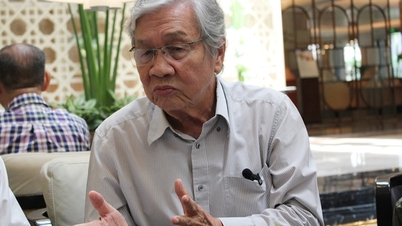
As a philosopher and researcher specializing in the history and conceptual foundations of science, Associate Professor Alessandra Buccella, working at the University of Albany (USA), argues that while AI can assist in many aspects of the research process, it is still far from achieving, and perhaps will never reach, the true meaning of "automating science." She believes that science is intrinsically linked to humans, and machines cannot replace them.
AI models don't learn directly from the real world. They can only learn through the "worlds" that humans build for them—that is, datasets that have been selected, organized, and interpreted. Without scientists overseeing the construction of those data worlds, AI itself would have no foundation to operate on.
The case of AlphaFold is a prime example. This model, with its ability to predict protein structure, earned its development team the 2024 Nobel Prize in Chemistry. Thanks to AlphaFold, researchers can quickly model protein structures, thereby accelerating drug design, disease research, and many other biomedical fields.
However, AlphaFold doesn't "create" new biological knowledge on its own. It doesn't understand proteins, diseases, or what constitutes a good drug. It simply analyzes and reorganizes a vast amount of information that humans have already created, in a faster and more efficient way.
"In other words, AI doesn't stand outside of science to create science. It stands within it, as a tool, and is entirely dependent on what human science has already prepared for it," Associate Professor Alessandra emphasized.
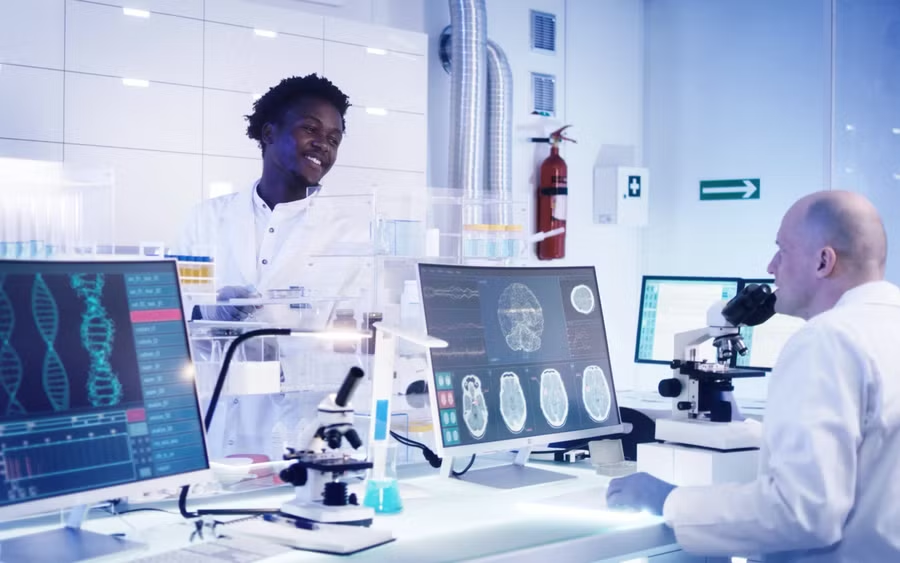
Science is a human activity.
According to Alessandra, the role of humans in science is not limited to designing and "nurturing" AI models. More fundamentally, science as an intellectual achievement is intertwined with the very distinctive values, goals, and ways of life of humankind. It is based on the ways in which humans think, question, debate, believe, and doubt one another.
Major scientific discoveries are not simply theories "mechanically formulated" from data. They are the result of generations of scientists, with diverse interests, biases, and perspectives, working together in a community bound by standards of intellectual integrity and professional ethics.
The history of DNA's double helix structure is a testament to this. When the idea was first proposed, there were no direct experiments to confirm it. It relied largely on the reasoning, synthesis, and imagination of highly trained scientists. It took nearly a century of technological progress and generations of research, from the vague speculations of the late 19th century, for science to arrive at the discovery that earned it the Nobel Prize in 1953.
This shows that science is, by its very nature, a social activity. Ideas are put forward for debate, and interpretations compete with one another. Scientists not only record the world but also construct knowledge through practice, debate, and standards formed from social, and even political, values.
In that picture, it's difficult to imagine an AI system, which has no social life, no values, no aspirations, truly "participating" in science in the way humans do. "However, the enormous potential of AI in driving scientific progress is undeniable. And therefore, AI needs to be used cautiously and responsibly to make it a 'right hand' for scientists," said Alessandra.
AI tools can help scientists save time, reduce errors, and focus more on the big questions. AI can be an excellent tool. But it has no reason to be curious, no incentive to be skeptical, and no moral responsibility for the consequences of the knowledge it produces.
As long as science remains a story about humans trying to understand themselves and the world, AI can only stand alongside, and not replace, scientists.
Source: https://giaoducthoidai.vn/vi-sao-ai-khong-the-thay-the-nha-khoa-hoc-post778616.html
![[Photo] First session of the 14th Congress of the Vietnam Trade Union](https://vphoto.vietnam.vn/thumb/1200x675/vietnam/resource/IMAGE/2026/06/03/1780465947883_ndo_br_img-3852-jpg.webp)

![[Photo] Secretary of the National Assembly Party Committee, Chairman of the National Assembly presides over the meeting of the Standing Committee and Executive Committee of the National Assembly Party Committee.](https://vphoto.vietnam.vn/thumb/1200x675/vietnam/resource/IMAGE/2026/06/03/1780480353201_ndo_br_bnd-2585-jpg.webp)
![[Photo] General Secretary and President To Lam presides over a meeting with the Central Organizing Committee.](https://vphoto.vietnam.vn/thumb/1200x675/vietnam/resource/IMAGE/2026/06/03/1780482764658_a1-bnd-4741-3342-jpg.webp)











































![[Video] Sunset at Lap An Lagoon – Where the sun sets over the fishing nets](https://vphoto.vietnam.vn/thumb/1200x675/vietnam/resource/IMAGE/2026/05/31/1780192137701_beach-landscape-sea-water-nature-grass-745871-pxhere-com.jpeg)





























Comment (0)