

 |
A Hanoi resident feels uncomfortable going out in the scorching sun on May 24th without wearing sun protection. Photo: Dinh Ha. |
Gloomy mornings, scorching midday sun, and stormy, flood-prone afternoons have been the weather patterns in Ho Chi Minh City and Hanoi over the past few days. This abrupt shift not only disrupts daily life but also signals an unusual summer ahead.
Speaking to Tri Thức - Znews , Dr. Truong Ba Kien, Deputy Executive Director of the Center for Meteorological and Climate Research (CMC), Institute of Meteorology, Hydrology, Environment and Marine Science, Ministry of Agriculture and Environment , said that recent ENSO forecasts show a more than 90% chance of El Nino returning in early summer.
"In the scenario where the hot phase returns and intensifies from the beginning of summer, Vietnam needs to prepare for the possibility of more intense heat waves, especially in the North, Central regions and major cities like Hanoi and Ho Chi Minh City," Mr. Kien said.
Summer scenarios in Hanoi and Ho Chi Minh City
The summer weather patterns in Hanoi and Ho Chi Minh City are expected to fluctuate significantly from time to time, rather than maintaining a single, prolonged period of hot weather. According to Dr. Truong Ba Kien, temperatures in the coming months may continuously fluctuate due to the interaction of various weather patterns such as hot low-pressure systems from the West, monsoon winds, the Foehn effect, and short-term atmospheric disturbances.
With regional temperatures already high, even periods of low cloud cover, reduced rainfall, or poor air circulation can rapidly intensify the oppressive heat in urban areas. This makes Hanoi and Ho Chi Minh City prone to short but intense heatwaves, interspersed with heavy thunderstorms in the late afternoon and evening.
In addition, the Deputy CEO of CMC stated that Northern and Central Vietnam will be the areas most significantly affected if El Nino returns. Hanoi is likely to continue experiencing prolonged periods of hot and humid weather, especially during June and July. At this time, high humidity combined with the urbanization effect means that the actual perceived outdoor temperature may far exceed the forecast.
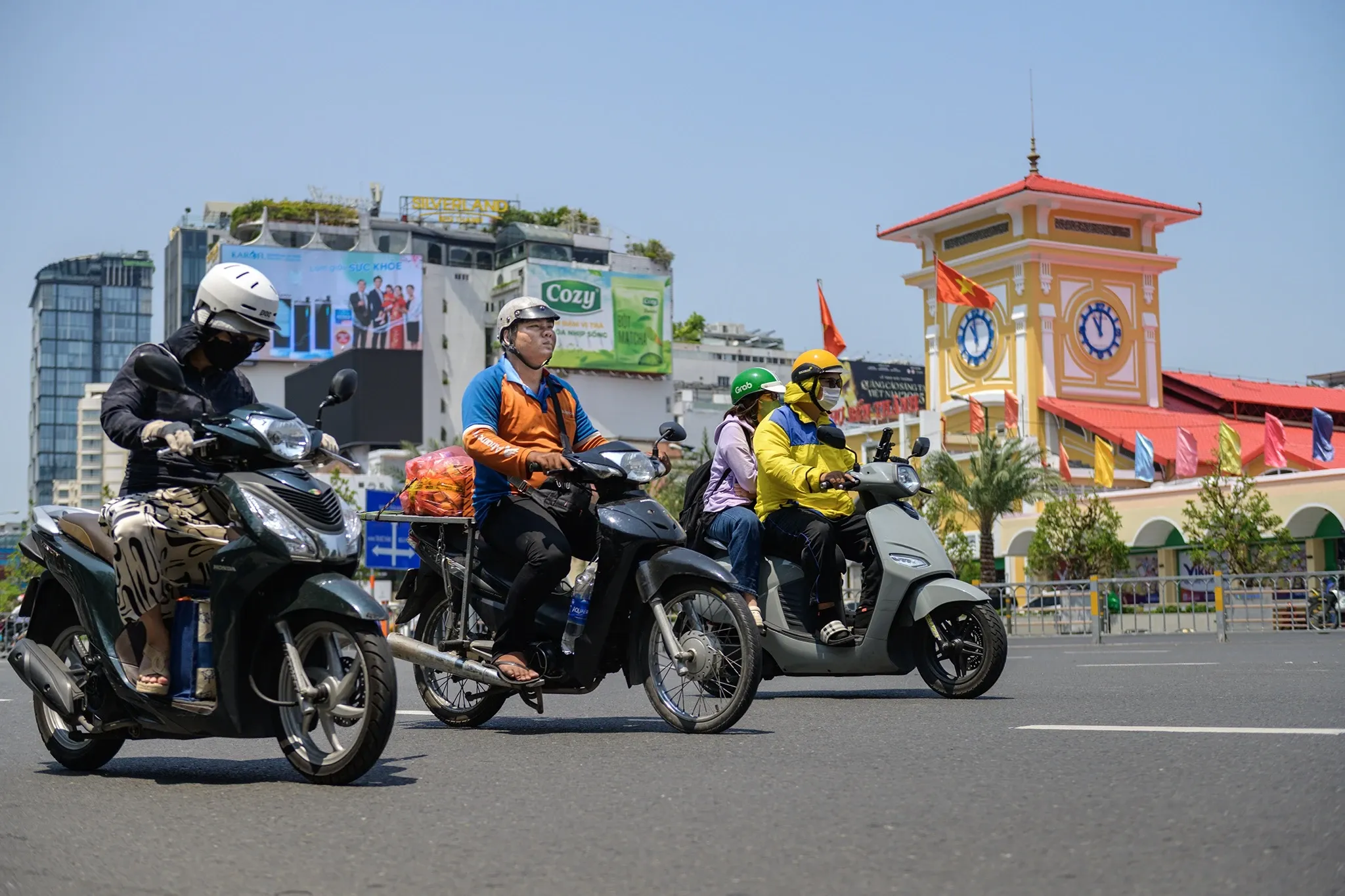 |
The sweltering heat in Ho Chi Minh City in mid-May makes pedestrians feel a burning sensation after just a few minutes of travel. Photo: Hoai Bao. |
Unlike the North, Ho Chi Minh City in the summer typically experiences more humid heat than dry heat. Temperatures don't always peak, but high humidity, little wind, and the heat absorption effect from concrete and road surfaces create a persistent feeling of stuffiness day and night. At many times, residents feel suffocated, even when the temperature is only around 35 degrees Celsius.
Notably, the "anomalous" phenomena this summer are not limited to just scorching heat. Dr. Truong Ba Kien explains that after many days of intense heat on the ground and in urban areas, the atmosphere becomes unstable. When low-pressure troughs, wind convergence, or monsoon disturbances appear, the weather can quickly shift to extreme conditions with heavy thunderstorms, tornadoes, lightning, strong gusts of wind, and even hailstorms in a short period of time.
This explains why in Ho Chi Minh City recently, it has been common to see scorching hot mornings followed by torrential rain in the evenings. Meanwhile, in Hanoi, prolonged periods of intense heat can quickly turn into severe thunderstorms, causing localized flooding and fallen trees.
"The current summer weather risks need to be viewed from a 'multi-extreme' perspective, meaning the interplay of intense heat, localized droughts, and extreme thunderstorms following the heatwave. This weather pattern is very noteworthy for urban areas, agriculture, energy, and public health," Mr. Kien explained.
El Nino is not the main "culprit".
Dr. Truong Ba Kien asserted that El Nino is merely a cyclical catalyst, not the sole cause of the "scorching" of major cities in the summer.
"The nature of the current extreme heatwaves is a confluence of global climate change and the rapid pace of urbanization," he said.
In Hanoi and Ho Chi Minh City, high building density, shrinking green spaces, heavy traffic, and a large amount of concrete, asphalt, and glass surfaces significantly increase the urban environment's heat absorption capacity. During the day, these surfaces accumulate heat rapidly under the hot sun, then release it slowly in the evening and at night, creating the "urban heat island" effect.
This is why many people clearly feel the city getting hotter, especially at night. Instead of cooling down after sunset as before, many inner-city areas maintain a stuffy feeling that lasts until late at night.
According to Dr. Truong Ba Kien, the projected climate change situation in Hanoi and Ho Chi Minh City throughout the 21st century will see significant changes. Average temperature, maximum temperature, minimum temperature, and urban heat index all tend to increase. In particular, the increase in the inner city area is predicted to be significantly higher than in the suburbs.
"This means that climate extremes in urban environments will become increasingly pronounced. Not only will the number of hot days increase, but hot nights, with temperatures remaining high throughout the night, will also occur more frequently, reducing the body's ability to recover after a day of prolonged heat exposure," Mr. Kien quoted from the 2025 Climate Change Scenario forecast developed by the Institute of Meteorology, Hydrology and Climate Change, expected to be published by the Ministry of Agriculture and Environment in the second quarter.
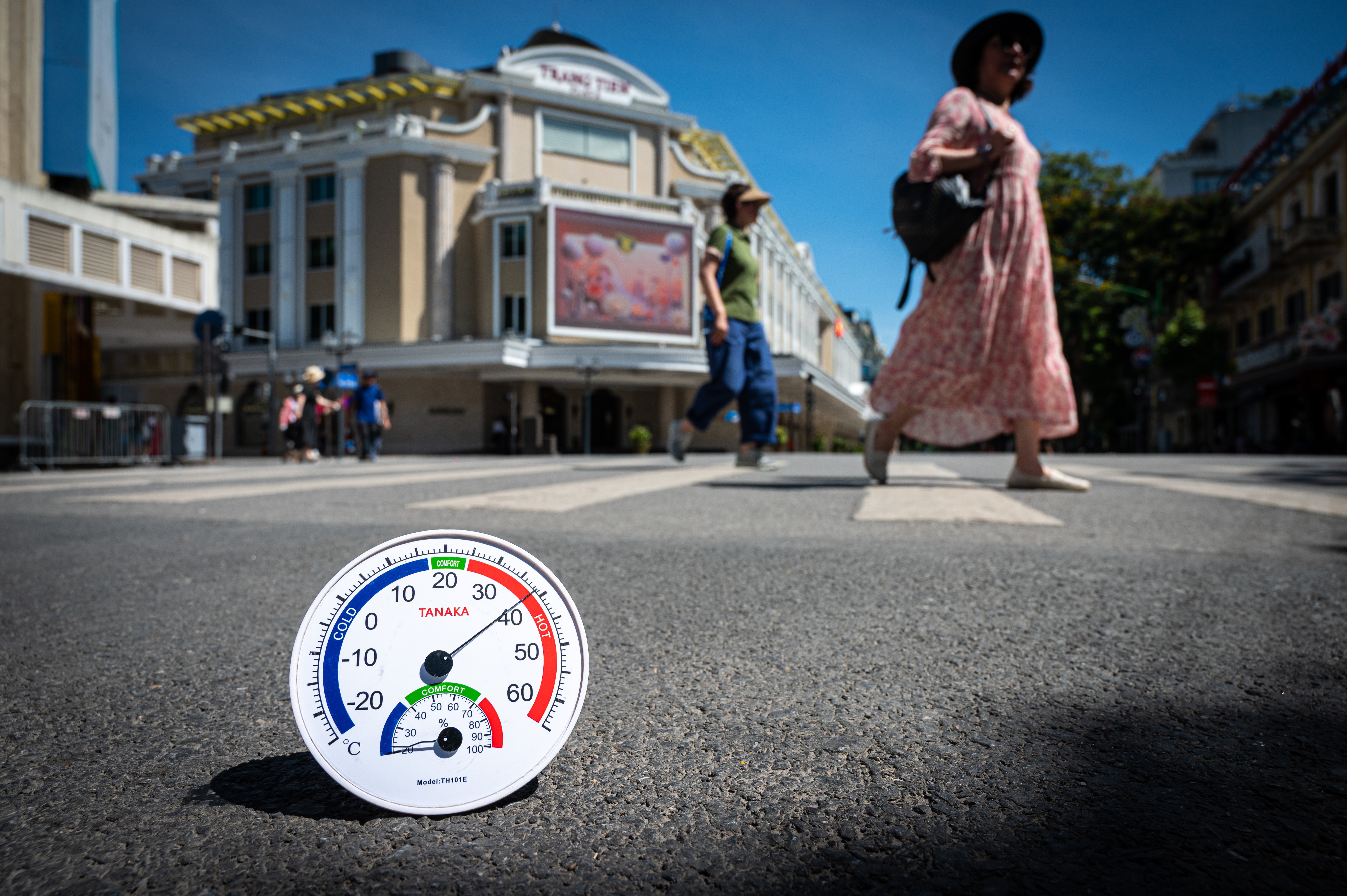 |
Experts advise people to stay indoors to avoid the intense midday sun. Photo: Dinh Ha. |
Experts warn that extreme weather events pose a significant risk to public health, especially for the elderly, children, people with underlying health conditions, and outdoor workers. When high temperatures persist for many consecutive days, the risk of heatstroke, exhaustion, dehydration, and cardiovascular and respiratory illnesses can all increase.
Beyond health impacts, the synergistic effects of El Niño, climate change, and urbanization also place significant pressure on urban infrastructure. Increased electricity demand for cooling can overload the energy system during extreme heat waves. Simultaneously, heavy rains following prolonged periods of sunshine increase the risk of localized flooding due to the reduced natural water infiltration capacity of concrete urban surfaces.
According to experts, the important question now is no longer whether summers will get hotter, but how cities will adapt to increasingly extreme and unpredictable weather conditions.
In the context of continued climate warming, increasing urban green spaces, improving natural ventilation, reducing concrete density, and upgrading drainage infrastructure are considered long-term solutions that major cities need to consider if they want to reduce pressure from extreme summers in the future.
Source: https://znews.vn/vi-sao-tphcm-ha-noi-sang-nang-rat-chieu-mua-dong-post1655088.html



![[Photo] General Secretary and President To Lam presides over a meeting on preparations for the review of one year of operation of the three-tiered government system.](https://vphoto.vietnam.vn/thumb/1200x675/vietnam/resource/IMAGE/2026/06/02/1780391821195_a1-bnd-4595-9717-jpg.webp)



























































Comment (0)