

Expectations differ from reality.
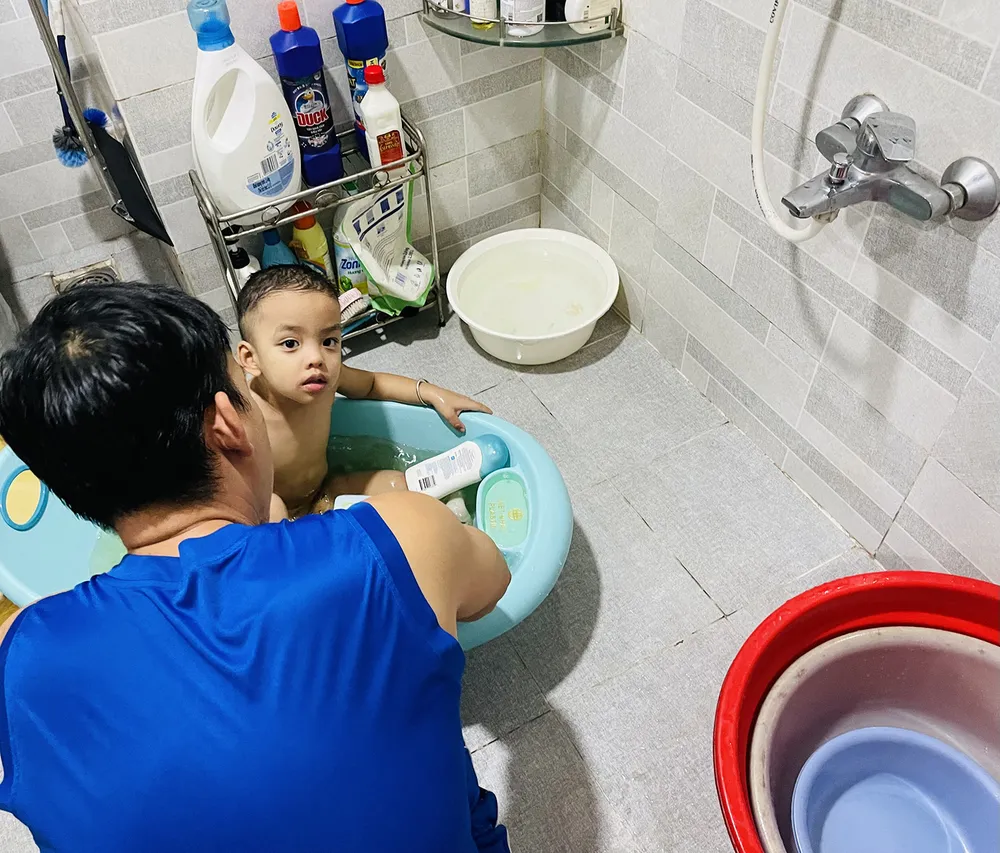
After giving birth to her first child, Ms. Ngoc Dung (residing in Cu Chi commune, Ho Chi Minh City) almost single-handedly managed to care for her baby in her small rented house. The mother and child slept downstairs, while her husband chose to sleep in the mezzanine because he needed a peaceful sleep after a tiring day at work.
She recounted: "Every day when he comes home from work, he only plays with the child for a short while before burying his face in his phone again, claiming he has unfinished work. When the child cries at night, has a fever, or is fussy, I'm mostly the one who stays up to take care of him."
What disappointed her wasn't necessarily the late nights or the hardships of childbirth, but the feeling of loneliness within her own marriage. During their courtship and pregnancy, she believed her husband was a loving father who cared deeply for his family. But as they entered real life, the gap between expectations and reality began to become apparent.
During the day, she rushes to do laundry, clean, and cook; at night, she tosses and turns with each cry of her child. Many times, she wonders when childcare became her sole responsibility, while her husband considers going to work and earning money as... fulfilling his duty.
The inability to find common ground is also the story of Ms. Kim Thu (residing in Xom Chieu Ward, Ho Chi Minh City). After the wedding, small conflicts began to appear: her husband frequently came home late, went out to eat and have coffee with colleagues but rarely texted or called to let her know. Feeling neglected made her uncomfortable, but instead of talking to him directly, she confided in her mother.
"I thought my mother-in-law was right to side with me, but things only got more tense later on. Every time we argued, she would call and scold my husband, which widened the gap between us," Thư shared.
The situation reached its peak during the first Lunar New Year after their wedding. Her husband wanted to take her back to his hometown in the North, but she refused, packing her bags and returning to her parents' home. After that, her husband gradually became silent, frequently using work as an excuse to be away from home. It wasn't until she discovered his infidelity that she realized her marriage had been fractured for a long time.
"Looking back, I realize the fault wasn't just on one side. There were times when neither of us wanted to listen to the other anymore," she said. When she filed for divorce, he signed immediately without thinking or trying to stop her.
Let's overcome our differences together.
Modern marriages largely begin with love and the voluntary choice of two people. But precisely because they are built on so many idealistic expectations, many couples easily become disillusioned when faced with real life: financial pressures, work, children, relationships with both families, or simply differences in lifestyle habits.
It's quite common for many people to prepare meticulously for their wedding, even though it's a fleeting event, but they don't prepare for married life for the rest of their lives.
Few couples sit down together to talk about managing finances, dividing responsibilities, how to handle conflicts, or simply sharing their flaws. And when we live together, that's when our truest selves can't be hidden anymore.
Marriage is not about finding a perfect partner, but about learning to walk alongside an imperfect person and accepting yourself as you are.
Only when both partners are willing to go through disappointments together does a marriage have a chance of becoming lasting.
When in love, people often present their most pleasant and romantic selves. But when living together, differences in personality, lifestyles, and life philosophies gradually become apparent. From who takes care of the children more, who does the housework, to how to spend money or interact with each other's families… all of these can become sources of conflict if there is a lack of trust, sharing, and understanding.
A lasting marriage no longer depends on whether two people are still in love; what matters is whether they truly want to be together and overcome disagreements. Many conflicts and breakdowns often begin with seemingly small things, as in Thư's case. But when communication fails, listening becomes infrequent, and expectations are too high, it can push a marriage to the brink of collapse.
According to psychologist Truong Tan Tai from the NHC Vietnam Center for Psychology and Human Development, disillusionment after marriage is not actually about people changing, but rather about the vast difference between pre-marital expectations and post-marriage reality.
He analyzed: "Before marriage, people often aim for romance or beautiful moments together without fully considering reality. But after marriage, the two have to face daily issues such as differing life philosophies, thoughts, and behaviors. This is what creates a feeling of disappointment."
Source: https://www.sggp.org.vn/vun-ven-giu-lua-hon-nhan-post855244.html




![[Image] A brilliant symphony and explosive power in the skies of Da Nang.](https://vphoto.vietnam.vn/thumb/1200x675/vietnam/resource/IMAGE/2026/05/31/1780196945787_anh-man-hinh-2026-05-31-luc-10-08-51.png)






















![[Video] Sunset at Lap An Lagoon – Where the sun sets over the fishing nets](https://vphoto.vietnam.vn/thumb/340x192/vietnam/resource/IMAGE/2026/05/31/1780192137701_beach-landscape-sea-water-nature-grass-745871-pxhere-com.jpeg)















































































Comment (0)