|
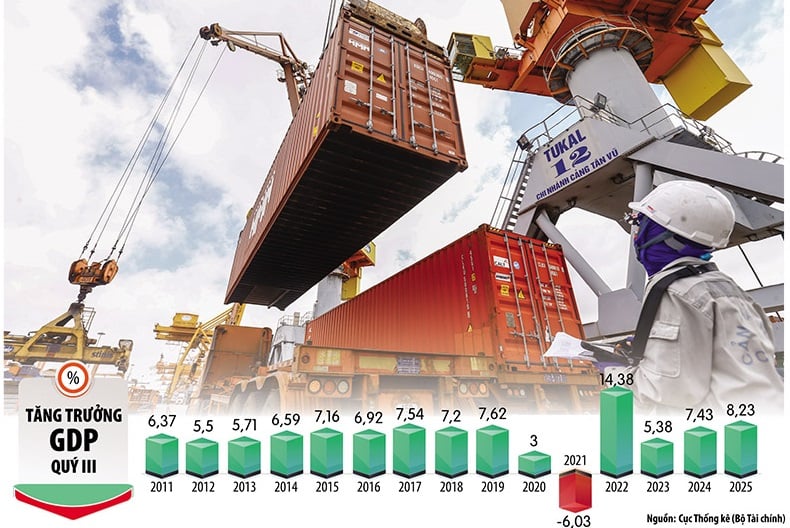
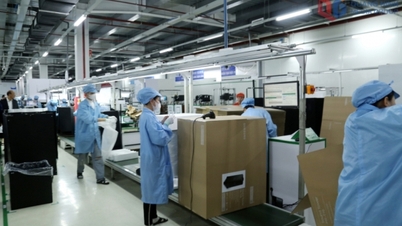
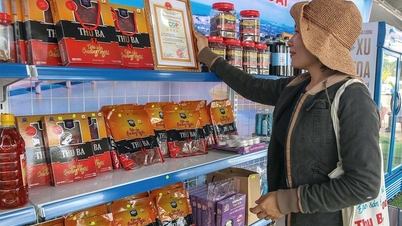
The trade sector plays a crucial role in boosting GDP growth, with total import and export turnover in the past nine months increasing by 17.3% compared to the same period last year. Photo: Duc Thanh. Graphics: Dan Nguyen |
Accelerating in the third quarter, the economy is steadily overcoming difficulties.
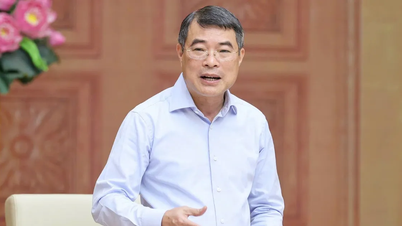
Overcoming difficulties caused by the impact of US tariff policies, as well as natural disasters and floods domestically, the Vietnamese economy can be said to have remained remarkably resilient in the face of adversity. In fact, when reporting at the recent Government-Local Authorities Conference, Minister of Finance Nguyen Van Thang used the phrase "turning the situation around, transforming the state" to emphasize the efforts in leadership and management by the Government, ministries, and localities over the past nine months.
Thanks to this, according to the Minister, the socio-economic situation continues to achieve many important and comprehensive results, one of which is high economic growth, macroeconomic stability, controlled inflation, and ensured major balances. "The economy has grown impressively in the third quarter, reflecting a strong and balanced recovery across all three economic sectors," Minister Nguyen Van Thang said.
At the government meeting with local authorities, the GDP growth rate for the third quarter was projected to be over 8%. The official figure released by the General Statistics Office (Ministry of Finance) was 8.23%, bringing the GDP growth for the first nine months to 7.85%.
"The economy has closely followed the 8% annual growth target as reported by the Government to the Politburo and the Central Committee, thanks to the synchronized implementation of the proposed solutions," Minister Nguyen Van Thang emphasized, adding that production and business activities, and growth drivers, continue to be promoted and renewed, maintaining positive growth momentum.
Meanwhile, according to Ms. Nguyen Thi Huong, Director of the General Statistics Office, the socio-economic results for the third quarter and the first nine months of 2025 were "very positive," with each month better than the previous one, and each quarter better than the previous one, despite the ongoing instability in the global and regional economies.
If we compare it to the third-quarter growth of previous years from 2011 onwards, this year's Q3 GDP growth ranks second, only behind the 14.38% growth of Q3/2022. However, that was a "special" time. At that time, due to the impact of the Covid-19 pandemic, Q3/2021 GDP experienced negative growth of 6.03%, so compared to the same period last year, Q3/2022 GDP growth was very high.
Meanwhile, GDP growth in the third quarter of most other years hovered around 7-7.5%, with Q3/2012 even reaching only 5.5%. Therefore, the 8.23% growth rate in Q3/2025, building on the 7.43% growth of Q3 last year, can be considered a strong acceleration.
Similarly, the 7.85% growth rate for the first nine months of 2025 is also a remarkable achievement, only slightly lower than the 9.44% growth rate of the same period in 2022 within the 2011-2025 timeframe. This is a high growth rate, which, according to Minister Nguyen Van Thang, ranks among the top in the region and globally.
In late September 2025, when releasing its report on Vietnam's socio-economic situation, the Asian Development Bank (ADB) emphasized the "stability" of the Vietnamese economy in the 2025-2026 period, thanks to expansionary fiscal and monetary policies, strong growth in merchandise trade, and accelerated disbursement of public investment capital.
|
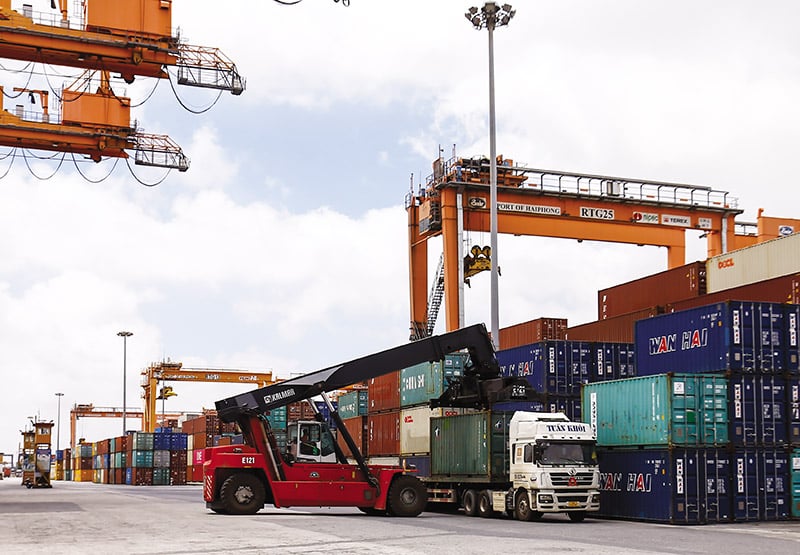
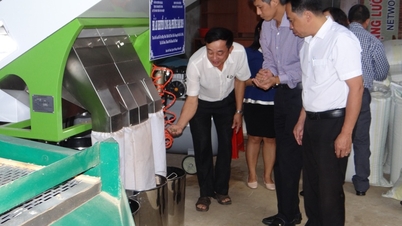
Export turnover in the first nine months reached US$348.74 billion, an increase of 16% compared to the same period last year. Photo: Duc Thanh |
Look at industrial and commercial dynamics.
As the ADB noted, industrial production and trade played a significant role in the overall economic growth during the third quarter and the first nine months of the year. “Strong trade growth and increased disbursement of foreign direct investment (FDI) have contributed to boosting Vietnam’s economic growth,” said Shantanu Chakraborty, ADB Country Director for Vietnam.
When reporting to the Government, Minister Nguyen Van Thang also highlighted a series of positive macroeconomic indicators. For example, the processing and manufacturing industry continues to be the driving force behind growth, increasing by about 10% in the third quarter and 9.92% in the first nine months, achieving the set target (9.9%); total retail sales of goods and consumer service revenue increased by 9.5% in the first nine months; total import and export turnover in the first nine months reached US$680.66 billion, an increase of 17.3% compared to the same period last year; of which exports in the first nine months reached US$348.74 billion, an increase of 16%, with an estimated trade surplus of US$16.82 billion…
In addition, total social investment in the third quarter increased by 13.3% compared to the same period last year, and by 11.6% in the first nine months; total registered FDI increased by approximately $2.4 billion, reaching over $28.5 billion in the first nine months, an increase of 15.2% compared to the same period last year, and implemented FDI reached $18.8 billion, an increase of 8.5%...
The number of newly registered and reactivated businesses in the first nine months reached over 231,300, an increase of 26.4%; the number of businesses withdrawing from the market in the first nine months increased by 6.82%, the lowest since 2021…
 In its recommendations to Vietnam, the ADB emphasized that effective public investment is a key factor in sustaining growth and reducing infrastructure bottlenecks. “With public debt below 34% of GDP – significantly lower than the 60% ceiling – Vietnam still has considerable fiscal space for growth-supporting measures. Extensive institutional reforms will streamline the legal environment, improve disbursement efficiency, and boost the domestic economy,” stressed Shantanu Chakraborty, ADB Country Director for Vietnam.
Sharing the same viewpoint, Minister of Industry and Trade Nguyen Hong Dien emphasized the leading role of the processing, manufacturing, and commodity trade industries in the economy. The head of the industry and trade sector even used the word "spectacular" to describe the positive results that the economy has achieved.
“The processing and manufacturing industry achieved its highest growth rate since the beginning of the term. Domestic trade and services also recorded a strong recovery,” Minister Nguyen Hong Dien said, adding that a special highlight was the record-breaking performance of import and export activities. It is projected that for the whole year, import and export turnover could exceed $900 billion and the trade surplus could reach over $20 billion, affirming Vietnam's role and position in the global supply chain.
Besides this growth driver, the active disbursement of public investment has also contributed significantly to economic growth. According to the Ministry of Finance's report, the total planned capital allocated to date is VND 1,112,841.7 billion. Of this amount, VND 1,029,648.4 billion has been allocated in detail. Excluding the increased capital allocated by local budgets, the total allocated capital is VND 866,193 billion, reaching 97.9% of the capital plan assigned by the Prime Minister.
Meanwhile, the estimated disbursement for the first nine months was approximately VND 440,400 billion, reaching about 50% of the plan assigned by the Prime Minister (or 55% if calculated based on the plan assigned at the beginning of the year). This is 4.5 percentage points higher in terms of percentage and VND 132,600 billion higher in absolute terms compared to the same period in 2024. This is a very positive figure, especially considering the large amount of public investment resources available this year.
“The government's goal and actions are to achieve 100% disbursement of the plan by 2025. To achieve this goal, the Prime Minister has directed the Deputy Prime Ministers to directly lead working groups, to promptly identify and provide solutions to support the resolution of difficulties and obstacles faced by localities, ministries, sectors, and investors; thereby accelerating construction progress, speeding up the disbursement of public investment capital, and aiming for 100% disbursement,” Deputy Minister of Finance Nguyen Duc Chi shared.
Ready for a breakthrough.
Although the economy is still on track with the projected growth scenario, the reality is that it's an 8% growth scenario. Meanwhile, the government's target is to achieve growth above 8% this year, possibly even 8.3-8.5%.
As outlined in the plan, to achieve an 8% GDP growth rate in 2025, GDP growth in the fourth quarter of 2025 must reach at least 8.5%. This is a significant challenge. Minister Nguyen Van Thang himself emphasized that the 2025 growth target "still faces many challenges," and the macroeconomic situation is also under considerable external pressure.
“Export growth continues to face many difficulties, especially the US tariff policy, unstable regional markets, shrinking traditional markets; increased input import costs due to exchange rate pressure, while global demand growth slows down, and the number of new export orders decreases; the target of a trade surplus of 30 billion USD in 2025 remains a major challenge,” Minister Nguyen Van Thang said.
The Minister also highlighted several other challenges that the economy must overcome in 2025, such as achieving a 12% growth in consumer spending; attracting 25 million international tourists (only 15.4 million have been reached in the first nine months - PV)...
Furthermore, investment has not truly broken through; attracting new foreign investment projects faces many difficulties, with newly registered foreign investment capital in the first nine months reaching only $12.4 billion, a decrease of 8.6% compared to the same period last year; disbursement of public investment capital has not met expectations, reaching only about 50% of the plan in the first nine months; private investment growth has not met expectations; the investment resources of state-owned enterprises have not been fully utilized, and many difficulties and obstacles remain unresolved.
In this context, new growth drivers are still in their early stages and require time to transform and yield results. Labor productivity and the quality of human resources do not yet meet requirements; there is a shortage of human resources for key economic sectors, high technology, and the digital economy…
The challenges are numerous, but the task is to achieve at least 8.5% economic growth in the fourth quarter of 2025. Therefore, as directed by Prime Minister Pham Minh Chinh, the fourth quarter must see accelerated growth and breakthroughs; focusing on implementing the "three accelerations" to strive for growth exceeding 8%...
The three priorities mentioned by the Prime Minister are: accelerating the disbursement of public investment capital, removing obstacles to production and business, creating jobs and livelihoods for the people, and striving for growth exceeding 8%; effectively implementing Resolution 57-NQ/TW of the Politburo on breakthroughs in science and technology development, innovation, and digital transformation in all sectors, fields, and localities to serve rapid and sustainable development; and decisively resolving difficulties and obstacles, operating synchronously and effectively the two-tiered local government system, and creating all favorable conditions for people and businesses…
Implementing these three initiatives addresses both traditional and new growth drivers. In particular, the disbursement of public investment capital continues to be a priority. "More effort is needed in disbursing public investment capital," the Prime Minister instructed.
Source: https://baodautu.vn/vuot-gian-kho-nen-kinh-te-san-sang-but-pha-d406196.html


![[Image] Hanoi's urban life under the challenge of a "scorching hot" environment](https://vphoto.vietnam.vn/thumb/1200x675/vietnam/resource/IMAGE/2026/05/25/1779706979265_nang-nong-t5-2026-minh-duy-7-4636-jpg.webp)



![[Image] Close-up view of the interchange connecting the two expressways and Long Thanh Airport.](https://vphoto.vietnam.vn/thumb/1200x675/vietnam/resource/IMAGE/2026/05/25/1779703378210_ndo_br_z7863716673926-224453a31600126cce10622af6290afd-4549-jpg.webp)

























































































Comment (0)