


The Asian team's dominance was evident from the moment they imposed their game in the opening minutes. Coach Hajime Moriyasu's players surged forward, pushing the Tunisian defense into a difficult position. Daichi Kamada's opening goal in the 207th second set a record for the fastest goal in Japan's World Cup history.
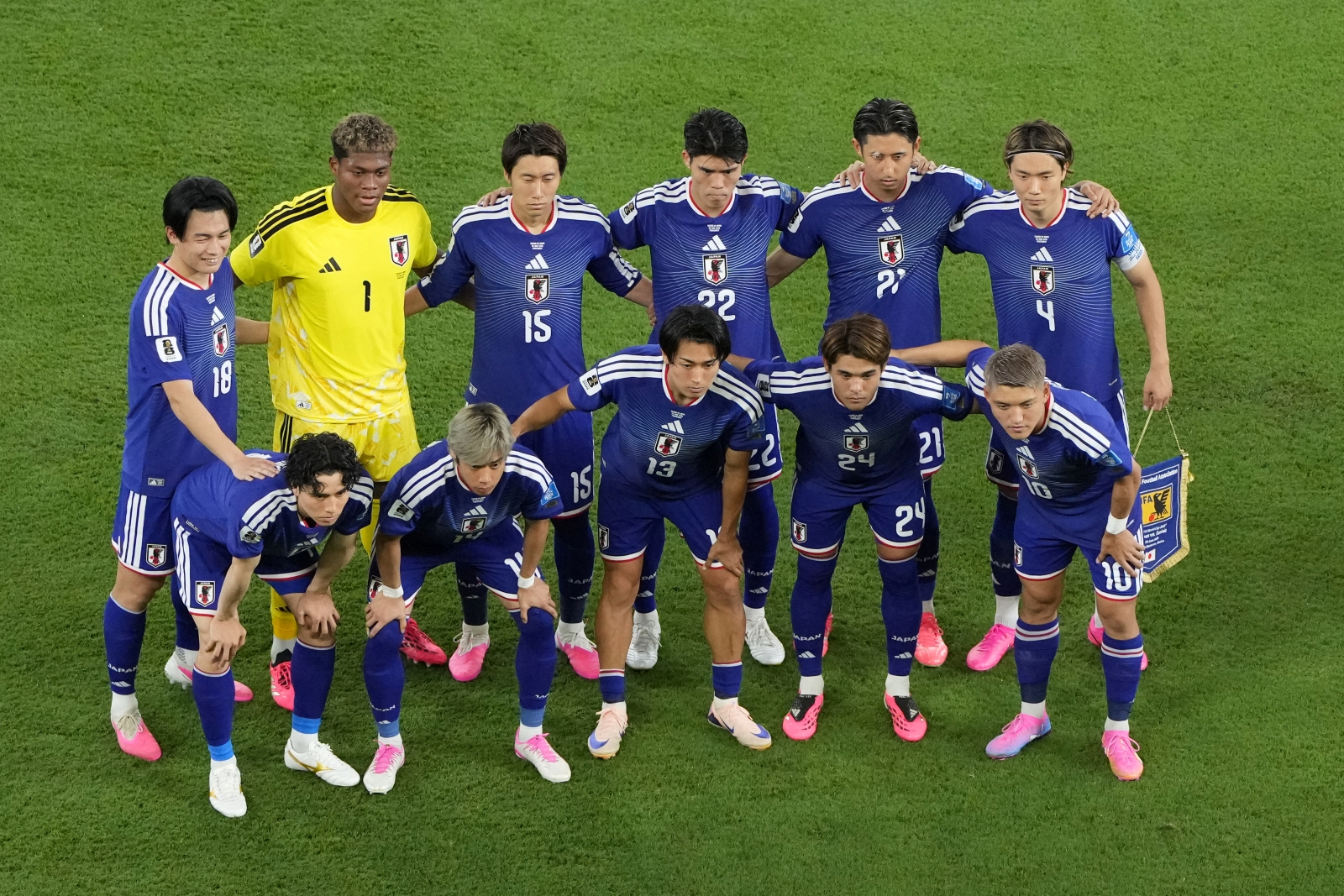 |
| Japan's starting lineup for the match against Tunisia. Photo: AP |
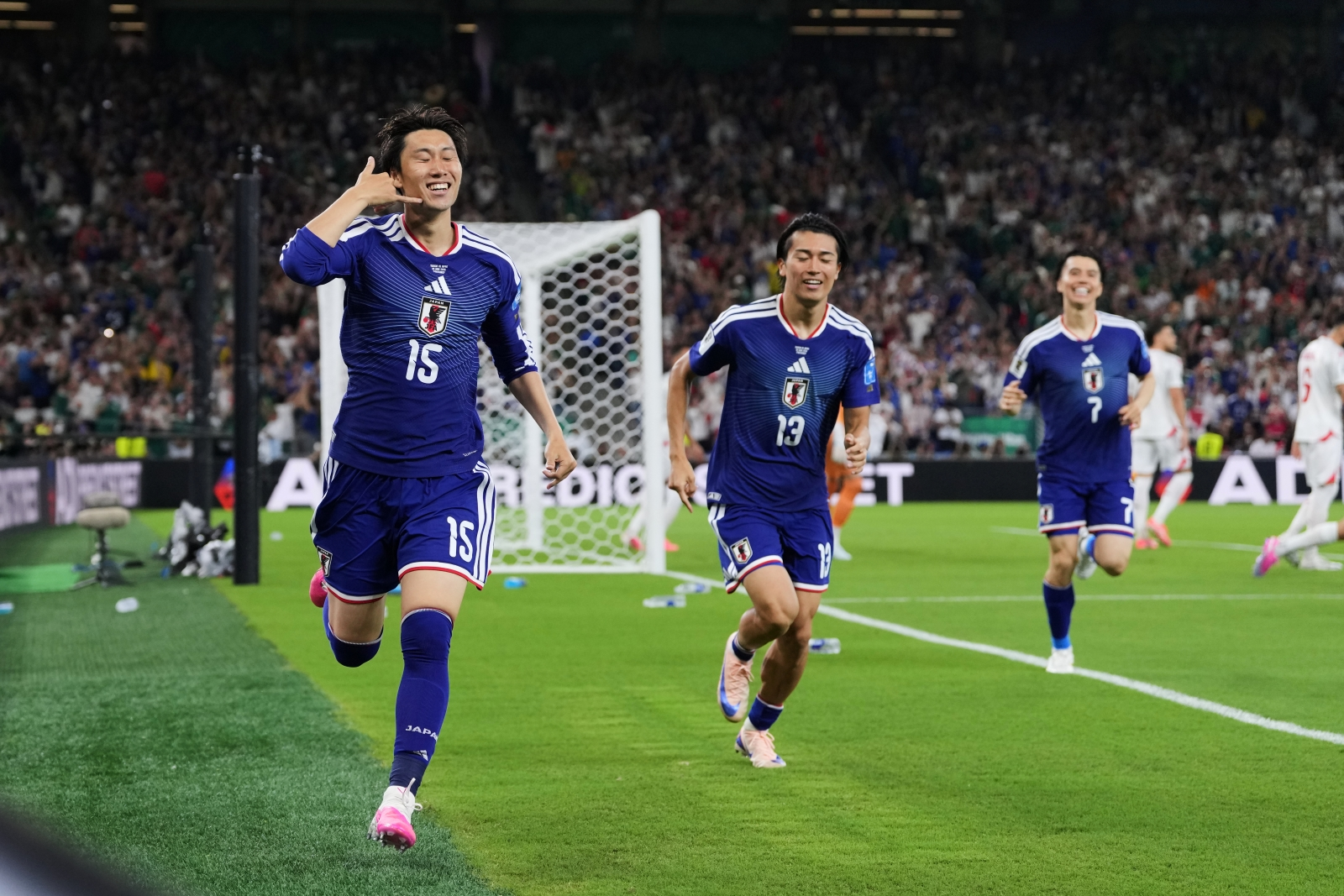 |
Daichi Kamada (number 15) celebrates his goal against Tunisia. Photo: AP |
Throughout the match, Japan dominated the game. They maintained constant pressure and scored three more goals. Conversely, their opponents only managed two harmless shots, with an expected goals ratio of just 0.05. This result allowed the Asian representative to make history, becoming the first team from the continent to score four goals in a single World Cup final match.



The ability to adapt to diverse circumstances is becoming one of Japan's greatest strengths.
Facing the Netherlands in their opening match, they opted for a deep defensive formation, bravely withstanding immense pressure and waiting for opportunities to launch counter-attacks. However, the scenario completely changed in the match against Tunisia, with the blue-shirted team proactively controlling the tempo and stifling their opponent's playing space. The combination play that increased the score to 3-0 clearly demonstrated their sharp transitions. The ball, originating from goalkeeper Zion Suzuki, circulated through the lines and landed neatly in the Tunisian net within just 28 seconds.
Besides the absence of three key players – Endo, Mitoma, and Minamino – from before the tournament, Japan was also missing another attacking star, Kubo, before this match. These were serious losses in terms of personnel. However, after two matches, the names most frequently mentioned now are Kamada, Nakamura, Ueda, and Ito.
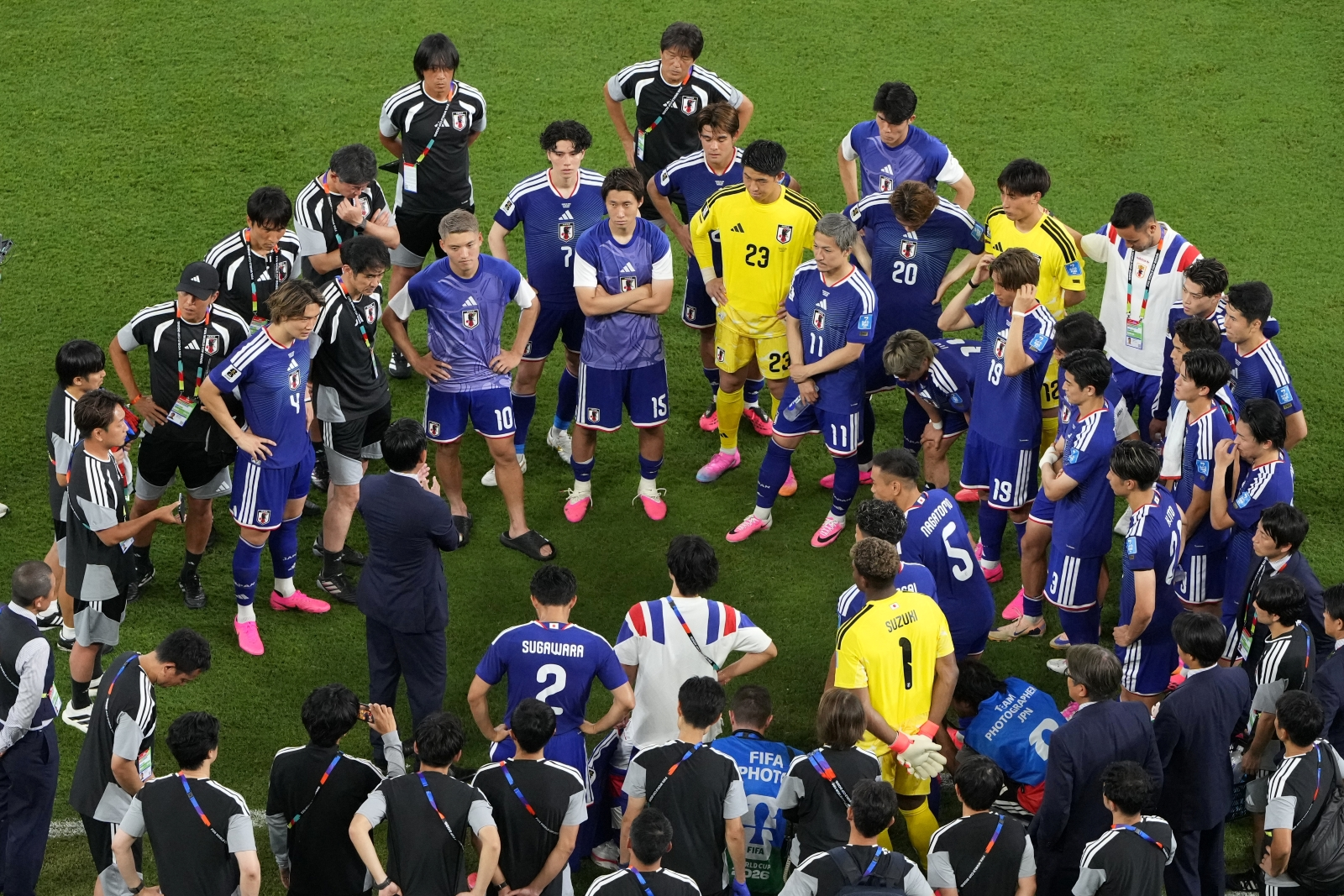 |
| Coach Hajime Moriyasu, the coaching staff, and the Japanese national team players after the match against Tunisia. Photo: AP |
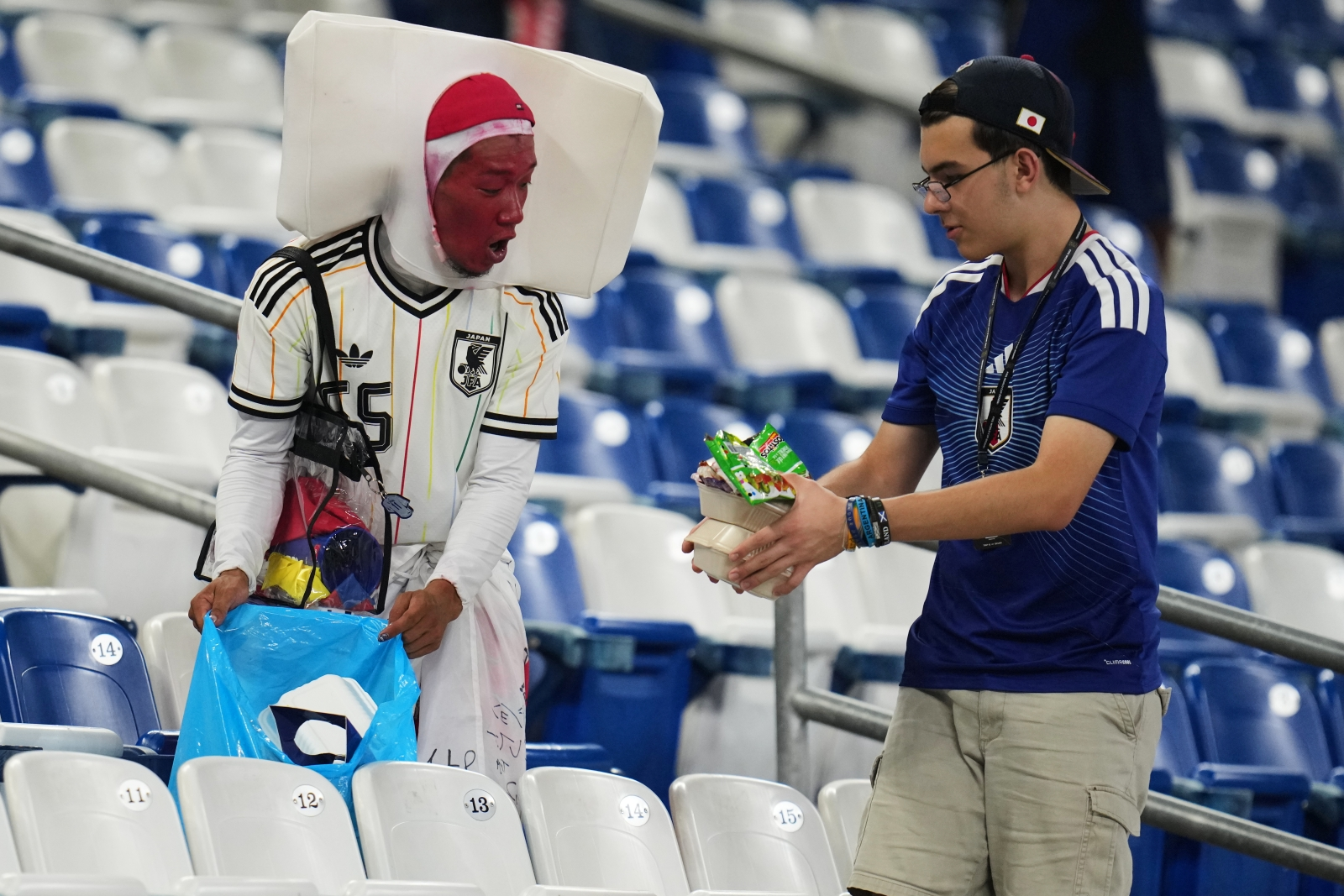 |
| A familiar scene over the years – Japanese fans collecting trash after a match ends. Photo: AP |
The excellent form of the substitutes quickly filled the gaps in the squad, demonstrating the depth of the team and a stable operating system under coach Hajime Moriyasu.


The Estadio Monterrey in Mexico recently witnessed the 1,000th match in World Cup history. At this symbolic milestone, the Japanese national team sent a powerful message about their ambition to conquer. Since the establishment of the J-League in 1992 (modeled after Germany's Bundesliga), Japanese football has flourished with a unified "Century Vision" and "Japanese National Football Philosophy" from top to bottom. Through a long-term strategic investment process, football in the Land of the Rising Sun is steadily progressing.
Although not yet considered a top contender for the championship, fans would probably not be surprised to see Japan continue to win or compete on equal footing with the world's leading teams. After all, the days when a victory for Japan at the World Cup was already a surprise are long gone.
Source: https://www.qdnd.vn/the-thao/worldcup-2026/world-cup-2026-nhat-ban-ap-dao-lanh-lung-1045390




![[Photo] Prime Minister Le Minh Hung presides over the thematic session on promoting science and technology development and innovation.](https://vphoto.vietnam.vn/thumb/1200x675/vietnam/resource/IMAGE/2026/06/23/1782207872934_ndo_br_dsc-1724-jpg.webp)