


From the old beaten path
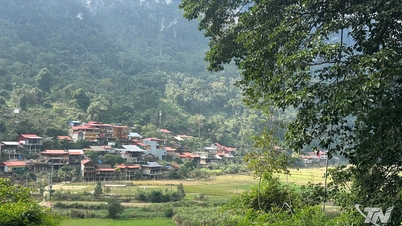
Anyone who visited Tuan Tuc commune in previous years surely hasn't forgotten the image of a rural area still facing many difficulties. The dirt roads were slippery in the rainy season and dusty in the dry season. Thatched-roof houses nestled beside canals and ditches, and winding paths snaked through the fields... Not only was Tuan Tuc backward in terms of infrastructure, but it was also a "low-lying" area in terms of economy , education, and development opportunities. The people relied on traditional agriculture, small-scale farming, and were completely dependent on the weather. Lack of arable land, lack of technology, and lack of market information caused the household economy to stagnate.
However, amidst that outdated atmosphere, a quiet transformation had begun. Without fanfare or loud slogans, change subtly permeated every step of the commune officials, every village meeting held in the courtyard, every instance of people being guided in building livestock pens, growing vegetables, and raising pigs. These undercurrents of change flowed silently, and one day, they burst forth as vitality. Roads rose from the mud. Houses emerged from hardship, and hopes were rekindled…
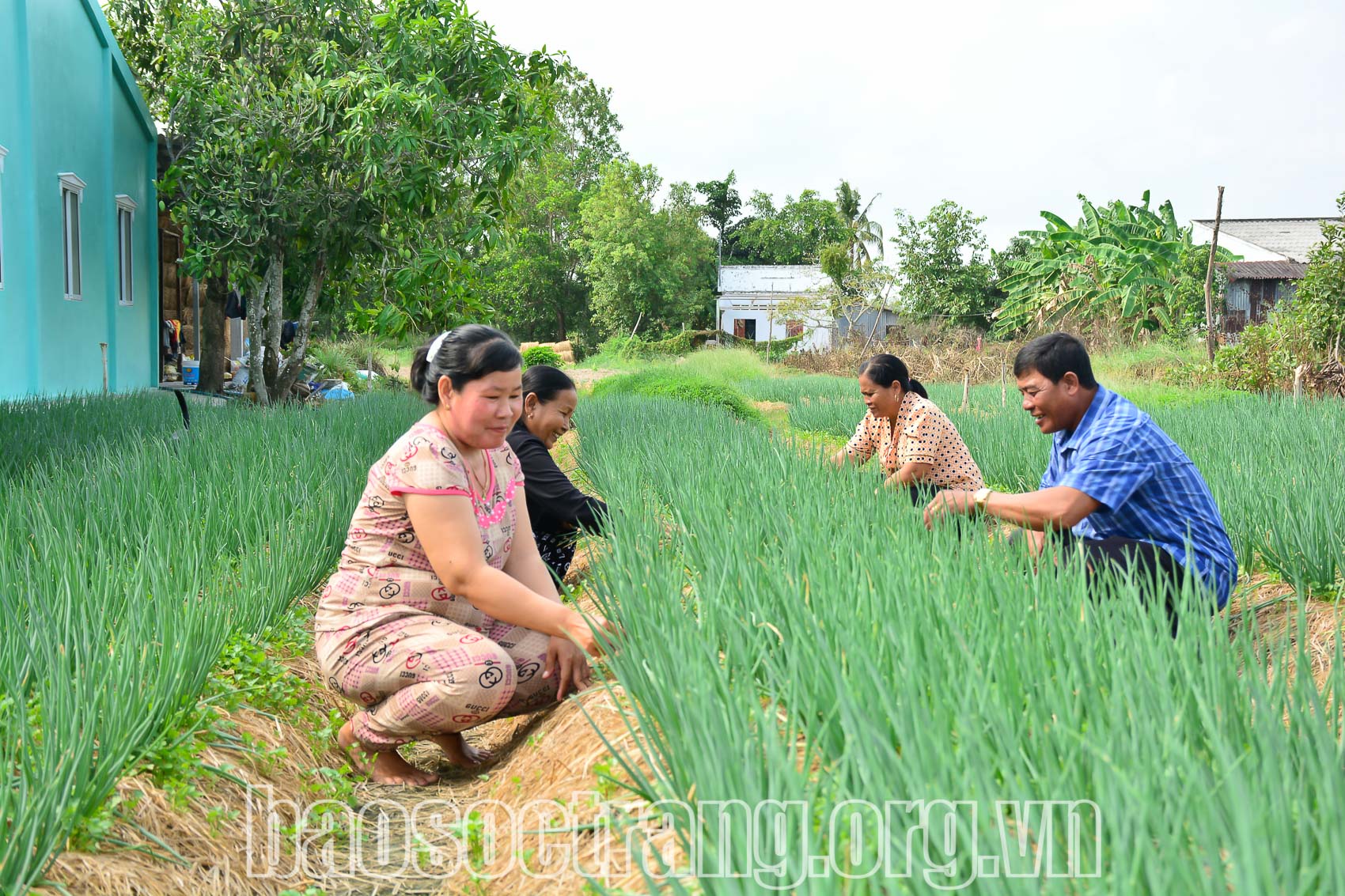 |
| Utilizing land around their homes to grow vegetables and raise chickens has helped many households increase their daily income. Photo: HOANG PHUC |
From Trung Hoa hamlet to Tan Dinh, from muddy canal banks to narrow footpaths, straight concrete roads now stand. Spacious houses have sprung up alongside lush green gardens, fish ponds, and well-planned livestock pens. New economic models are being tested, and most importantly, people are no longer living hand-to-mouth but are actively taking control of their own lives.
Accompanying you through every change.
Behind these changes lies a long period of effort by local authorities in implementing ethnic policies in a synchronized, flexible, and practical manner. Particularly noteworthy is the effective implementation of the National Target Program for socio-economic development in ethnic minority and mountainous areas, giai đoạn 2021 - 2030.
Tuan Tuc commune currently has about 2,500 households, mostly Khmer and Hoa ethnic minorities. They own land but lack farming knowledge, market connections, and modern agricultural techniques. The national target program for socio-economic development in ethnic minority and mountainous areas has helped fill these gaps.
In 2024 alone, the commune implemented 9 projects and sub-projects, focusing on essential areas such as housing support, clean water, vocational retraining, investment in transportation and production infrastructure, healthcare, education , and cultural preservation. Among these, the housing and vocational retraining support project, with a total budget of over 1.6 billion VND, stood out, helping 66 households acquire sturdy houses and stable livelihoods.
The policy went beyond simply "giving a fishing rod"; it also "taught how to fish." A pig breeding model was implemented in three hamlets, distributing 224 piglets to 45 households. Officials not only handed out the pigs but also went to the farms to provide guidance on building pens, care techniques, and disease prevention. The people began to think strategically: selling the first litter to reinvest, raising pigs as a way to preserve their assets.
Along with improved livelihoods, transportation infrastructure – a major bottleneck in remote rural areas – has also been addressed. The Trung Thong - Tan Dinh road and the Ong Cua canal have been paved with clean, wide concrete, making travel easier for residents, facilitating the transportation of goods, and ensuring safer journeys for children to school.
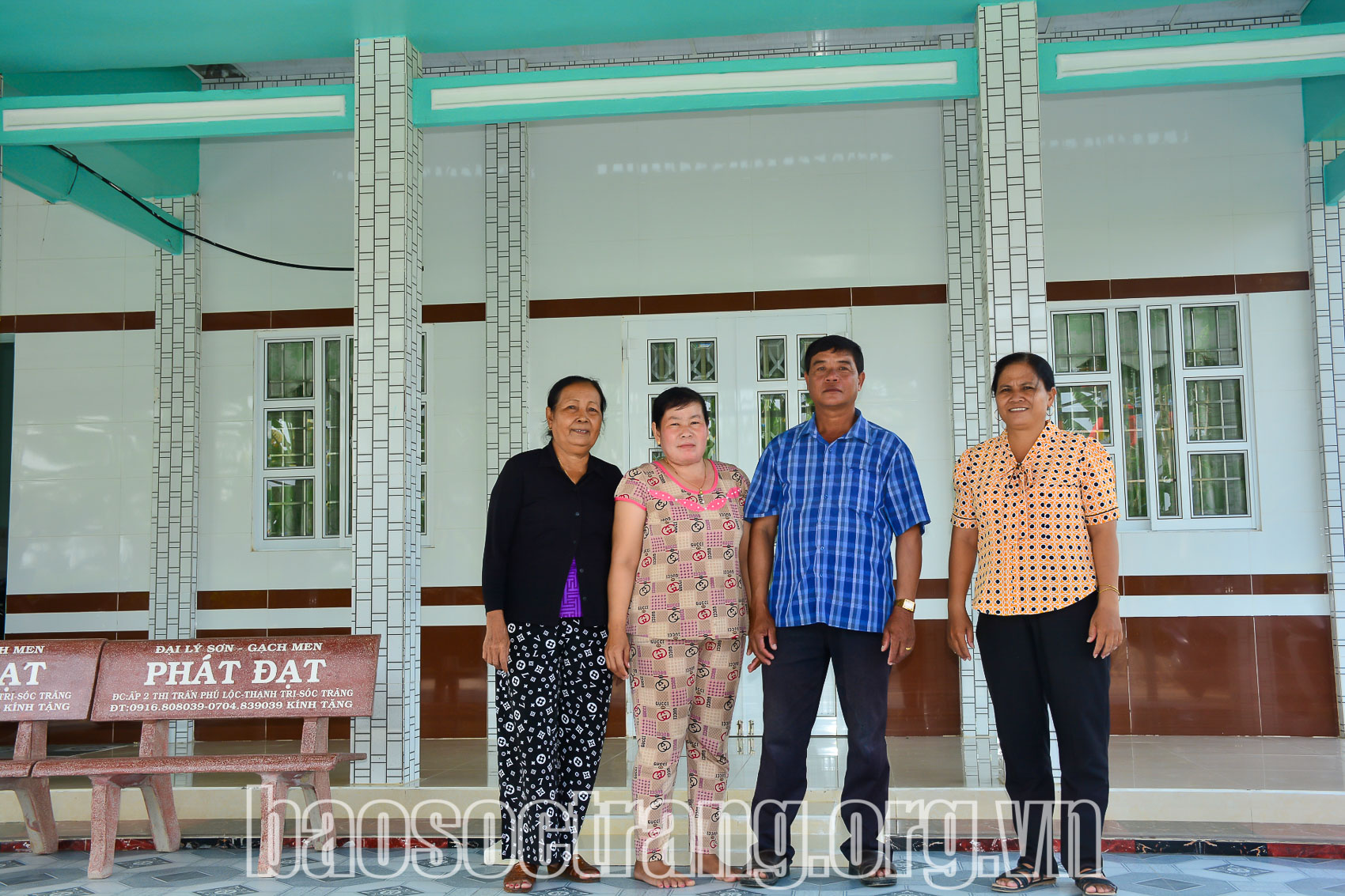 |
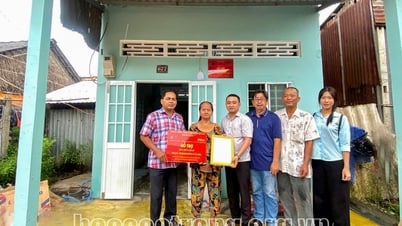
| The sturdy houses have helped people feel secure in their work and production, and stabilize their lives. Photo: HOANG PHUC |
Comrade Son Doi, Chairman of the People's Committee of Tuan Tuc commune, shared: "Poverty reduction policies have significantly changed people's awareness, helping them proactively participate in production, increase income, and improve their lives. We believe that the people's consensus is the key factor for the program to be truly effective."
The commune authorities also played a good bridging role, strengthening the commune-level program management board, assigning officials to be in charge of specific areas, and going door-to-door to listen to and resolve difficulties. Over the past year, there were more than 40 direct communication and dialogue sessions, attracting over 2,100 people – not only to listen but also to offer feedback and propose models suitable to the practical situation.
The vitality of everyday things
One sunny March day, we returned to Trung Hoa hamlet and visited Mrs. Tran Thi Thon's newly built house. In front of the house was a lush green banana grove and vibrant vegetable patches. Mrs. Thon, scattering rice grains for her chickens, smiled and recounted, "In the old days, when it rained, the house leaked everywhere; even inside the mosquito net, we had to wear hats. Now, the house is solidly built, and I've learned how to raise chickens, with someone coming to guide me. The chickens lay eggs regularly, and I sell eggs every day, providing money for my child's schooling."
Her eyes no longer held the gaze of someone struggling to make a living, but the gaze of someone placing faith in the future. That faith didn't come from anywhere far away – it sprouted in the garden behind her house, in the vegetable patch growing day by day, in the quiet but sure changes. Not far from Mrs. Thon's house, Mr. Do Kim Sa Phep is also a testament to the transformation of a farming household's economic life. Mr. Sa Phep shared: "At first, I was afraid I wouldn't be able to do it. But the commune officials came down and guided me attentively, and now raising pigs and growing vegetables is going very well. My neighbors saw it and followed suit."
Besides caring for the people's lives, the commune focuses on enhancing community capacity: organizing technical training classes, agricultural workshops, and activities to preserve ethnic culture. The "Trusted Address" model in the hamlets is also effective, helping to identify and support households in need in a timely manner, and reducing social evils. What is happening is not noisy or flashy, but like an underground stream, it spreads and gradually permeates the lives of the people.
Nevertheless, many challenges remain. Some households are unfamiliar with the new production model and lack matching funds, making sustainability precarious. Areas such as school health, community healthcare, and ethnic cultural education still need more investment. Connecting to product consumption markets remains a major bottleneck.
The commune authorities have proposed that higher levels invest in more schools, health stations, and cultural centers; at the same time, they are promoting the development of characteristic products such as Tan Dinh pineapples, free-range chickens, and freshwater fish, aiming to build OCOP products - both preserving traditional values and increasing income for the people.
The Chairman of the People's Committee of Tuan Tuc Son Doi commune emphasized: "We not only want to eradicate poverty, but also aim to build a strong, self-reliant community, confidently entering a new phase of development."
This is no longer the Tuan Tuc of the "old beaten path," but a Tuan Tuc that is asserting itself and rising day by day. The farmers, with their hands and feet stained with mud, now know how to nurture dreams, how to plan, and how to be proud of their homeland. This transformation is not a distant vision; it is already present – in every glance, every vegetable patch, every classroom, every newly built house.
HOANG PHUC
Source: https://baosoctrang.org.vn/xay-dung-nong-thon-moi/202504/xa-tuan-tuc-chuyen-minh-a7b4d3e/



































































![[Video] Fisheries Patrol Vessel 260 Completes Early Election Activities](https://vphoto.vietnam.vn/thumb/402x226/vietnam/resource/IMAGE/2026/03/06/1772764523414_dung00-46-38-05still010-png.webp)




Comment (0)