

 |
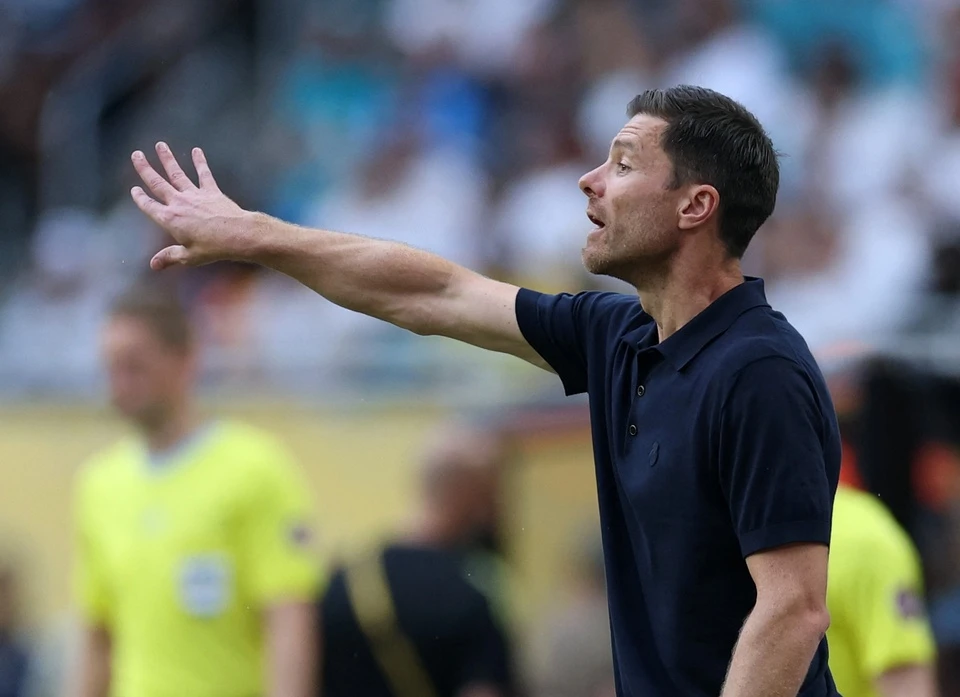
Xabi Alonso is making his tactical mark at Real Madrid. |
For a long time, the right flank has been fertile ground for players capable of penetrating, dribbling, and creating breakthroughs. Real Madrid once had an energetic and sharp Rodrygo in that area. But under Xabi Alonso, everything changed dramatically.
Xabi Alonso's manifesto
Without fanfare or a noisy revolution, through subtle tactical adjustments, Xabi quietly eliminated the role of the classic right winger. That position – once considered an integral part of Real's attacking DNA – has now almost disappeared.
Rodrygo wasn't down on his luck. He wasn't out of favor. But simply, the new system no longer had a place for him.
In the last three matches, the Brazilian player has only appeared for a mere 23 minutes. For Ancelotti, Rodrygo is a crucial piece in the 4-3-3 or 4-4-2 formation, playing on the wing, dribbling, and shooting.
But with Xabi, the structured and systematic style of football completely changed how the right wing operated. There, Rodrygo – despite his qualities – became a superfluous element.
It's noteworthy that Xabi didn't leave the right wing empty. He "redefined" it. And the main character in this endeavor was none other than Trent Alexander-Arnold.
The English defender didn't arrive to run down the wing like a machine, nor to make risky runs. He arrived to become a "playmaker from the wing"—a player who orchestrates the game from the flanks, using his intelligence, vision, and razor-sharp passes.
 |
Valverde is Xabi Alonso's key player right now. |
The match against Juventus in the Round of 16 of the FIFA Club World Cup 2025 is a prime example. Trent's perfect assist to Gonzalo was not a random moment, but the product of a clearly designed tactical structure.
Trent doesn't seek out one-on-one situations. Instead, he expands his influence through passes, initiating attacks and linking up play. In this style of play, football becomes a continuous chain of interconnected links – not individual solos, but a seamless combination.
But for Trent to achieve that, Xabi needed a "guardian." And he had Valverde—a quiet but effective warrior.
Valverde's mark
The Uruguayan player not only pushes forward to support the attack, but also drops back to cover and fill the gaps left by Trent after each attacking move. His constant presence, tireless movement, and sharp tactical thinking make Valverde an irreplaceable link in the team.
In fact, Valverde was also tested in the right wing role during the early days of the "Xabi era." But after Asensio's red card in the match against Pachuca, he was moved back to midfield - and from there, he shone.
The two goals at the Club World Cup are clear evidence of Valverde's influence in his new role. The right wing is no longer dominated by a classic attacking player, but now features a combination of a creative defender and a versatile midfielder.
 |
Xabi Alonso is leading a tactical revolution at Real Madrid. |
This isn't just a tactical adaptation – it's a statement. Xabi Alonso wants to usher Real Madrid into a new era, where system trumps individualism, where tactical efficiency replaces traditional habits. The right wing – a symbol of speed, technique, and risk-taking for many years – now becomes the corridor of precision, discipline, and organization.
But every revolution needs time to prove its worth. Leading Real to the Club World Cup quarter-finals is not a bad start, but to convince Bernabeu – a place that always worships flamboyant and explosive players – Xabi needs more than that. He needs results, titles, and above all, consistency.
The disappearance of a position is not uncommon in modern football. But for a club like Real Madrid – which always values tradition – to bravely remove the right winger from its tactical system is a bold move. And if successful, Xabi Alonso could be remembered not just as a successor, but as a revolutionary.
Source: https://znews.vn/xabi-alonso-lam-dieu-chua-tung-co-o-real-madrid-post1565925.html
![[Photo] The General Secretary, President and his wife begin their state visit to the Philippines.](https://vphoto.vietnam.vn/thumb/1200x675/vietnam/resource/IMAGE/2026/05/31/1780230559452_anh-man-hinh-2026-05-31-luc-19-28-11.png)
![[Photo] Admire the coral "masterpiece" amidst the million-year-old heritage of Dak Lak province.](https://vphoto.vietnam.vn/thumb/1200x675/vietnam/resource/IMAGE/2026/05/31/1780221235105_anh-man-hinh-2026-05-31-luc-16-53-27.png)
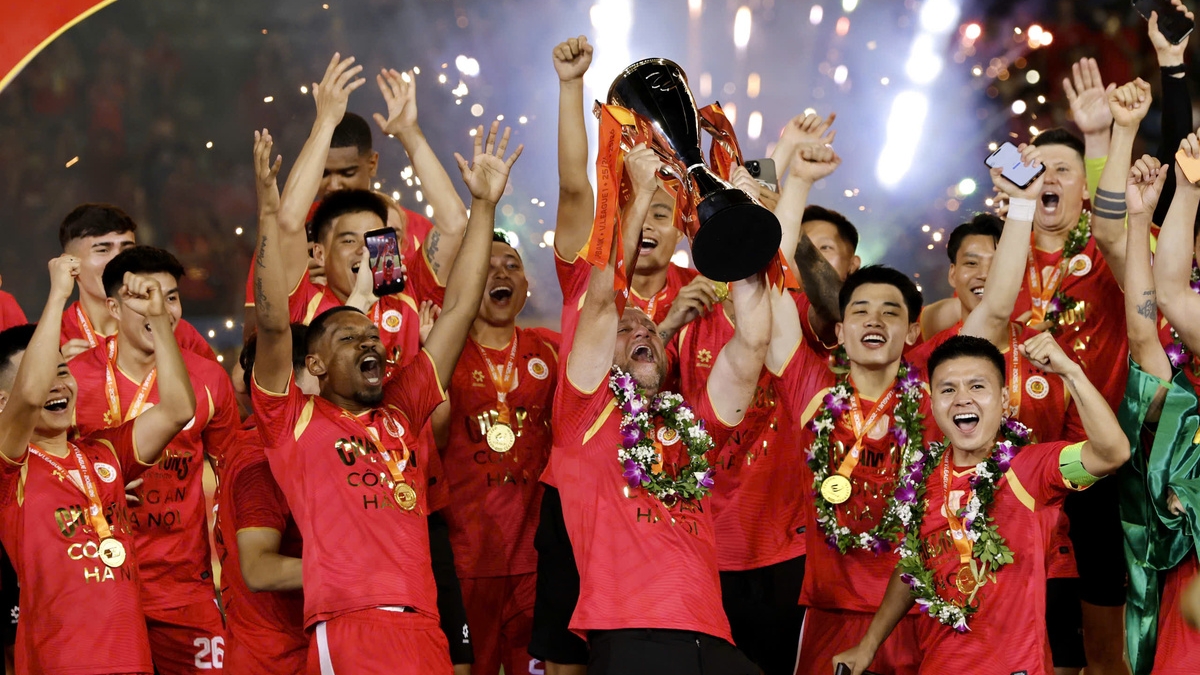
![[Image] Hanoi Police officially crowned champions of V-League 2025/2026](https://vphoto.vietnam.vn/thumb/1200x675/vietnam/resource/IMAGE/2026/05/31/1780244769054_ndo_br_039d561b692be875b13a-jpg.webp)

![[Photo] Solemn bathing ceremony and Buddha procession in Hue](https://vphoto.vietnam.vn/thumb/1200x675/vietnam/resource/IMAGE/2026/05/31/1780228263543_1-jpg.webp)















![[Video] Sunset at Lap An Lagoon – Where the sun sets over the fishing nets](https://vphoto.vietnam.vn/thumb/340x192/vietnam/resource/IMAGE/2026/05/31/1780192137701_beach-landscape-sea-water-nature-grass-745871-pxhere-com.jpeg)











































































Comment (0)