

In a video shared by NASASpaceflight, a large robotic arm can be seen welding the nose cone of a Starship rocket inside the "Starfactory"—the massive manufacturing facility at SpaceX's "Starbase" launch complex in South Texas.
Based on documents from The Launch Pad Network, SpaceX is aiming to conduct its seventh Starship test on January 11th (unless something changes).
This test launch is expected to utilize a new generation of Starship prototypes, known as "Block 2," with the first in this generation being called "Ship 33." It is currently unclear whether the rocket warhead in the video belongs to Ship 33 or another Block 2 prototype.
A SpaceX robot welds the nose section of the Starship spacecraft. (Video: NASASpaceflight)
The new prototype version includes several notable improvements, such as a new front wing design, an upgraded heat shield arrangement, increased fuel capacity, and the ability to provide greater thrust than previous versions, among other changes.
SpaceX is making significant changes to its new generation of rockets to make them capable of reaching the Moon. Therefore, the test launch scheduled for next month will be under more pressure than ever before. According to NASASpaceflight, Ship 33 completed its initial cryogenic testing phase in late October.
However, it remains to be seen whether this prototype can pass the upcoming flight test without damage. In its two previous launches, SpaceX's Starship spacecraft crashed into the ocean after enduring extremely high temperatures that melted metal during re-entry into the atmosphere.
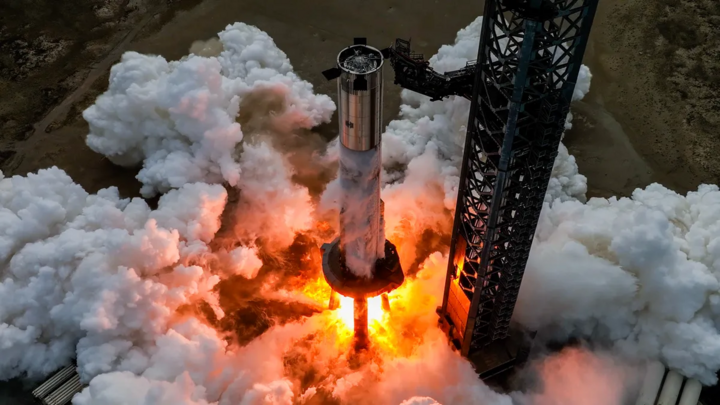
SpaceX conducted a test of in-situ combustion for its Super Heavy booster stage on December 9th. This is a crucial step in testing its propulsion capabilities without requiring the rocket to lift off the launch pad. (Photo: SpaceX)
For SpaceX CEO Elon Musk, the key objective is achieving the ability to relaunch immediately after landing. This is seen as a true test for the highly ambitious heavy-lift rocket platform that NASA still hopes to use for the first human mission back to the Moon since the 1970s.
" The biggest remaining technological challenge for Starship is creating a fully reusable heat shield that can be used immediately. The ability to land, refuel, and relaunch instantly without costly repairs or inspections is the decisive test ," Musk wrote on Twitter last month.
Source
![[Image] National Assembly discusses the implementation of the socio-economic development plan.](https://vphoto.vietnam.vn/thumb/1200x675/vietnam/resource/IMAGE/2026/04/20/1776696707422_ndo_br_img-20260420-185419-jpg.webp)



![[Photo] General Secretary and President To Lam meets with National Assembly delegates from ethnic minorities.](https://vphoto.vietnam.vn/thumb/1200x675/vietnam/resource/IMAGE/2026/04/20/1776696701056_a1-bnd-8331-3342-jpg.webp)








































































Comment (0)