

Specifically, the three sites ranked as special national historical sites in this round include: the Xom Trai Cave and Vanh Village Rock Shelter archaeological sites (Lac Son district, Hoa Binh province); the Vinh Hung archaeological site (Vinh Loi district, Bac Lieu province); and the historical sites of the Truong Dinh Uprising (Go Cong town, Go Cong Dong district and Tan Phu Dong district, Tien Giang province).
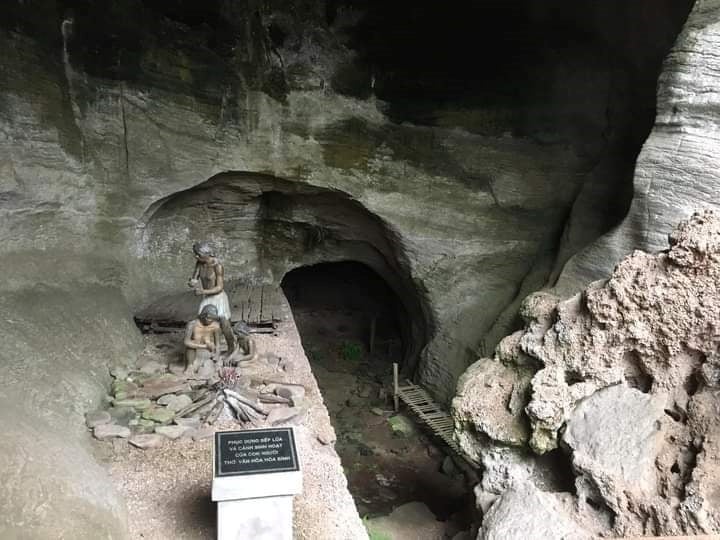
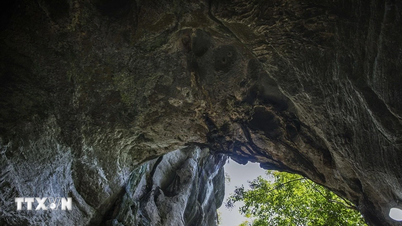
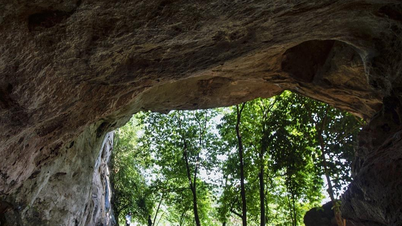
The archaeological sites of Xom Trai Cave and Vanh Village Rock Shelter (Lac Son District, Hoa Binh Province) are typical representatives of Hoa Binh's cultural heritage in Hoa Binh province in particular and Vietnam in general. Xom Trai Cave was discovered in 1975. The cave dates back 21,000 years and was classified as a national archaeological site in 2001. Through numerous investigations, explorations, and excavations, a vast collection of artifacts has been unearthed, including mollusk shells, animal bones and teeth, human remains, pottery, and especially thousands of stone tools. To date, this is the Hoa Binh cultural site with the richest collection of stone tools.
The Vành village rock shelter was discovered and excavated in 1929 by the French female archaeologist M. Colani and was classified as a national archaeological site in 2004. The site retains a portion of its original cultural layer, with many layers of Quaternary sediments remaining on the rock shelter walls. The site has a very thick stratigraphy, containing a complex of stone tools, pottery, and burial sites of the Hoa Binh Culture inhabitants dating from 17,000 to 8,000 years ago...
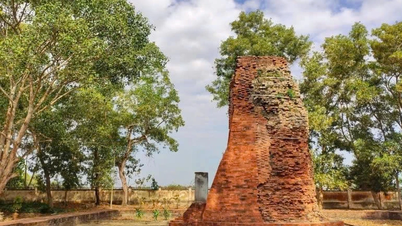
The Vinh Hung archaeological site (Vinh Loi district, Bac Lieu province) is one of the remaining tower structures of the Oc Eo culture in Southern Vietnam. At the Vinh Hung tower, archaeologists have unearthed many extremely valuable artifacts, including numerous stone, bronze, ceramic, and precious stone statues, marking a relatively long period of existence and development (from the 4th to the 13th centuries AD) of the ancient Vinh Hung tower. In 1992, the Ministry of Culture, Information and Sports (now the Ministry of Culture, Sports and Tourism) decided to classify it as a national historical site.
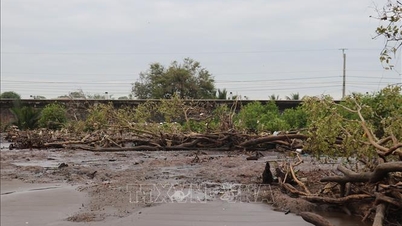
Historical sites related to the Truong Dinh Uprising (Go Cong town, Go Cong Dong district and Tan Phu Dong district, Tien Giang province). The Truong Dinh Temple is located in Hamlet 2, Gia Thuan commune, Go Cong Dong district. The temple is a place of worship for the national hero Truong Dinh, who played a key role in developing the Go Cong region. This is considered his second home (alongside his hometown in Quang Ngai province), where he grew up, established his career, and fought against the French colonial invasion.
To commemorate his meritorious deeds, the people of Go Cong often call him "Truong Cong Dinh" or "Mr. Truong," and in some places in Go Cong, he is called "Mr. Lon." The Truong Dinh Temple in Gia Thuan commune is a national-level historical site, along with the Ao Dinh and Dam La Toi Troi sites, collectively known as the Truong Dinh Uprising sites: Truong Dinh Temple, Dam La Toi Troi, and Ao Dinh.
Thus, after the 15th ranking, Vietnam has a total of 133 Special National Monuments. According to the Decision, the protected areas of the monuments are determined according to the Minutes and Maps of the protected areas in the dossier.
The Deputy Prime Minister assigned the Minister of Culture, Sports and Tourism and the Chairpersons of the People's Committees at all levels where the ranked relics are located, within their respective scopes, duties, and powers, to carry out state management of the relics in accordance with the law on cultural heritage.
Source












































































Comment (0)