

The key is transparency.
A field survey conducted by reporters from the Industry and Trade Newspaper on November 25th in several fashion , accessories, and cosmetics streets in Hanoi, such as Chua Boc, Ba Trieu, and Bach Mai, revealed that Black Friday 2025 saw a significant change in the form of promotions. Instead of the widespread deep discounts of 50-70% as in previous years, most stores opted for a more flexible strategy, targeting current consumer needs and behavior.
Most notably, the combo sales model is popular. Many fashion stores offer combo deals like "2 items for 20% off, 3 items for 30% off," or set discounts to increase the average order value. In some stores, "buy one get one free" or "buy one get two free" promotions become major attractions during sale days.
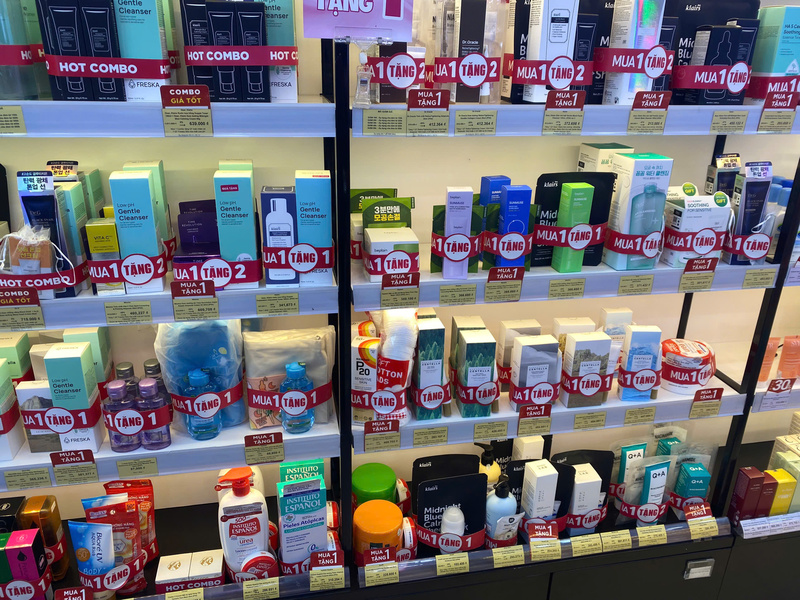
"Buy one, get one free" or "buy one, get two free" promotions become a major draw for customers on sale days.
In particular, the cosmetics category saw more significant discounts. Items were reduced by an average of 20-40%, with 'near-expiry' items discounted by up to 70%. Many stores even set aside a separate area for near-expiry items and displayed signs indicating deep discounts for easy identification. According to an employee at SammiShop cosmetics store on Chua Boc Street: " This is a way to 'clear inventory transparently.' Items nearing their expiry date are heavily discounted, customers are clearly informed of the reasons, and the advantages and disadvantages are explained. Because of this transparency, customers trust us and buy more."
In addition, many stores list prices before and after the discount. They also offer complimentary services such as free cleaning and sole warranty for footwear, and free eye examinations and lifetime adjustments for eyewear. "A moderate but clear discount builds customer trust; a deep discount followed by a price increase won't appeal to customers," shared an employee at Daisy Eyewear.
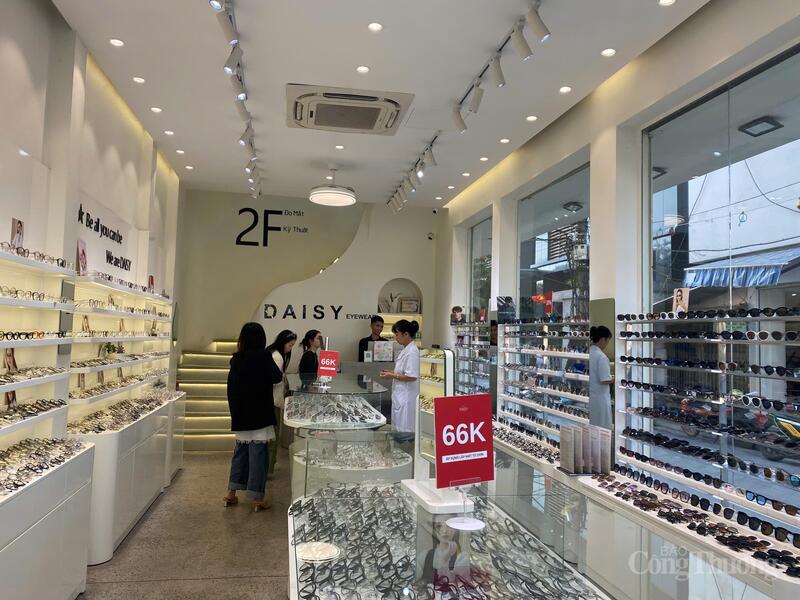
Listing both the price before and after the discount makes pricing transparent and gives customers peace of mind.
In the fashion and footwear category, discounts are usually only 10-20%, another common sale mechanism is fixed prices at shock-price levels of 39,000 - 49,000 - 59,000 VND. Ms. Tra My, a 26-year-old female customer shopping at the Atino fashion store, shared: “ I find this fixed price system easier to buy, less likely to encounter items with inflated prices followed by discounts. Just looking at the price tells you whether you can buy it or not .” Especially, products with minor defects, sample items, or leftover stock are discounted by 50-70%, grouped together at a uniform price, allowing customers to choose quickly and creating a feeling of a “great deal” without having to worry about the percentage discount.
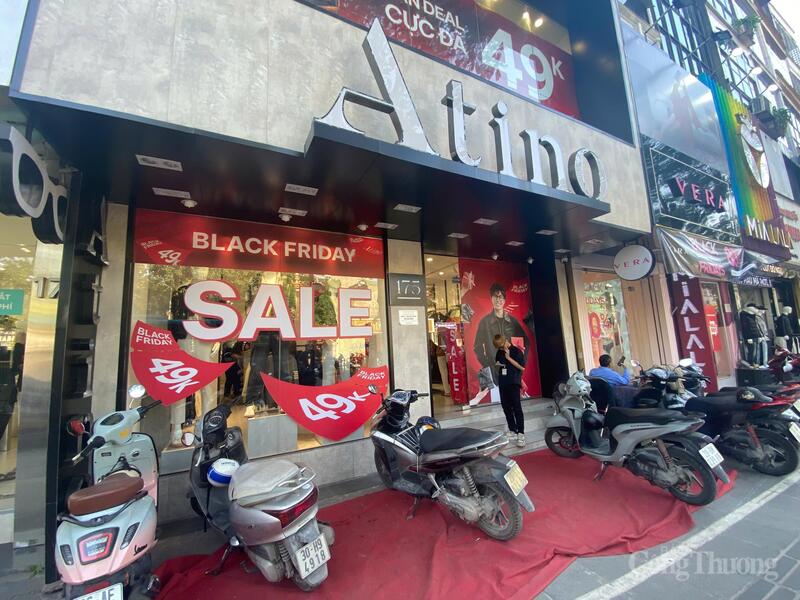
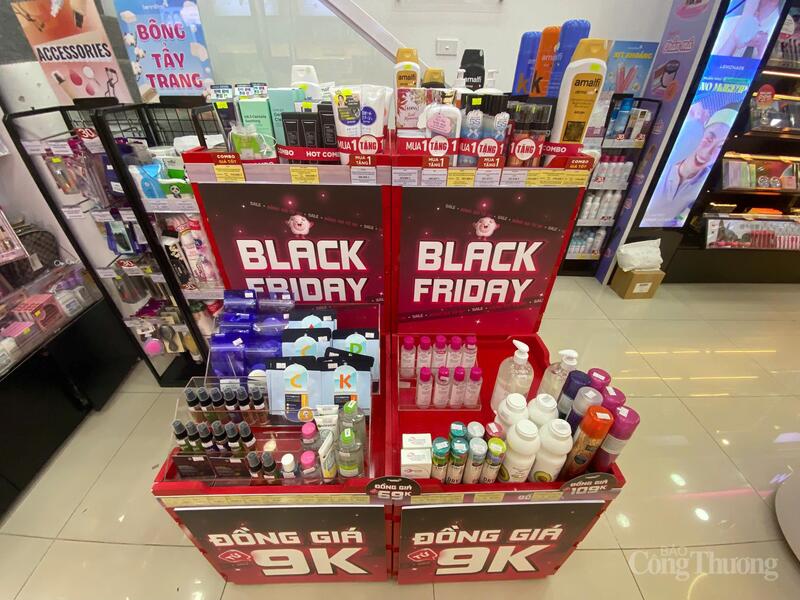
Items are discounted at fixed prices of 9,000 - 39,000 - 59,000 VND.
Based on observations, the highlight of this year's sale season is its transparency. Although the shopping atmosphere wasn't as frenzied as during the Black Friday boom a few years ago, store staff noted that the number of customers this year was still 2-3 times higher than usual. Specifically, customer traffic wasn't concentrated during the day, but rather in the evening from 6 PM to 9 PM, a time when workers take advantage of the time after work.
Consumer behavior has also changed quite noticeably; customers are less inclined to buy based on emotion and more focused on checking quality, origin, and especially comparing prices online and offline. It's not uncommon to see customers trying on shoes while simultaneously checking prices on their phones on e-commerce platforms.
Customers no longer buy based on emotion.
A notable trend in this year's survey is the on-the-spot price comparison among customers in most stores. Customers are no longer buying impulsively based on deep discounts; instead, they check prices on e-commerce platforms, official websites, and even price history to see if the item has ever been genuinely discounted. This trend is strongest among younger customers aged 18-35, who are already accustomed to hunting for discount codes, checking shipping costs, and reading online reviews before making a purchase.
However, the trend of online shopping, once dominated by low prices, has clearly changed this Black Friday. Increased platform fees, including platform fees, shipping fees, order processing fees, and transaction fees, have made many products no longer significantly cheaper than buying them in traditional stores. Linh Trang, 27, who was browsing cosmetics on Hang Bong Street, said: “ I compared the same lipstick; there was a discount on the online platform, but when I went to the store, it was almost the same price as buying it in person. Buying in-store also allows you to try the colors, so I decided to buy it right away .”

Customers compare prices online and offline right at the store.
Surveys show that in many cases, online and offline prices are almost the same. A staff member at Bee Shoes store on Chua Boc Street shared: “ Previously, customers would try on shoes offline and then buy online because it was cheaper, but now online platforms charge various fees, so the price difference is negligible. Many customers return to buy directly because they can try on sizes, check the soles, and feel the quality of the shoes to be sure .”
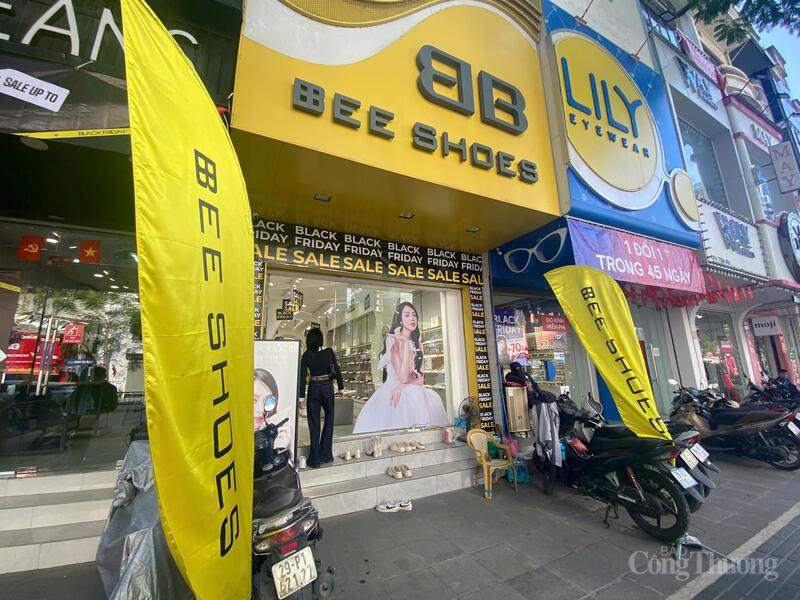
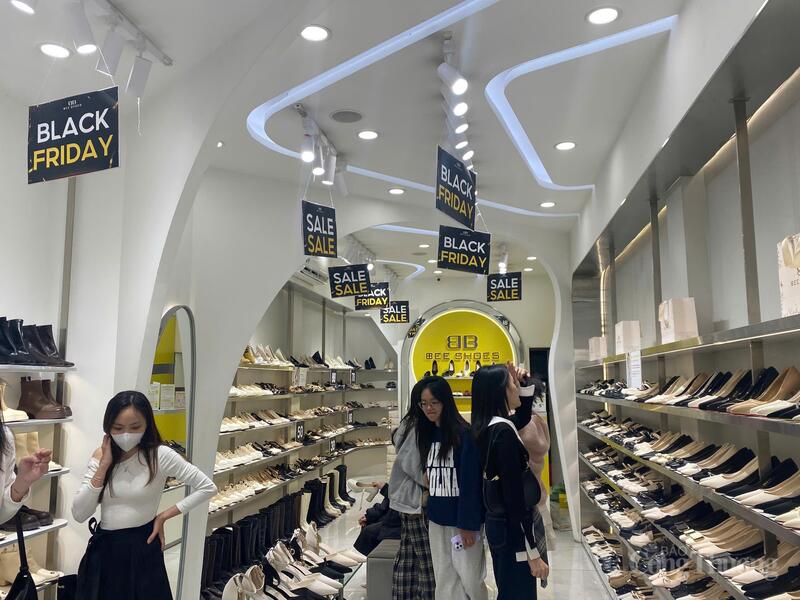
Customers shopping at the store during Black Friday.
This shift is particularly evident in product categories requiring hands-on experience, such as cosmetics, shoes, and eyewear. Consumers believe that trying on lipstick colors, examining cream textures, trying on glasses, or trying on shoes provides much greater peace of mind than simply viewing images online.
Conversely, online shopping remains attractive for small household items, phone accessories, or products under 200,000 VND, where a price difference of just a few thousand VND is enough to make customers choose to order online for convenience. However, even this group of customers admits that the price difference between online and offline is no longer as significant as it was a few years ago.
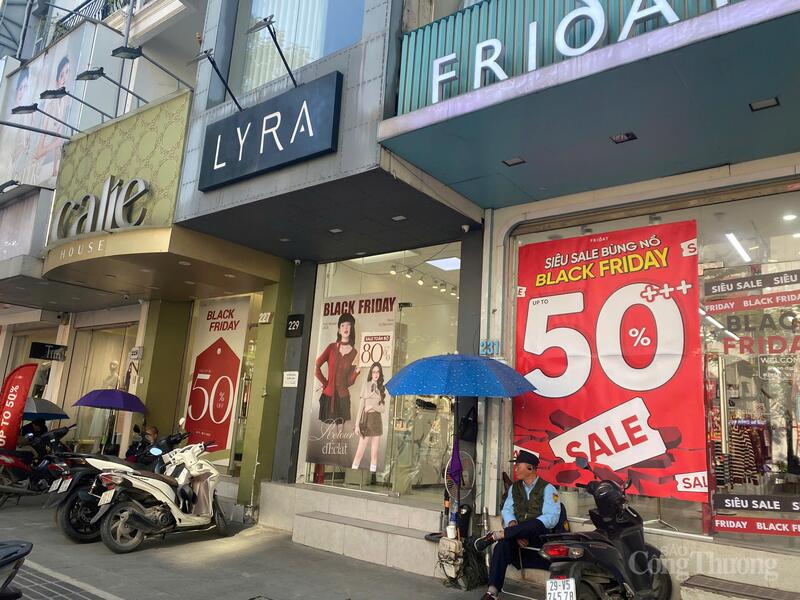
Stores enthusiastically celebrate Black Friday.
This indicates that Black Friday in Vietnam is entering a more balanced phase: shoppers are becoming smarter, and businesses are forced to sell more transparently to retain customers, whether online or offline.
Observations from this year's market show that Black Friday 2025 in Vietnam has entered a new phase: less noisy but more substantial. Discounts are no longer as overwhelming as before, but are more transparent and reasonable. Businesses are shifting from competing on price to competing on service quality, while consumers are increasingly discerning, buying based on real needs rather than being stimulated by "50-70% off" figures.
Source: https://congthuong.vn/xu-huong-mua-sam-mua-black-friday-thay-doi-giam-soc-co-con-hap-dan-432066.html
![[Photo] General Secretary and President To Lam presides over a meeting on preparations for the review of one year of operation of the three-tiered government system.](https://vphoto.vietnam.vn/thumb/1200x675/vietnam/resource/IMAGE/2026/06/02/1780391821195_a1-bnd-4595-9717-jpg.webp)


































































































Comment (0)