

Here are some of the best forms of exercise for people with fatty liver disease:
Fast walking
Brisk walking is one of the simplest yet most effective ways to reduce liver fat. This exercise increases energy expenditure and promotes the oxidation of fatty acids in the muscles, thereby reducing the transport of fat to the liver, according to the health website Verywell Health (USA).
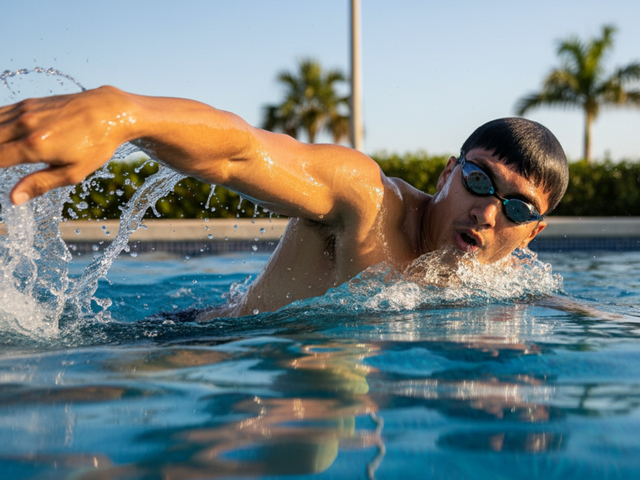
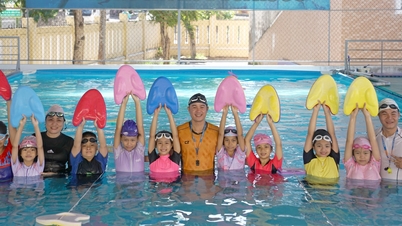
Swimming increases energy metabolism, reduces visceral fat, and improves insulin sensitivity.
PHOTO: AI
A clinical trial published in the journal JAMA Internal Medicine showed that moderate to vigorous aerobic exercise, including brisk walking, can reduce liver fat by about 35-40%. This effect was still present even with weight loss of only 3-6%.
In addition, ALT and AST liver enzyme levels also improve significantly after 8-12 weeks of exercise. For beginners, just 30 minutes of brisk walking each day, 5 days a week, can yield noticeable benefits.
Cycling
Cycling is another suitable option for those who want to build endurance without putting too much stress on their joints. Numerous studies show that moderate-intensity continuous cycling or high-intensity interval cycling can reduce liver fat, improve liver function, and enhance insulin sensitivity.
Cycling on a stationary or outdoor bike is both good, just maintain 20-60 minutes per session, 3-5 times per week. Alternating between high and low intensity workouts also helps increase effectiveness.
Swimming
Swimming is a full-body exercise that both increases energy expenditure and causes minimal joint damage. Although there haven't been many specific studies on swimming and fatty liver disease, the impact of swimming on the body's mechanisms is similar to other endurance exercises such as brisk walking and cycling.
Specifically, swimming increases energy metabolism, reduces visceral fat, and improves insulin sensitivity. Swimming allows the body to maintain moderate to high-intensity activity for extended periods, while supporting the circulatory and respiratory systems. Beginners can start with 10-15 minutes at a time and gradually increase to 20-30 minutes. Varying swimming styles such as breaststroke, freestyle, or backstroke not only diversifies the exercise but also activates different muscle groups, increasing fat-burning efficiency.
Strength training
Strength training is an essential part of any exercise regimen for people with fatty liver disease. Unlike endurance training, strength training doesn't consume as much energy during exercise but increases muscle mass, thereby boosting the basal metabolic rate even at rest.
Several studies on humans have shown that consistent strength training for 20 weeks or more significantly improves ALT and AST liver enzymes. Combining both aerobic and strength training further enhances the effectiveness in improving fatty liver disease. Patients can exercise 2-3 times per week, focusing on large muscle groups such as the legs, back, chest, and shoulders, according to Verywell Health .
Source: https://thanhnien.vn/4-bai-tap-tot-nhat-giup-cai-thien-gan-nhiem-mo-185251003133129962.htm



![[Photo] General Secretary and President To Lam and the President of the Philippines hold talks.](https://vphoto.vietnam.vn/thumb/1200x675/vietnam/resource/IMAGE/2026/06/01/1780286997787_anh-man-hinh-2026-06-01-luc-11-09-43.png)
































































































Comment (0)