

Don't rush to start working on the test as soon as you receive the paper.
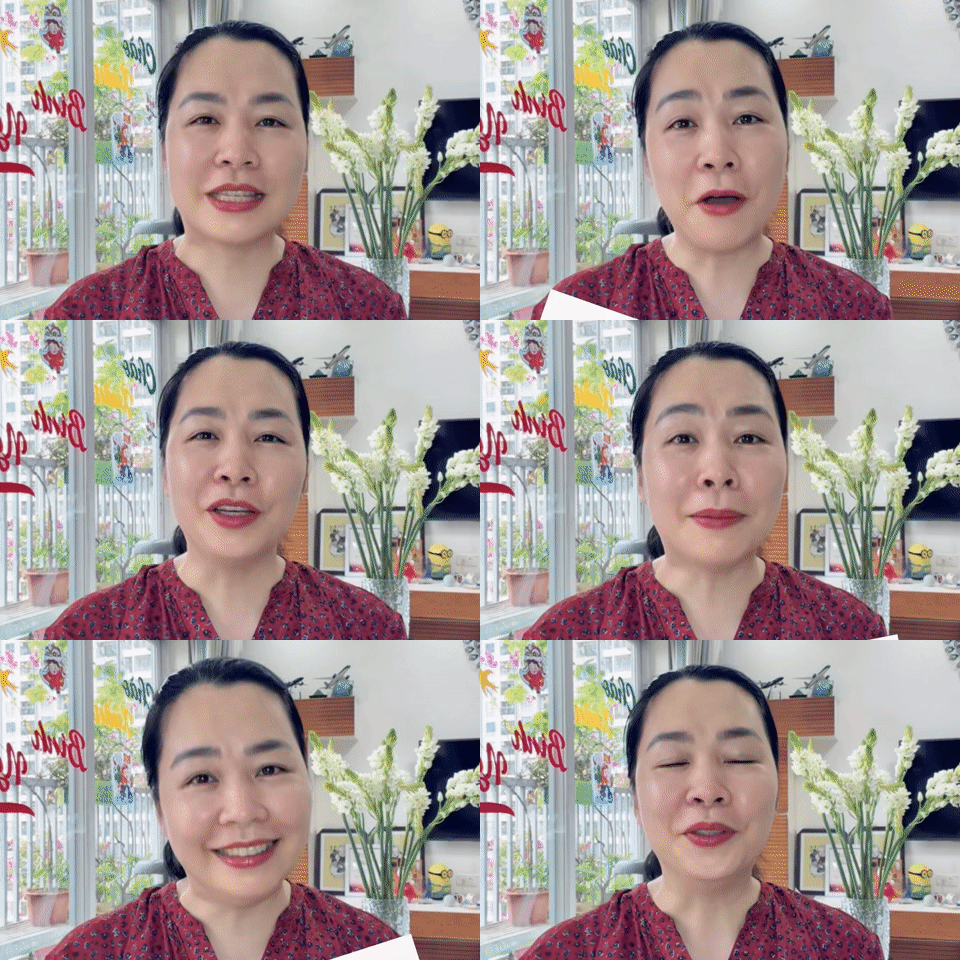
Sharing her exam-taking strategy, Ms. Tran Minh Tam, an English teacher in Hanoi , said that the first 5 minutes in the exam room are crucial. "The truth in the exam room is that those who do best aren't necessarily the smartest students; they are often the ones with the best strategy and psychological control skills right from the first 5 minutes," Ms. Tam shared.
According to her, a common mistake many students make is immediately diving into the test as soon as they receive it, fearing they will run out of time. This makes them prone to missing facts, misunderstanding the instructions, or getting stuck on difficult questions right from the start.

Ms. Tam advises candidates to spend the first 5 minutes scanning the entire exam paper. This step helps students visualize the exam structure, identify easy and difficult questions, and estimate the appropriate time for each section.
"Just like when traveling long distances, we should look at a map beforehand," she said.
According to the teacher, this short period of time is crucial because it's when the brain switches from a state of anxiety to a state of focus. If used correctly, students will get into the rhythm of the test faster, work more coherently, and reduce errors caused by rushing.
Divide the questions into two groups to maintain a stable mindset.
After scanning the exam paper, according to Ms. Tam, the next thing students should do is categorize the questions into two groups.
The first group consists of "surefire" questions, where you know how to answer them immediately. Ms. Tam believes these are the questions that should be prioritized to build a foundation and create a sense of confidence.
"When students successfully solve familiar questions in a row, their brains feel like they are in control of the situation. That's very important in the exam room," she shared.
The second group consists of difficult questions that require more time to think about. For these questions, students should mark them and come back to them later instead of trying to solve them right away.
Many students lose their composure simply because they spend too much time on a difficult question at the beginning of the exam. When stuck, their minds easily become disordered, leading to feelings of panic and affecting the entire subsequent part of the exam.
Meanwhile, students with a strategic approach often choose a "do it right the first time" approach. They prioritize completing the parts they can handle well first to maintain a steady pace and a stable mindset.
The female teacher said that this is not just about test-taking skills, but also about mastering emotions in a high-pressure environment.
"Often, the outcome doesn't depend on which student studies more, but on which student is calmer," she observed.
Therefore, in addition to reviewing knowledge, students also need to develop the habit of allocating time, scanning exam questions, and determining the order of answering them when practicing at home. When this skill becomes a reflex, they will be much more confident in the actual exam.
"Sometimes, just the first five minutes can change the outcome of an entire exam," she emphasized.
Source: https://vietnamnet.vn/5-phut-vang-trong-phong-thi-giup-thi-sinh-dat-ket-qua-cao-2520061.html


![[Photo] Standing Committee member of the Party Central Committee Tran Cam Tu working with the Central Inspection Committee](https://vphoto.vietnam.vn/thumb/1200x675/vietnam/resource/IMAGE/2026/05/28/1779969579668_ndo_br_bnd-2495-jpg.webp)










































































































Comment (0)