

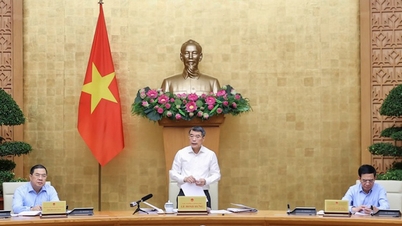
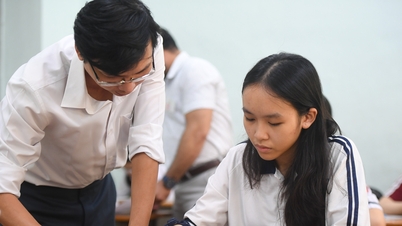
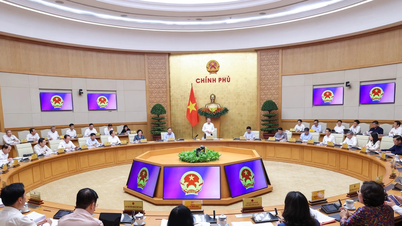
According to information from the Center for Media and Events, Prime Minister Le Minh Hung worked with leaders of the Ministry of Education and Training on the situation regarding the implementation of tasks in the past period and the direction and key tasks for the coming period.
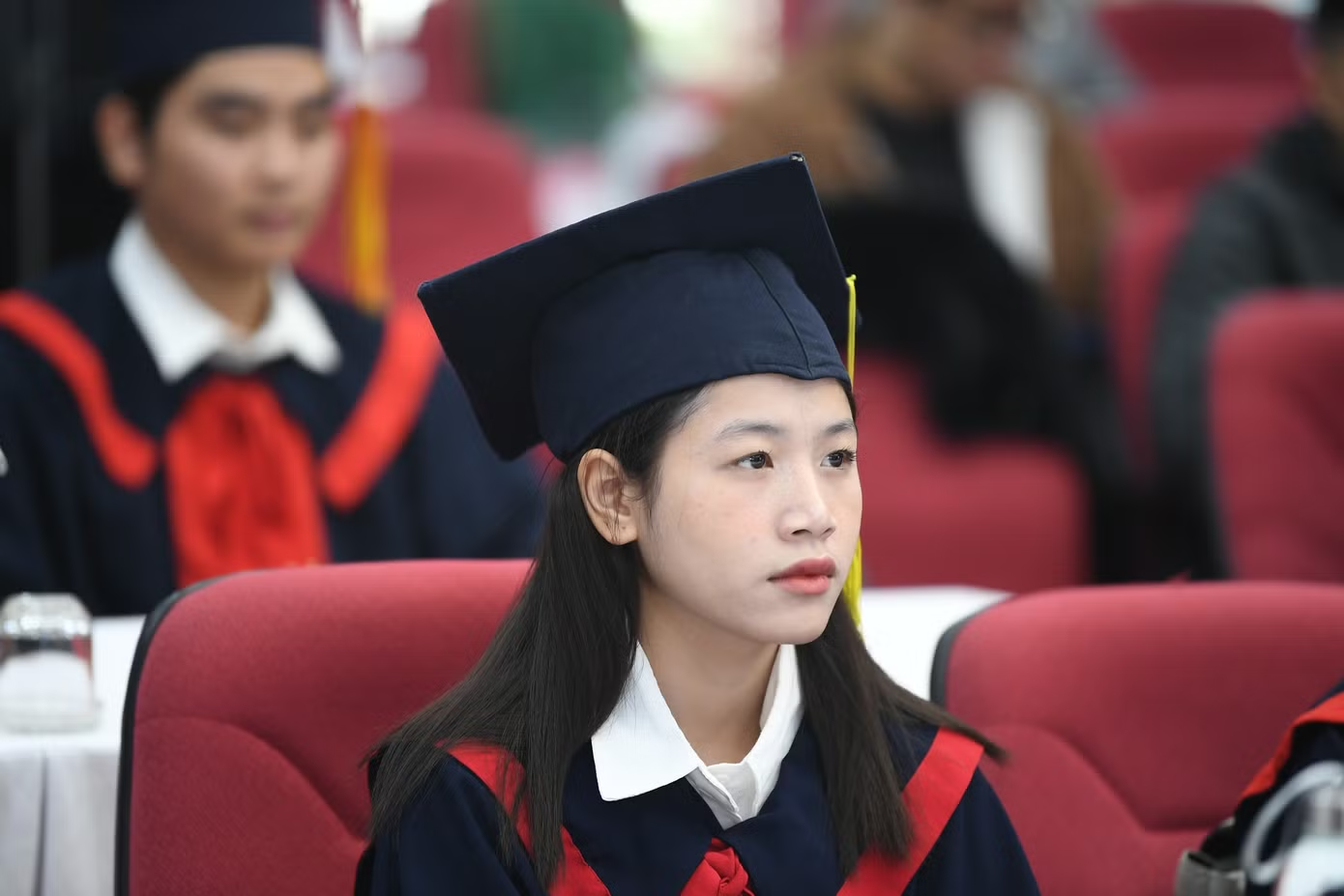
Prime Minister Le Minh Hung has issued specific requirements for restructuring the education sector. The Prime Minister emphasized the principle of "one task should be assigned to only one lead agency," and also requested a review and dissolution of substandard training institutions to streamline the system and improve management efficiency.
In particular, the Prime Minister directed the education sector to transform itself by closely integrating with strategic technologies such as semiconductor chips, artificial intelligence (AI), and cloud computing through a "State - School - Enterprise" cooperation model.
"Unleashing" authority for ministers and local governments.
In response to that urgent request, on April 29, the Government issued Resolution No. 23/2026/NQ-CP on reducing, decentralizing, simplifying administrative procedures and cutting business conditions under the management of the Ministry of Education and Training.
According to the Resolution, a number of powers previously belonging to the Prime Minister have now been directly delegated to the Minister of Education and Training, including:
Decisions on establishing or permitting the establishment of branches of higher education institutions (both public and private).
The authority to dissolve higher education institutions and their affiliated branches is empowered to do so.
This change is considered a breakthrough compared to the old regulations in Decree 46/2017 on investment and operation conditions in the education sector, helping to reduce intermediate layers and accelerate the implementation of education investment projects.
Eliminate the "request and grant" mechanism after suspension.
Another notable new feature is the simplification of procedures for educational institutions after their suspension. According to the new regulations, instead of waiting for the management agency to issue a document "allowing" them to resume operations, schools will: Organize their own resumption of activities after fully addressing the causes of the suspension; bear full legal responsibility for meeting the required conditions; and only need to notify the authorities in writing and publicly on the school's website five working days in advance.
The regulatory body will shift from pre-inspection to post-inspection. The Ministry of Education and Training will play a supervisory role, inspecting and strictly penalizing any facility found to still not meet the requirements but has resumed operations without authorization.
Thus, Resolution 23 is not simply about reducing paperwork, but about a shift in management thinking, moving from "control" to "service and supervision." The strong decentralization to local authorities and increased autonomy for schools are expected to create a more open investment environment, attract social resources, and help the education sector be more flexible in responding to the demands of the digital age labor market.
Source: https://tienphong.vn/ai-co-quyen-giai-the-truong-dai-hoc-post1840021.tpo

![[Photo] Solemn bathing ceremony and Buddha procession in Hue](https://vphoto.vietnam.vn/thumb/1200x675/vietnam/resource/IMAGE/2026/05/31/1780228263543_1-jpg.webp)
![[Photo] The General Secretary, President and his wife begin their state visit to the Philippines.](https://vphoto.vietnam.vn/thumb/1200x675/vietnam/resource/IMAGE/2026/05/31/1780230559452_anh-man-hinh-2026-05-31-luc-19-28-11.png)
![[Photo] Admire the coral "masterpiece" amidst the million-year-old heritage of Dak Lak province.](https://vphoto.vietnam.vn/thumb/1200x675/vietnam/resource/IMAGE/2026/05/31/1780221235105_anh-man-hinh-2026-05-31-luc-16-53-27.png)















![[Video] Sunset at Lap An Lagoon – Where the sun sets over the fishing nets](https://vphoto.vietnam.vn/thumb/340x192/vietnam/resource/IMAGE/2026/05/31/1780192137701_beach-landscape-sea-water-nature-grass-745871-pxhere-com.jpeg)






























![[Photo] Admire the coral "masterpiece" amidst the million-year-old heritage of Dak Lak province.](https://vphoto.vietnam.vn/thumb/402x226/vietnam/resource/IMAGE/2026/05/31/1780221235105_anh-man-hinh-2026-05-31-luc-16-53-27.png)





























Comment (0)