

Since 2020, geopolitical tensions with China have been escalating, prompting India to strive to reduce its dependence on the world's second-largest economy .
The New Delhi government has imposed restrictions on Chinese investment , blocked Chinese companies in sensitive sectors such as electricity and railways, and banned hundreds of Chinese-origin mobile apps, including the popular TikTok.
Despite these efforts, trade between the two countries continues to surge. According to Chinese customs data, in 2022, bilateral trade between India and China reached a record high of $135.98 billion, of which more than $100 billion was imports of goods from China.
In January, Indian Prime Minister Narendra Modi convened leaders from 18 ministries to discuss ideas for reducing imports from China.

TikTok has been banned in India since June 2020. In March, the company closed its telemarketing support center in India, dashing hopes of a return to the market. Photo: NPR
Key role
However, the South Asian nation's efforts may not yield the expected results, as a recent report shows that Chinese goods are not only important in various Indian manufacturing sectors, but in some cases are even favored by Indian manufacturers.
Research by the Indian Institute of Foreign Trade (IIFT) shows that India's production and exports in key sectors, including inorganic chemicals, pharmaceuticals, iron, and steel, rely heavily on imports from China.
According to IIFT, among the 32 product categories imported from China, one-third are classified as the cheapest. 70% also have cheaper, but still more popular, alternatives.
“There is a misconception that imports from China are preferred simply because they are cheaper. Many domestic buyers say they prefer the quality of products from China over those manufactured elsewhere,” shared Professor Sunitha Raju at IIFT.
According to Ms. Raju, the quality of goods supplied by Chinese suppliers varies widely, depending on the price the buyer is willing to pay.
Furthermore, China is the sole supplier for 16 products, making it impossible for domestic manufacturers to replace them in the supply chain.
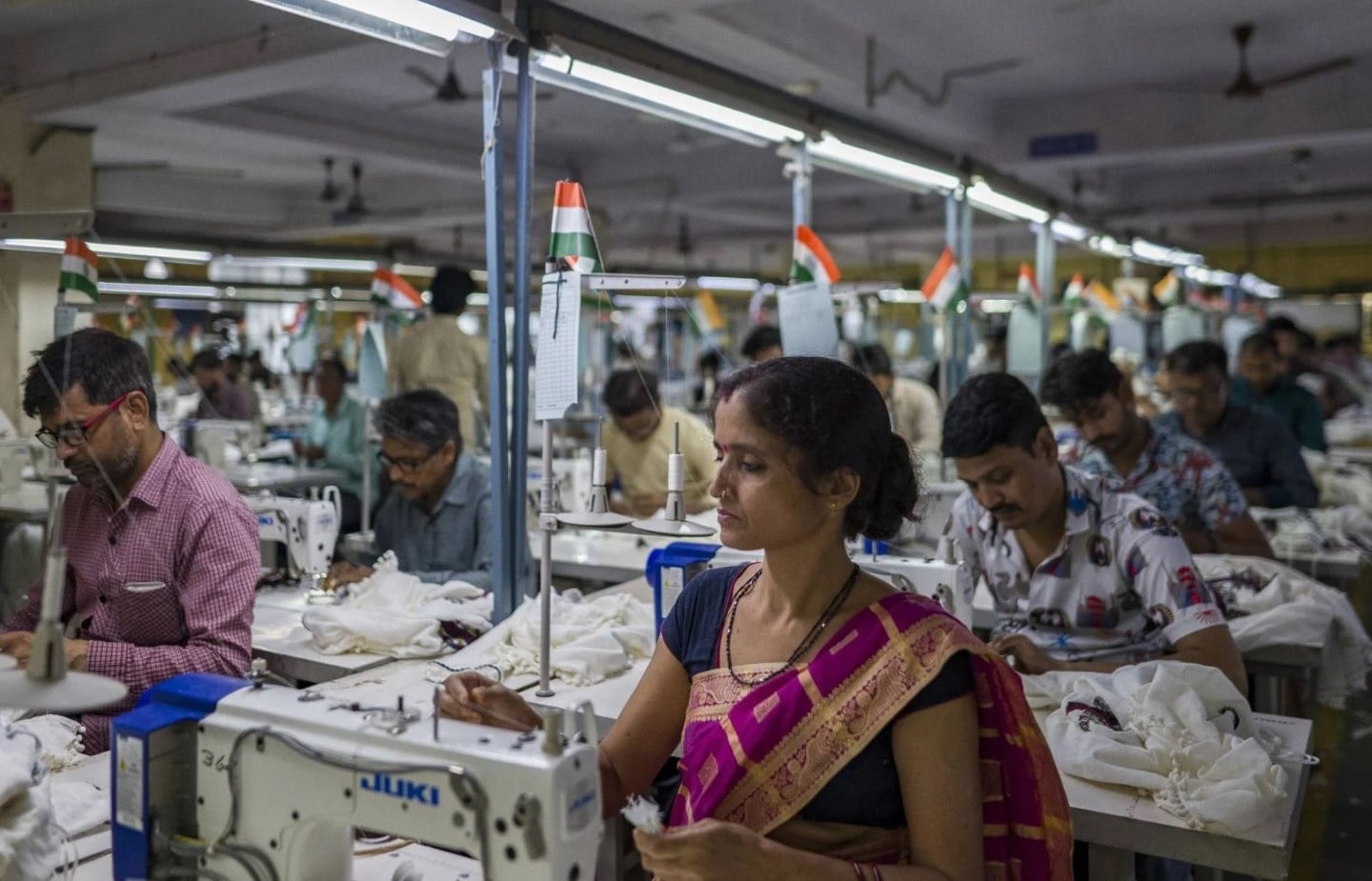
Workers at a garment factory in India. IIFT research shows that one-third of the 32 product categories imported from China are the cheapest on the market. Photo: SCMP/Bloomberg
There are sectors, such as pharmaceuticals, that are so dependent on imported goods that they cannot sustain themselves without them.
"More than 60% of the raw materials for the pharmaceutical industry come from China, so any delay in imports could disrupt production," said Naresh Gupta, president of the Indochina Chamber of Commerce.
According to experts, this is also the story of India's telecommunications industry. This sector is heavily dependent on imports from China.
"When we manufacture telecommunications equipment like phones in India, most of the components come from China. In other words, we simply assemble the phones in India rather than actually manufacturing them," said a senior member of the Indian telecommunications industry.
Ms. Raju also agreed with this statement. “During our research, we discovered that many manufacturers are actually just intermediaries. They simply import goods from other countries, including China, and then supply them to domestic customers,” she said.
Technology is the key.
IIFT's research also shows that most of India's imports from China are products with medium to low technology.
"While China exports many high-tech products to various parts of the world, it only exports low- and medium-tech products to India. This demonstrates India's extremely weak technological capabilities," Raju stated.
"If we want to stop imports from China, we need to have an alternative source of imports, or the ability to produce domestically. If we don't have either of those, what can we do?"
According to Ms. Raju, the "India Self-Reliance" strategy will not be effective unless domestic manufacturing is boosted with high-tech products. In that case, increased imports would no longer be a concern because it would mean increased exports as well.
Ms. Raju, Mr. Gupta, and many other experts argue that the Indian government needs to shift its priorities from an inward-looking self-reliance campaign to an export-oriented manufacturing sector.
According to IIFT research, the increase in imports has led to a corresponding increase in output of Indian industries, with the exception of iron and steel.
Therefore, the agency recommends that the Indian government lower trade barriers and encourage imports to boost domestic production capacity. This approach would promote manufacturing growth and create more job opportunities, according to IIFT.
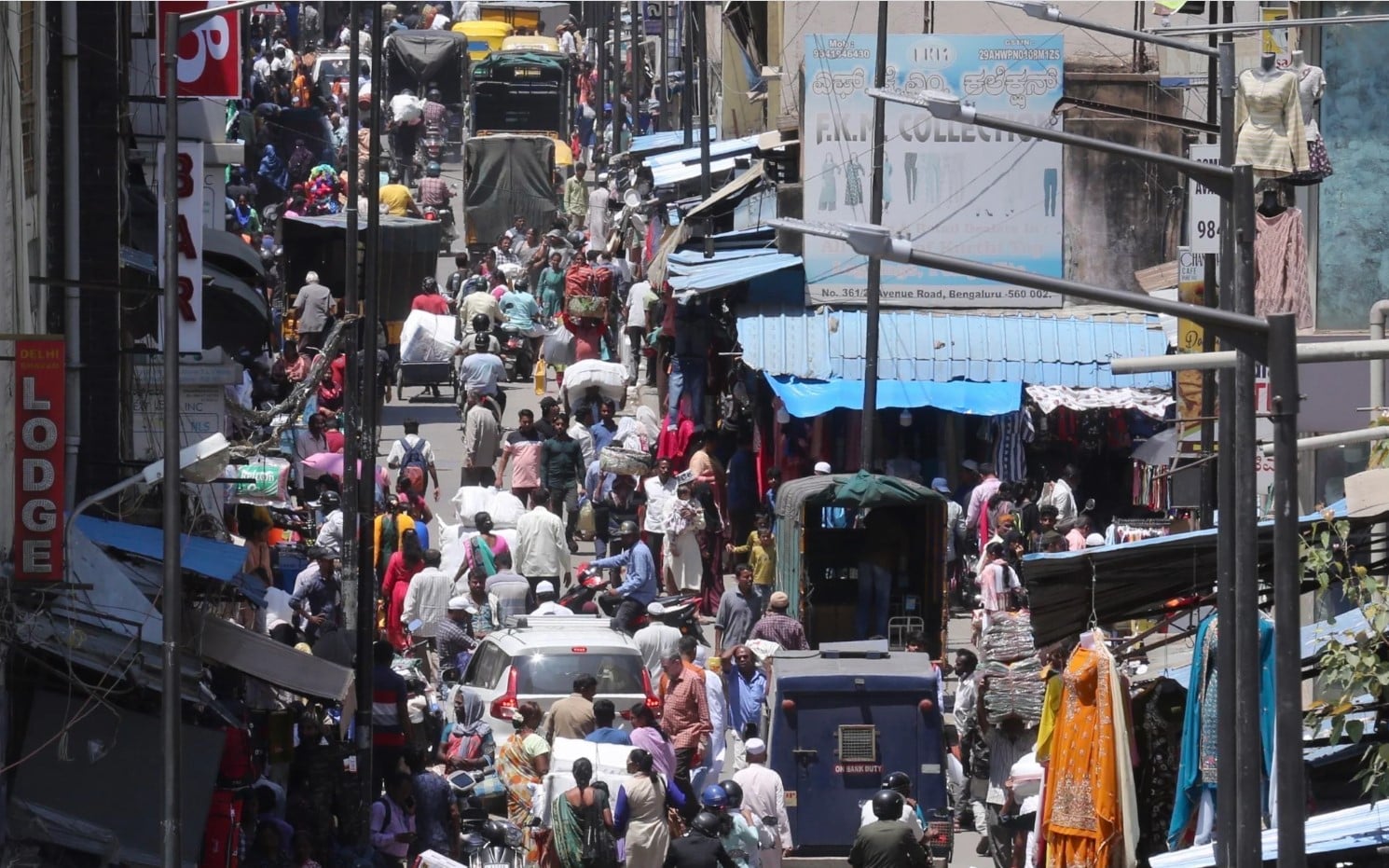
The majority of goods India imports from China have a medium to low technological content. Photo: SCMP
Meanwhile, Gupta recommended that the country needs to create more favorable conditions for industries, such as providing cheaper energy.
Prime Minister Modi's policies were also suggested for review. "India focuses on the domestic market, while they need to invest more in research and development and innovation," Raju proposed.
According to Raju, the Indian government should also connect micro, small, and medium-sized enterprises and encourage and support them to boost production in the domestic market instead of focusing on attracting large foreign companies.
The latest IIFT study could prompt President Modi's administration to reconsider cutting Chinese imports, as New Delhi's dependence on Beijing is undeniable and unlikely to change anytime soon.
Furthermore, reducing imports or restricting Chinese investment would harm India even more, as Chinese exports and investments in India account for only a very small percentage of India's global exports and investments .
Nguyen Tuyet (Based on SCMP, NBR, Yahoo!News)
Source

![[Image] Hanoi Police officially crowned champions of V-League 2025/2026](https://vphoto.vietnam.vn/thumb/1200x675/vietnam/resource/IMAGE/2026/05/31/1780244769054_ndo_br_039d561b692be875b13a-jpg.webp)
![[Photo] The General Secretary, President and his wife begin their state visit to the Philippines.](https://vphoto.vietnam.vn/thumb/1200x675/vietnam/resource/IMAGE/2026/05/31/1780230559452_anh-man-hinh-2026-05-31-luc-19-28-11.png)












![[Video] Sunset at Lap An Lagoon – Where the sun sets over the fishing nets](https://vphoto.vietnam.vn/thumb/340x192/vietnam/resource/IMAGE/2026/05/31/1780192137701_beach-landscape-sea-water-nature-grass-745871-pxhere-com.jpeg)



![[Photo] Admire the coral "masterpiece" amidst the million-year-old heritage of Dak Lak province.](https://vphoto.vietnam.vn/thumb/1200x675/vietnam/resource/IMAGE/2026/05/31/1780221235105_anh-man-hinh-2026-05-31-luc-16-53-27.png)

![[Photo] Solemn bathing ceremony and Buddha procession in Hue](https://vphoto.vietnam.vn/thumb/1200x675/vietnam/resource/IMAGE/2026/05/31/1780228263543_1-jpg.webp)






























































Comment (0)