

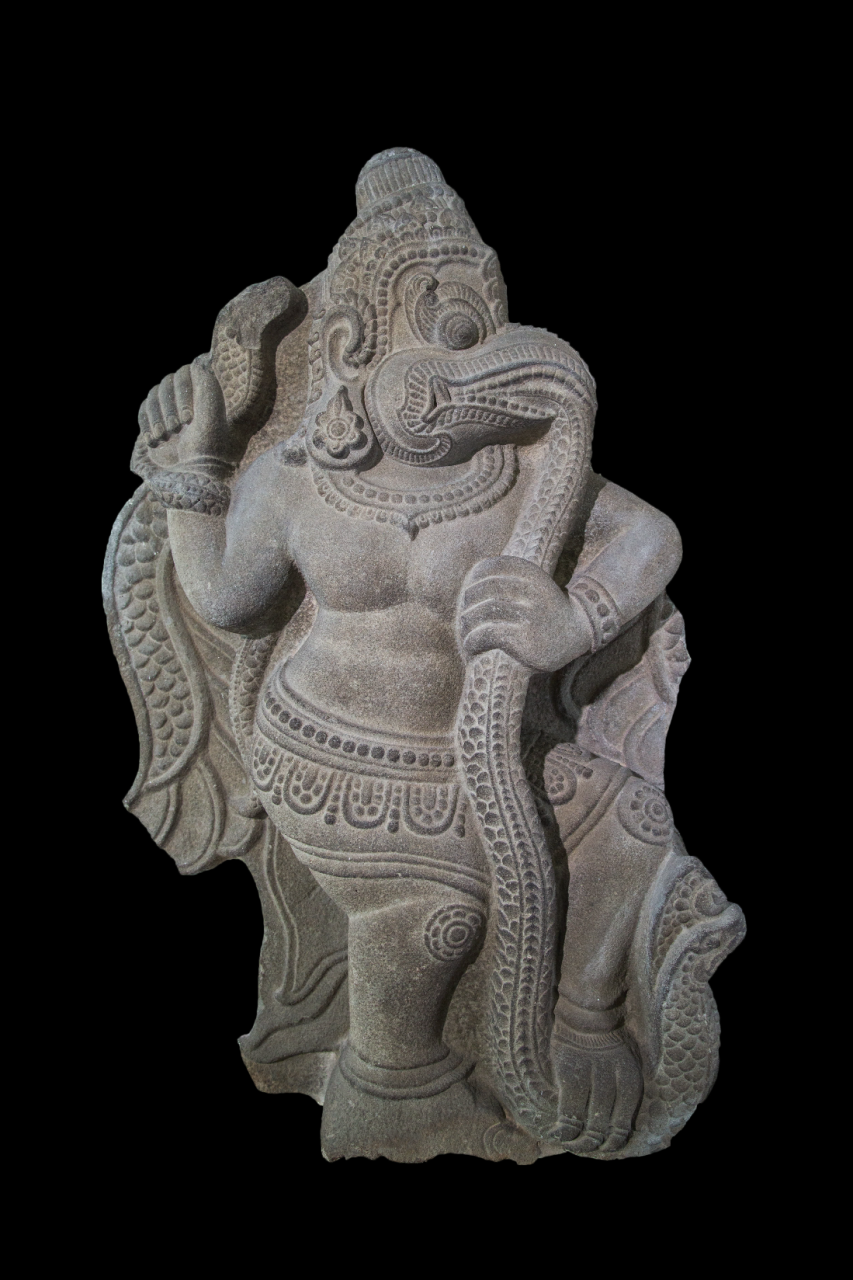
A symbol of authority and power.
In nature, cobras are fearsome creatures. When threatened and ready to attack, cobras raise their heads and flare their necks, creating a menacing, puffed-up shape.
That ferocious and dangerous nature has made the cobra a symbol of intimidating power, emanating not only from the snake itself but also from those who can control or subdue it.
This metaphor is frequently used in Indian mythology. The images of the two powerful Hindu deities, Siva (Rudra) and Vishnu, are often emphasized with the characteristic of taming snakes or being subdued and protected by snakes.
In the Mahabharata epic, there is a story about the evil Asura gods who built three fortresses of gold, silver, and iron to resist the gods. The gods tried everything to destroy the Asuras' fortresses but failed.
Finally, Shiva gathered the power of the gods to attack the Asuras. The gods transformed into weapons, with Shiva using the serpent Vasuki as a bowstring to shoot arrows of fire (an incarnation of the god Agni), burning down three of the Asura's strongholds.
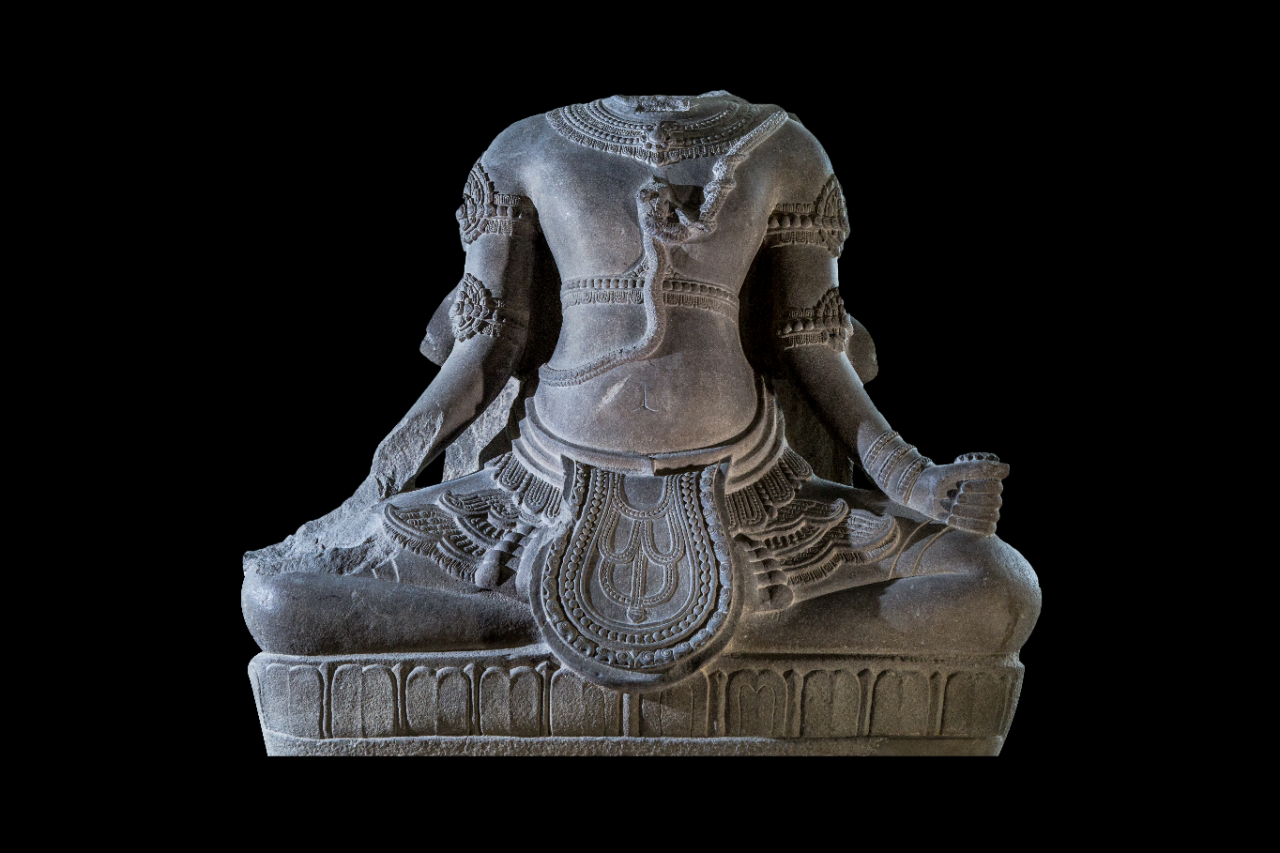
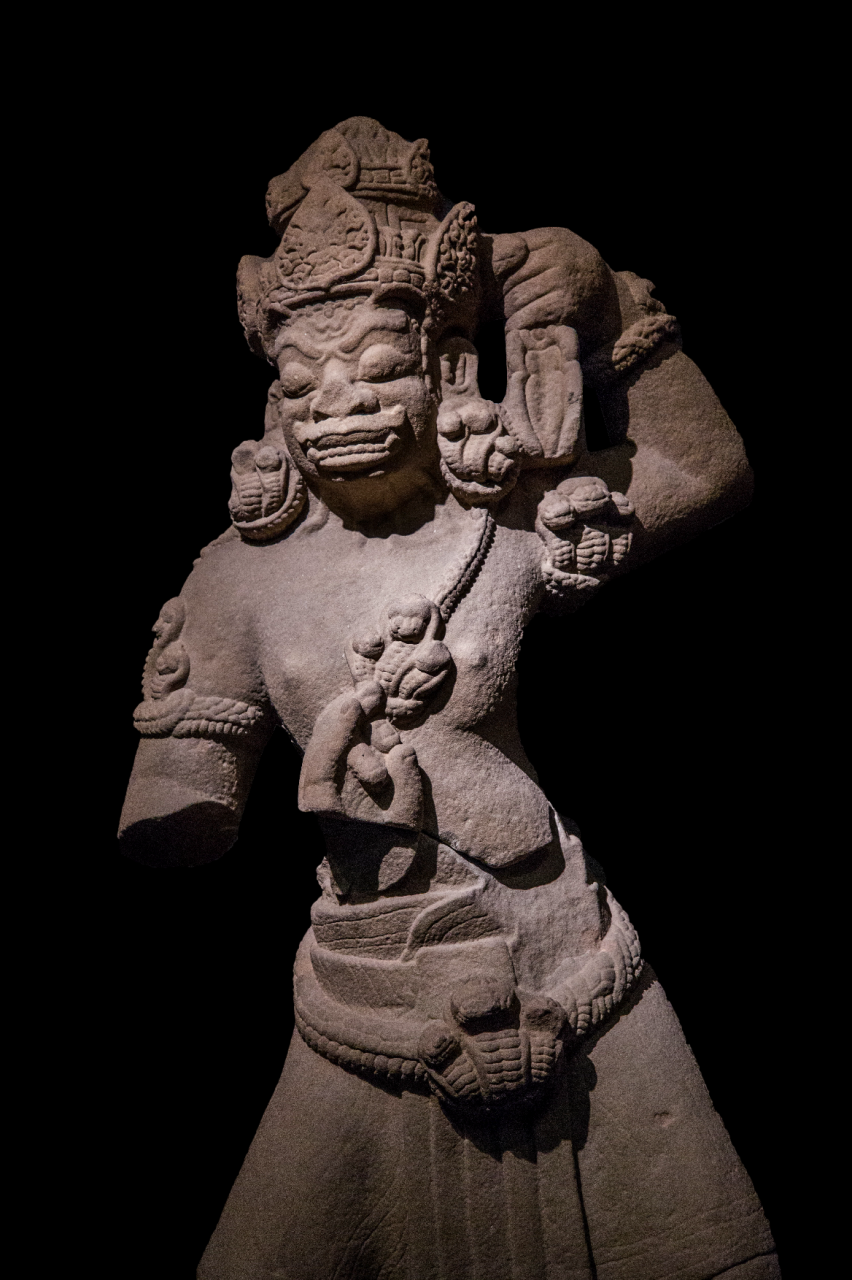
From this legend, the image of the snake is used to represent the power of the god Shiva. A recognizable sign of Shiva statues in Cham sculpture is the cord carved with snake scales and snake heads (one or three heads) draped from the shoulder down to the chest. This sign is extended to symbolize authority and power on guardian statues, which are also considered an incarnation of Shiva.
At the Đồng Dương Buddhist temple complex, the guardian statues, in addition to the snake-shaped sash around their chests, also feature bands on their arms, waists, ankles, and earrings in the shape of snake heads. These are symbols representing the powerful and deterrent nature of the guardian deity protecting the temple.
A profound philosophy about instinct and desire.
Indian mythology also tells the story of Shesha the serpent, a sacred creature of the ocean during the creation of the universe. At that time, Shesha was the support and guardian spirit of the god Vishnu.
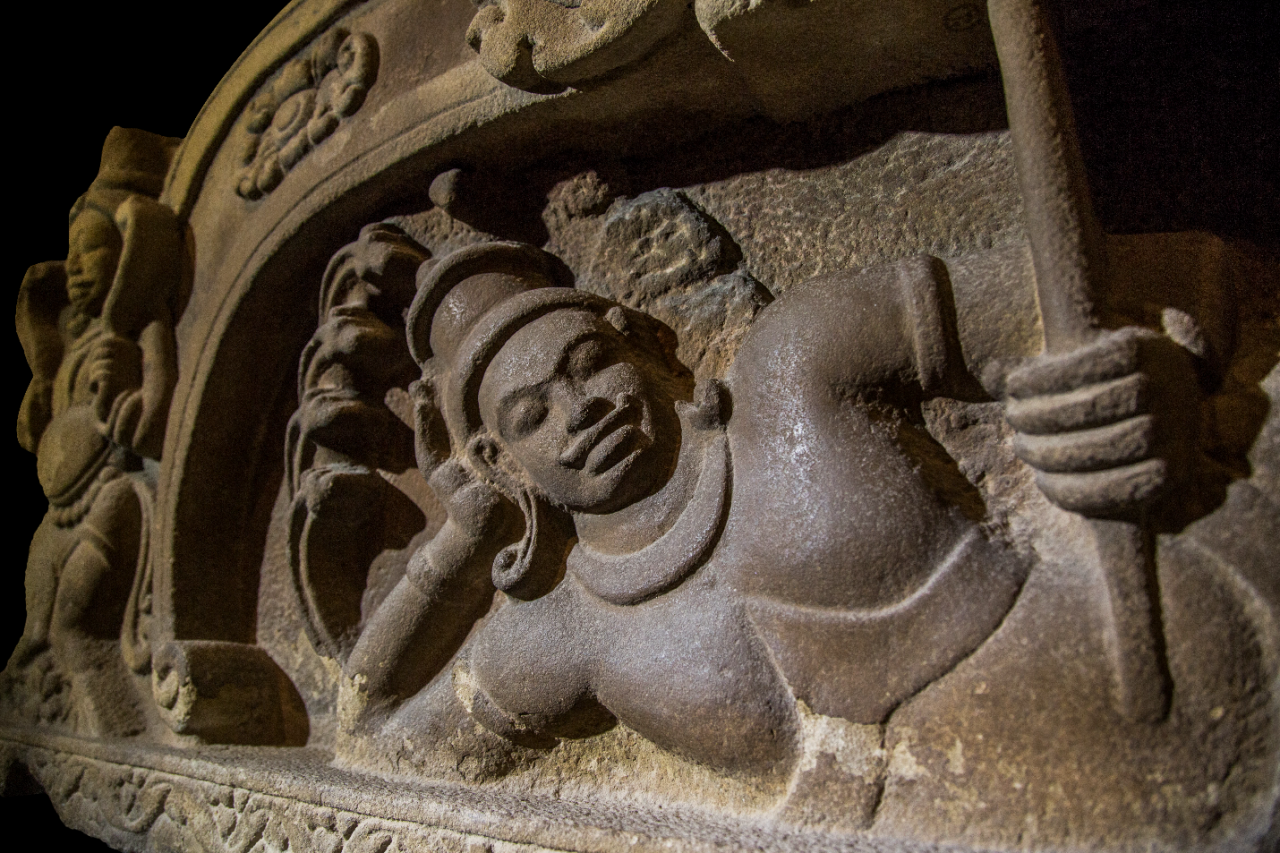
The Brahma Birth relief found at My Son Tower E1 (on display at the Da Nang Cham Sculpture Museum, recognized as a National Treasure) depicts the god Brahma being born from a lotus flower emerging from the navel of the god Vishnu, while Vishnu is being protected by snakes with their heads raised high. Another relief found in Phu Tho (Quang Ngai) has a similar theme and style.
Furthermore, Cham sculpture also includes reliefs depicting the god Vishnu or the Buddha seated on a coiled serpent, with stylized serpent heads rising and spreading out to form a protective dome above. In some cases, the image of the god Vishnu is replaced by the mythical bird Garuda, Vishnu's mount, protected by a serpent canopy.
Notably, Cham sculpture includes round statues depicting the Naga serpent being subdued by the mythical Garuda bird. Garuda is shown with the serpent's tail in its mouth, its left hand gripping the serpent's neck at one end, and its right foot stepping on the body of a two-headed serpent. This image seems contradictory to the symbolism of the Naga serpent's power and is explained by the legend of the feud between the Naga serpent and the Garuda bird.
However, this can be understood as a profound metaphor, symbolizing the control of the aggressive energy of instinct and desire. Instinct and desire are a powerful source of energy within each person, and it is the taming and control of this energy that creates divine authority.
In other words, the cobra's natural characteristics, with its ferocious venom, have become a symbol with dual meaning in Indian mythology and Cham sculpture; it is both a sign of destructive power and an expression of submission to a supreme authority.
Source: https://baoquangnam.vn/an-du-ran-trong-than-thoai-an-va-dieu-khac-cham-3148357.html


![[Photo] Prime Minister Pham Minh Chinh presides over a meeting on private sector economic development.](/_next/image?url=https%3A%2F%2Fvphoto.vietnam.vn%2Fthumb%2F1200x675%2Fvietnam%2Fresource%2FIMAGE%2F2025%2F12%2F20%2F1766237501876_thiet-ke-chua-co-ten-40-png.webp&w=3840&q=75)



































































Comment (0)