

 Lakes and dams are key water storage structures used to prevent floods, regulate irrigation for agricultural production, and provide drinking water for people in downstream areas. Dam failures can cause significant loss of life and property. Therefore, ensuring the safety of lakes and dams, being prepared to respond to unusual floods, preventing major losses of life and property, and contributing to disaster mitigation are crucial tasks for all levels of government, relevant agencies, and the people.
The province currently has 452 dams and reservoirs (11 large dams and reservoirs; 18 medium-sized dams and reservoirs; and 423 small dams and reservoirs). Of these, large and medium-sized reservoirs, and some reservoirs serving inter-district and inter-commune irrigation purposes, are managed by the Provincial People's Committee and operated by the Irrigation Companies; small reservoirs are managed by the District People's Committees and operated by the Commune People's Committees and local irrigation cooperatives.
Besides providing irrigation water for 37,000 hectares of cultivated land per crop season in the province, the lakes and dams also supply water for industrial production and daily life of the people, while simultaneously controlling floods and reducing localized waterlogging in downstream areas, contributing to improving the ecosystem and environment in the province.

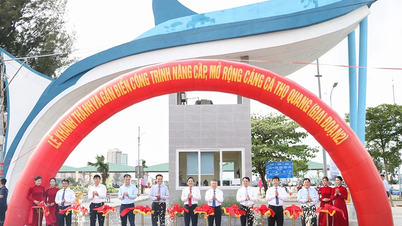
Long Thuyen Lake in Nha Son commune (Song Lo district) has recently been renovated and upgraded to ensure safe water storage during heavy rains and floods.
The process of exploiting and operating reservoirs and dams is regularly maintained and repaired by relevant authorities to ensure safety. Therefore, in recent years, there have been no incidents of reservoir or dam breaches causing significant damage to production and the lives of people in downstream areas in the province.
However, most of the reservoirs and dams were built in the 1950s and 1960s and the early period of reform, especially the large ones built during the French colonial era, which are now old; some new, small-scale projects built by local authorities and residents do not meet technical standards; management is still unscientific and not rigorous, and there is little investment in repair, renovation, and upgrading. Many structures have deteriorated and are deteriorating, posing a constant worry for managers when the rainy season arrives, especially during unusually heavy rainfall which can easily lead to dam breaches, causing widespread flooding and significant damage to state and local property.
To ensure dam safety, over the years, the Provincial Irrigation Department has actively advised the Department of Agriculture and Rural Development and the Provincial People's Committee to direct localities and functional agencies to reinforce, renovate, and upgrade vulnerable reservoirs and dams; and to prepare sufficient materials and supplies (sandbags, sand, gravel, rocks, transport vehicles) to be stockpiled on-site in case of incidents, ensuring timely rescue and the safety of people's lives and property.
However, to this day, many reservoirs and dams still suffer from seepage in the dam body, erosion of the embankment, spillway and energy dissipation basin, collapse of the reinforced slope, damage to culverts and spillways, lack of reinforcement in the dam body, and even some reservoirs with small capacities lack surface concrete reinforcement.
According to Duong Van The, head of the provincial irrigation department, in addition to the 10 large reservoirs and 1 newly upgraded water dam, there are also small reservoirs and dams scattered across communes and towns, especially those in mountainous districts such as Song Lo, Lap Thach, and Tam Dao.
These lakes and dams are all located in high-altitude areas with steep slopes and fast-flowing water, resulting in low water storage capacity and a very high risk of dam failure during heavy rains and floods.
Upon reviewing the current situation, it was found that 22 dams were leaking, 5 dams had deformed slopes, 1 dam had a cracked body; 9 spillways were not reinforced, 8 spillways were cracked, 9 culverts had damaged bodies; 11 sluice gates were damaged; and 11 culverts had leakage through their walls.
For example, Gia Khau reservoir is experiencing siltation, the dam surface has not been renovated, the sluice gate is difficult to operate, the downstream drainage ditch is degraded, and there is seepage on the right dam abutment; Dong Mo reservoir is experiencing slight seepage at elevation +53.00 (at the base of the drainage stone pile); Lang Ha reservoir is experiencing seepage on the downstream slope of the main dam; on the left and right abutments of the main and auxiliary dams; Ma Sang reservoir is experiencing slight seepage in the main dam, seepage through the sluice gate, damage to the sluice body and water intake gate; Cham Vang reservoir's operating building is tilted, and the sluice gate is leaking; Bai Me reservoir is experiencing erosion at the base of the sluice gate and cracks in the upstream slope; San Sat reservoir is experiencing erosion on the upstream and downstream slopes, damage to the sluice body and seepage through the sluice gate; Dong Cheo reservoir is experiencing slight seepage in the main dam, damage to the sluice body and water intake gate; Cam Binh and Quang Yen reservoirs are experiencing slight seepage in the main dam; Dong Quan reservoir is experiencing erosion at the base of the sluice gate and upstream concrete slope),…
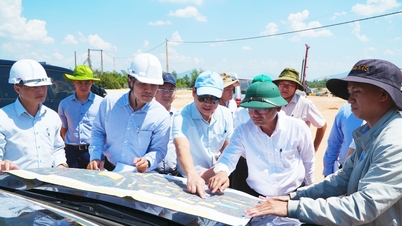
To promptly address potential safety risks to reservoirs and dams during heavy rains and floods, the Provincial Irrigation Department, since the beginning of the year, has consulted with relevant agencies and the Provincial People's Committee to allocate resources and funds for investment, reinforcement, repair, and remediation; and directed management units to monitor, supervise, and operate, especially reservoirs and dams with a storage capacity of over 2 million cubic meters of water, to protect downstream areas in the event of unusually heavy rains and floods.
The management units are marking the boundaries for dam and reservoir protection, inspecting reservoirs that have not met the prescribed timeframe, especially ensuring dam safety according to the WB8 program. In addition, investment is being made to ensure the safety of medium and small-scale reservoirs that have not been renovated or upgraded for many years, so they are ready to cope with major floods.
In accordance with the Central Government's directives and to proactively prevent and respond promptly to the complex weather developments in order to ensure the safety of irrigation and dike structures, especially reservoirs and dams, and to minimize damage caused by natural disasters, the Provincial People's Committee issued Directive No. 03 dated March 5, 2024, on "Strengthening the work of disaster prevention and control - search and rescue and ensuring the safety of irrigation and dike structures in 2024".
Accordingly, the Provincial People's Committee has directed localities and functional agencies to review and prepare cost estimates to address potential safety hazards in dikes, lakes, dams, and main canals. It has also directed management units to complete maintenance, operation, and regular inspection procedures for large lakes and dams with a storage capacity of over 2 million cubic meters of water.
Establishing boundary markers to protect dams and reservoirs, inspecting reservoirs and dams that do not meet safety regulations; renovating and upgrading medium and small-scale reservoirs that have not been renovated or upgraded for many years, preparing to respond to heavy rains and floods, and resolutely preventing dam breaches that cause damage to people and property during floods.
Currently, the province is directing the Department of Agriculture and Rural Development, localities, the Irrigation Sub-Department, and the Irrigation Companies to strengthen regular inspections and supervision of local officials, workers, and forces to patrol and guard day and night, proactively monitoring weather developments and water levels in reservoirs, and promptly reporting to the Provincial Steering Committee for Disaster Prevention and Search and Rescue, the Department of Agriculture and Rural Development, and the Standing Committee for Disaster Prevention and Search and Rescue in the districts throughout the rainy season.
Directing flood prevention efforts according to the "four on-the-spot" principle: on-the-spot personnel, on-the-spot command, on-the-spot technical supplies, and on-the-spot logistics. Simultaneously, organizing maintenance of sluice gate and spillway operation systems to ensure safety in adverse weather conditions.
Text and photos: Xuan Hung
Source




![[Image] Hanoi's urban life under the challenge of a "scorching hot" environment](https://vphoto.vietnam.vn/thumb/1200x675/vietnam/resource/IMAGE/2026/05/25/1779706979265_nang-nong-t5-2026-minh-duy-7-4636-jpg.webp)
![[Image] Close-up view of the interchange connecting the two expressways and Long Thanh Airport.](https://vphoto.vietnam.vn/thumb/1200x675/vietnam/resource/IMAGE/2026/05/25/1779703378210_ndo_br_z7863716673926-224453a31600126cce10622af6290afd-4549-jpg.webp)

















































































Comment (0)