

Suffering from power outages
The National Power System Operation and Electricity Market Company (NSMO) reported that, following a heatwave from the end of July 2025, the Northern region entered a new period of intense heat from the beginning of August. In the first week of August, temperatures in Hanoi approached 40°C, with the Lang station recording 39.1-39.7°C, and the perceived temperature reaching 47°C, placing it among the hottest spots in the country.
Extreme weather conditions have caused a sharp increase in electricity consumption in the North, even during holidays. From August 1st to 4th, the region's peak power consumption reached 25,761 MW. This is about 25% higher than on normal holidays and nearly twice the capacity of the Son La Hydropower Plant.
During peak hours from 1:30 PM to 2:30 PM on August 4th, the highest national electricity consumption reached approximately 54,500 MW, the highest since the beginning of the year and setting a new record. This represents an increase of about 5,000 MW, equivalent to 10% compared to the same period in 2024. The North alone reached 28,500 MW, an increase of about 3,000 MW (12%). In Hanoi, data from the Hanoi Electricity Corporation (EVNHANOI) shows that electricity consumption in recent days has reached its highest level ever, peaking at 5,988 MW (at 1:20 PM on August 4th), equivalent to an increase of approximately 14% compared to the record consumption of 2024.
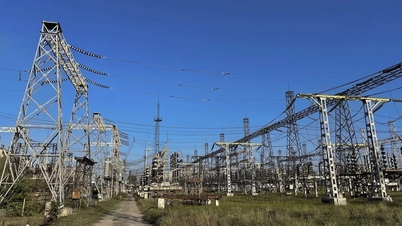
The increased power demand has caused many transmission lines and transformers at 220kV and 500kV substations to become full and overloaded, such as the 500kV Son La - Viet Tri line; the 220kV Thanh Cong - Ha Dong line; 500kV substations in Hoa Binh, Lai Chau, Viet Tri, Tay Hanoi, Pho Noi, Thuong Tin, Hiep Hoa, Dong Anh; and 220kV substations in Mai Dong, Chem, Thanh Cong, Bac Ninh 2, Dong Hoa, Ha Dong…
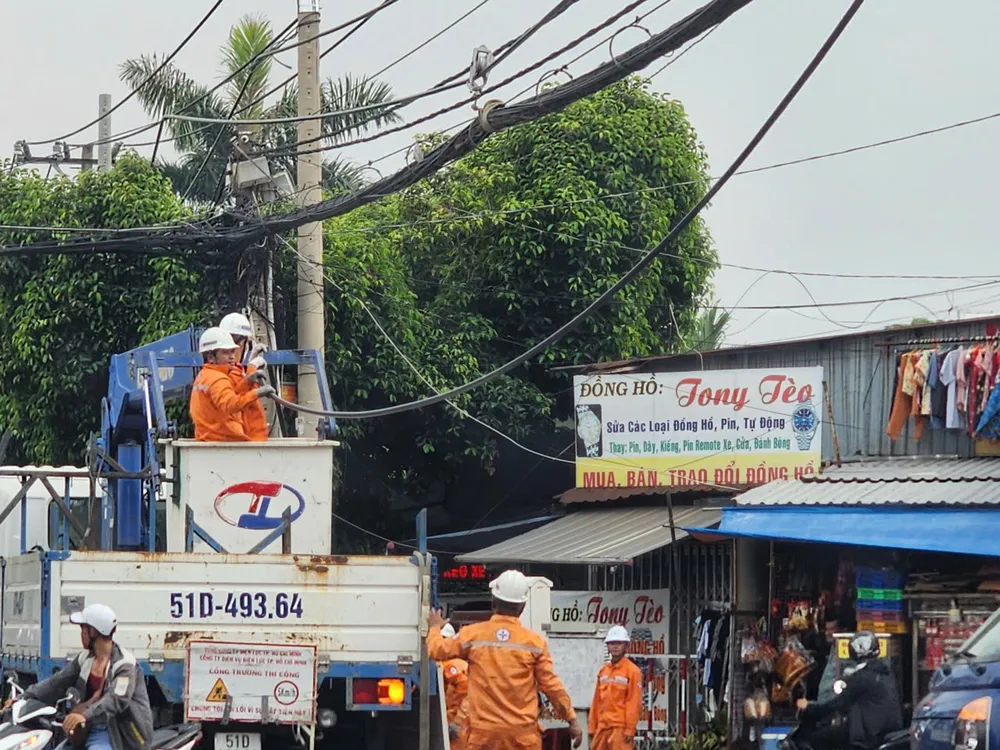
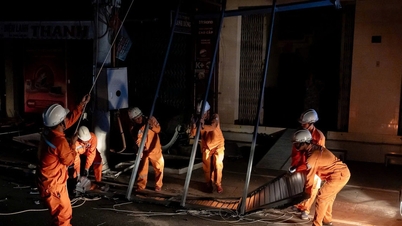
Previously, Ho Chi Minh City experienced a widespread power outage in its central wards. Specifically, at noon on July 30th, a malfunction at a 220kV transformer station (formerly located in District 8) caused a 30-minute power outage in many areas of Ho Chi Minh City during a hot day. The following day, at around 7:30 PM on July 31st, many central areas of the city, such as Xuan Hoa Ward, Ban Co Ward, Tan Thuan Ward, An Dong Ward, and Binh Hung Commune, suddenly lost power. In the city center, traffic lights were paralyzed, causing traffic jams on many roads.
Energy saving solutions
Regarding the power outage in Ho Chi Minh City, Mr. Bui Trung Kien, Deputy General Director of Ho Chi Minh City Power Corporation (EVNHCMC), said that a widespread power outage occurred in central wards at the end of July. The location of the outage was the former 220kV substation in District 8. This substation has two power sources; however, during this period, one of the two sources was undergoing upgrades and renovations, and the problem occurred on the remaining power line. EVNHCMC promptly transferred power from other substations to resolve the issue and restore the power supply.
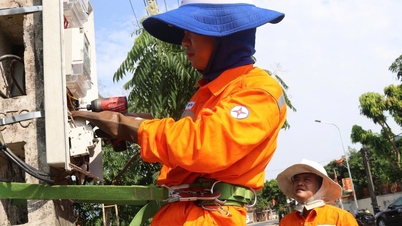
Regarding solutions, the corporation continues to implement measures including efficient use of the smart grid system, enhanced maintenance and upkeep, etc., to maximize the reliability of electricity supply. EVNHCMC leaders also stated that they are actively encouraging businesses to install electricity storage systems, thereby shifting load to off-peak hours. This is considered a crucial approach to optimizing the load curve and reducing pressure on the system during periods of intense heat or imbalances in electricity supply and demand.
Mr. Vo Quang Lam, Deputy General Director of Vietnam Electricity Group, noted that the electricity sector in the southern provinces and cities is facing a series of significant pressures, from the economic and industrial recovery, prolonged climate change, to increasing electricity consumption. In 2024, the South recorded an electricity growth of over 1,200 MW, a figure that shows the continued pressure on the system.
To reduce the load on the system, load shifting plays a crucial role. Calculations show that if the South can effectively shift approximately 500MW of load from peak hours to off-peak hours, it would be equivalent to avoiding investment in a large-scale thermal power plant, saving billions of USD.
Meanwhile, according to Dr. Nguyen Cong Trang, a lecturer at Ton Duc Thang University, this year's hot season poses a challenge for businesses and many families. The solution of adjusting and shifting load is beneficial for both businesses and the electricity sector. Specifically, it significantly reduces costs for businesses by shifting to off-peak hours, improves the reliability of electricity supply, and reduces the number of power outages due to a more stable power system.
The electricity sector will experience reduced pressure on the system, decreased overload on power lines, and reduced operating and investment costs for power supply sources. Regarding difficulties, the electricity sector currently lacks favorable financial policies to support businesses; its existing policies are merely incentives and encouragement, making negotiations with businesses challenging. Renewable energy sources (solar and wind power) are highly variable and often installed independently by businesses. Therefore, forecasting and shifting load for these sources also presents significant challenges.
Energy management in businesses remains challenging due to the predominantly traditional and manual nature of their electrical systems, resulting in low levels of energy monitoring and control. Achieving energy savings requires the adoption of smart automation technologies, but these require substantial investment, making them unaffordable for many businesses. Load adjustment and shifting necessitate energy storage. Vietnam should begin developing energy storage technologies early, following the lead of other countries.
On August 8th, the Ministry of Industry and Trade held a meeting on the situation and solutions to ensure electricity supply for the remaining months of 2025 and the period 2025-2030, especially after days of hot weather and high load demand.
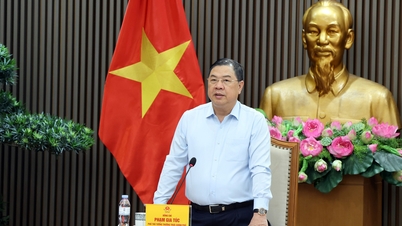
Mr. Pham Nguyen Hung, Director of the Electricity Department, advised that to ensure electricity supply in the 2025-2027 period, it is necessary to strengthen power sources to ensure electricity supply to the North; develop renewable and new energy sources; invest in the construction of power grids, especially transmission grids; develop electricity storage systems and operate the power system.
In the medium and long term, there are solutions for large power sources, especially LNG sources; improving institutions, promoting the implementation of projects, as well as solutions for investment in power grid construction and power system operation.
Source: https://www.sggp.org.vn/ap-luc-cung-ung-dien-trong-mua-nang-nong-post807773.html
![[Photo] Admire the coral "masterpiece" amidst the million-year-old heritage of Dak Lak province.](https://vphoto.vietnam.vn/thumb/1200x675/vietnam/resource/IMAGE/2026/05/31/1780221235105_anh-man-hinh-2026-05-31-luc-16-53-27.png)



![[Photo] Solemn bathing ceremony and Buddha procession in Hue](https://vphoto.vietnam.vn/thumb/1200x675/vietnam/resource/IMAGE/2026/05/31/1780228263543_1-jpg.webp)

















![[Video] Sunset at Lap An Lagoon – Where the sun sets over the fishing nets](https://vphoto.vietnam.vn/thumb/340x192/vietnam/resource/IMAGE/2026/05/31/1780192137701_beach-landscape-sea-water-nature-grass-745871-pxhere-com.jpeg)



































![[Photo] Admire the coral "masterpiece" amidst the million-year-old heritage of Dak Lak province.](https://vphoto.vietnam.vn/thumb/402x226/vietnam/resource/IMAGE/2026/05/31/1780221235105_anh-man-hinh-2026-05-31-luc-16-53-27.png)






























Comment (0)