

 |
| Despite the sharp decline in the index, bargain-hunting buying continued to appear selectively across various stock groups. |
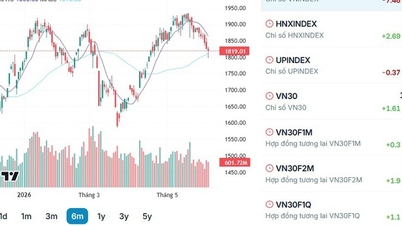
The trading session on January 28th witnessed volatile movements in the Vietnamese stock market, with the VN-Index continuing to be heavily influenced by large-cap stocks. In the afternoon, the index briefly fell to 1,793.13 points, officially breaking through the 1,800-point mark, a crucial psychological support level for investors. However, thanks to selective buying at the end of the session, the index recovered slightly but still closed in the red.
Entering the morning session, the market quickly showed clear divergence. Blue-chip stocks were no longer in agreement, with Vingroup stocks continuing to face strong selling pressure, falling by 4-6%. Conversely, many large banking, oil and gas, and technology stocks such as MSN,FPT , BID, STB, PLX, and GAS surged by 3% to over 5%, helping to curb the index's decline. As a result, the VN-Index mostly fluctuated and traded around the reference point during the first hour of trading.
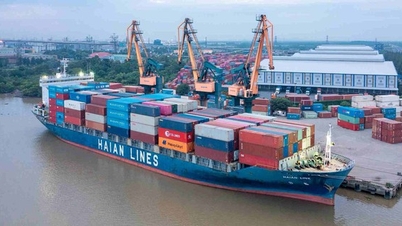
Furthermore, capital flows tended towards oil and gas and logistics stocks. Stocks such as PVT, HVN, BSR , PVD, TCO, and VTP attracted significant demand and recorded good gains. Conversely, the real estate and construction sector continued to disappoint, with many stocks like PDR, ACC, DXG, and NTL falling by around 3%, reflecting the lingering risk aversion.
Market sentiment worsened towards the end of the morning session and the beginning of the afternoon session, as selling pressure unexpectedly intensified. The wave of selling off Vingroup shares negatively impacted overall sentiment, causing many investors to reduce their stock holdings and shift their capital towards a defensive stance. Blue-chip stocks that had supported the index from the beginning of the session also gradually cooled down.
At the end of the morning session, the VN-Index fell 24.77 points to 1,805.73 points. In the afternoon session, red continued to dominate. Closing on January 28th, the VN-Index lost a total of 27.59 points, equivalent to 1.51%, to 1,802.91 points; the VN30-Index decreased by 22.75 points (-1.13%), to 1,997.13 points. Market liquidity increased sharply, reaching nearly 34,000 billion VND, indicating active trading amidst significant volatility.
Notably, VinGroup's stocks accounted for most of the VN-Index's decline during the session. VIC and VHM both hit their lower limit at one point, causing the index to lose 16.44 points and 6.4 points respectively. VPL and VRE also dragged the VN-Index down by nearly 3 points. While pessimism spread across the derivatives market, VHM recovered slightly by about 1.36% towards the end of the session, helping the index to improve somewhat from its intraday low.
Conversely, some other key stocks, such as banks, showed signs of a slight recovery from their lows. VCB, BID, and TCB edged up from their intraday lows, but the support for the index was not significant as the overall trend remained a sharp decline. Within the VN30 basket, although the number of declining stocks (16) still outnumbered the number of rising stocks (11), a positive sign was that, apart from VIC and GVR, most stocks no longer closed at their lowest prices of the day.
In terms of sectors, the picture shows a fairly balanced mix of gains and losses. The two sectors experiencing the sharpest declines were hardware and real estate. Conversely, essential goods trading, software, and services were the most positive performers. Bank stocks continued to show clear divergence, reflecting the increasingly selective flow of capital.
On the Hanoi Stock Exchange, the HNX-Index closed at 252.47 points, down slightly by 0.15%, while the HNX30-Index rose by 1.21%, showing a difference in performance between different stock groups. The total trading value on the HNX reached nearly 2,800 billion VND.
From a cash flow perspective, foreign investors traded heavily but also sold significantly. The total value of purchases reached approximately VND 6,505 billion, while the value of sales amounted to VND 8,282 billion. However, the net selling pressure decreased significantly in the afternoon session compared to the morning, indicating a somewhat less negative sentiment as the market retreated.
From an analyst's perspective, although the market is under strong short-term correction pressure, the medium- and long-term outlook remains positive. According to Mr. Nguyen Ky Minh, Chief Economist of Guotai Junan Vietnam Securities Company, the market is on the verge of a new growth cycle that could last 5-10 years, linked to the economic transformation and the prospect of market upgrade. However, in the first half of the year, large capital inflows from international institutions are unlikely to be strong, leaving the market facing intermittent corrections.
The trading session on January 28th showed that, despite the sharp decline in the VN-Index and significant psychological pressure, selective bottom-fishing still occurred. Many stocks recovered considerably from their intraday lows, reflecting the long-term expectations of a segment of investors. However, the decrease in afternoon trading volume compared to the morning also indicated that caution still prevailed. In this context, the 1,800-point mark continues to act as an important support zone, where the market needs more time to test and consolidate before establishing a clearer trend.
Source: https://thoibaonganhang.vn/ap-luc-don-tru-vn-index-chao-dao-ve-sat-moc-1800-diem-177189.html
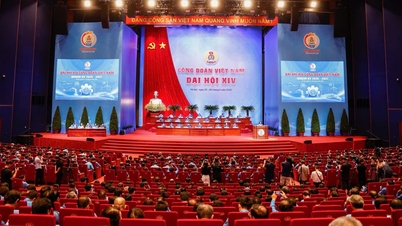
![[Photo] First session of the 14th Congress of the Vietnam Trade Union](https://vphoto.vietnam.vn/thumb/1200x675/vietnam/resource/IMAGE/2026/06/03/1780465947883_ndo_br_img-3852-jpg.webp)


![[Photo] General Secretary and President To Lam presides over a meeting with the Central Organizing Committee.](https://vphoto.vietnam.vn/thumb/1200x675/vietnam/resource/IMAGE/2026/06/03/1780482764658_a1-bnd-4741-3342-jpg.webp)

![[Photo] Secretary of the National Assembly Party Committee, Chairman of the National Assembly presides over the meeting of the Standing Committee and Executive Committee of the National Assembly Party Committee.](https://vphoto.vietnam.vn/thumb/1200x675/vietnam/resource/IMAGE/2026/06/03/1780480353201_ndo_br_bnd-2585-jpg.webp)




















































![[Video] Sunset at Lap An Lagoon – Where the sun sets over the fishing nets](https://vphoto.vietnam.vn/thumb/1200x675/vietnam/resource/IMAGE/2026/05/31/1780192137701_beach-landscape-sea-water-nature-grass-745871-pxhere-com.jpeg)




































Comment (0)