

During his lifetime, President Ho Chi Minh reminded us: "The whole country looks to our capital. The world looks to our capital," so Hanoi must be a role model in its leading position to ensure that it "becomes a peaceful, beautiful, and healthy capital, both materially and spiritually."
Deep feelings, unforgettable memories.
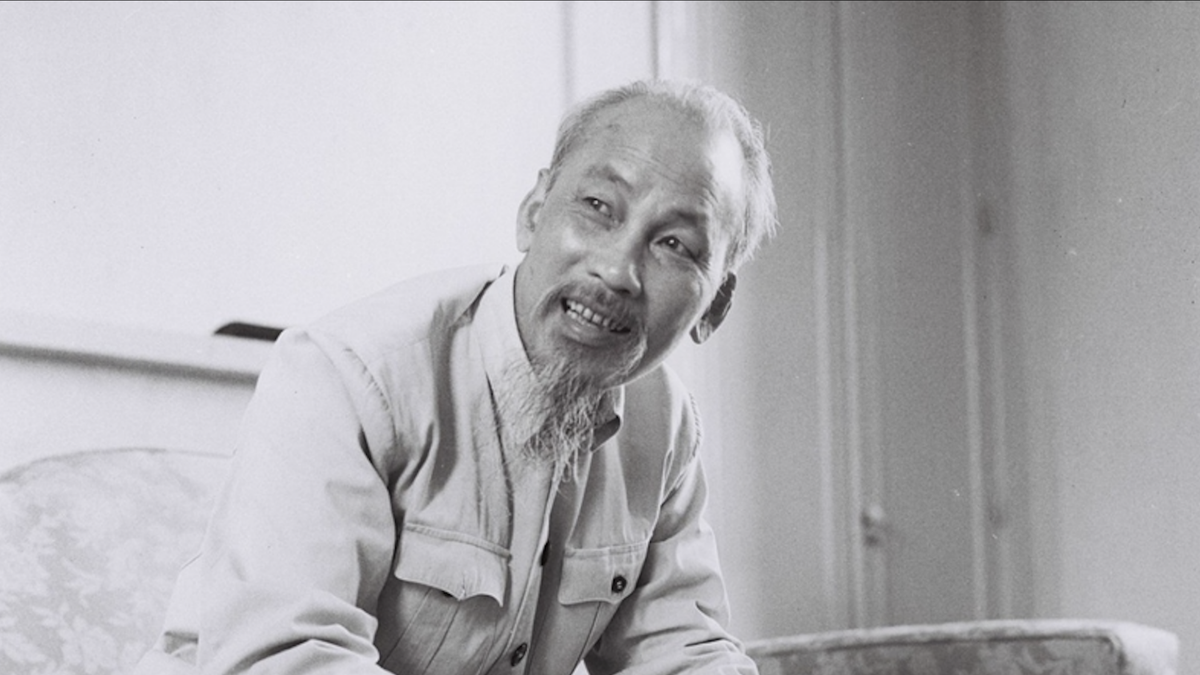
The three words "Our Capital" encapsulate the profound, intimate, and close affection that President Ho Chi Minh had for Hanoi ; only Hanoi had the honor of being associated with it. Hanoi is also the place that marked important milestones in his revolutionary life; one of the places where President Ho Chi Minh lived and worked the longest, and also a place with many landmarks bearing his footprints and where he paid attention, visited, and gave advice. Through his speeches, writings, telegrams, and visits, he left an unforgettable mark.
In the historic autumn of 1945, Hanoi welcomed President Ho Chi Minh for the first time after the success of the August Revolution. On August 23, 1945, President Ho arrived in Phu Gia (now Phu Thuong, Tay Ho district), and on August 25, comrades Truong Chinh and Vo Nguyen Giap came to welcome him to house number 48 Hang Ngang, owned by the patriotic businessman Trinh Van Bo. This is where President Ho Chi Minh drafted the immortal Declaration of Independence.
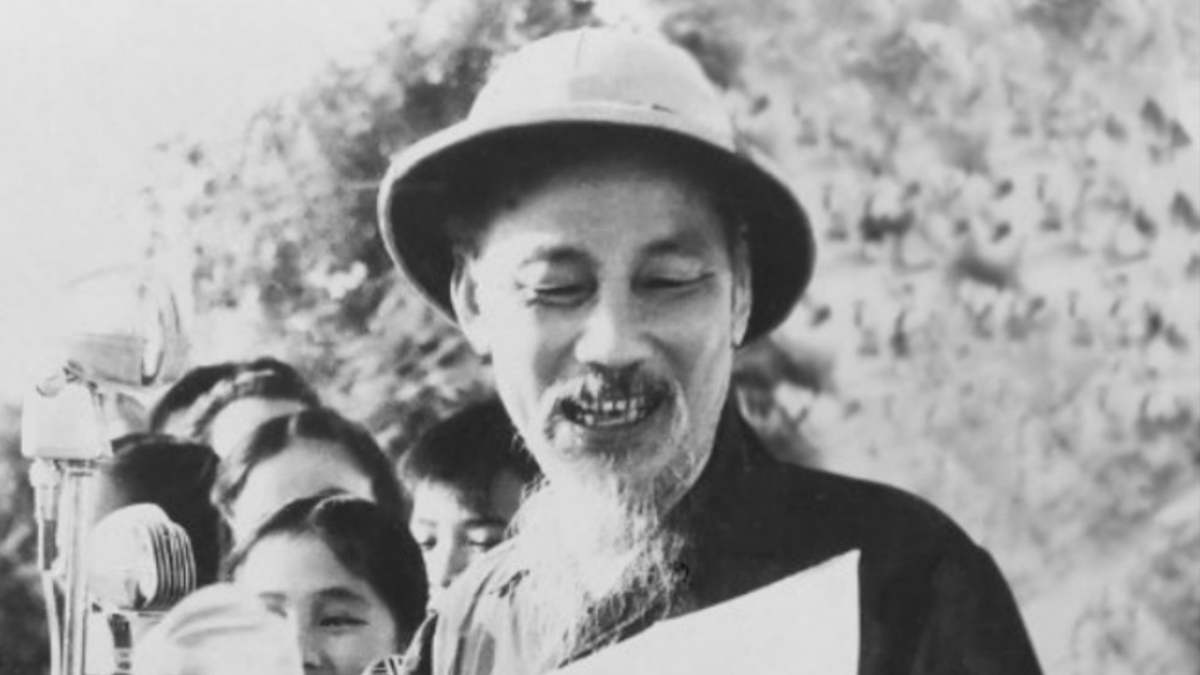
According to historical records, Uncle Ho later recalled that those were the happiest moments of his revolutionary life when he came to live and work in Hanoi. On September 2, 1945, when Uncle Ho read the Declaration of Independence at Ba Dinh Square and introduced the Provisional Government, it also implied choosing Hanoi as the capital, a fact later officially recognized by the National Assembly .
On the very first day of the Provisional Revolutionary Government's work, Ho Chi Minh outlined the urgent tasks of national reconstruction and caring for the people's lives, especially eradicating hunger, illiteracy, and foreign invasion. A fervent response swept across the country; the people of the capital, heeding the President's call, spared no effort or expense in supporting the revolution and the people, with some even donating their entire fortunes.
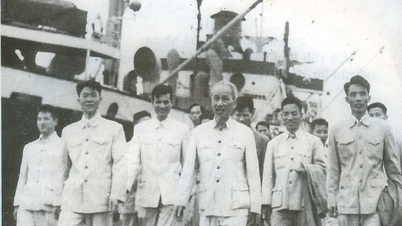
After nine years of resistance, in the historic autumn of 1954, Hanoi welcomed President Ho Chi Minh and the Government back. President Ho Chi Minh had a special concern for the people of Hanoi. According to Associate Professor Dr. Nguyen Trong Phuc (former Director of the Institute of Party History), a researcher on President Ho Chi Minh's ideology, historical documents show that President Ho Chi Minh always showed affection, special concern, and placed his trust in the immense potential of the people of Hanoi.
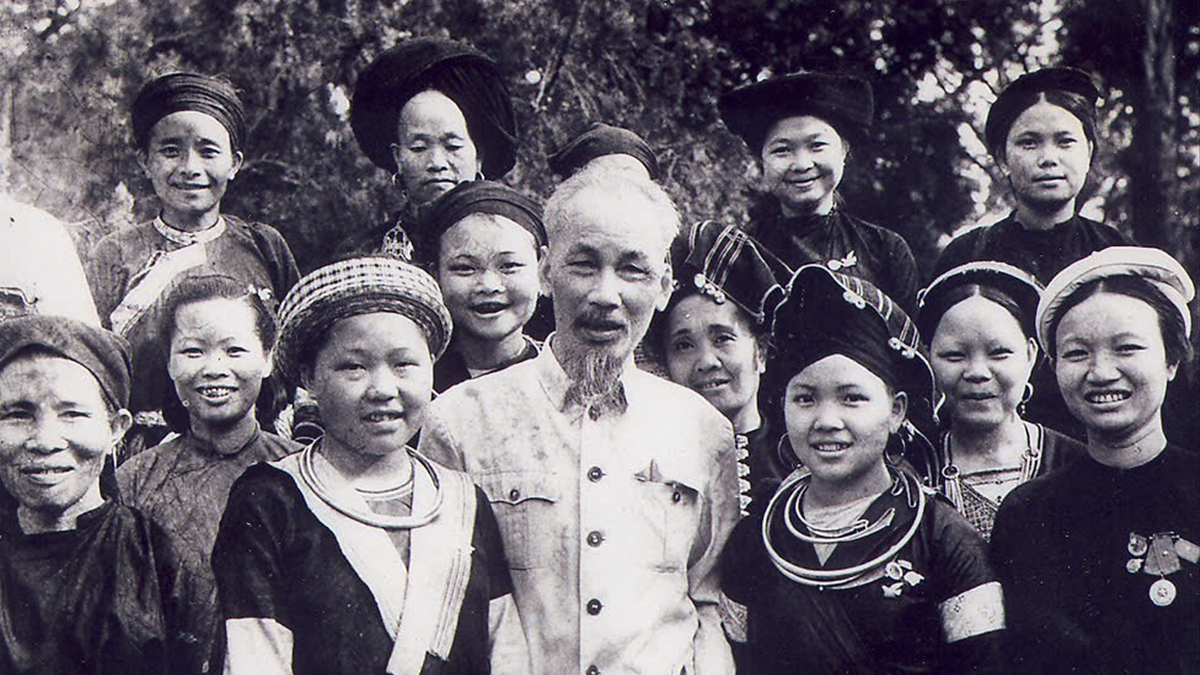
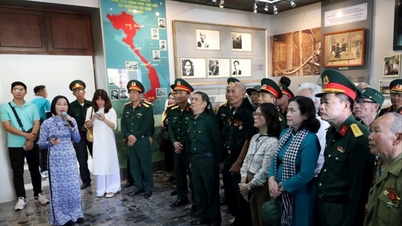
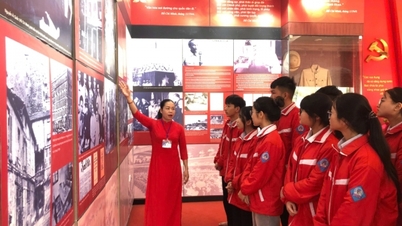
From the Lunar New Year of the Goat (1955), almost every year, President Ho Chi Minh visited the Party Committee, government, and people of Hanoi to extend New Year greetings. Having lived and worked in the capital for a long time, he had the opportunity to visit many places – facilities, hospitals, factories, schools, and military units; directly meeting, visiting, and encouraging cadres, soldiers, and all strata of the people of Hanoi. According to statistics from the Ho Chi Minh Museum, there are 173 historical sites in the inner city and 44 historical sites in the outer city that bear witness to President Ho Chi Minh's affection and memories with the people of the capital.
During the Lunar New Year of 1969, on a hill in Vật Lại commune (Ba Vì district), President Ho Chi Minh participated in planting trees, marking the beginning of the 10th "Tree Planting Festival" initiated by himself. He extended New Year greetings and encouragement to the cadres and workers of the Yên Phụ Power Plant, the Hanoi Mechanical Factory, the Rubber, Soap, and Tobacco factories, the Bờ Hồ Lamp Factory, the Thống Nhất Match Factory, the construction site and precast concrete factory in Chèm...; attended a poetry recitation celebrating the Spring Festival by elderly people and artists of Hanoi at the Temple of Literature; sent letters and visited teachers and students in Hanoi; and visited poor laborers in the capital during the Lunar New Year...
According to Associate Professor Dr. Nguyen Trong Phuc, a remarkable aspect is that President Ho Chi Minh paid close attention to the outskirts of Hanoi, visiting them directly or sending letters of encouragement on numerous occasions. Perhaps because the people in the outskirts of Hanoi were still struggling at that time, he showed deeper concern and expressed his wish: "Party committees and branches in the outskirts need to lead the movement in the suburbs to advance even more strongly, making the suburbs truly become the 'red belt' of the socialist capital."
Uncle Ho's teachings are like a guiding light.
The phrase "Our Capital," which President Ho Chi Minh repeatedly mentioned when speaking about Hanoi, also reflects the position, responsibility, and pioneering and exemplary role of the capital city. For the Hanoi Party Committee and government, President Ho Chi Minh not only directly guided and monitored major strategic and macro-level matters but also the most specific, detailed, and practical daily tasks.
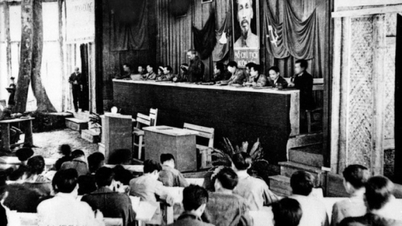
In his speeches and addresses at Hanoi Party Congresses and Hanoi People's Congresses, President Ho Chi Minh paid close attention to the comprehensive development and strengthening of the capital city. He affirmed, "The whole country looks to our capital. The world looks to our capital," therefore, "our capital" must strive to "become a peaceful, beautiful, and healthy capital, both materially and spiritually." He also consistently urged Hanoi to identify and ensure the fulfillment of its responsibilities as the "leading force" and "exemplary model" for the entire country.
From the end of August 1945 to September 2, 1969, President Ho Chi Minh lived and worked in the capital city for over 17 years. Hanoi is a place that bears the imprint of the Party and Government's major decisions for the country's progress, but it is also a place deeply marked by the image of Uncle Ho, with all the pride, emotion, affection, and special feelings he had for the capital.
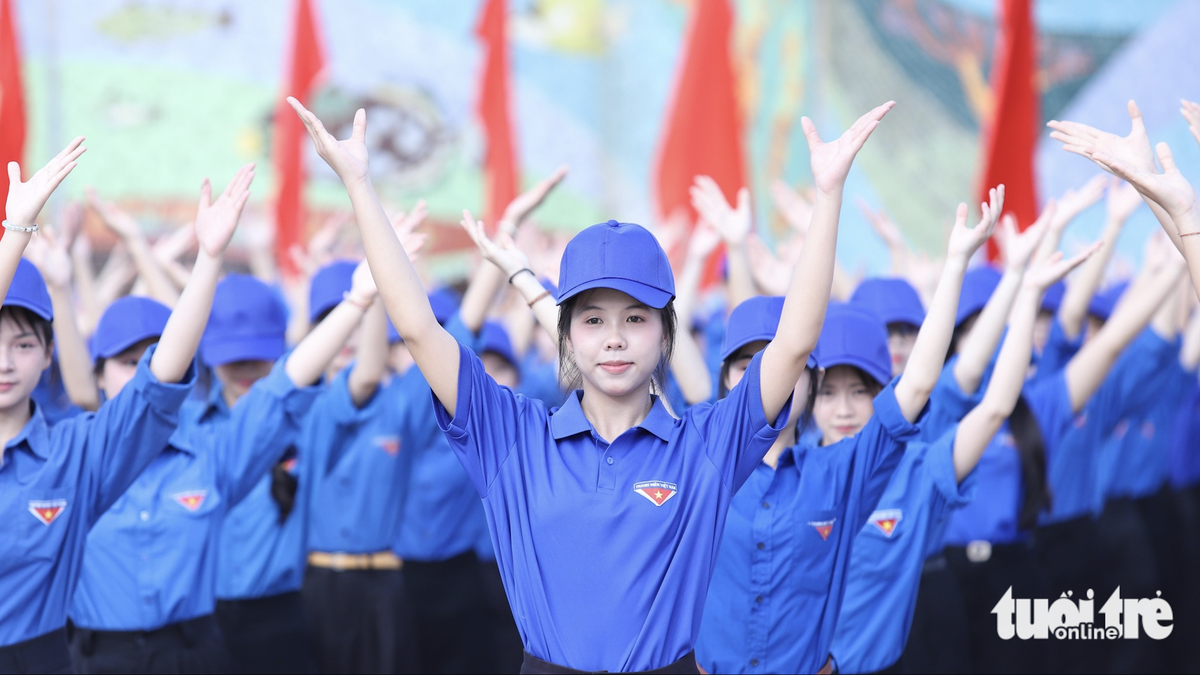
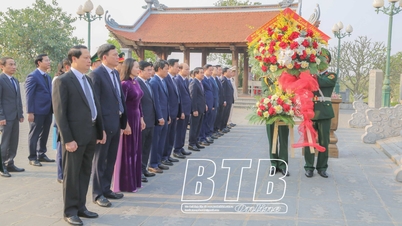
The teachings of President Ho Chi Minh have always been considered by the Party Committee, government, and people of Hanoi as a guiding principle and a beacon of light for building a more prosperous, civilized, and modern Hanoi, as he wished during his lifetime. For the past 70 years, since the complete liberation of Hanoi, fulfilling President Ho Chi Minh's instructions and wishes, the Party Committee, government, military, and people of Hanoi have continuously strived to become an exemplary Party Committee, leading in many aspects. In particular, during the period of reform, Hanoi has not only become a key economic center but also a birthplace of many outstanding domestic and international talents, a crucial driving force in the country's integration and globalization process.
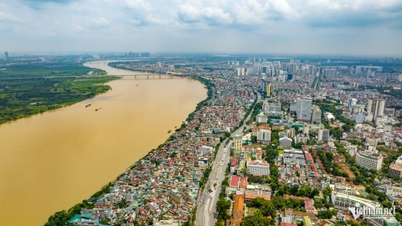
As Associate Professor Dr. Nguyen Trong Phuc observed: Uncle Ho wished for Hanoi after the war to be a more dignified and beautiful capital. Hanoi has achieved that. Hanoi can proudly report to Uncle Ho, fulfilling his teachings. From a city terribly devastated by war, Hanoi has risen and developed remarkably, affirming its position as the national political and administrative center, a major center for culture, education, science and technology, economy, and international trade. Hanoi is changing every day, its appearance becoming more modern and attractive with a series of key transportation and economic infrastructure projects put into operation. This achievement is thanks to many factors, but among them is the resilience of the people of Hanoi.
The commemoration of the Liberation Day of Hanoi is also an occasion for Hanoians to be proud of their traditions, proud of the noble titles that friends around the world have affectionately bestowed upon them. It is also an opportunity for each person to reflect and become more aware of their responsibility to make Hanoi a more prosperous, beautiful, cultured, and civilized city, worthy of being "our capital" as President Ho Chi Minh once hoped during his lifetime.
Source: https://kinhtedothi.vn/bac-ho-with-our-capital-801520.html
![[Photo] National Assembly Chairman Tran Thanh Man attends the groundbreaking ceremony for the National Highway 1A spatial axis project.](https://vphoto.vietnam.vn/thumb/1200x675/vietnam/resource/IMAGE/2026/05/19/1779161360398_ndo_br_bnd-1412-jpg.webp)
![[Photo] Capturing the moment the tide recedes at Yen Binh Son rapids - a million-year-old scenic spot in Quang Ngai.](https://vphoto.vietnam.vn/thumb/1200x675/vietnam/resource/IMAGE/2026/05/19/1779175463885_yen9-1199-jpg.webp)



























![[Photo] General Secretary and President To Lam receives Indian Defense Minister Rajnath Singh](https://vphoto.vietnam.vn/thumb/402x226/vietnam/resource/IMAGE/2026/05/19/1779184046302_anh-man-hinh-2026-05-19-luc-16-46-58.png)











Comment (0)