

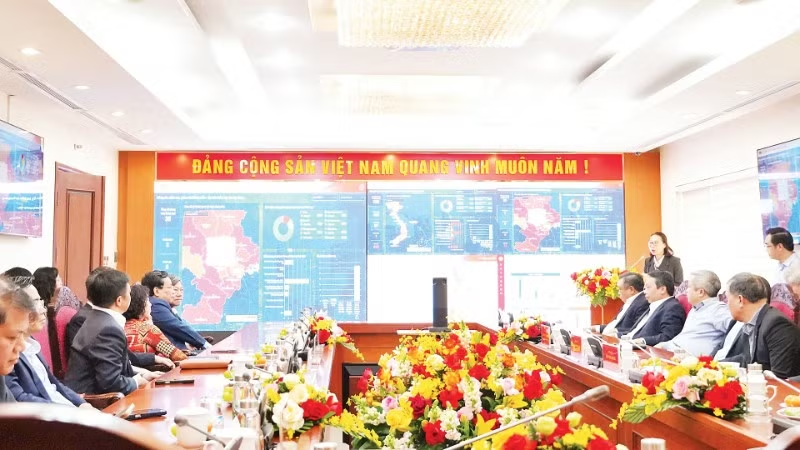
With new regulations and resolutions, the Party's guiding principles on inspection and supervision work represent a breakthrough in theoretical thinking and practical experience. With a new approach that is both systematic and strategically profound, inspection and supervision work is placed within the overall requirements of building and rectifying the Party and the political system to be clean, strong, and to ensure rapid and sustainable national development.
Right from the moment it was issued
Resolution No. 05-NQ/TW dated April 7, 2026, on reforming and improving the effectiveness of Party inspection, supervision, and discipline, was issued in the spirit of inheriting the results of 20 years of implementing Resolution No. 14-NQ/TW dated July 30, 2007; while also supplementing new viewpoints and regulations in accordance with the practical situation. The Resolution identifies important, core objectives and six groups of tasks and solutions to ensure that inspection and supervision must be one of the most important methods and functions of leadership, a mechanism for the Party to self-rectify, self-improve, and enhance its leadership and governance capacity; and is consistently linked to the implementation of the "four steadfast principles" of politics and ideology within the Party…
According to Comrade Nghiem Xuan Thanh, Member of the Central Committee of the Party and Deputy Chairman of the Central Inspection Committee, Resolution No. 05 stipulates that inspection and supervision must go hand in hand with and contribute to building and promoting development.
In particular, strengthening regular and early supervision, ensuring the serious implementation of the Party's strategic policies and decisions, is considered a significant shift in thinking, methods, and approaches to inspection and supervision work. The shift in focus to regular, proactive, and continuous supervision in leadership, guidance, and implementation of resolutions, directives, and conclusions of Party committees at all levels contributes to ensuring that all Party policies and guidelines are implemented seriously and effectively from the moment they are issued; preventing any "gaps" or "dark areas" that the Party's inspection and supervision work cannot reach.
Resolution No. 05 stipulates that inspection and supervision must go hand in hand with, and contribute to, the creation and promotion of development. In particular, strengthening regular supervision, supervision from the outset, and ensuring the serious implementation of the Party's strategic policies and decisions is considered a significant shift in thinking, methods, and approaches to inspection and supervision work.
Comrade Nghiem Xuan Thanh,
Member of the Central Committee of the Party, Deputy Chairman of the Central Inspection Commission
Shifting to a proactive approach means that inspection work must be one step ahead, grasping the situation, anticipating risks, and identifying early signs of deviations in order to correct and prevent them promptly. This is the shift from "handling violations" to "preventing violations," from "addressing consequences" to "controlling risks."
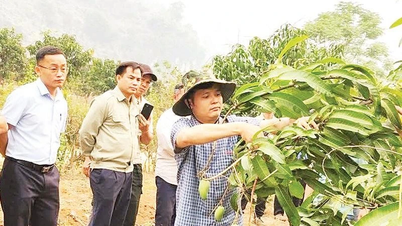
In Hanoi , inspection and supervision work has been proactively carried out from the very beginning when the Party Committee's policies and decisions are implemented. The Standing Committee of the City Party Committee immediately deployed 12 inspection teams to 40 standing committees of commune and ward Party committees and the secretaries and chairmen of People's Committees regarding the implementation of the Resolution of the 14th Party Congress, the development and implementation of working regulations, and the programs and plans for organizing the implementation of resolutions of Party congresses at all levels.
During the first three months of the year, the Hanoi City Party Committee's Inspection Commission maintained regular monitoring of 21 areas; directing all 126 communes and wards to implement the directives, focusing on the progress of resolving 5 bottlenecks, land clearance work, and the progress of urgent flood control projects. The Inspection Commission proactively reported and advised the Standing Committee and the Executive Committee of the City Party Committee weekly on the progress of key projects to monitor, promptly identify difficulties and obstacles, and direct their resolution.
Through regular monitoring activities, the City Party Committee's Inspection Commission has compiled 109 exemplary models and practices in the implementation of political tasks, such as: proactive resettlement; centralization of public administrative services; or resolving bottlenecks through critical path planning…
Gradually professionalize inspection work.
The country is focusing on achieving many strategic goals; a series of large-scale projects are being implemented with flexible mechanisms in the context of post-mergers, with provinces having large geographical areas and sectors, and vast territories; communes have been decentralized, empowered, and given more authority to perform many tasks… placing very high demands on the political system and the Party Inspection sector. The requirements for the capacity of the system and the inspection staff are more important than ever, especially at the grassroots level.
The current two-tiered local government model reveals that inspection and supervision at the grassroots level face numerous challenges in terms of organizational structure, personnel, expertise, and the demands of digital transformation. The workforce is generally small, with many members holding multiple positions, and limited knowledge, expertise, and experience in inspection work, while the workload is increasing, encompassing diverse, sensitive, and specialized areas such as land, finance, public investment, public asset management, and personnel matters.
According to the Central Inspection Commission, by the end of March, the number of full-time inspection officers from the immediate superior level to the grassroots was approximately 18,500, of which more than 70% of the inspection officers at the commune, ward, special zone and equivalent levels were newly involved in inspection and supervision work.
In response to the need to reorganize and streamline the apparatus, improve the effectiveness and efficiency of the Party's inspection committees at all levels, and cultivate and develop a pool of Party inspection cadres in the new situation, the Action Program of the Party Inspection Sector implementing the Resolution of the 14th Party Congress has proposed a solution to research and build a vertical organizational model for the Party's inspection agencies, operating under a "dual" leadership mechanism.
Studying the model of a vertically structured organization operating under a "dual" leadership mechanism is not only organizational in nature but also relates to the mechanism of power control within the Party. This will be led by the Central Organization Department, in coordination with the Central Inspection Commission, in the coming period.
Along with implementing personnel rotation and establishing appropriate incentive mechanisms to attract, retain, and develop talent to meet the requirements of inspection and supervision work, the Central Inspection Commission continues to direct the improvement of programs and plans, and regularly implement training, education, and professional guidance to build a team of inspection officials at all levels with strong political convictions, exemplary moral character, professional skills, and digital skills, meeting the requirements of the new revolutionary period.
The Central Inspection Commission has issued a plan to organize 16 refresher courses and professional training programs on inspection and supervision work in 2026 for officials nationwide. A notable new feature of this year's training is that the courses are designed at two levels, basic and advanced, with separate programs for officials at the provincial level and those directly above the grassroots level.
The coordination with the Ho Chi Minh National Political Academy in recruiting students for second-degree undergraduate programs, as well as undergraduate and postgraduate programs to create a strategic pool of cadres, continues to be strengthened, gradually building a solid professional foundation and professionalizing inspection and supervision work within the Party.
Source: https://nhandan.vn/bai-2-thuc-day-thuc-hien-thang-loi-cac-muc-tieu-chien-luoc-post962524.html
![[Photo] Ba Lang An Lighthouse - the "eye of the sea" amidst the "rock museum" of Quang Ngai province.](https://vphoto.vietnam.vn/thumb/1200x675/vietnam/resource/IMAGE/2026/05/29/1780038698840_anh-man-hinh-2026-05-29-luc-14-10-42.png)

![[Image] Pleasant weather helps students enter the 10th grade entrance exam with confidence.](https://vphoto.vietnam.vn/thumb/1200x675/vietnam/resource/IMAGE/2026/05/29/1780034401612_ngay-1-thi-lop-10-minh-duy-8-5009-jpg.webp)

























































Comment (0)