

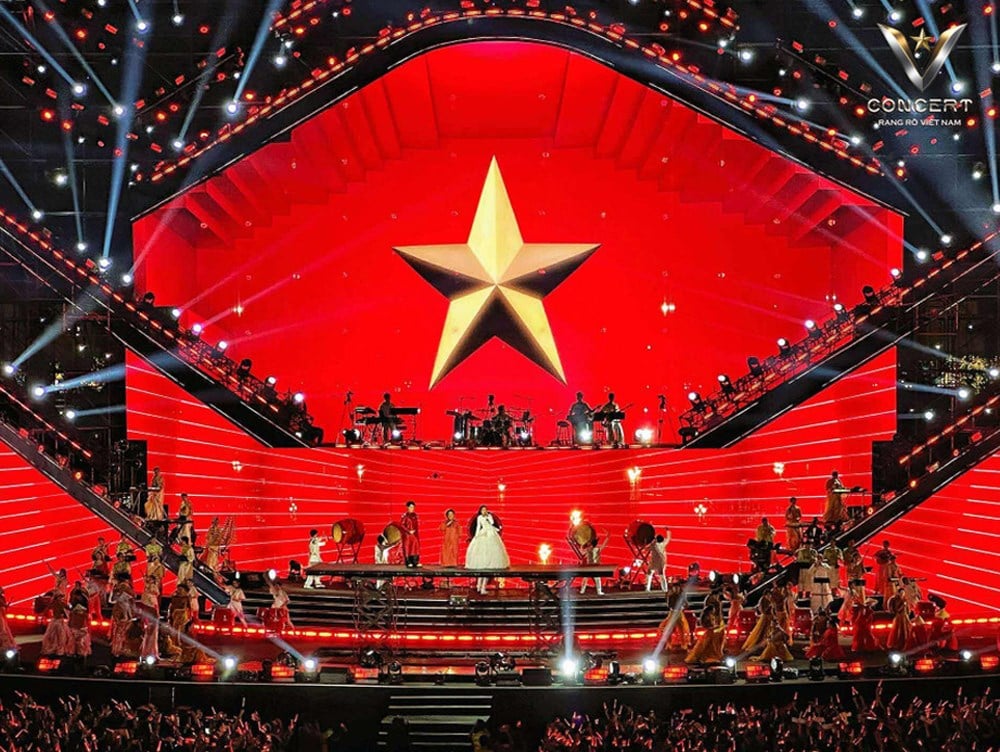
The artist's compass in the digital age.
The development of digital media, especially social networks, has opened up a vast interactive space between artists and the public, where every statement can instantly spread to millions of people. But this very environment can easily become a "trap" if artists lack caution. According to Ms. Le Thi Thoa, M.Sc., School of Interdisciplinary Sciences and Arts, Vietnam National University, Hanoi, common media mistakes today include uncontrolled statements, acting impulsively, "exposing" private lives, and allowing personal scandals to spread on social media.
In addition, there is the problem of excessive media coverage, exaggerating true abilities; chasing after "reach" pressure, leading to the sharing of unverified information. More worryingly, some artists are gradually losing their identity by chasing algorithms and trends, even engaging in deviant behavior to "gain views" and exchange them for artificial numbers.
Researcher Nguyen Quang Long observes that social media has become a second "performance space" for artists. Therefore, the responsibility for what one says is no longer solely the concern of one individual. An ill-considered statement can create a chain reaction, impacting the perceptions and behaviors of a segment of the public, especially young people. In the digital environment, the line between "private life" and "public life" is increasingly blurred. Every statement becomes part of one's professional image. Therefore, artists need to be cautious, verify information, and demonstrate a responsible attitude.
This does not mean avoiding or "safeguarding" personal opinions. Artists have the right to express their individuality and opinions outside their professional field. However, before speaking out, they need to consider the broader social context, avoiding extremism, incitement, or the spread of misinformation.
Researcher Nguyen Quang Long emphasized that developing policies and regulations related to artists' online speech is necessary to create common standards. However, the core element remains self-awareness. When artists understand the weight of their words, they will know how to balance their individuality with social responsibility. This also serves as a "compass" to help them navigate the ever-changing media environment.
The foundation for a sustainable brand.
In an era where anyone can become famous overnight, building a sustainable personal brand has become a major challenge for artists. According to Ms. Le Thi Thoa, digital media communication activities need to adhere to clear principles to ensure professionalism, ethics, and long-term development.
First and foremost, artists and their teams must always adhere to the law and social norms. Artists have the right to reinvent themselves and break conventions to attract audiences, but all creative endeavors must be based on the law, ethics, and traditional customs. It's unacceptable to choose shocking tactics, provocative statements, or offensive imagery just for a few likes or virtual comments.
Secondly, all information conveyed by artists or their teams must be transparent and accurate. In the context of social media spreading information at a high speed, verifying sources and ensuring that content reflects the truth is crucial to maintaining public trust.
Thirdly, the artist's and team's communication activities need to demonstrate respect for the public and colleagues. This is shown through the selection of appropriate language, imagery, and messaging; avoiding attacks, negative comparisons, or creating conflict between fan communities.
Ultimately, artists need to recognize that the public is not simply a consumer of artistic products, but also a supportive community. Therefore, media should aim to deliver positive cultural, emotional, and intellectual value to the audience, rather than merely pursuing commercial goals or short-term effects.
“Fame can come from luck or social media algorithms, but respect from the community is reserved only for artists who practice their craft authentically and respect common cultural norms. Adhering to principles not only helps Vietnamese artists build a sustainable personal brand but also contributes to shaping a professional, civilized, and socially responsible music media environment,” emphasized Ms. Le Thi Thoa, M.Sc.
In reality, in the digital media environment, crises are unavoidable, but how artists handle them determines "who they are." According to Ms. Le Thi Thoa, what the public needs most is honesty. If artists face a crisis due to their own mistakes, they need to proactively speak up promptly, frankly admit their errors, and take concrete corrective actions with transparent information. In the long run, the "shortest and most sustainable path" to regaining audience trust remains through quality artistic products and practical contributions to the community.
"Cultural ambassadors" in modern society
When an artist's influence extends beyond the realm of art, viewing them as "cultural ambassadors" is an appropriate approach. However, according to researcher Nguyen Quang Long, this role should not be understood as a formal pressure, but rather as a professional consciousness formed through learning and training.
Artists don't necessarily have to be perfect role models, but they need to have standards in choosing their message and expression. An artist can be individualistic, even rebellious in their art, but they shouldn't encourage deviations from norms in behavior or values. This boundary is sometimes very thin, requiring vigilance and the ability to constantly adjust. Therefore, "cultural ambassador" is not just a title, but the result of accumulation, refinement, and experience. When artists are serious about their profession, responsible to society, and exemplary in their behavior, they naturally become a valuable pillar of support for the public.
In reality, the music scene has seen many artists build lasting images by harmoniously combining talent and social responsibility. They don't rush to chase short-term trends, while consciously preserving and spreading positive values. Some artists make their mark by engaging in community activities or selectively incorporating traditional cultural elements into their work, contributing to innovation without distorting its essence.
Notably, their influence often stems not from their statements, but from their professional conduct and behavior. According to Mr. Nguyen Quang Long, in the current context, such role models need to be recognized and promoted. These are also factors that contribute to shaping aesthetic sensibilities and ensuring that cultural management policies are implemented effectively, rather than merely remaining on paper or administrative regulations.
On an international level, cases like singer Taylor Swift with her civil rights advocacy or the group BTS with their "Love Myself" campaign demonstrate the power of media when used to spread humanitarian values. In Vietnam, Ha Anh Tuan is a prime example of linking music with environmental protection activities and building a civilized audience community.
Based on these examples, Ms. Le Thi Thoa affirmed that the role of "cultural ambassador" for artists is not only a noble title but also a social responsibility. With a large fan base, artists hold immense "soft power," capable of shaping aesthetics and lifestyles for the younger generation. Each artist appearing on international digital platforms not only represents themselves but also reflects the image of national culture. Therefore, artists' media activities need to ensure national pride and cultural sophistication.
A "cultural ambassador" is not defined by fleeting fame, but by sustained contributions to society. This is also the long-term path for artists to maintain their prestige and position in the public's heart and contribute to building a healthy digital cultural environment.
(To be continued)
Source: https://baovanhoa.vn/van-hoa/bai-3-hao-quang-di-cung-chuan-muc-van-hoa-232475.html
![[Photo] The General Secretary, President and his wife begin their state visit to the Philippines.](https://vphoto.vietnam.vn/thumb/1200x675/vietnam/resource/IMAGE/2026/05/31/1780230559452_anh-man-hinh-2026-05-31-luc-19-28-11.png)
![[Photo] Solemn bathing ceremony and Buddha procession in Hue](https://vphoto.vietnam.vn/thumb/1200x675/vietnam/resource/IMAGE/2026/05/31/1780228263543_1-jpg.webp)
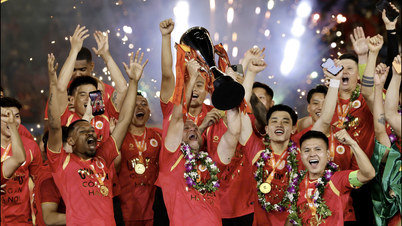
![[Image] Hanoi Police officially crowned champions of V-League 2025/2026](https://vphoto.vietnam.vn/thumb/1200x675/vietnam/resource/IMAGE/2026/05/31/1780244769054_ndo_br_039d561b692be875b13a-jpg.webp)
![[Photo] Admire the coral "masterpiece" amidst the million-year-old heritage of Dak Lak province.](https://vphoto.vietnam.vn/thumb/1200x675/vietnam/resource/IMAGE/2026/05/31/1780221235105_anh-man-hinh-2026-05-31-luc-16-53-27.png)






![[Video] Sunset at Lap An Lagoon – Where the sun sets over the fishing nets](https://vphoto.vietnam.vn/thumb/340x192/vietnam/resource/IMAGE/2026/05/31/1780192137701_beach-landscape-sea-water-nature-grass-745871-pxhere-com.jpeg)































































Comment (0)