

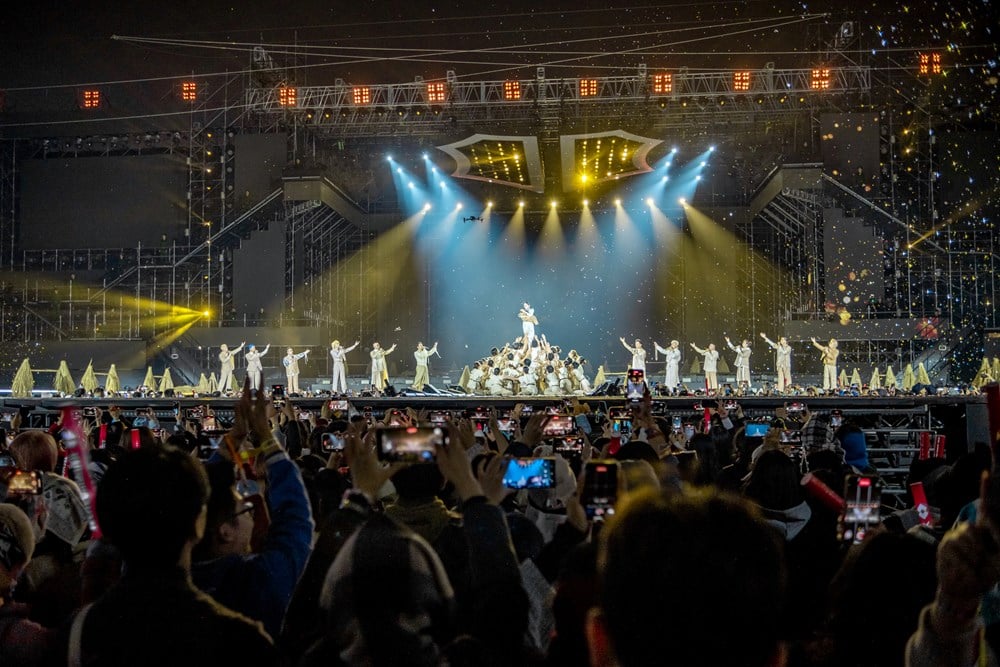
Digital content management still has many shortcomings.
Speaking to Văn Hóa magazine, Associate Professor Dr. Nguyễn Văn Thăng Long (RMIT University Vietnam) argued that the current problem lies not in a lack of legal regulations, but in the gap between the speed of practical implementation and the responsiveness of the management system.
First, there's the issue of how cross-border platforms operate. The majority of entertainment products are currently accessed by Vietnamese users through YouTube, TikTok, Facebook, etc. Shocking and deviant content therefore spreads easily, while products reflecting national cultural identity face more difficulties in reaching viewers.
Artists face a difficult choice: maintaining standards makes it hard to achieve widespread popularity, while chasing trends risks compromising professional values. With distribution heavily reliant on foreign platforms, domestic regulatory bodies are often in a passive position in terms of guidance and control.
The challenge lies not only in the distribution mechanism but also in identifying the entities behind influential social media accounts and groups. Currently, besides professional artists, many individuals and online communities are involved in producing and disseminating information with a large following. However, information about the operating entity, the purpose of their activities, or the funding sources of some groups remains unclear.
The line between entertainment, content business, and activities that influence public opinion is sometimes difficult to define. Meanwhile, the legal responsibilities of administrators of large-scale online communities remain inadequately defined.
The capacity to monitor and handle violations also presents many challenges. Currently, detecting online violations still relies mainly on user reports or manual verification methods, while information can spread very quickly and reach millions of people in a short time. By the time authorities intervene, the consequences arising from substandard products have sometimes already emerged.
Some penalties have not yet created the necessary deterrent effect. Many cases of recidivism occur in increasingly sophisticated forms, further increasing the pressure on cyberspace management.
Based on practical experience in performing arts, Dr. Hoang Duan, Meritorious Artist and Director, Deputy Head of the Department of Cultural and Artistic Management at the Ho Chi Minh City University of Culture, believes that the biggest challenge today is not the lack of regulations, but the mismatch between technology and management methods. According to him, creators are rapidly utilizing new tools, especially AI, to produce and disseminate works across multiple platforms. Meanwhile, online control on social media is still largely based on post-publication review. "In most cases, the review and handling process only begins after the product has been published and feedback from the public or authorities has emerged," Dr. Hoang Duan stated.
In the performing arts sector, management is currently still carried out through a pre-performance or broadcast review process. However, according to experts, the legal system for this sector still has gaps that need further improvement. The lack of a Law on Performing Arts is an issue that many experts have repeatedly raised, in the context of the increasing emergence of new operating models and distribution methods.
According to Dr. Hoang Duan, the challenge of developing the cultural industry is not solely the responsibility of the arts sector. Creating lasting value requires the synchronized participation of many fields such as tourism , transportation, urban planning, and related services. This connection contributes to expanding the creative space and facilitates more effective access for cultural products to the public.

Filling the "grey area" in online content management
According to experts, in the context of rapidly developing digital platforms, it is not easy to demand that global platforms completely change their operating methods. Therefore, a more feasible approach is to increase the responsibility of these platforms when operating in Vietnam.
“Decree 147/2024/ND-CP has initially required platforms to cooperate in removing infringing content within a short period of time. Vietnam can also refer to international experience, such as the European Union’s Digital Services Act, with regulations on algorithm transparency and content display responsibility,” said Associate Professor Dr. Nguyen Van Thang Long.
Beyond regulations on platform responsibility, tax instruments and financial obligations can also become leverage to encourage businesses to invest more seriously in control systems suitable for the Vietnamese market. Meanwhile, the role of users needs to be properly recognized. When external control capabilities are limited, the information recipients themselves become a crucial filtering layer.
In this context, enhancing public communication skills needs to be given more attention. Skills such as identifying fake news and distinguishing verified sources from emotionally driven content should be included in formal education from the secondary school level, instead of just being temporary recommendations.
The issue of account verification is also considered a crucial link. Strict implementation of account verification regulations under Decree 147 is expected to help curb the spread of rumors and inappropriate content. Simultaneously, it is necessary to study management mechanisms for large-scale social media groups as a form of regulated communication channel, with clear legal responsibilities for administrators.
Regarding acts of exploiting technology such as deepfake to manipulate images or distort personal information, perfecting regulations to protect image rights in the digital space, and considering this as an aggravating circumstance in handling violations, is a requirement that is being raised.
Practical experience also shows that manual monitoring methods are increasingly revealing their limitations. New regulations in the amended Cybersecurity Law have placed the responsibility on network service providers to proactively detect and handle violations, instead of simply waiting for requests from authorities. However, to keep pace with the rapid spread of information, continued investment in AI-powered monitoring systems is needed to identify early signs of risk from the very beginning.
Another requirement is to strengthen coordination mechanisms among management agencies. Establishing a permanent coordinating body between relevant ministries and sectors is considered necessary to ensure unified management and minimize gaps. Experience from South Korea, with its centralized creative content coordination agency model, demonstrates the potential for connecting technical management, content management, and industry development direction within a single system.
The gaps in online content management are difficult to address with a single measure. From perfecting the legal framework and enhancing platform accountability to applying monitoring technology and improving users' information literacy, each link plays a crucial role in building a healthy digital environment. As the entertainment industry enters a new phase of development, the requirement goes beyond simply addressing violations; it also aims to build an ecosystem capable of protecting cultural values in cyberspace.
(To be continued)
Source: https://baovanhoa.vn/van-hoa/bai-4-khi-luat-choi-chua-theo-kip-cuoc-choi-233236.html


![[Photo] General Secretary and President To Lam presides over a meeting with the Central Organizing Committee.](https://vphoto.vietnam.vn/thumb/1200x675/vietnam/resource/IMAGE/2026/06/03/1780482764658_a1-bnd-4741-3342-jpg.webp)
![[Photo] First session of the 14th Congress of the Vietnam Trade Union](https://vphoto.vietnam.vn/thumb/1200x675/vietnam/resource/IMAGE/2026/06/03/1780465947883_ndo_br_img-3852-jpg.webp)
![[Photo] Secretary of the National Assembly Party Committee, Chairman of the National Assembly presides over the meeting of the Standing Committee and Executive Committee of the National Assembly Party Committee.](https://vphoto.vietnam.vn/thumb/1200x675/vietnam/resource/IMAGE/2026/06/03/1780480353201_ndo_br_bnd-2585-jpg.webp)










































![[Video] Sunset at Lap An Lagoon – Where the sun sets over the fishing nets](https://vphoto.vietnam.vn/thumb/1200x675/vietnam/resource/IMAGE/2026/05/31/1780192137701_beach-landscape-sea-water-nature-grass-745871-pxhere-com.jpeg)



































Comment (0)