

From the achievements of the past term and the direction for the new journey, a profound message can be seen: Reforming the trade union organization today is not only about reforming its methods of operation, but also about building a worker culture, a labor culture, a culture of care, and a culture of creativity – a crucial foundation for the country to enter a new era of development.
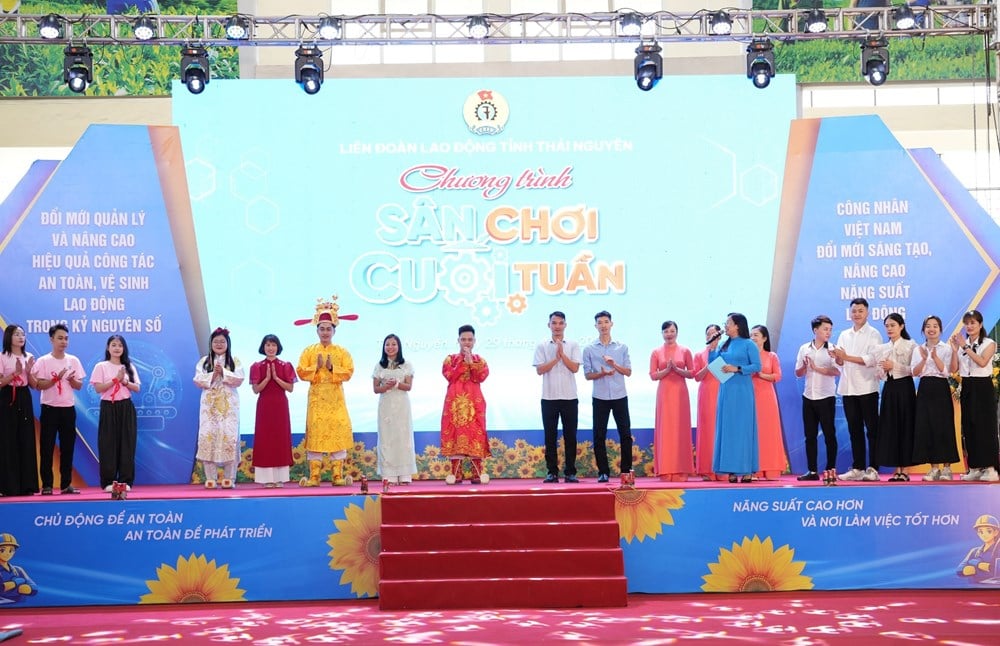
From caring for the well-being of workers to fostering their dignity.
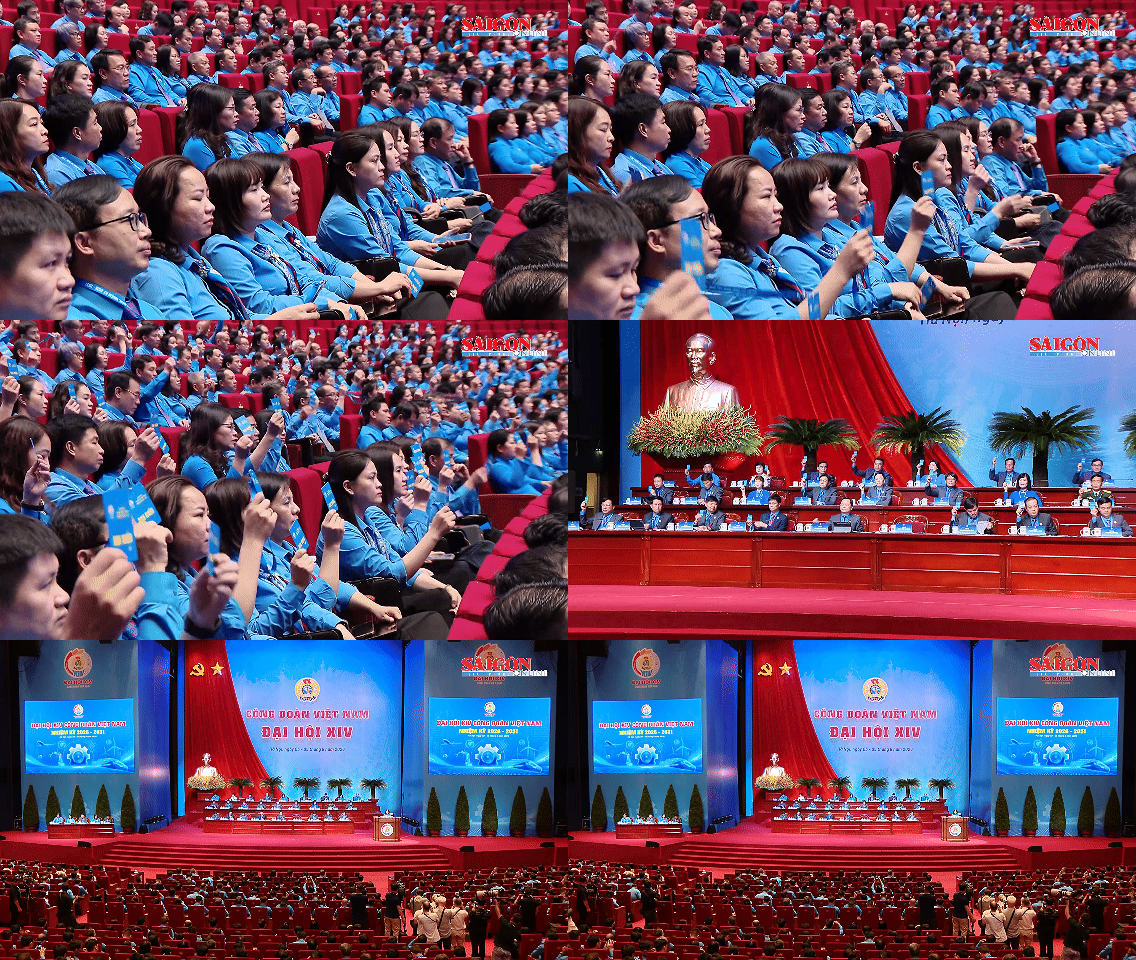
There are socio- political events that, if viewed solely in terms of numbers, reveal only their scale, targets, and results. However, if we look at them from a cultural perspective, we see behind them the human condition, the lives of millions of families, the faith, hope, attachment, and aspirations of those who are daily creating material and spiritual wealth for the nation. The 14th Congress of the Vietnam Trade Union is one such event.
The figures for the 2023-2026 term should therefore be interpreted as indicators of cultural significance. Nearly 23 million union members and workers received support and care during Tet (Lunar New Year) with a total budget of nearly 15,000 billion VND; the total amount spent on caring for union members and workers reached over 27,220 billion VND; programs such as "Tet Reunion," "Workers' Month," "Union Shelter," and "Union Member Welfare" continued to expand... But if we only focus on the support results, we don't fully understand its meaning. More valuable is that through these activities, the Trade Union has contributed to building a culture essential for modern society: a culture that leaves no one behind.
This culture of caring is especially important in the context of a rapidly transforming country. We talk a lot about double-digit growth, the digital economy , artificial intelligence, automation, new productive forces, labor productivity, and international integration. All of these are true and necessary. But all development goals will only have sustainable meaning if people remain at the center.
Therefore, developing a modern workforce cannot simply be about improving skills, work discipline, productivity, and income. Equally important is building a worker culture: a culture of professional self-respect, a culture of lifelong learning, a culture of discipline, a culture of cooperation, a culture of dialogue, a culture of creativity, and a culture of responsibility to the community.
From this perspective, the participation of trade unions in drafting the revised Trade Union Law, contributing to and perfecting policies and laws directly related to workers, is a deeply significant cultural milestone. Culture exists not only in festivals, heritage, art, or customs, but also in institutions. A cultured society is one that institutionalizes fairness, protects the vulnerable, and establishes civilized standards of conduct between employers and employees. When the right to dialogue, the right to negotiation, the right to work in a safe environment, and the right to welfare are guaranteed by law and implemented in daily life, that is the culture of the rule of law in labor…
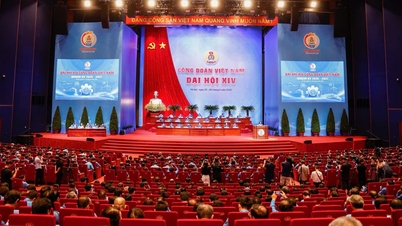
The 14th Congress of the Vietnam Trade Union can be viewed from that very perspective: This is not only a congress of an organization representing workers, but also an opportunity for us to reflect on a strategy for building a cultural life for workers, civil servants, and laborers in the new era.
Building a creative, modern, and humane work culture.
The 14th Congress of the Vietnam Trade Union is defined as a congress of action. During the 2026-2031 term, the Vietnam Trade Union plans to launch a new emulation movement: "Excellent Workers, High Productivity, Good Income"; and simultaneously set forth two breakthroughs: improving the quality of trade union officials, especially full-time officials and grassroots trade union chairpersons; and strongly applying science and technology and digital transformation in trade union activities and promoting production and business.
This is a very noteworthy approach from a cultural perspective. Productivity, if understood only as increasing output, speed, and pressure, can easily lead to fatigue and alienation. But productivity built on a cultural foundation is a different story. It's productivity linked to creativity, skills, better working conditions, better income, the joy of work, and the holistic development of the individual.
The "Excellent Work, High Productivity, Good Income" movement should therefore be seen as a shift from traditional emulation culture to a modern emulation culture: Emulation is not a formality, not a slogan, but must create real benefits for workers, businesses, and the country.
The achievements of the past term have demonstrated the immense potential of Vietnamese workers. Through emulation movements, more than 383,800 initiatives have been recognized and effectively applied in practice, bringing in benefits worth over 40 trillion VND. Behind each initiative lies the intelligence, experience, observation, and sense of responsibility of the workers. Some initiatives do not necessarily have to be major inventions, but they can save materials, improve processes, reduce risks, enhance product quality, make work safer, more efficient, and more humane.
In this new era of development, we need to awaken that creative energy even more strongly. To achieve this, trade unions must not only encourage workers to compete, but also contribute to creating an environment where workers dare to innovate, are encouraged to innovate, and rightfully benefit from their innovation.
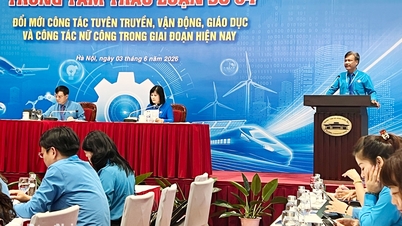
Here, a culture of dialogue plays a particularly important role. The 14th Congress of the Vietnam Trade Union is expected to discuss major issues, including representing, caring for, and protecting the rights of workers; innovating propaganda, mobilization, and women's affairs; implementing the "Excellent Worker, High Productivity, Good Income" emulation movement; and simultaneously developing a plan to improve the effectiveness of dialogue, collective bargaining, and labor relations building for the period 2026-2031. This shows that the Trade Union is facing the need to shift strongly from "caring on behalf of others" to "representing through dialogue," from "one-way mobilization" to "two-way listening," from broad movements to more practical, individualized services that are closer to the needs of each group of workers.
A particularly noteworthy new development is the requirement for digital transformation in trade union activities. Digital transformation not only helps to better manage union members, facilitate faster interaction, and provide more efficient services, but also opens up the possibility of building a "digital cultural space" for workers: a place where they can access knowledge, legal information, professional skills, digital skills, psychological counseling, welfare information, cultural and artistic activities, and various forms of lifelong learning.
Furthermore, building a workers' culture in the new era cannot be without family culture and gender equality. Women's affairs were identified as one of the thematic discussion topics of the Congress. This is an issue very close to cultural life. Female workers, employees, and laborers participate in production and work while also shouldering many family responsibilities.
From this, it can be seen that the 14th Congress of the Vietnam Trade Union set a greater requirement: to build Vietnamese workers in the new era with all the qualities of a developing subject. These are workers who are skilled, disciplined, healthy, digitally proficient, legally aware, creative, have a healthy cultural life, and are responsible to their families, communities, and the nation. They are also workers who are proud of their work, whether on the production line, in the laboratory, on the construction site, in the classroom, hospital, enterprise, or on digital platforms.
To achieve this, the new term of the Trade Union needs to pay more attention to the cultural ecosystem of workers. In industrial zones and export processing zones, there is a need for more libraries, cultural institutions, sports fields, reading spaces, performance spaces, community art activities, legal and psychological counseling services.
In businesses, it's necessary to build a corporate culture that respects employees, considering them the most valuable asset, not the lowest cost. At the policy level, worker development should be linked to the development of social housing, schools, healthcare, public transportation, cultural services, and urban welfare. At the media level, more positive stories about workers should be told...
The 14th Congress of the Vietnam Trade Union is therefore not just an organizational milestone. It is also a reminder that in the era of national progress, cultural development must penetrate factories, construction sites, industrial zones, agencies, schools, hospitals, enterprises, and every worker's home. A strong Vietnam Trade Union is not only one with a large membership, broad organization, and many movements, but also one that knows how to make workers feel respected, protected, supported, and inspired.
Source: https://baovanhoa.vn/chinh-polit/xay-dung-van-hoa-cong-nhan-trong-ky-nguyen-moi-233756.html
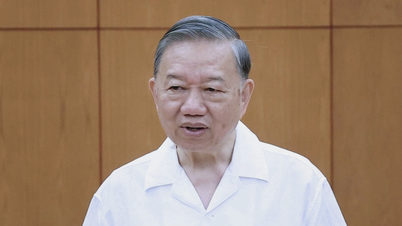
![[Photo] General Secretary and President To Lam presides over a meeting with the Central Organizing Committee.](https://vphoto.vietnam.vn/thumb/1200x675/vietnam/resource/IMAGE/2026/06/03/1780482764658_a1-bnd-4741-3342-jpg.webp)
![[Photo] First session of the 14th Congress of the Vietnam Trade Union](https://vphoto.vietnam.vn/thumb/1200x675/vietnam/resource/IMAGE/2026/06/03/1780465947883_ndo_br_img-3852-jpg.webp)

![[Photo] Secretary of the National Assembly Party Committee, Chairman of the National Assembly presides over the meeting of the Standing Committee and Executive Committee of the National Assembly Party Committee.](https://vphoto.vietnam.vn/thumb/1200x675/vietnam/resource/IMAGE/2026/06/03/1780480353201_ndo_br_bnd-2585-jpg.webp)


































![[Video] Sunset at Lap An Lagoon – Where the sun sets over the fishing nets](https://vphoto.vietnam.vn/thumb/1200x675/vietnam/resource/IMAGE/2026/05/31/1780192137701_beach-landscape-sea-water-nature-grass-745871-pxhere-com.jpeg)




















Comment (0)