

In line with this goal, Tuyen Quang has embarked on a journey to restore the health of its soil. This will not only help increase the value of agricultural products but also open up opportunities for the development of green and sustainable agriculture in the future.
Reviving the land
In the four-season lemon-growing area of Mr. Nguyen Xuan Doan's family in Phu Luong village, Binh Ca commune, signs of declining soil productivity are quite evident.
Many years ago, hoping to increase productivity, the family primarily used inorganic fertilizers in crop care. In the first few seasons, the lemon trees grew well and yielded good results. However, over time, the effectiveness of fertilizer use gradually decreased while investment costs increased.
Field surveys in lemon orchards show that current yields are only about 50-60% compared to areas using organic fertilizers. The soil under the trees shows signs of compaction, reduced moisture and nutrient retention, and uneven tree growth.
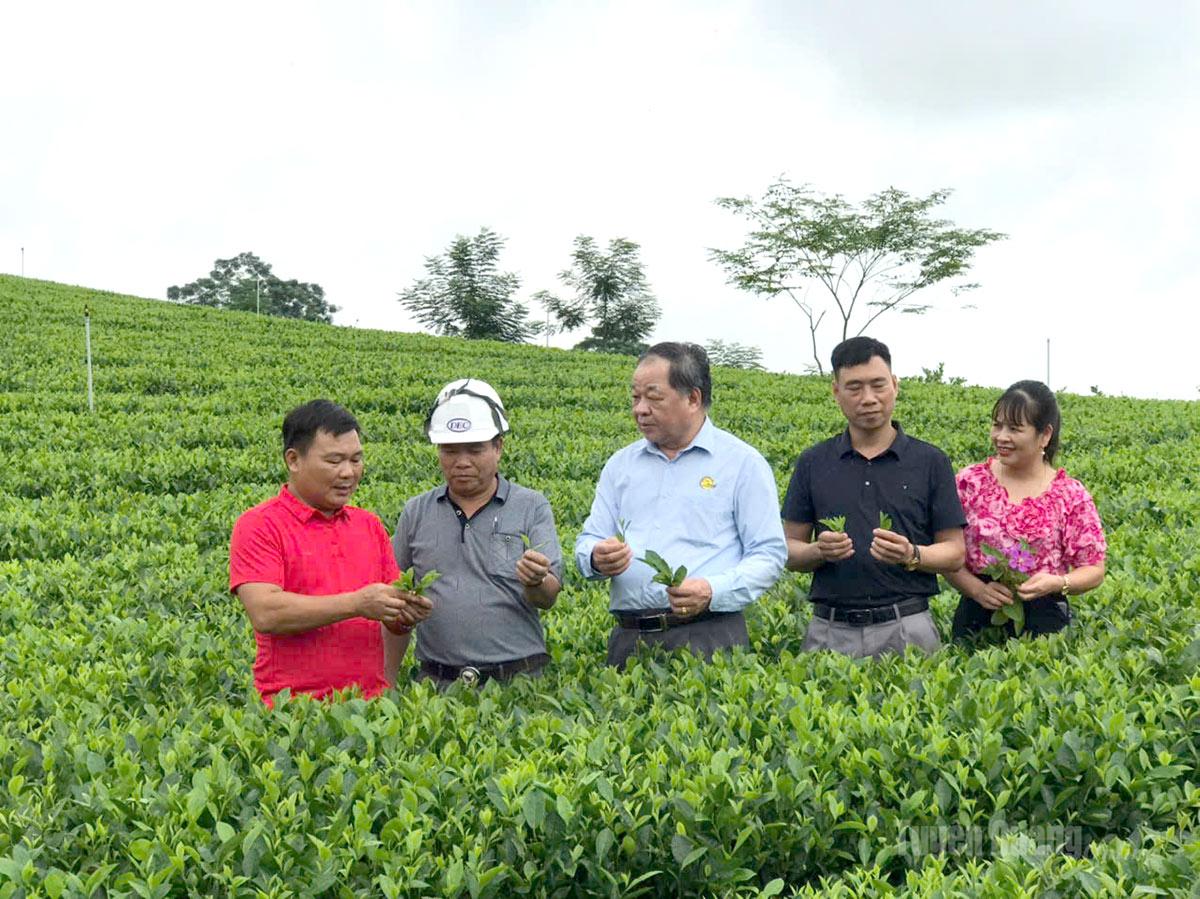 |
| Comrade Ha Phuc Mich, Chairman of the Vietnam Organic Agriculture Association, visits a tea cultivation model in Tan Thanh commune. |
After visiting several organic farming models in the province, he hopes to gradually change his farming methods, reducing the use of chemical fertilizers and increasing the use of organic fertilizers. The awareness of the need to change production methods to protect the soil is not only present among individual farmers but has also formed in many concentrated commodity production areas of the province.
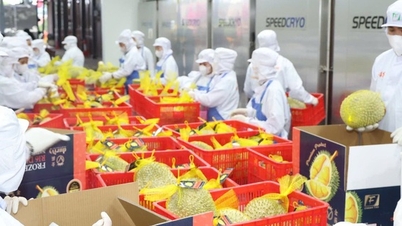
In the Soi Ha pomelo growing area of Xuan Van commune, pomelos bearing the local brand have gradually conquered demanding markets in Europe. Behind this success lies the culmination of many years of persistent efforts to change production methods by the local people and the Xuan Van Agricultural and Forestry Cooperative.
Mr. Tran Van Tuyen, Director of Xuan Van Agricultural and Forestry Cooperative, said: To maintain the Soi Ha pomelo brand, the cooperative has proactively linked with agricultural export businesses, guided people to apply safe production processes, reduced the use of chemicals, increased the use of organic fertilizers, and strictly implemented traceability requirements.
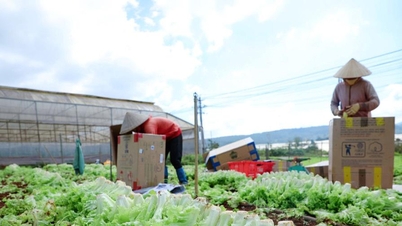
The application of organic fertilizers is also yielding positive results in many high-tech agricultural production models. A typical example is the greenhouse model of Ms. Chu Thi Binh in Thai Binh commune. On her land for growing melons, pumpkins, and other vegetables, Ms. Binh has boldly applied a comprehensive system of greenhouses, water-saving irrigation, and organic fertilizers.
According to Ms. Binh, using organic fertilizers helps plants develop stronger root systems, increasing their ability to absorb nutrients and resist pests and diseases. Melons and pumpkins grow uniformly, resulting in better product quality and meeting the demands of the clean agricultural market. In particular, the model has created high economic value per unit area, while maintaining soil aeration in the production area and limiting soil degradation commonly seen in intensive vegetable farming regions.
Accompanying these models is the Sang Nhung Green Agricultural Products Cooperative, which plays a role in researching, producing, and supplying organic fertilizers to the people. Using agricultural by-products and livestock waste as raw materials, the cooperative has built a model for producing organic fertilizers in a circular economy, creating products that serve clean agricultural production.
According to Mr. Nguyen Ngoc Sang, Director of the Cooperative, the unit's organic fertilizer products are currently being applied in many models such as Hong Thai Shan Tuyet tea, Xuan Van pomelo growing area, Lang Bat tea, and greenhouse production models.
According to a report by the Department of Agriculture and Environment, the province currently has over 4,409 hectares of agricultural production adhering to advanced standards such as VietGAP, organic farming, Rainforest Alliance, and GlobalGAP. Of this, nearly 340 hectares are under organic and organically-oriented farming; over 3,146 hectares are under VietGAP; and over 914 hectares are under Rainforest Alliance.
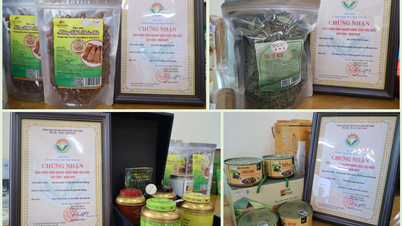
The province currently has 357 OCOP products rated 3 stars or higher; over 300 products have traceability labels; and 13 products have been granted geographical indication protection. Many organic products and products produced using organic methods have gradually established their brands in domestic and international markets.
These results show that the trend of green production is gradually taking shape, creating an important foundation for land resource restoration and increasing the added value of the agricultural sector.
Scaling up green production chains
Speaking at the province's organic agriculture development conference, Dr. Ha Phuc Mich, Chairman of the Vietnam Organic Agriculture Association, assessed that Tuyen Quang possesses many advantages for developing organic agriculture. After the merger, the province has a diverse ecosystem, ample land for development, and especially many production areas that have not been heavily impacted by agricultural chemicals. This is a favorable condition for the formation of large-scale organic production areas in the future.
However, to effectively exploit this potential, it is necessary to reorganize production according to appropriate organic standards, while leveraging the advantages of non-timber forest products, medicinal plants, and natural resources under the forest canopy. Once a sustainable value chain is established, organic products can achieve a value 1.3 to 2 times higher than conventionally produced products.
Clarifying the local development orientation, Comrade Pham Manh Duyet, Member of the Provincial Party Committee, Director of the Department of Agriculture and Environment, said that the province is aiming for double-digit economic growth, with the agriculture and fisheries sector striving to achieve a growth rate of 5.58% in 2026.
According to Comrade Pham Manh Duyet, the agricultural sector will focus on developing organic production areas with advantages; surveying and replicating new models such as Ngoc Linh ginseng grown under forest canopy, closed-loop banana production areas, high-quality orange growing areas, mulberry cultivation areas for silkworm farming, and many other crops with high economic value.
The industry's perspective is that the development of organic agriculture must prioritize the right subjects, the right products, and the right production areas; it should not be done as a trend but rather with the aim of achieving tangible, long-term results.
The circular economy model is spreading throughout the province, and the journey of land revitalization is gradually being realized. When the land is restored to its original fertility, it will not only create more sustainable harvests but also open up a new path for the development of green, modern, and high-value-added agriculture in Tuyen Quang in the coming years.
Text and photos: Nguyen Dat, Thanh Phuc, Ly Thu
Lesson 1: When the soil... gets poisoned
Lesson 2: A Costly Lesson
Source: https://baotuyenquang.com.vn/kinh-te/202606/bai-cuoi-co-hoi-cho-nong-nghiep-xanh-de0113b/
![[Photo] General Secretary and President To Lam presides over a meeting with the Central Organizing Committee.](https://vphoto.vietnam.vn/thumb/1200x675/vietnam/resource/IMAGE/2026/06/03/1780482764658_a1-bnd-4741-3342-jpg.webp)
![[Photo] Secretary of the National Assembly Party Committee, Chairman of the National Assembly presides over the meeting of the Standing Committee and Executive Committee of the National Assembly Party Committee.](https://vphoto.vietnam.vn/thumb/1200x675/vietnam/resource/IMAGE/2026/06/03/1780480353201_ndo_br_bnd-2585-jpg.webp)



















![[Infographic] Over 1,400 intellectual property infringement cases processed after 3 weeks of implementing Directive 38](https://vphoto.vietnam.vn/thumb/402x226/vietnam/resource/IMAGE/2026/06/04/1780545194110_infographic-xu-ly-hon-1-400-vu-xam-pham-quyen-so-huu-tri-tue-sau-3-tuan-thuc-hien-cong-dien-38_20260604090937.webp)





















![[Video] Sunset at Lap An Lagoon – Where the sun sets over the fishing nets](https://vphoto.vietnam.vn/thumb/1200x675/vietnam/resource/IMAGE/2026/05/31/1780192137701_beach-landscape-sea-water-nature-grass-745871-pxhere-com.jpeg)







![[Photo] General Secretary and President To Lam attends the 14th Congress of the Vietnam Trade Union](https://vphoto.vietnam.vn/thumb/402x226/vietnam/resource/IMAGE/2026/06/04/1780543339765_anh-man-hinh-2026-06-04-luc-10-22-07.png)















Comment (0)