

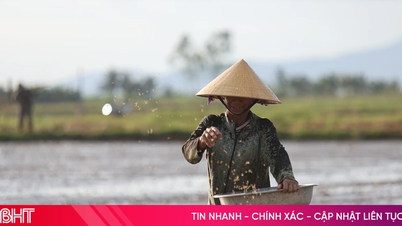
Having planted over one acre of rice, Ms. Tran Thi Thuy (Thinh Loc village, Xuan Loc commune) is currently focusing her efforts on thinning and replanting to ensure the recommended plant density. Ms. Thuy said: “Currently, the first rains of the Spring Equinox have provided additional moisture and nutrients for the rice plants, so they are growing quite quickly. Along with the abundant irrigation water, I am taking advantage of the early thinning and replanting, striving to complete it within the next 5-6 days so that I can prepare for Tet (Lunar New Year) and welcome the spring.”
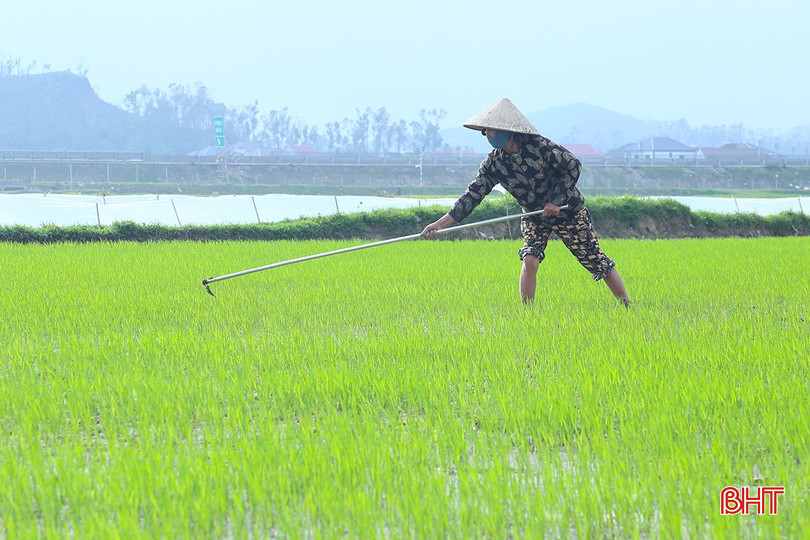
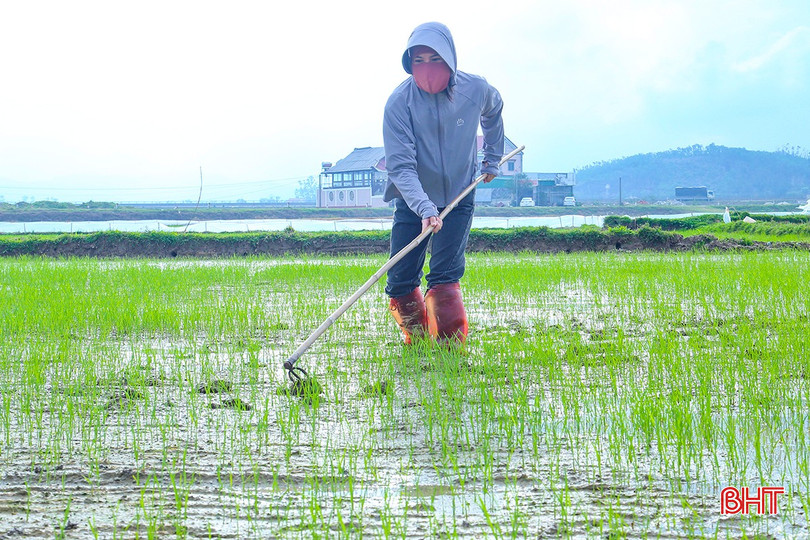
Thanks to adhering closely to the planting schedule and proactively managing the sowing process, over 1,300 hectares of spring rice in Xuan Loc commune are now growing quite uniformly. In the concentrated fields, farmers are actively thinning and replanting rice in areas where sown unevenly or damaged by rats and golden apple snails; at the same time, they are weeding, irrigating the fields, and preparing for the first round of fertilization. Timely care helps the rice plants recover quickly, increases tillering capacity, and creates a suitable density for the next growth stage.
With over 1,100 hectares of rice fields, farmers in Toan Luu commune are focusing on tending their crops right from the start of the season. On the lush green fields, the atmosphere of production in the final days of the year is becoming increasingly bustling. Ms. Phan Thi Chau (Phu Son village, Toan Luu commune) said: “To date, the early-sown rice fields are almost a month old and are entering the stage of root development and tillering. This year, the weather has been favorable, and the rice is growing evenly, so farmers don't have to spend much time thinning and replanting, which helps reduce costs and labor.”
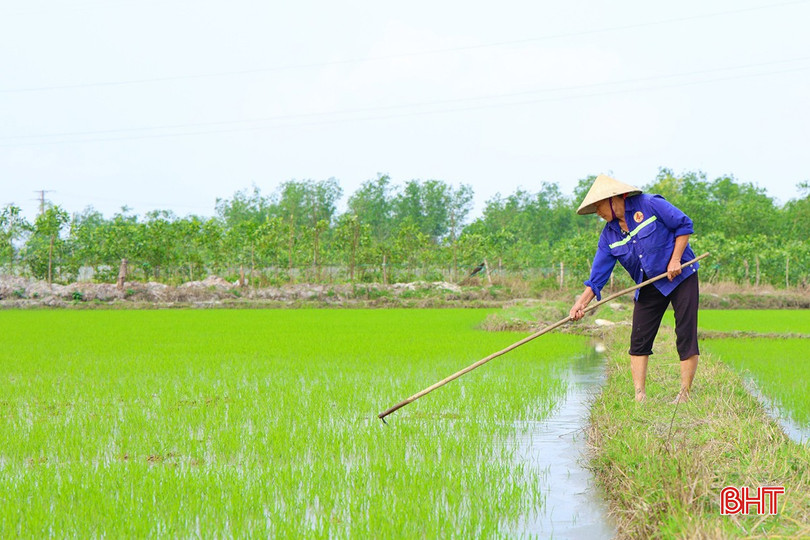
Not far away, Mr. Pham Van Hung was busily applying well-rotted manure and nitrogen fertilizer to stimulate rapid rice growth. After applying the fertilizer, he would combine it with thinning and replanting, maintaining a stable water level of 3-5 cm in the rice field to help the rice plants absorb nutrients well in the coming days. "During this stage, if we take good care of the plants and apply balanced fertilizer, the rice will tiller vigorously, creating a foundation for high yields at the end of the season," Mr. Hung shared.
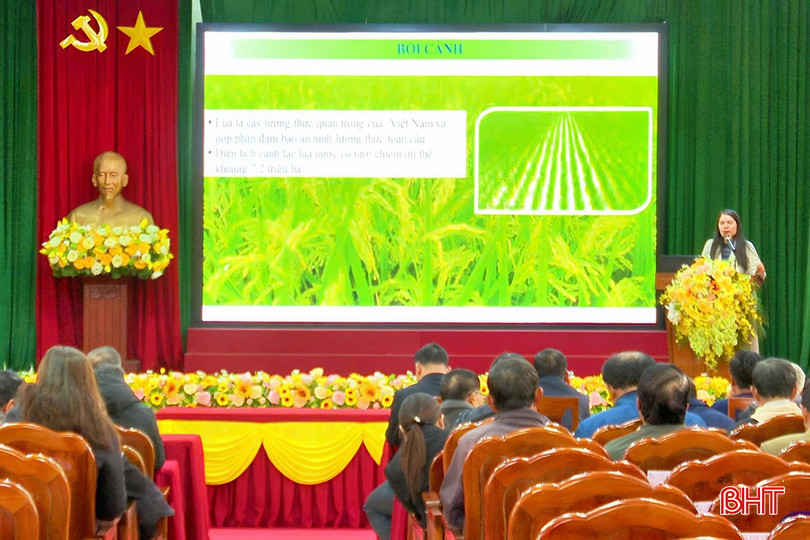

For the spring crop of 2026, Ha Tinh province planted over 59,000 hectares. Thanks to favorable weather conditions and the proactive efforts of local authorities, most areas have completed planting, and the rice plants are growing and developing well. Of this, 4,150 hectares of rice are being irrigated using the alternating wet-dry irrigation method, which is being actively implemented by local authorities and farmers.
Mr. Phan Ba Ninh, Head of the Economic Department of Dong Kinh Commune, said: “The locality is implementing an alternating wet-dry irrigation model on an area of about 200 hectares. This is a new production method, so the guidance of production is given special attention. The commune will continue to closely coordinate with the irrigation management unit to regulate water appropriately in the post-planting stage, and at the same time guide people to care for rice according to the correct technical procedures, ensuring cultivation efficiency and saving water resources.”
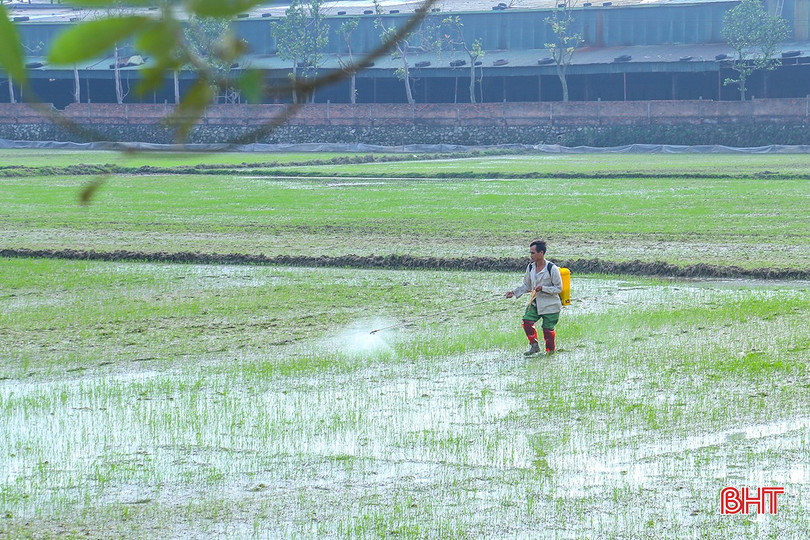
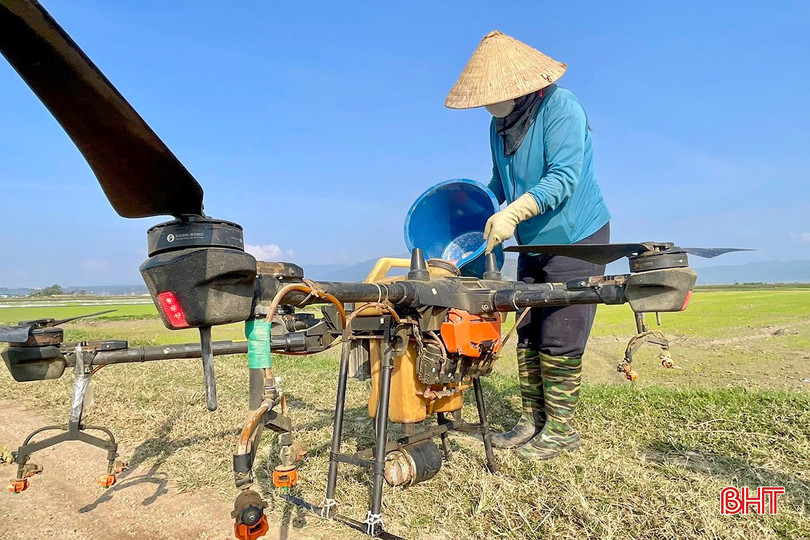
In addition, some pests and diseases have begun to emerge, causing localized damage in production areas. Farmers need to intensify field inspections to detect and control them promptly.
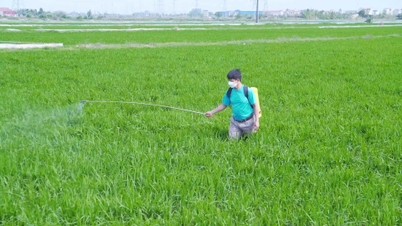
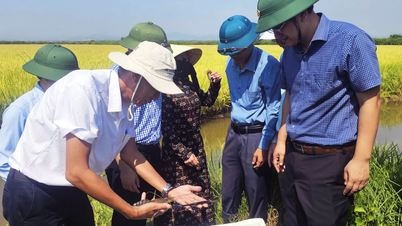
Mr. Phan Van Hanh (Doan Ket village, Thien Loc commune) reported: “In some early-planted rice fields, thrips have appeared, causing damage by sucking sap from young leaves, making them curl up, shrivel, and turn yellow and dry, slowing down rice plant growth. Farmers are applying integrated pest management measures such as weed control, proper water management, balanced fertilization, and possibly spraying pesticides when pest density is high.”
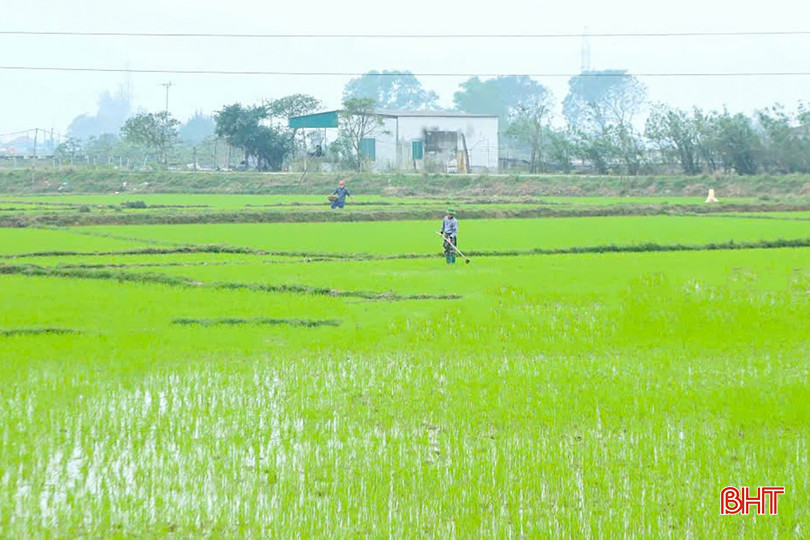
According to Mr. Phan Van Huan, Head of the Crop Production Department, Sub-Department of Crop Production and Livestock (Department of Agriculture and Environment of the province), the weather during the Spring Equinox - Rain Water period is characterized by gradually increasing temperatures, high humidity, and sufficient sunlight, which helps improve photosynthesis and is favorable for crop growth. Therefore, localities and farmers need to focus on regulating water, thinning rice seedlings to ensure a reasonable density, especially for direct-seeded rice; and applying fertilizer early and concentratedly to promote good rice growth.
However, this is also the period when many pests and diseases such as thrips, rice blast, and stem borers are at risk of developing strongly. Farmers need to regularly inspect their fields, detect problems early, and take timely control measures. In areas where pests and diseases have appeared, stop applying nitrogen fertilizer and do not spray foliar fertilizers containing nitrogen. If pests and diseases appear in high densities, spray pesticides according to the "four correct principles"; after 5-7 days, check again and treat a second time if necessary.
Source: https://baohatinh.vn/bam-dong-cham-lua-phong-som-sau-benh-hai-post305206.html




![[Photo] National Assembly Chairman Tran Thanh Man working with the Standing Committee of the Economic and Financial Committee](https://vphoto.vietnam.vn/thumb/1200x675/vietnam/resource/IMAGE/2026/05/20/1779249584387_ndo_br_1-jpg.webp)
![[Photo] General Secretary and President To Lam presides over a meeting on assessing national development resources.](https://vphoto.vietnam.vn/thumb/1200x675/vietnam/resource/IMAGE/2026/05/20/1779253785852_a1-bnd-2943-8519-jpg.webp)










































![[Workers' Month 2026] Spreading love on the Vinh - Dong Hoi frontline: Nearly 1 billion VND spent on caring for the lives of workers.](https://vphoto.vietnam.vn/thumb/402x226/vietnam/resource/IMAGE/2026/05/20/1779237885217_img_8650.jpeg)







































Comment (0)