

(HNMO) - After more than a year of operation in Hanoi , Ho Chi Minh City, and Phu Quoc (Kien Giang province), Vinbus' electric buses have served nearly 32 million passengers. It is estimated that the amount of CO2 emissions reduced into the environment is approximately 19,938 tons. However, the development of this environmentally friendly form of public passenger transport still faces many obstacles...
Initial results
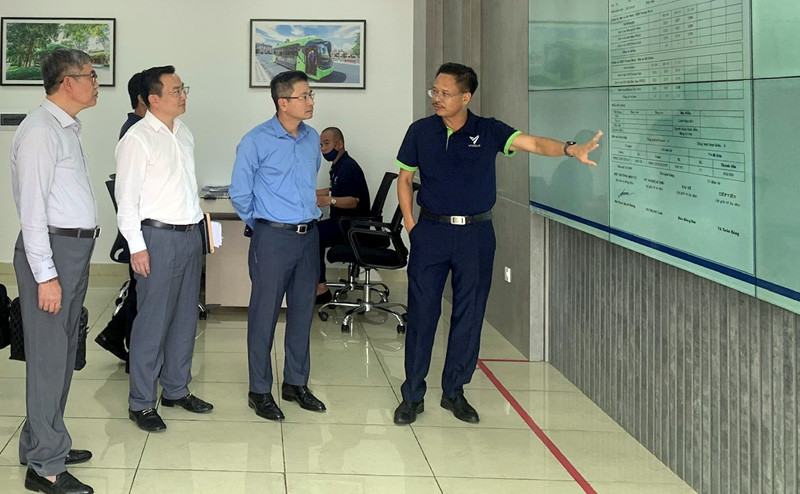
According to Mr. Nguyen Cong Nhat, General Director of Vinbus, Vinbus - a subsidiary of Vingroup - is the first enterprise to deploy electric bus services in Vietnam.
Officially joining the Hanoi public passenger transport network on December 2, 2021, with route E03 (Ocean Park Urban Area - My Dinh Bus Station), Vinbus now has 9 electric bus routes with 153 vehicles operating daily, after more than a year.
Following its launch in Hanoi, Vinbus has deployed electric buses in Phu Quoc (Kien Giang province) and Ho Chi Minh City. To date, the company has operated over 756,550 trips, serving nearly 32 million passengers. The estimated amount of CO2 emissions reduced into the environment is approximately 19,938 tons.
“Electric bus routes are widely supported and highly appreciated by the public for their service quality. Vinbus conducts quarterly surveys on customer satisfaction. In the latest survey (Q1 2023), 90% of surveyed customers gave service quality scores of 9 or 10. Passenger volume has continuously increased month by month, with some routes ranking among the top in the capital's bus network. Routes E01 and E03 ranked 1st and 3rd respectively in terms of average passenger volume per trip. Notably, 85% of passengers are office workers, while this rate is only 20-25% on conventional bus routes,” Mr. Nhat informed.
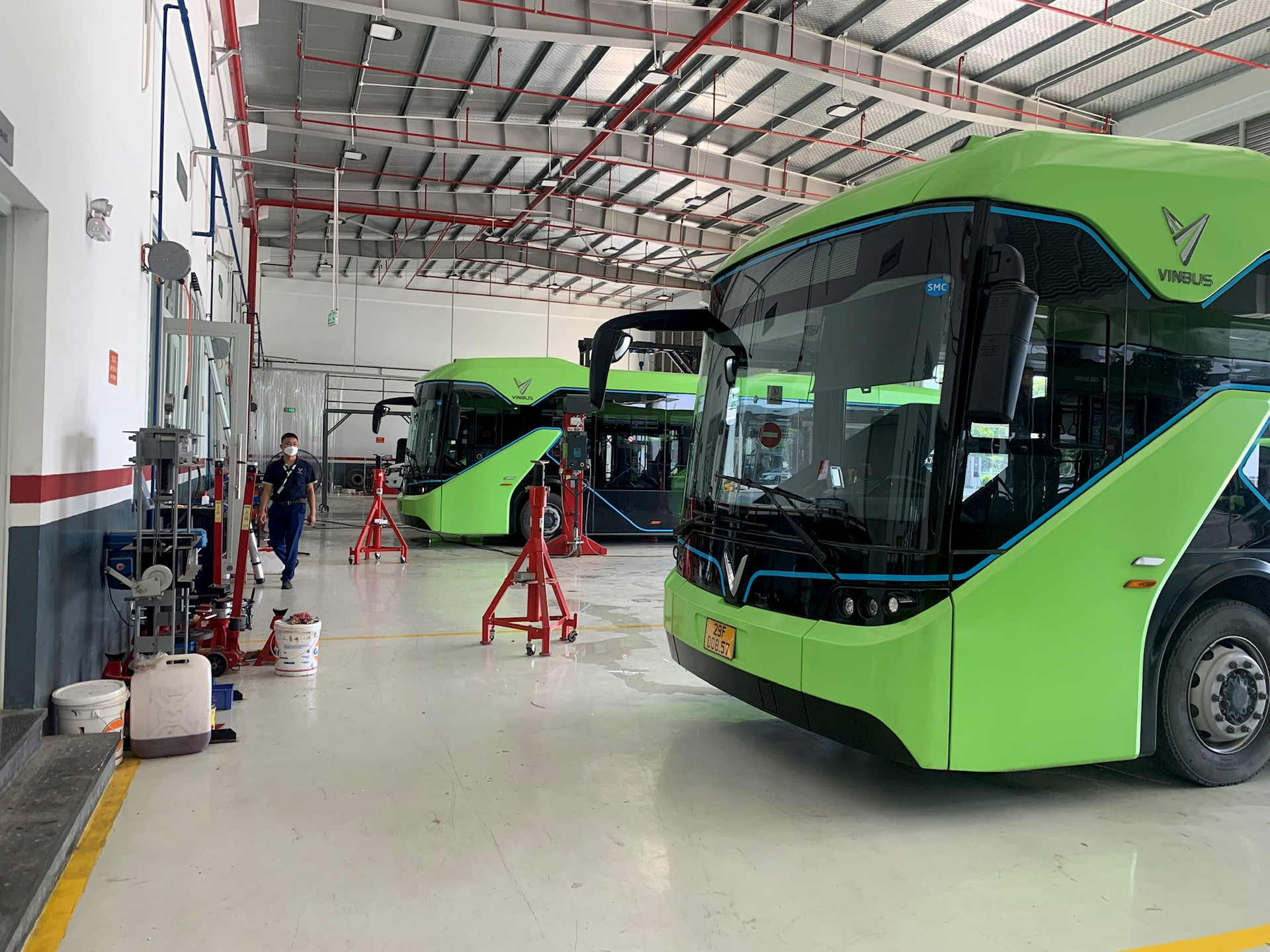
In terms of infrastructure, Vinbus has two depots in Hanoi, with modern and integrated equipment. The depot in Ocean Park Urban Area (Gia Lam District) has a total area of 10,000 m² , with a parking capacity for 110 vehicles. The depot in Smart City Urban Area (Nam Tu Liem District) has a total area of 23,000 m² , with a parking capacity for 160 vehicles.

To ensure the stable and safe operation of the electric buses, the depot uses a 24kV medium-voltage power supply. Each bus takes 3-6 hours to fully charge after a day of operation and can travel 250-280km on a single charge.
Utilizing modern, intelligent technology, electric buses are not only environmentally friendly but also improve traffic safety through camera systems, GPS positioning, and direct interaction between the control center and drivers. Electronic tickets are linked to 18 banks…
A spirit of partnership with businesses.
According to Tran Nhat Quang, Chief Inspector of the Hanoi Department of Transport, electric buses strictly comply with the Road Traffic Law and transport regulations. To date, the Department's Inspectorate has not had to issue any administrative violation fines related to the operation of electric buses.
Commenting on electric buses, Deputy Director of the Hanoi City Public Transport Management Center, Thai Ho Phuong, said that the application of technology not only meets the management and service provision requirements of businesses but also helps state management agencies control, inspect trips, and monitor quality in a public and transparent manner.
Providing further information on the operation of electric buses, Vinbus General Director Nguyen Cong Nhat said that the investment cost per vehicle is approximately 7.4 billion VND, 3-3.5 times higher than diesel buses. Furthermore, without government support policies, businesses have to bear high bank loan interest costs, equivalent to vehicle depreciation costs. If businesses lack sufficient financial resources, it will be difficult to sustain operations.
Therefore, Vinbus proposed that the Hanoi Department of Transport promptly issue standardized pricing for electric buses; and advise the city on policies to support interest rates for businesses using clean energy, in accordance with Resolution No. 07/NQ-HĐND of the Hanoi People's Council.
Regarding the policy of transitioning to green energy in public bus transportation, the Director of the Hanoi Department of Transport, Nguyen Phi Thuong, stated that the city is reviewing and developing a bus network plan with the goal of increasing the percentage of people using public transportation services. The green energy transition roadmap will closely follow this plan and Hanoi's electricity plan.
The transformation must be feasible and have a roadmap to allow businesses to prepare. The State should work alongside businesses, providing appropriate mechanisms and policies to support and resolve obstacles for them.
“Right in 2023, the Department completed the draft on unit prices and norms for electric buses and submitted it to the City People's Committee for consideration and approval for implementation in 2024. The unit prices ensure accuracy and completeness, preventing loss of state budget funds, while also not stifling the participation of businesses,” Mr. Nguyen Phi Thuong stated.
Source























































































Comment (0)