

Many people have a habit of simply rinsing water bottles with plain water before reusing them. However, epidemiologists warn that this habit poses several health risks.
Professor Chuck Gerba at the University of Arizona (USA) stated that saliva is the main culprit contaminating water bottles. Examining samples from students' bottles, he observed a dramatic increase in bacteria after just three or four days of continuous use. The mouth of the bottle is the dirtiest area due to direct contact with the user's mouth.
Additionally, touching the lid or suction nozzle can introduce bacteria such as Salmonella, E. coli, and Norovirus into the device.
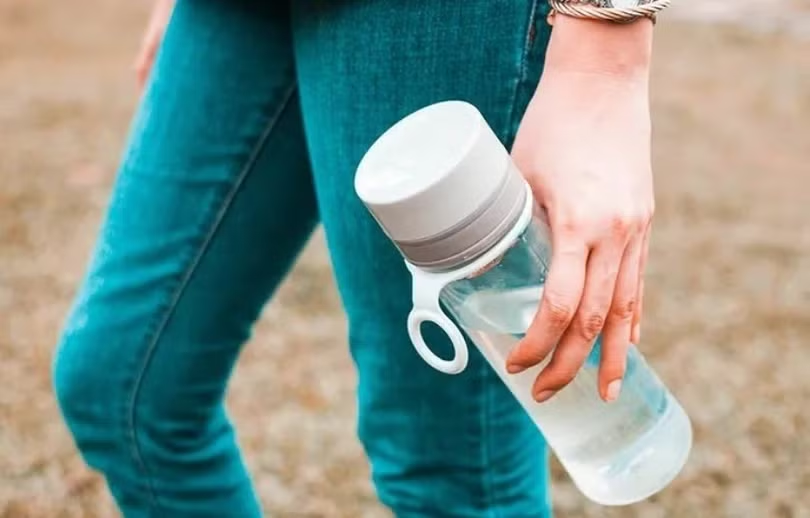
Bacteria have a mechanism for creating biofilms that are difficult to observe with the naked eye. Gastroenterologist Supriya Rao (USA) explains that each time you drink, bacteria from your mouth enter and multiply rapidly in the moist environment. Therefore, she recommends that users wash the bottle with soap every day. For bottles containing sugary or flavored drinks, they should be cleaned immediately after use because the sweet environment accelerates bacterial growth.
If daily soap washing isn't feasible, microbiologist Jason Tetro of the University of Ottawa (Canada) suggests that three days is the maximum safe timeframe for rinsing the bottle with plain water. Beyond this point, the bottle must be cleaned with chemicals. The most easily recognizable sign of a bottle with a high bacterial buildup is an unusual odor.
Regarding deep cleaning, Mr. Tetro advises users to use a specialized brush and soap to thoroughly scrub the bottles every 5-7 days. Readers can also use a dishwasher to take advantage of the high heat to kill microorganisms. Rinsing the bottles with 70°C hot water daily may help reduce bacteria, but it is only a temporary solution.
Experts also advise against sharing water bottles. This increases the risk of cross-contamination with foreign bacteria, such as group A streptococcus or agents that cause meningitis.
Ngoc Ngan (According to Huffpost )
Source: https://baohatinh.vn/bao-lau-can-rua-binh-nuoc-ca-nhan-post309476.html



































































































Comment (0)