

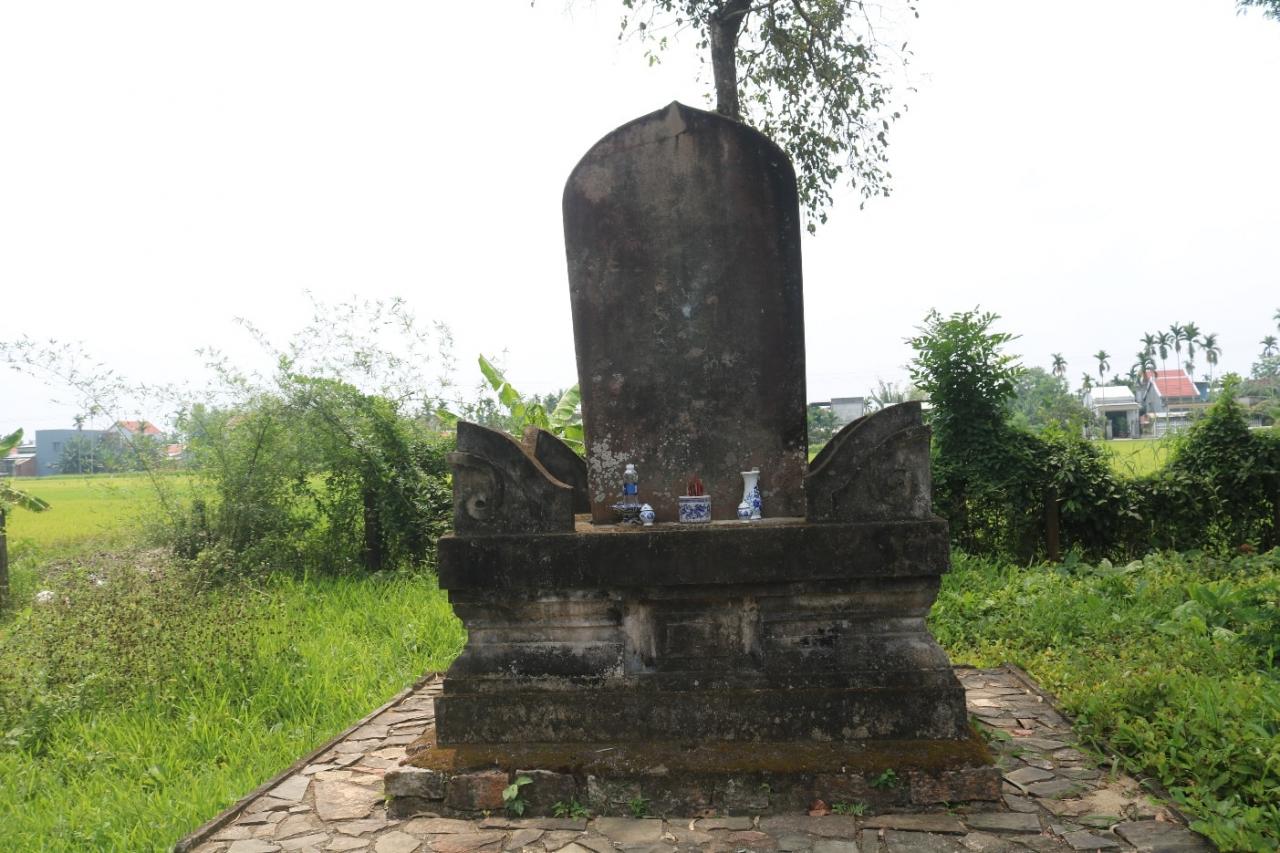
The Champa inscriptions in Quang Nam province were carved over a considerable period. Through the ups and downs and the impacts of nature and human activity, many Champa characters have been weathered, eroded, and damaged considerably; some inscriptions have even been vandalized or stolen. Protecting these inscribed texts contributes to preserving and promoting Vietnam's cultural identity.
Anti-mold
The rock inscriptions discovered in Quang Nam can be classified into natural rock inscriptions at archaeological sites, inscriptions on carved stones placed in front of temples, inscriptions on main doors and steps, and inscriptions behind reliefs, etc.
Although stone is a natural material that is strong, resistant to abrasion and biological impact, it is susceptible to cracking and weathering when exposed to sunlight, rain, and harmful microorganisms. Over time, this can cause significant damage to inscriptions. Therefore, researchers have proposed various methods to preserve and conserve stone inscriptions.
Therefore, the first step is to investigate, survey, and assess the current condition and extent of damage to the discovered and preserved inscriptions throughout the province.
Today, all experts agree that accurate damage assessment is a prerequisite for understanding the causes, processes, and characteristics of rock damage and for the sustainable preservation of monuments. Over the past few decades, interdisciplinary research and new technologies have been incorporated into the diagnosis of rock damage and weathering to develop conservation plans for artifacts.
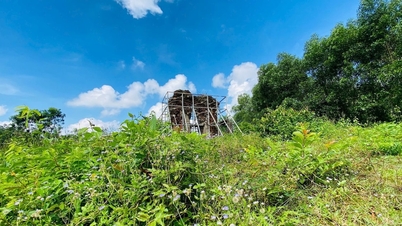
For natural stone stelae such as those at Hon Cup, Ho Nhi, Samo, and Thach Bich, local cultural management agencies need to demarcate and protect the archaeological site. In addition, the surface of the relics needs to be cleaned and protected from the intrusion of microorganisms and animals. The process of surface erosion should be prevented by neutralizing the mineral content that has penetrated the stone material.
The top priority in preserving stone inscriptions is implementing anti-moss and anti-mold procedures, ranging from external cleaning and root removal in the surface layer to impregnating the material with anti-moss agents and creating a super-hydrophobic film on the surface.
Surface coating using new technology
Currently, many buildings and monuments around the world utilize self-cleaning material protection technology, offering long-lasting durability and numerous advantages.
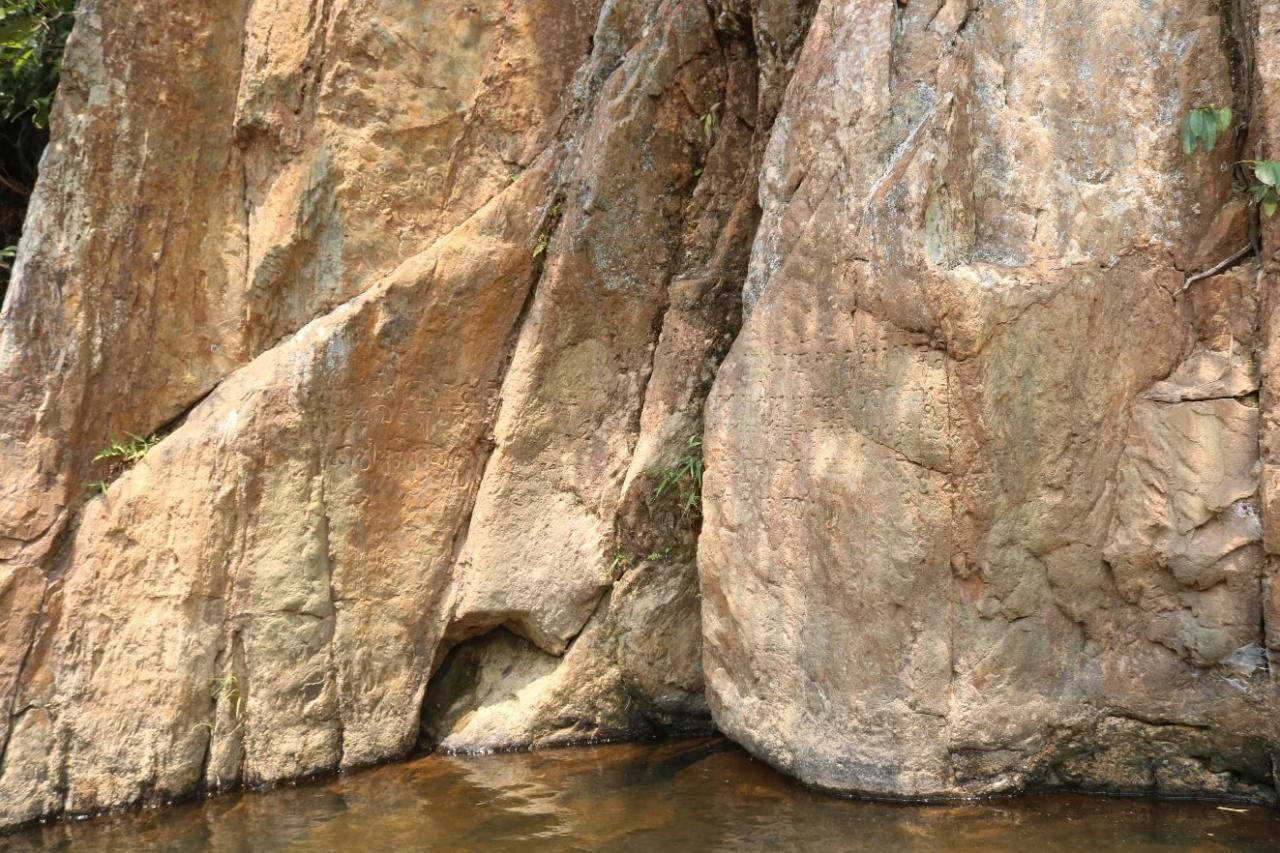
In Vietnam, conservation using nanotechnology is a viable research option. This is a relatively new technology, currently being applied experimentally at a few historical sites in our country.
Creating accurate digital replicas of archaeological artifacts, sites, and landscapes without damaging them is also a solution that leverages current science and technology.
Previously, most of the inscriptions in Quang Nam were transcribed, translated, and deciphered with the assistance of French archaeologists (except for newer inscriptions such as those on the rocks at Ho Nhi). However, due to the natural rock formations, many of which are uneven, and the erosion of many inscriptions, many translations have not fully conveyed the information.
Around the world, many digital image processing software programs have been adopted by linguists. This aims to make faded inscriptions on rocks easier to read and to use digital technologies to create replicas of artifacts.
Furthermore, the development of various 3D scanning technologies not only provides accuracy and detail but also opens new doors for the research and preservation of this unique type of historical site.
By using 3D scanners, archaeologists can accurately preserve intricate and complex details. This not only helps preserve physical heritage but also facilitates research, analysis, and a deeper understanding of human history and culture.
*
* *
According to Western researchers, the Cham people used a relatively early writing system to engrave inscriptions on stone steles. The content of some of these steles in Champa provides us with valuable scientific information about the culture, language, customs, rituals, and territorial boundaries of Champa. This is an extremely important source of information for the study of Champa culture.
Quang Nam was the most important region in the history of the Champa kingdom. Fortunately, Quang Nam possesses numerous Champa cultural heritage sites, particularly stone inscriptions that have been preserved to this day. Preserving this treasure trove of knowledge is both a blessing and a challenge for those working in heritage conservation in Quang Nam.
Given the modern technologies just mentioned and the advanced scientific technologies being invented and innovated daily, it is necessary for local authorities, researchers, and heritage conservationists nationwide to pay more attention and work together to protect these precious heritage sites.
Source: https://baoquangnam.vn/bao-quan-van-khac-tren-da-3145436.html

![[Photo] General Secretary and President To Lam works with the Party Committee of the Ministry of Health on the work of Vietnamese traditional medicine.](https://vphoto.vietnam.vn/thumb/1200x675/vietnam/resource/IMAGE/2026/05/20/1779294323718_a1-bnd-2978-3319-jpg.webp)
![[Image] "Journey of Hope" promotes the organ and tissue donation movement in Vietnam.](https://vphoto.vietnam.vn/thumb/1200x675/vietnam/resource/IMAGE/2026/05/20/1779294400833_1-8910-jpg.webp)








































































Comment (0)