

On May 21, 1973, the Government Council issued Decree No. 101/CP, stipulating the organizational system, tasks, and powers of the People's Forest Protection Force. From that milestone, May 21st has become the traditional day of the Vietnamese Forest Protection Force, a day to honor those who silently cling to the forests, protect the forests, and safeguard the green landscape of the country. In 2026, the 53rd anniversary of the establishment of the Vietnamese Forest Protection Force is not only an opportunity to look back on a glorious journey, but also to inspire new thoughts about the role of forest protection in the current development context. As the country moves towards a green economy , a circular economy, adapting to climate change, and protecting biodiversity, the tasks of the forest protection force no longer stop at patrolling, preventing violations, or preventing and fighting forest fires. It also includes the responsibility, together with all levels and sectors, to effectively manage forest resources, protect the ecological foundation, and create more sustainable values from forests.
The Son La Forest Protection Force was established on May 21, 1974, in a vast area with complex forests and mountains, and where the lives of the people were still fraught with difficulties. From those early days, generations of forest rangers in the province have persistently stayed close to the forests, villages, and people, advising the Party committee and government on forest management, protection, and development. Through each stage, the Son La Forest Protection Force has continuously grown, becoming a core force in preserving the greenness of the forests, protecting the ecological environment, and paving the way for green development thinking in the Northwest region.
However, viewing forest rangers only through the familiar images of patrolling forests, working nights on fire prevention and control, and inspecting forest products along roads is insufficient to fully grasp their role in this new era. Today, forests are not just natural resources that need protection. They are also the living space of communities, a protective shield for watersheds, a carbon reservoir, the foundation of biodiversity, and a condition for developing ecotourism, sustainable agriculture , the undergrowth economy, and integration into the green market. Therefore, today's forest rangers not only "protect the forest" in the traditional sense, but also contribute to "paving the way" for a green economy.
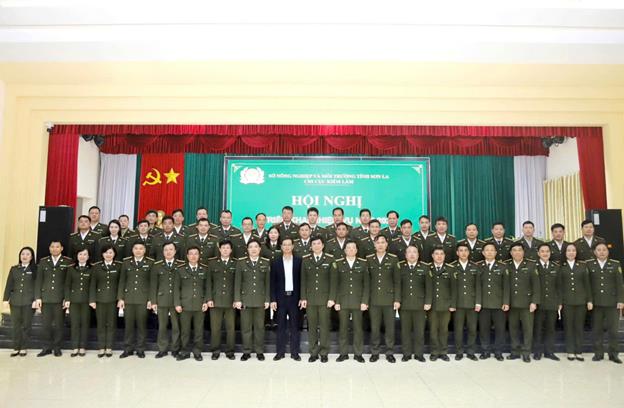
Leaders of the Son La Provincial Department of Agriculture and Environment pose for a commemorative photo with leaders and staff of the Son La Provincial Forest Protection Department at the Conference on the Implementation of Tasks for 2026.
From traditional forest conservation to modern forest management requirements.
Son La is a mountainous province with a large forest area, playing a crucial role in protecting the ecological environment of the Northwest region. Its natural area is 1,410,889 hectares; the total area of land planned for forestry is 694,958.3 hectares (accounting for 49.3% of the natural area). Of this, the planned forestry land includes: special-use forests 88,809.4 hectares (12.78%); protection forests 333,322.7 hectares (47.96%); and production forests 272,826.2 hectares (39.26%). By 2025, the total forested area of the province is expected to reach 669,166.92 hectares, with a forest cover rate of 47.3%. This is not just a figure representing resources, but also a measure of responsibility. Because behind every forest lies the water source, arable land, livelihoods, villages, hydroelectric power, agriculture, tourism, and ecological security of an entire region.
Throughout its formation and development, the Son La Forest Protection Force has always been the core force in forest management and protection. At each stage, the tasks assigned have had different priorities. Sometimes, the urgent requirement is to prevent deforestation, illegal logging, trading, and transportation of forest products. At other times, the focus shifts to land allocation, forest allocation, regeneration, reforestation, and forest fire prevention and control.
Currently, this task has expanded, requiring a more systematic and modern approach. Forest rangers not only protect forests from the outset but also advise on mechanisms and policies; they not only detect and handle violations but also educate and mobilize the public to protect forests. In addition, forest rangers participate in protecting biodiversity, building databases, monitoring forest changes, managing forest carbon, and adapting to new market standards such as EUDR.
In the first quarter of 2026, the Son La Forest Protection Department directed its regional forest protection units and subordinate units to strengthen the dissemination of laws on forest management, protection, and development; coordinating with local authorities, forest owners, and relevant agencies to innovate the forms of communication through loudspeakers, social media, billboards, leaflets, images, documentaries, and short clips. The entire force coordinated 262 awareness campaigns in communes and villages, attracting 18,362 listeners and resulting in signed commitments to protect forests and prevent forest fires with forest owners.
This confirms that forest protection cannot be achieved solely through inspection and punishment; it must begin with awareness. In Son La, forests are closely linked to the fields, villages, customs, traditions, and lives of the ethnic minority communities. Therefore, if forestry laws remain only on paper, sustainable forest protection will be difficult. The law must be implemented in village meetings, through public address systems, through commitments from forest owners, and through the habit of not indiscriminately burning fields, encroaching on forest land, or assisting in illegal logging. This is how the Son La Forest Protection Department builds a "people's support" base in forest protection.
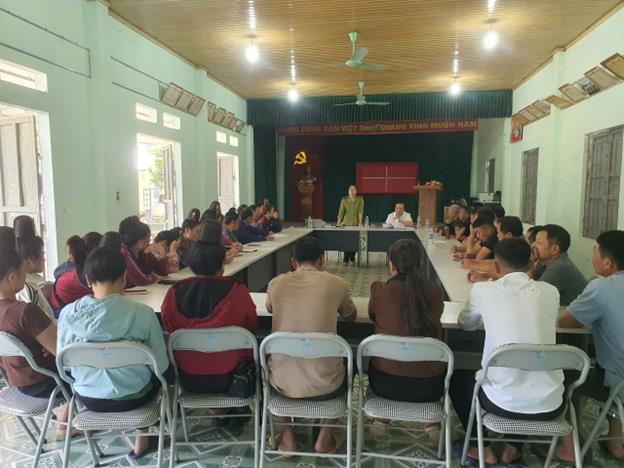
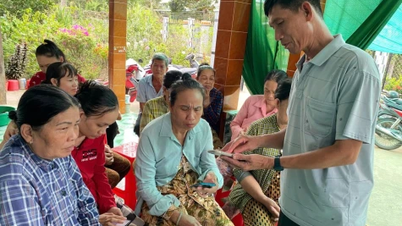
Forest rangers from Region VI held a meeting with local residents to guide them on the operational regulations of the Forest Protection and Fire Prevention Team in Ot Cha village, Phieng Pan commune.
Preserving forests is the foundation of a green economy and integration capacity.
In traditional development thinking, forests were sometimes viewed as "reserve land" for immediate economic goals. But in green development thinking, forests are a strategic asset. A well-preserved forest can do many things at once: conserve soil, conserve water, regulate climate, reduce emissions, preserve biodiversity, create livelihoods for people, open up ecotourism, and generate new financial resources from forest environmental services and carbon credits.
Forest rangers do not directly engage in economic activities in the conventional sense, but by protecting forests, managing forests, preventing forest fires, stopping violations, advising on forest development, and building forestry data, the forest ranger force is protecting the "natural infrastructure" of the green economy.
Over the past period, the Son La Forest Protection Department has demonstrated that its forest management and protection tasks are closely linked to new issues of sustainable development. The Department has advised on adapting to the European Union's Regulations on Deforestation and Forest Degradation regarding coffee cultivation in the province; and urged communes and wards with coffee plantations to review the area of coffee trees planted on forest land to meet EUDR regulations. Simultaneously, the unit continues to conduct forest surveys, develop forest pricing frameworks, provide input on carbon credit projects, and engage in activities to mobilize sustainable financing for forest protection and development, including the high-quality forest carbon market.
Through this practical experience, it can be seen that Son La's forests are entering a new development space. While previously, the value of a forest was often measured by timber, forest products, and forest cover, today it must also be measured by its carbon sequestration capacity, water resource protection, biodiversity value, landscape value, tourism value, livelihood value, and its ability to meet international green market standards.
One of the very new points worth emphasizing is the EUDR – the European Union Regulation on Non-Deforestation Products. According to the European Commission, this regulation aims to ensure that products consumed in the EU do not contribute to deforestation or forest degradation globally; the relevant product groups include livestock, cocoa, coffee, palm oil, rubber, soybeans, timber, and certain products derived from these groups.
For Son La, EUDR is not a distant dream. Son La is a locality with thriving coffee, fruit, and commercial agriculture. As importing markets increasingly value traceability, non-deforestation, and non-degradation of forests, forest land management, and cultivation area management become essential conditions for agricultural products to reach wider markets. A coffee product aiming to enter the green market needs not only quality beans but also clear answers: whether the product is linked to deforestation, whether it is grown on illegally managed forest land, and whether its origin is traceable.
Here, the role of forest rangers becomes crucial. Forest rangers don't replace export businesses or coffee farmers, but they play a fundamental role: managing forests and forest land, advising on area reviews, detecting violations, warning of risks, and providing local authorities with data and a basis for adjustment. In other words, preserving forests is not just about preserving resources, but also about maintaining market credibility for Son La's agricultural products.
In the era of the green economy, a locality cannot achieve sustainable development if its growth is based on sacrificing forests. Conversely, localities that manage forest resources well, ensure data transparency, and protect ecological zones will have an advantage when participating in green value chains. Therefore, the Son La Forest Protection Department is contributing to building a "green passport" for the province's agricultural and forestry development.
Preserving forests ensures livelihoods for the people and promotes sustainable green development in Son La.
Another approach that clearly demonstrates the role of forests in the green economy is forest carbon credits. The Son La Forest Protection Department's website has published numerous articles promoting "Forest Carbon Credits - A New Direction for the Green Economy" and "Preserving Forests and Building a Green Future: Participating in the Global Carbon Economic Flow," showing that forest carbon issues are being placed within the new vision of the local forestry sector.
Simply put, forests are like natural carbon sinks. During their growth, trees absorb CO₂ from the air, storing the carbon in their trunks, branches, roots, and even in the soil. When forests are well-protected, not cut down, and not degraded, their ability to absorb and store carbon is maintained, and may even increase over time. In the context of countries striving to reduce greenhouse gas emissions, the carbon absorbed by forests can be measured, verified, and converted into financial resources through appropriate mechanisms, including carbon credits. In other words, forests are not only valuable for timber or forest products. Today, a well-preserved, restored, and cared-for forest can also create new value – value derived from its ability to protect the climate and the human living environment.
For Son La, this is a promising direction. The province has a large forest area, including protection forests, special-use forests, nature reserves, hydropower basins, and highlands rich in biodiversity. If well managed, properly measured, and with transparent data, Son La's forests can become an important resource in emission reduction programs, payment for forest environmental services, carbon credits, and green finance.
However, carbon credits are not an easily exploitable "gold mine." To transform the carbon value of forests into a real resource, accurate forest data is essential, along with regular monitoring of forest changes, clearly defined community benefits, and a transparent benefit-sharing mechanism. More importantly, forests must be genuinely protected, restored, and cared for, not just exist on paper or in statistics. This is why the role of forest rangers is increasingly important. Without a professional force knowledgeable about forests, reliable data, regular inspections and monitoring, and the participation of the people, the carbon economy will be difficult to integrate into daily life. In that case, carbon credits will remain merely a new concept, unable to become a true driving force for forest protection and green development.
In the early months of 2026, the Son La Forest Protection Department advised on and implemented activities within the framework of a technical assistance project aimed at building capacity to implement plans to mitigate the impacts of climate change and mobilize sustainable financial resources for forest protection and development, including a high-quality forest carbon market. This signals that the forest protection force is entering a new role: not only protecting the current state of the forest, but also contributing to preparing the conditions for forests to participate in green economic mechanisms.
In Son La, the people in the highlands are both the primary stakeholders living near the forest and a crucial force in forest protection. If the people's livelihoods are precarious, the pressure on the forest will be even greater. Conversely, when people have legitimate, stable livelihoods and see the benefits from the forest, the forest will be protected more sustainably.
Therefore, green economic development in forestry cannot be separated from green livelihoods. This could include cultivating medicinal plants under the forest canopy, developing ecotourism, supporting the buffer zones of special-use and protection forests, rationally exploiting non-timber forest products, paying for forest environmental services, reforestation, forest restoration, and developing agriculture that does not cause deforestation; creating livelihoods for people in the buffer zone of the Ta Xua special-use forest, preserving forests for tourism development, and developing a multi-value forest economy.
The key point to emphasize is that people should not be seen merely as "targets for propaganda," but as partners in the forest conservation process. Each village can become a "green fortress" if its people understand their rights, responsibilities, and legitimate benefits from the forest. Each forest owner can become a link in the green economy if they receive appropriate information, technical, legal, and livelihood support.
Currently, the Son La Forest Protection Department continues to prioritize coordination with local authorities to effectively manage and protect forests at the grassroots level, preventing the formation of "hot spots"; identifying areas at high risk of forest fires; and increasing the broadcast time for forest fire prevention and control in three languages: Vietnamese, Thai, and Hmong. This demonstrates that forest protection in Son La is not only a professional task but also involves community outreach, cultural activities, and community communication.
A green economy doesn't just mean converting forests into monetary value. One of the greatest values of forests is biodiversity. Son La has special-use forests, nature reserves, and biodiversity corridors, including areas with rich potential such as Muong La and Ta Xua. Biodiversity conservation plays a crucial role in contributing to socio-economic development oriented towards a green economy and proactively adapting to climate change. Currently, the Son La Forest Protection Department has advised on many issues related to nature conservation: assessing the potential and proposing the establishment of a biosphere reserve within the biodiversity corridor extending from the Muong La Nature Reserve to the Ta Xua Special-Use Forest; implementing new regulations in the field of nature conservation and biodiversity; and conducting biodiversity surveys in several areas of Muong La and Bac Yen after administrative reorganization. Therefore, the role of the Son La Forest Protection Department extends beyond simply protecting individual forests. It is also a task to preserve the vitality of the ecosystem, protect genetic resources, landscapes, and the unique natural values of Northwest Vietnam. In other words, preserving forests today is not just about maintaining forest area on the map, but about preserving the quality of life of the forest, preserving the ecological foundation for sustainable development.
Son La Forest Rangers in a New Mission
From the traditional May 21st to the demands of green development today, the forest ranger force is embarking on a new journey, one filled with pressure but also opening up many valuable opportunities for forest management, protection, and development. The forest rangers of Son La now not only spend their days and nights in the forests, among the people, and in their assigned areas, but amidst the flow of integration, they must also familiarize themselves with digital data, uphold the rule of law, and approach green standards, all for the goal of sustainable development of the Northwest region.
From this workload, it's clear that today's forest rangers are not just performing a single task. At the grassroots level, they are the direct law enforcement force, staying close to the people and the forests, detecting and handling violations. From a management perspective, they advise Party committees and authorities on issues related to forest protection and development. In the new context, forest rangers also participate in forest fire prevention and control, data updating, monitoring forest changes, supporting digital transformation, carbon economics, EUDR implementation, and biodiversity conservation. In other words, the role of forest rangers is expanding along with the new demands of modern forest management.
Protecting forests today is not just about preserving the green color on the map. It's about protecting water resources for hydroelectric projects, preserving land for agricultural production, creating livelihoods for local people, and conserving biodiversity for future generations. Furthermore, each well-protected forest contributes to enhancing the reputation of Son La's agricultural products in the green market, opening up a more sustainable development space for the province in the future. From the silent footsteps under the forest canopy to new tasks in the carbon economy, EUDR, and green livelihood development, Son La's Forest Protection Department is affirming a broader role: not just a force guarding the forests, but a force contributing to creating green value from the forests. And in this mission, the tradition of May 21st is not only recalled with pride, but is being continued through action, innovation, responsibility, and the aspiration to keep Son La green forever in its journey towards sustainable development.
Nguyen Thi Van - Provincial Political School
Source: https://sonla.dcs.vn/tin-tuc-su-kien/noi-dung/kiem-lam-son-la-tu-giu-rung-den-mo-loi-kinh-te-xanh-7984.html
![[Photo] Admire the coral "masterpiece" amidst the million-year-old heritage of Dak Lak province.](https://vphoto.vietnam.vn/thumb/1200x675/vietnam/resource/IMAGE/2026/05/31/1780221235105_anh-man-hinh-2026-05-31-luc-16-53-27.png)



![[Photo] Solemn bathing ceremony and Buddha procession in Hue](https://vphoto.vietnam.vn/thumb/1200x675/vietnam/resource/IMAGE/2026/05/31/1780228263543_1-jpg.webp)














![[Video] Sunset at Lap An Lagoon – Where the sun sets over the fishing nets](https://vphoto.vietnam.vn/thumb/340x192/vietnam/resource/IMAGE/2026/05/31/1780192137701_beach-landscape-sea-water-nature-grass-745871-pxhere-com.jpeg)











































![[Photo] Admire the coral "masterpiece" amidst the million-year-old heritage of Dak Lak province.](https://vphoto.vietnam.vn/thumb/402x226/vietnam/resource/IMAGE/2026/05/31/1780221235105_anh-man-hinh-2026-05-31-luc-16-53-27.png)































Comment (0)