


Baby K. is being cared for at Children's Hospital 1.
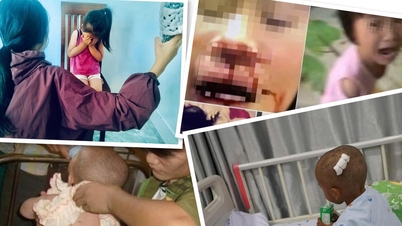
Despite the abundance of legal provisions, a two-year-old boy in Hoa Hiep commune, Ho Chi Minh City, was recently hospitalized with a 9-point injury score: bilateral lung rupture, damage to the liver, spleen, pancreas, and kidneys, and multiple fractures, including an "old fracture of the right arm," indicating this was not the first time he had been beaten. The perpetrators were not strangers, but his own mother and her lover.
Dr. Nguyen Thi Thanh Huong, Deputy Director of Children's Hospital 1, warned: "The hospital is most concerned about complications such as lung contusion causing infection and pancreatic damage, which could leave the child with lasting effects for life."
Besides the physical injuries, what's even more heartbreaking is that, according to the hospital, all of K.'s relatives have refused to take care of her after her discharge. Therefore, she will be placed in the city's social welfare center without the welcoming embrace of her family. Thus, it's clear that the child's first line of defense has completely collapsed from within.
The hospital also stated that the 111 child protection hotline had received information about this case, but by then the incident had already occurred. Deputy Minister of Health Nguyen Tri Thuc bluntly stated: "In child protection work, if we only intervene after child abuse has occurred, it is considered a failure."

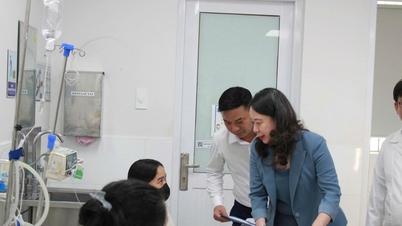
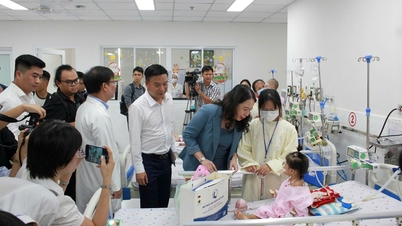
Deputy Minister of Health Nguyen Tri Thuc visits baby K. at Children's Hospital 1.
This is a very realistic observation because while the 111 hotline is operational, the mechanism from receiving information to intervening is far too slow compared to the speed of domestic violence, and a two-year-old child cannot protect themselves during that waiting period.
Deputy Minister Thuc pointed out that child abuse is a "hidden crime," difficult to detect both in Vietnam and around the world . He suggested that we should learn from the "risk grouping" model used in many countries to classify children according to their risk of abuse, from low to extremely high.
When a child is classified as high-risk, the entire social system gets involved, with local authorities making frequent visits and continuously monitoring them under a "red alert" mechanism. He explained: "When local authorities are frequently present, those intending to abuse the child will be more hesitant."
This is a preventative approach that starts at the root, but to implement it, it's necessary to clarify who is responsible for detecting and activating early intervention mechanisms to protect children.
It could be a neighbor, a teacher, a local health worker, a neighborhood or village head—all are links in the chain for early detection if they are equipped with the knowledge to recognize signs of abuse, have a clear reporting procedure, and are protected when reporting.

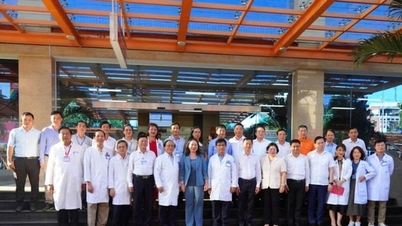
Deputy Minister of Health Nguyen Tri Thuc works with the leaders of Children's Hospital 1.
From a legal perspective, lawyer Le Kien Luong of the Ho Chi Minh City Bar Association affirmed that the Vietnamese legal system has sufficient tools to handle cases ranging from administrative penalties to criminal prosecution, with the maximum penalty being the death penalty in cases resulting in death. In fact, serious domestic violence cases in recent times have been tried to the highest possible penalty.

Lawyer Le Kien Luong, Ho Chi Minh City Bar Association.
However, lawyer Luong clarified: "Strong laws are necessary, but their deterrent function is only effective when those intending to commit violence believe they will be detected and punished. If the monitoring mechanism is still lax, that belief is not enough."
Furthermore, the lawyer suggested adding a provision allowing for the proactive separation of children from dangerous environments before abuse occurs. This is an area where current law lacks sufficiently strong enforcement tools at the local level, as local officials do not have the authority or legal basis to intervene even when they recognize signs of risk.
In this context, the interdisciplinary model recently implemented by Children's Hospital 2, which includes a cooperation agreement with the Saigon Ward Police, the local Women's Union, and lawyers, establishing a synchronized intervention mechanism as soon as abused children are admitted to the hospital, is considered a step in the right direction.
At that time, medical personnel treated the injuries, the police investigated, lawyers protected legal rights, and women's associations provided psychological support and social connections.

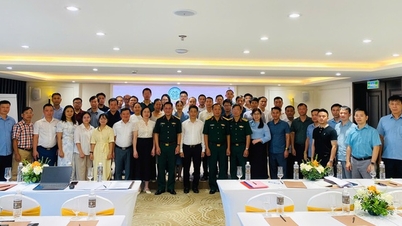
The parties involved signed the cooperation agreement for Children's Hospital 2.
Associate Professor, Doctor Pham Ngoc Thach, Deputy Director of Children's Hospital 2, said: "Protecting children cannot be the responsibility of a single unit; it requires the joint efforts of the entire society."
This model is not new in concept, but it is new in that it is institutionalized through regulations that bind each party to responsibility, instead of coordination based on situational variations.
Experts believe that protecting children doesn't start in the emergency room, but in the community, in schools, in health centers, and in anyone brave enough to see the warning signs and not turn away. This is a responsibility that cannot be left solely to hotlines but requires the collective effort of the community.
According to KHANG ANH (Nhan Dan Newspaper)
Source: https://baocantho.com.vn/bao-ve-tre-em-khong-chi-qua-duong-day-nong-a204255.html
![[Image] Hanoi's urban life under the challenge of a "scorching hot" environment](https://vphoto.vietnam.vn/thumb/1200x675/vietnam/resource/IMAGE/2026/05/25/1779706979265_nang-nong-t5-2026-minh-duy-7-4636-jpg.webp)


![[Image] Close-up view of the interchange connecting the two expressways and Long Thanh Airport.](https://vphoto.vietnam.vn/thumb/1200x675/vietnam/resource/IMAGE/2026/05/25/1779703378210_ndo_br_z7863716673926-224453a31600126cce10622af6290afd-4549-jpg.webp)


















































































Comment (0)