

The ability of each family to care for the elderly is increasingly limited.
Vietnam currently has approximately 17 million elderly people, and this number is expected to continue to increase significantly over the next two decades. Rising average life expectancy, coupled with rapid urbanization and changing family structures, is creating profound shifts in the care and lifestyle needs of the elderly.
In reality, the multi-generational family model, where children and grandchildren directly care for their grandparents, is gradually giving way to the nuclear family. The increasingly fast pace of urban life, work pressure, and labor migration are shrinking the capacity within each family to care for the elderly. In this context, the need for flexible, safe, and modern-friendly care models is becoming increasingly evident.
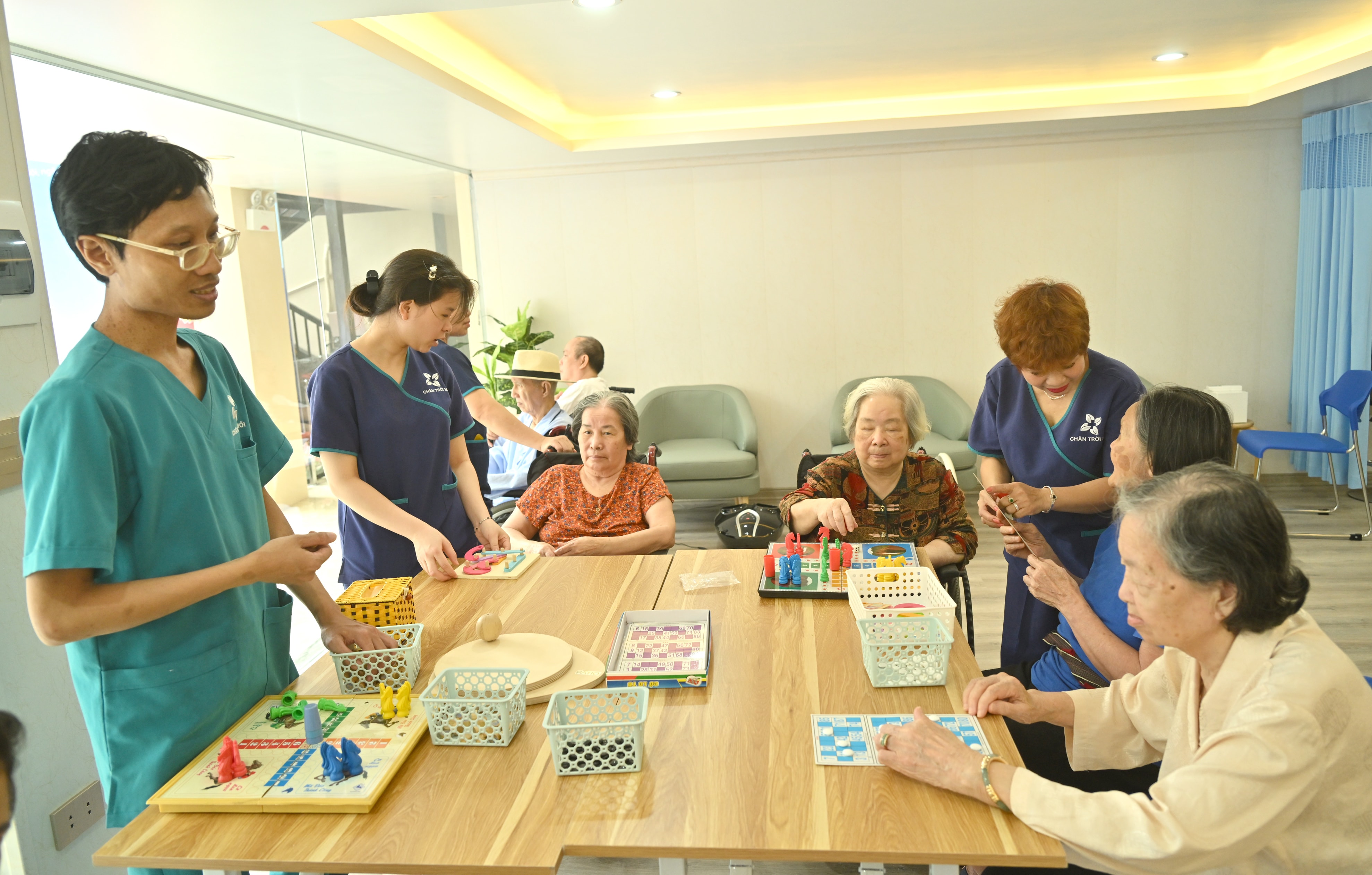
According to Matthew Powell, Director of Savills Hanoi , Vietnam is entering a period of rapid aging, creating a clear impetus for the development of senior care real estate models. Increased life expectancy, changing family structures, and emerging market support policies are driving a strong increase in demand for safe and comprehensive senior care models.
From a social perspective, Ms. Chu Viet Nga, Program Manager of HelpAge International in Vietnam, believes that Vietnam is shifting its focus from family planning to population and development. Simultaneously, it prioritizes long-term care, basic healthcare , chronic diseases, and geriatrics. In the future, home and community-based care will be the core focus. However, the incomplete legal framework in Vietnam presents both challenges and opportunities for the private sector.
International experience shows that policy plays a crucial role in promoting this segment. In Japan, where nearly 30% of the population is over 65 years old, the Long-Term Care Insurance (LTCI) system has created a stable source of payouts, helping the market attract institutional capital through guaranteed long-term lease agreements.
In Australia, the retirement village model has developed thanks to a financially well-off retired population and a deferred payment management fee mechanism, which reduces initial costs for service users. The government plays a regulatory role, focusing on protecting the rights of the elderly and controlling the quality of services.
Find a model suitable for Vietnamese conditions.
Experts believe that Vietnam cannot simply copy these models, but can flexibly combine and integrate modern urban lifestyles with care services that suit the country's socio -economic conditions.
According to Emily Fell, Senior Director of Living Sectors at Savills Asia Pacific, Vietnam is at a pivotal moment in shaping its aged care market. She believes investors should not only look at tangible assets but also focus on the operating entity – a key factor determining service quality and long-term customer trust.
"Investors shouldn't just pour capital into buildings, but also invest in operational capabilities. The biggest challenge for Vietnam right now is developing reputable and professional operating units," said Emily Fell.
Based on regional experience, Savills experts suggest that Vietnam can develop this market in the following directions: investors developing specialized assets with long-term financing models; building safe and inclusive communities; designing flexible financing models such as lease-sale, service tiering, and technology application.
In terms of geographical location, each region has its own advantages. The North, especially Hanoi, is well-suited to a model integrated with existing hospital systems and healthcare planning. The Central region, such as Da Nang, can leverage its tourism infrastructure to develop a comprehensive healthcare model. Meanwhile, Ho Chi Minh City and the Southern region have the conditions to experiment with models combining new technologies and services.
Savills also pointed out six types of elderly care that could be applied in Vietnam, including: day care services; residential areas or retirement villages; assisted home care; assisted independent living models; rehabilitation after acute treatment; and service-enhanced housing or nursing homes.
Population aging is an irreversible trend. Early preparation of appropriate care models not only helps meet social security needs but also lays the foundation for a new service market linked to quality of life and long-term sustainable development.
Source: https://daibieunhandan.vn/bat-dong-san-duong-lao-mo-hinh-nao-phu-hop-10402082.html
![[Photo] The General Secretary, President and his wife begin their state visit to the Philippines.](https://vphoto.vietnam.vn/thumb/1200x675/vietnam/resource/IMAGE/2026/05/31/1780230559452_anh-man-hinh-2026-05-31-luc-19-28-11.png)


![[Photo] Solemn bathing ceremony and Buddha procession in Hue](https://vphoto.vietnam.vn/thumb/1200x675/vietnam/resource/IMAGE/2026/05/31/1780228263543_1-jpg.webp)
![[Photo] Admire the coral "masterpiece" amidst the million-year-old heritage of Dak Lak province.](https://vphoto.vietnam.vn/thumb/1200x675/vietnam/resource/IMAGE/2026/05/31/1780221235105_anh-man-hinh-2026-05-31-luc-16-53-27.png)





















![[Video] Sunset at Lap An Lagoon – Where the sun sets over the fishing nets](https://vphoto.vietnam.vn/thumb/340x192/vietnam/resource/IMAGE/2026/05/31/1780192137701_beach-landscape-sea-water-nature-grass-745871-pxhere-com.jpeg)










































![[Photo] Admire the coral "masterpiece" amidst the million-year-old heritage of Dak Lak province.](https://vphoto.vietnam.vn/thumb/402x226/vietnam/resource/IMAGE/2026/05/31/1780221235105_anh-man-hinh-2026-05-31-luc-16-53-27.png)

































Comment (0)