

According to doctors, the main cause of peripheral facial paralysis is cold, because the peripheral facial nerve (cranial nerve VII) is located close to the skin's surface and is therefore very sensitive to temperature.
During the cold season, the unpredictable weather changes cause many health problems, especially for children. Among them, facial nerve paralysis (also known as facial palsy) is one of the diseases related to weather conditions.
For example, recently, the Cam Khe District Health Center (Phu Tho province) received a child over 4 years old suffering from facial nerve paralysis (cranial nerve VII) due to cold exposure. According to the family, upon noticing their child's mouth was crooked, shifted to the left, and unable to close the right eye completely, the parents immediately took the child for examination.
At the hospital, doctors diagnosed the child with right peripheral facial nerve paralysis (cranial nerve VII palsy).
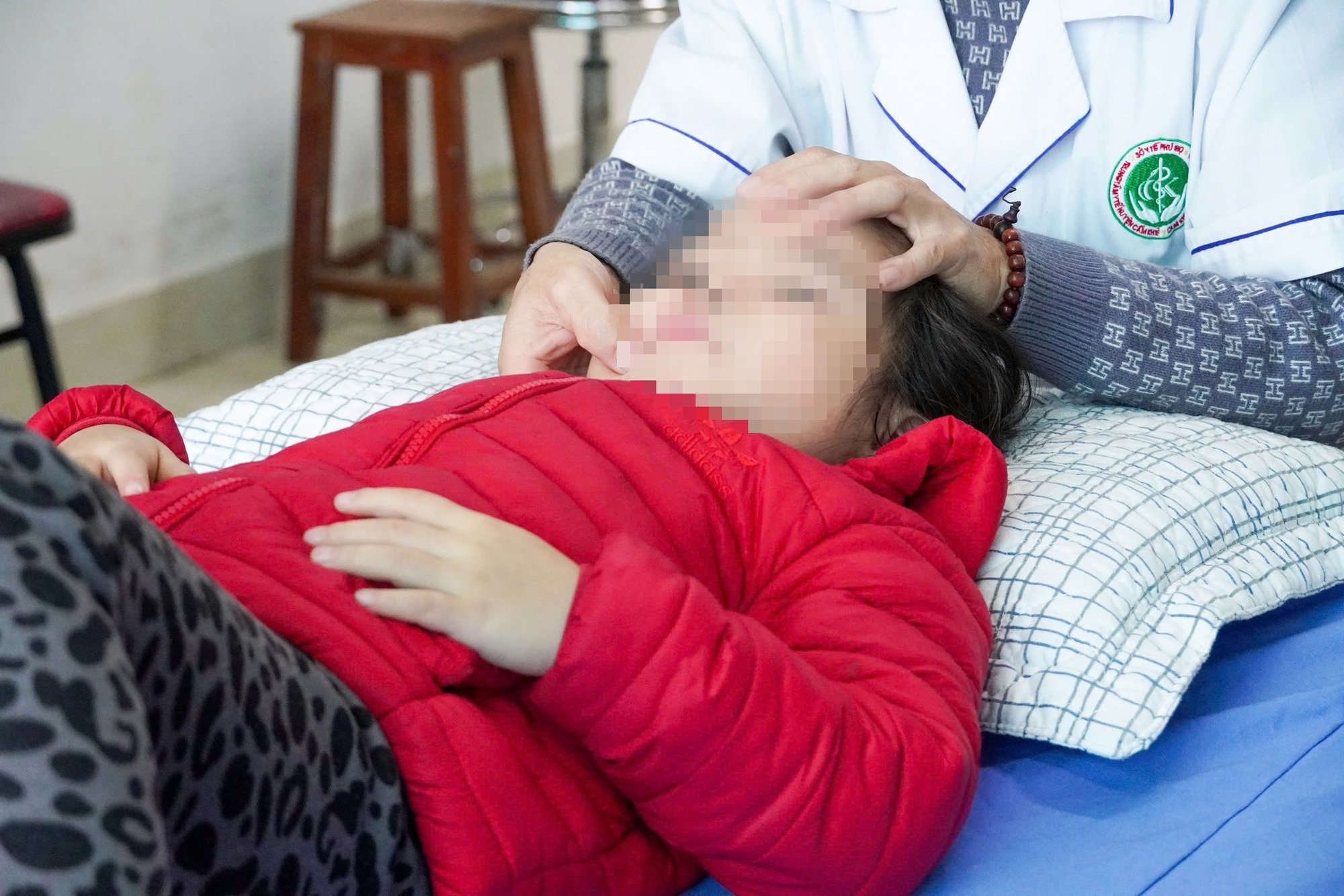
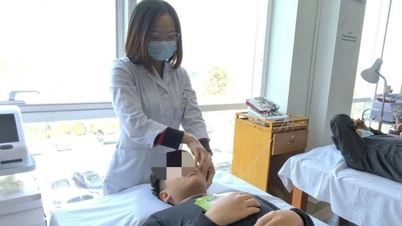
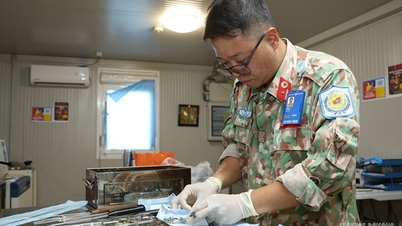
Doctors treat a child with facial nerve paralysis (cranial nerve VII). Photo: Provided by the hospital.
After 10 days of treatment using traditional medicine procedures, the child's face is now more symmetrical and has almost completely recovered.
According to Dr. Pham Anh Hung, Head of the Traditional Medicine and Rehabilitation Department at Cam Khe District Health Center, the department is currently treating five patients with facial nerve paralysis (cranial nerve VII), including one elderly person, two young adults, and two children.
The primary cause of peripheral facial paralysis is cold exposure, as the peripheral facial nerve (cranial nerve VII) is located close to the skin's surface and is therefore highly sensitive to temperature. Sudden exposure to cold causes the blood vessels supplying the nerve to constrict, damaging it. The condition can develop within seconds of contact with a cold source.
Facial nerve paralysis (cranial nerve VII) is a fairly common condition that significantly affects quality of life if left untreated. Examination, diagnosis, and treatment should be carried out by specialist doctors.
To prevent the risk of facial nerve paralysis (cranial nerve VII), experts recommend keeping the head, face, and neck warm during cold weather; avoiding suddenly opening doors to let cold wind hit the face; and refraining from bathing late at night.
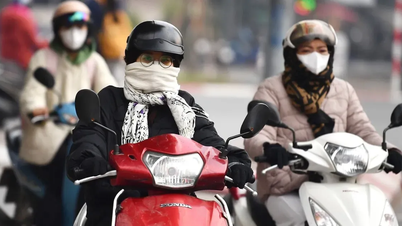
For young children, when going outdoors, parents should dress them warmly, wrap them in scarves, put on hats, and limit playtime to short periods. Avoid letting children sit in drafty areas; when traveling long distances, keep their chins warm, wear masks, and do not let them sit in front of a motorbike.
If you experience symptoms of facial nerve paralysis (cranial nerve VII), you should seek examination and treatment at a specialized medical facility. Self-treatment at home or using folk remedies should be avoided.
If the disease is left untreated until it reaches a severe stage, applying treatment late makes recovery very difficult. In particular, delayed treatment can cause nerve degeneration, and in some cases, the condition may worsen due to incorrect treatment.
Source: https://giadinh.suckhoedoisong.vn/be-gai-hon-4-tuoi-bi-liet-day-than-kinh-so-7-chuyen-gia-chi-ro-nguyen-nhan-khong-the-bo-qua-172250122122034426.htm
![[Image] Pleasant weather helps students enter the 10th grade entrance exam with confidence.](https://vphoto.vietnam.vn/thumb/1200x675/vietnam/resource/IMAGE/2026/05/29/1780034401612_ngay-1-thi-lop-10-minh-duy-8-5009-jpg.webp)

![[Photo] Ba Lang An Lighthouse - the "eye of the sea" amidst the "rock museum" of Quang Ngai province.](https://vphoto.vietnam.vn/thumb/1200x675/vietnam/resource/IMAGE/2026/05/29/1780038698840_anh-man-hinh-2026-05-29-luc-14-10-42.png)




























































































Comment (0)