

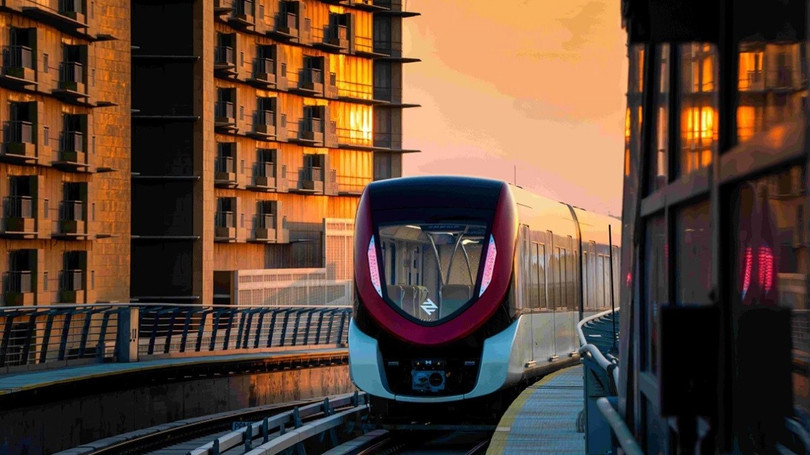
Subways are typically just a means of transportation within a city, but Saudi Arabia's new Riyadh Metro line is completely changing that concept.
Inaugurated in December 2024, this automated rapid transit system gives new meaning to the saying "it's not the destination, but the journey that matters."
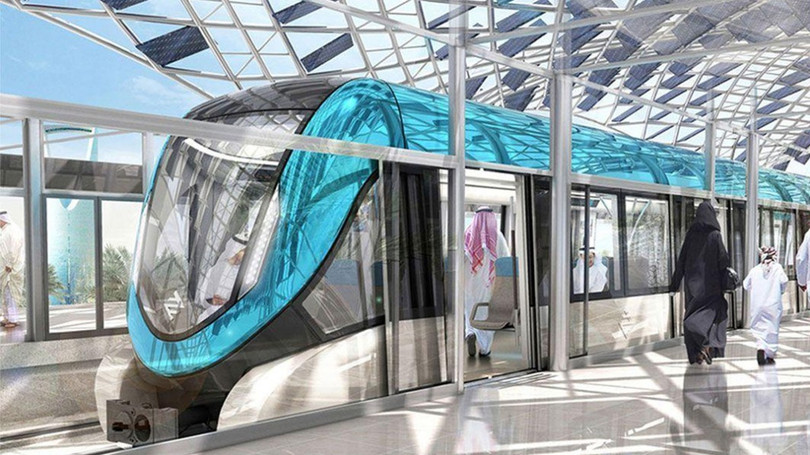
Spanning over 176 km across six different lines, Riyah is the world's longest driverless metro system, connecting key points in the capital, including King Khalid International Airport and the King Abdullah Financial District (KAFD).
The Metro operates from 5:30 a.m. to midnight, Saturday through Thursday, and from 10:00 a.m. to midnight on Fridays. Fares start at 4 SAR (over 1 USD) for a two-hour pass; 20 SAR for a three-day unlimited ride; and 140 SAR (37 USD) for a monthly pass.
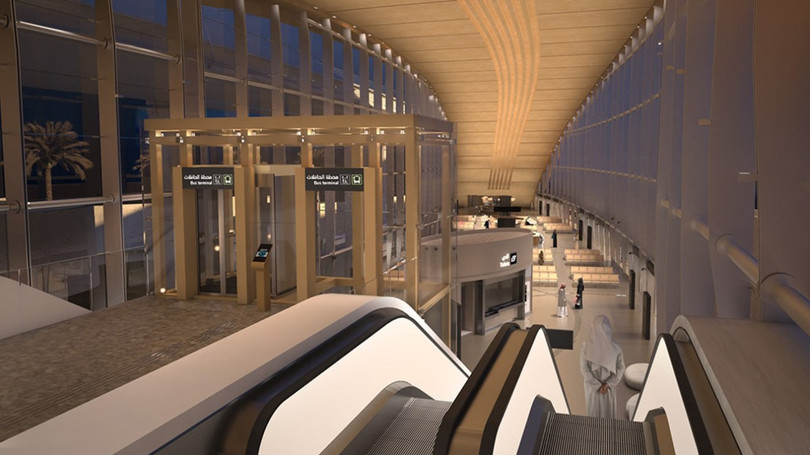
Similar to other Muslim cities like Kuala Lumpur and Dubai, the train has separate areas for men and women. The Riyadh train is divided into three types of carriages: carriages for men traveling alone, family carriages for women and families, and first-class carriages for VIP passengers. Eating and drinking are prohibited in these carriages to ensure hygiene.
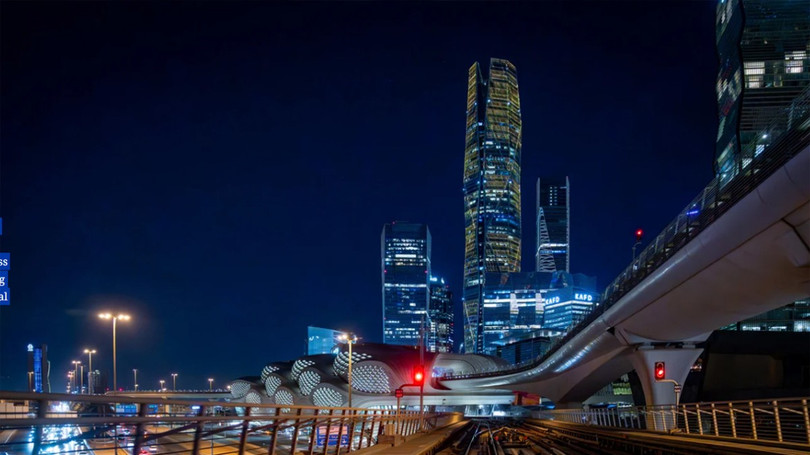
Built at a cost of $22.5 billion, the system can transport at least 3.6 million passengers per day and includes many architectural marvels at the stations along the train line.
The Riyadh Metro has a total of 85 stations, of which four are particularly noteworthy: King Abdullah Financial District (KAFD), STC, Western Station, and Qasr Al Hokm.
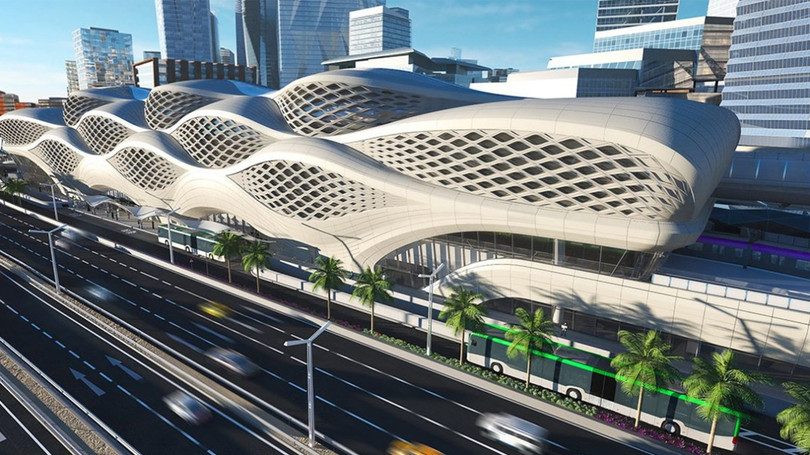
King Abdullah Financial District Station, or KAFD (pictured), has become the busiest station on the network, with a undulating lattice facade inspired by desert patterns formed by the wind.
The KAFD station is both iconic and central, connecting three metro lines, linked to the new monorail system, and also houses a bus terminal. It also displays numerous works of art, including sculptures by American artist Alexander Calder, part of the Riyadh Art permanent collection.
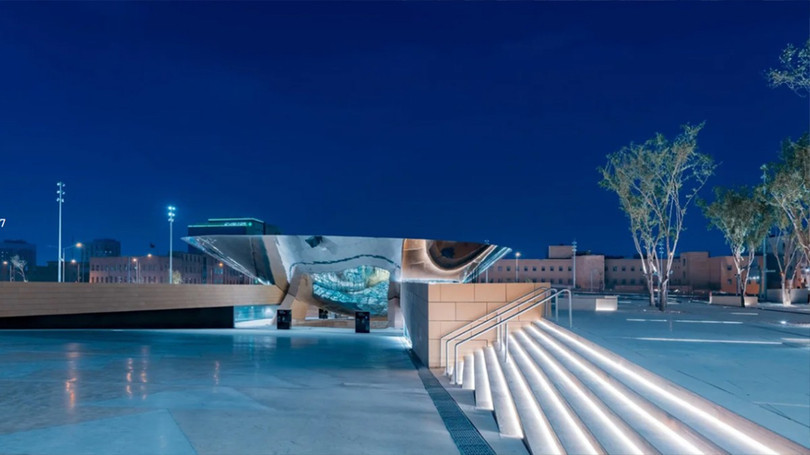
Located in Riyadh's historic district, Qasr Al Hokm station, which opened in February, offers direct access to numerous government buildings and famous landmarks, including Al-Hukm Palace, Imam Turki bin Abdullah Grand Mosque, and Al Masmak Palace.
The train station is also considered a popular tourist attraction, with people often stopping to admire and take photos of its undulating design.
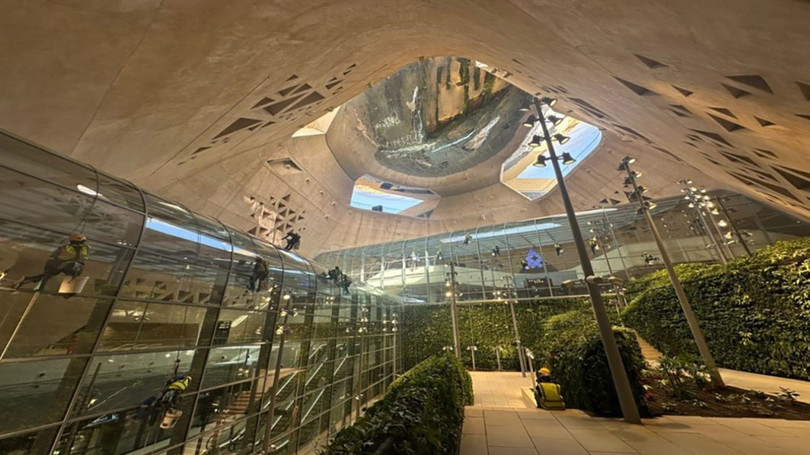
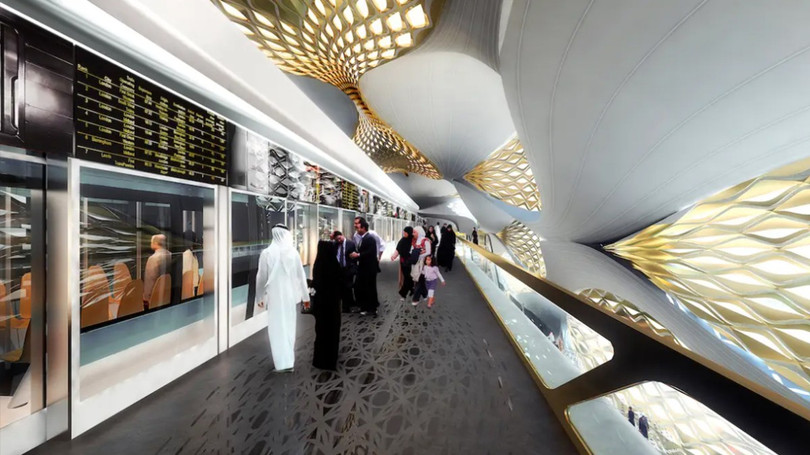
Qasr Al Hokm station covers an area of over 22,000 m2, is 40 m deep, and comprises 7 floors, 17 elevators, and 46 escalators. The station's curved stainless steel dome reflects the surrounding neighborhood, creating a blend of history and modernity.
Inside the station are shops, art galleries, and an indoor garden where passengers can sit on benches and enjoy the space.
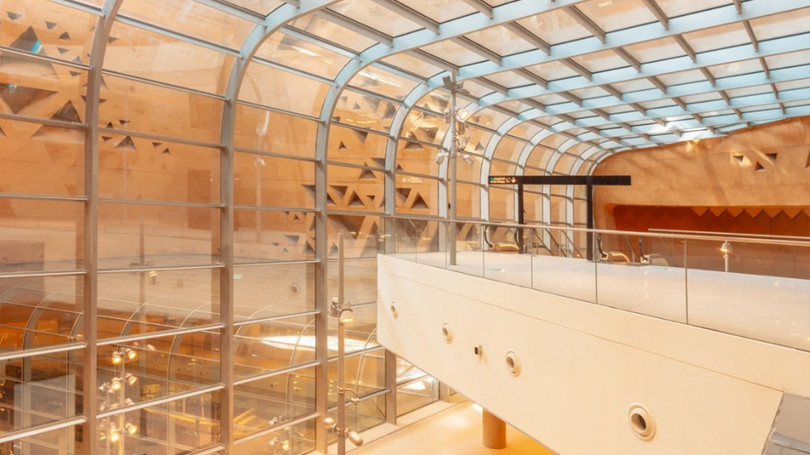
Trisha Ooi, a Riyadh resident who moved from Malaysia four years ago, says she often recommends that tourists visit Qasr Al Hokm, in addition to well-known landmarks like the Sky Bridge and Boulevard World.
"I think this is one of the most attractive tourist attractions," Ooi said.
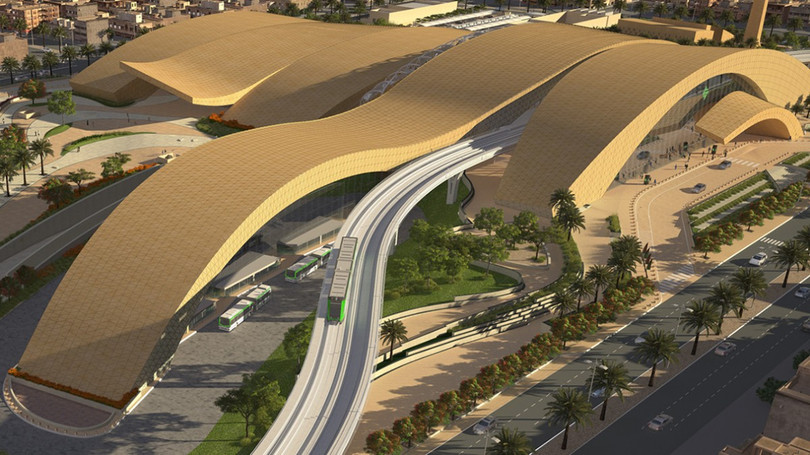
Western Station (pictured) opened in January, while the STC station is inspired by the limestone formations of the Tuwaiq Mountains in Saudi Arabia.
Beyond its visual appeal, the Riyadh Metro also scores points for sustainability with its energy-efficient trains equipped with regenerative braking systems. The stations all feature solar panels. The system is also designed to be very user-friendly.
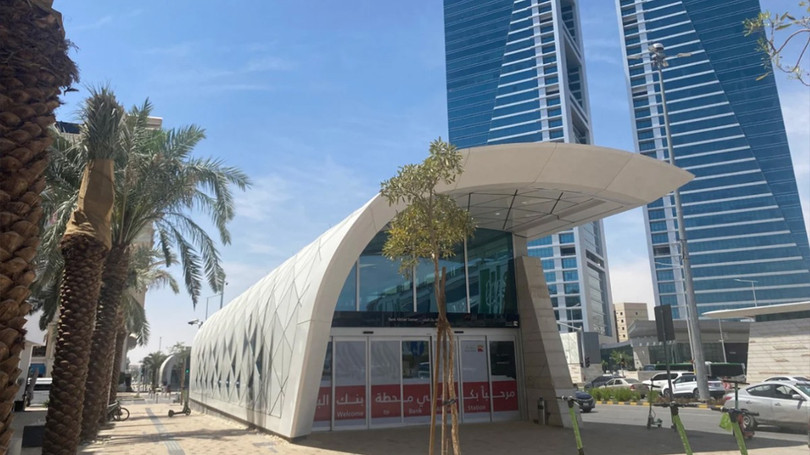
Visitors to Riyadh can purchase Darb, a reusable transport card similar to New York's OMNY card, at vending machines in the station or using the Darb app. In September, Hassan bin Thabet Street station was added to the Orange Line.
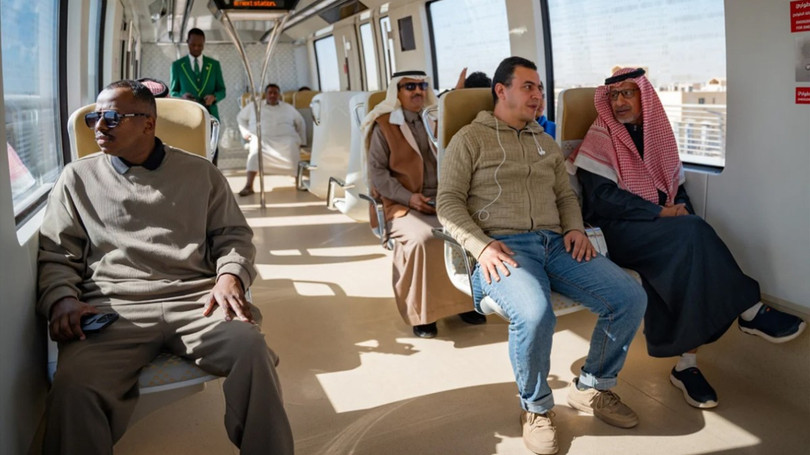
Trains run every four minutes during peak hours. Passengers rate the seats as comfortable, but the number is limited, especially compared to the London Underground system. The current network has two-car trains with around 55 seats and four-car trains with 123 seats. This creates a spacious and airy feel, but means passengers may have to stand when traveling during peak hours.
Six months after its launch, the system has exceeded expectations. The Royal Commission for the City of Riyadh reported that there were over 18 million passengers in the first 11 weeks. Last month, Riyadh Metro welcomed its 100 millionth passenger.
"The Riyadh Metro will make daily life and commuting easier for residents, visitors, and tourists, providing them with a world-class urban mobility experience," said Ibrahim bin Mohammed Al Sultan, Minister, Councillor and Director-General of the Royal Commission for the City of Riyadh.
Source: https://baohatinh.vn/ben-trong-chuyen-tau-22-ty-usd-cua-arab-saudi-post296669.html





















![[Photo] Reception to welcome General Secretary and President To Lam and his wife on their State visit to the Philippines](https://vphoto.vietnam.vn/thumb/1200x675/vietnam/resource/IMAGE/2026/06/01/1780295488620_vna-potal-chieu-dai-chao-mung-tong-bi-thu-chu-tich-nuoc-to-lam-va-phu-nhan-tham-cap-nha-nuoc-toi-philippines-8798060-7855-jpg.webp)









































Comment (0)