

Many people wonder if walking affects their knee joints. Is it okay for people with knee pain to walk?
- 1. Should you walk if you have knee pain?
- 2. Guide to walking properly for people with knee pain
- 2.1 Choose the right shoes
- 2.2 Walking correctly
- 2.3 How long should you walk?
- 2.4. Walking should be done on flat terrain.
- 3. A 3-step process for a safe workout session.
1. Should you walk if you have knee pain?
According to recommendations, people with bone and joint problems such as knee pain should still walk, provided that your knee joint is not in an acute inflammatory phase with conditions such as swelling, heat, redness, or joint effusion.
So why is walking good for people with knee pain? To clarify this, you need to understand the physiological mechanism of articular cartilage. Unlike other cartilage in the knee joint, it doesn't have direct blood vessel nourishment. The cartilage in the knee joint maintains its vitality and elasticity entirely thanks to synovial fluid.
When you walk, your knee joints move, flexing and extending, acting like biological pumps. This process continuously pushes synovial fluid into and out of the cartilage, helping the cartilage absorb nutrients while simultaneously removing waste products. For sedentary individuals, the knee cartilage suffers from insufficient nourishment, leading to dryness of synovial fluid and increased susceptibility to injury from impact.
Here are three benefits of walking for overall health:
- Control your weight. When you walk, the force of movement puts four times the weight of your body on your knee joints. Therefore, losing weight will reduce this mechanical load. Simply put, if you lose 1kg of weight, the pressure on your knee joints will be reduced by 4kg with each step.
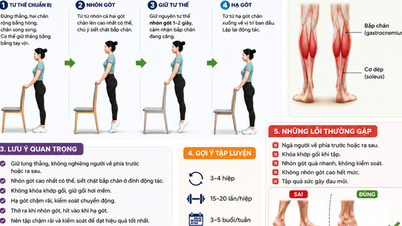
- Walking strengthens the muscles around the knee. Walking helps to strengthen the quadriceps and calf muscles. These muscle groups will then share some of the weight-bearing burden with the knee joint.
- Stimulating lubricating fluid production. Walking helps the body stimulate the production of lubricating fluid in the knee joints, thereby reducing joint dryness and stiffness, which often occur in the morning.
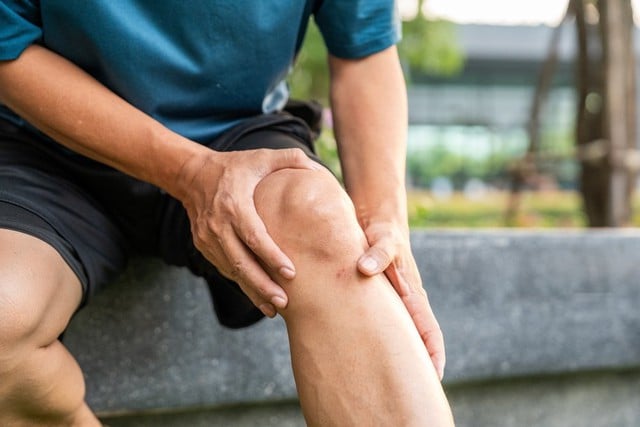
Many people with knee pain are reluctant to walk because they fear it will further injure their joints.
2. Guide to walking properly for people with knee pain
Walking is great for your knees, but doing it incorrectly can be counterproductive. So, if you experience knee pain, keep the following in mind when walking:
2.1 Choose the right shoes
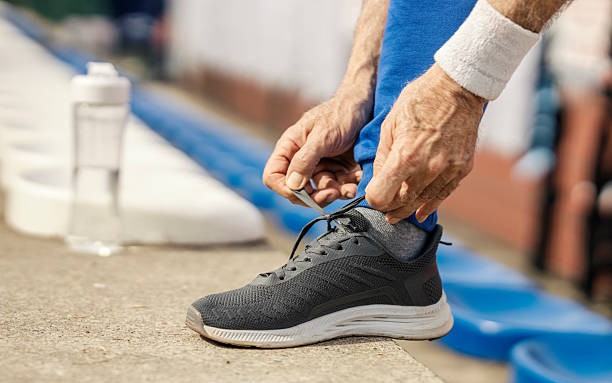
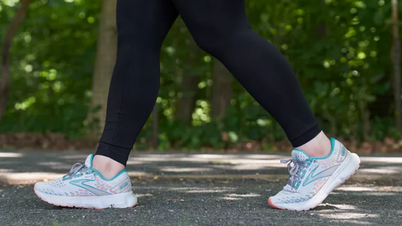
Before walking, in addition to choosing breathable, sweat-wicking clothing, you need to pay attention to choosing shoes suitable for walking. Choosing the right shoes is extremely important; you absolutely must not go barefoot, wear flip-flops, or use shoes that are too thin or stiff. The criteria for choosing suitable shoes are as follows: choose specialized athletic shoes with a soft sole and high elasticity. The heel should have sufficiently thick air or gel cushioning, as this cushioning acts as a shock absorber, absorbing all the impact force from the ground and preventing it from being reflected back to the knee joint.
2.2 Walking correctly
Incorrect walking posture can overload your knees. You shouldn't take excessively long strides, stomp your feet heavily on the ground, or bend over too much. The correct posture and technique for walking are:
- Keep your head and back straight, your eyes looking forward, and your shoulders relaxed and natural, without tensing up.
- Take short, light steps. Remember to land on your heel first, then gradually lower your ball of foot and use the balls of your feet to propel yourself forward. This helps distribute the force evenly and minimizes pressure on the kneecap.
2.3 How long should you walk?
People with knee pain shouldn't view walking as a form of exercise. The goal of walking for those with knee pain is endurance and flexibility. You should maintain the following pace and intensity.
Speed: You should maintain a speed level of 2 – a gentle exercise that helps keep your heart rate stable. This is a good level for endurance training and doesn't overload the heart. Additionally, you can exercise and talk comfortably without feeling out of breath or gasping for air.
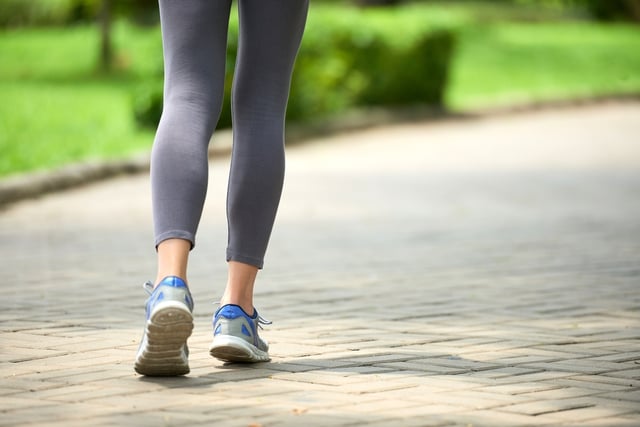
If done correctly, walking can still help increase flexibility, improve muscle strength around the joint, and help reduce knee pain.
How long should you walk? If you're just starting out, you should only walk for 10-15 minutes each day. Then, if your body adapts well and you don't experience any knee pain, you can increase your exercise time by 10%, meaning you shouldn't increase it by more than 10% of your total exercise time from the previous week. The ideal recommended goal is 30-45 minutes per day, maintained 5-6 times per week.
2.4. Walking should be done on flat terrain.
The terrain you use for exercise greatly influences the lifespan of your knee joints. Therefore, you should avoid walking on steep slopes, potholes, and stairs. Additionally, walking down stairs subjects the knee joint to a mechanical force 3-4 times greater than your body weight, potentially causing cartilage damage.
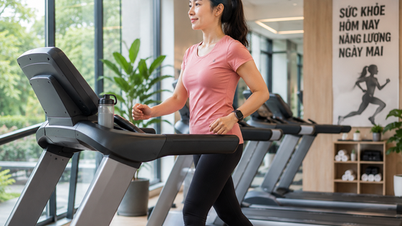
You should choose flat terrain such as a dedicated running track in a park, a flat dirt road, or a treadmill at a slow speed, without any incline.
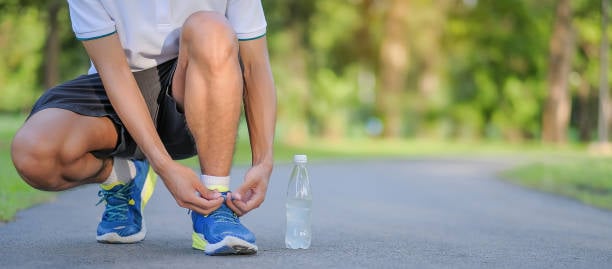
Knee pain doesn't necessarily mean you should completely restrict your movement.
3. A 3-step process for a safe workout session.
For the exercises to be most effective, patients should follow a three-stage process:
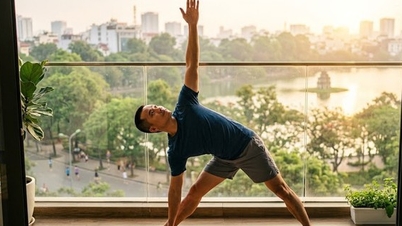
- 5-minute warm-up. Before exercising, you need to spend at least 5 minutes warming up by gently rotating your ankles and knees, and stretching your hip and thigh muscles in place. This stimulates the release of synovial fluid to lubricate the entire joint system before bearing weight.
- Walk for 15-30 minutes. While walking, apply proper landing techniques with short steps and maintain a steady breathing rhythm.
- Allow 5 minutes for your body to cool down and recover. After finishing your workout, you shouldn't sit down; instead, walk slowly for about 1-2 minutes and relax your muscles. If you feel slight fatigue or soreness in your knees, apply an ice pack for about 10-15 minutes.
When walking, it's important for people with knee pain to listen to their bodies. If you experience any of the following symptoms after exercising, you should stop and consult a doctor:
- There may be crackling or popping sounds accompanied by a feeling of joint stiffness or sharp pain.
- The pain appears suddenly in the knee joint while walking.
- The knee joint is swollen or feels warmer to the touch.
Walking is like a natural therapy for people with knee pain. With persistence, proper exercise, and listening to your body, you can regain flexibility in your musculoskeletal system.
Source: https://suckhoedoisong.vn/bi-quyet-di-bo-cho-nguoi-dau-khop-goi-169260522223058188.htm
![[Photo] General Secretary and President To Lam and the President of the Philippines hold talks.](https://vphoto.vietnam.vn/thumb/1200x675/vietnam/resource/IMAGE/2026/06/01/1780286997787_anh-man-hinh-2026-06-01-luc-11-09-43.png)


































































































Comment (0)