Converting shrimp farming land to noni tree cultivation.
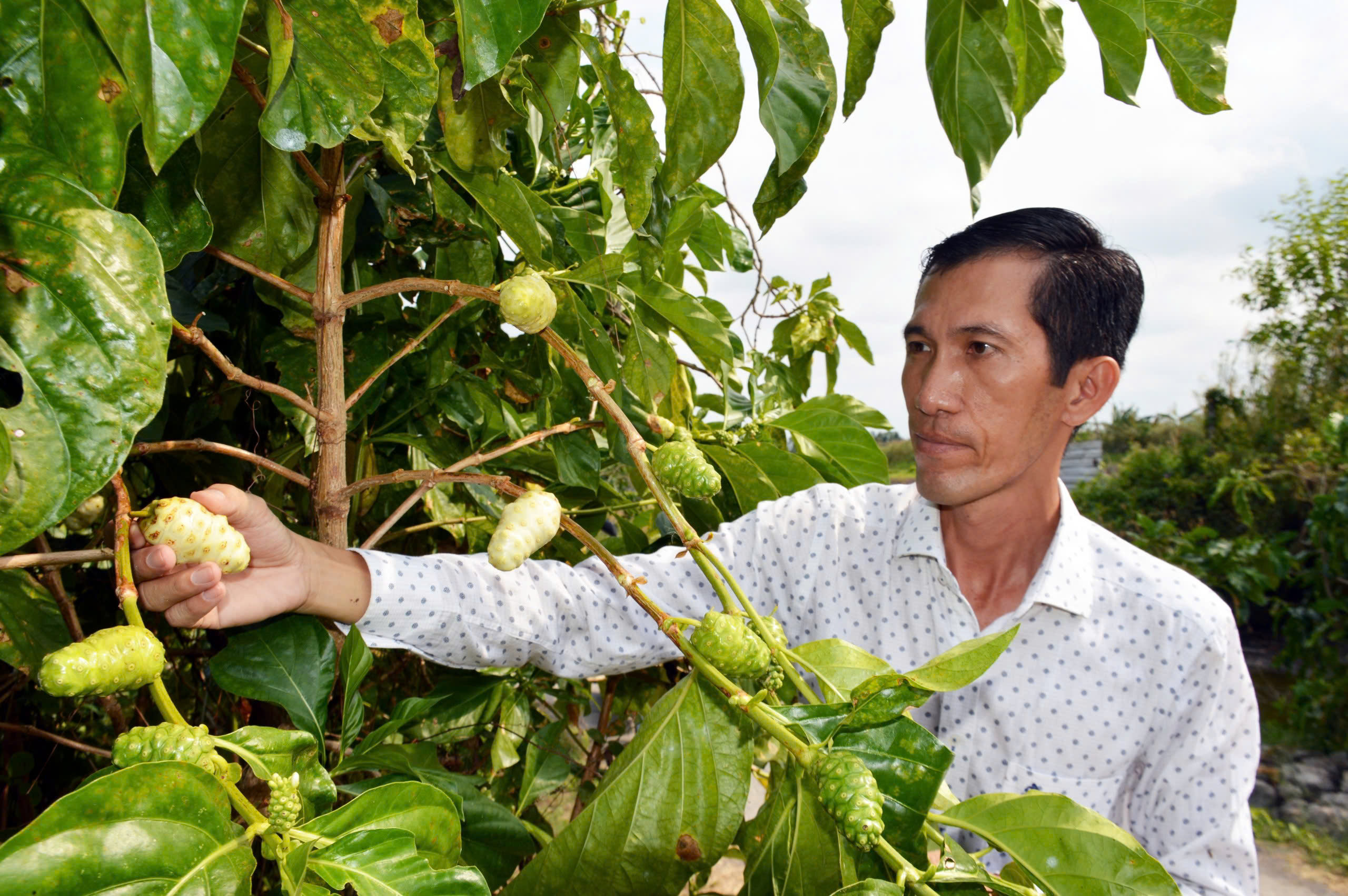
Mr. Chuong's noni orchard spans over 5 hectares. Seeing the trees thriving, lush green, and laden with fruit, many people are surprised that this wild plant has become a source of income, providing his family with a stable life.
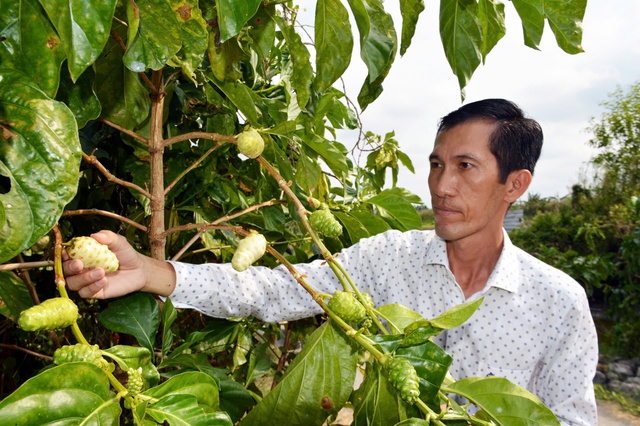
Mr. Chuong harvests noni fruit to make noni juice. PHOTO: DUY TAN
After graduating with a degree in Information Technology from the University of Science , Vietnam National University Ho Chi Minh City in 2004, Mr. Chuong applied for a job at a telecommunications company in Ho Chi Minh City with a relatively high income.
In 2018, his father fell seriously ill, so he temporarily put his work aside to return home to care for him. At that time, a friend gave him a bottle of noni juice from the US. After researching and finding that the product was popular in the market due to its effectiveness in treating high blood pressure, constipation, headaches, insomnia, etc., he conceived the idea of starting a business selling noni juice.
Using savings accumulated over many years of work, he invested approximately 1 billion VND in converting 5 hectares of his family's shrimp farming land into a plantation of over 100,000 noni trees. Initially, the trees were not suited to the soil and many died. At that time, Mr. Chuong's wife was still working in Ho Chi Minh City to support the family . Thanks to persistent research into suitable cultivation methods, after more than a year, the noni orchard yielded its first harvests and gradually began to provide year-round harvesting, ensuring a stable supply of raw materials.
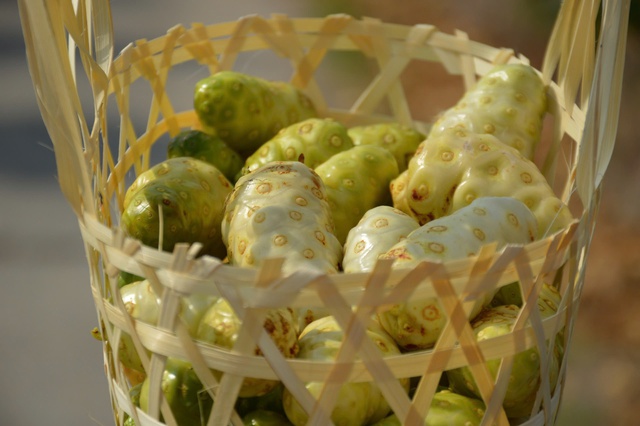
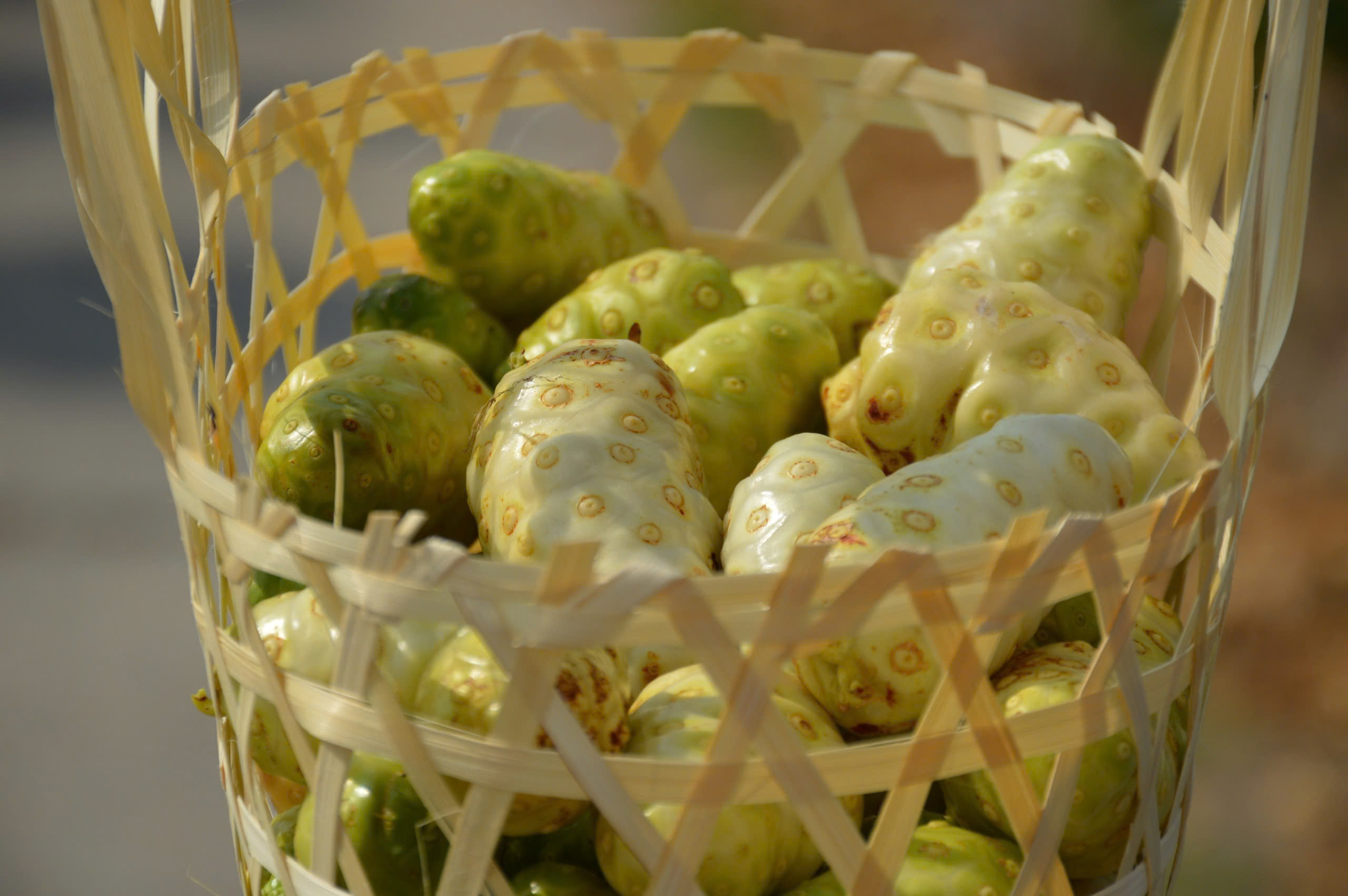
Approximately 3-4 kg of fresh noni fruit yields 1 liter of pure noni juice. PHOTO: DUY TAN
Mr. Chuong is in contact with gardeners. They moved to nearby areas to grow crops in large quantities, generating income for the local people. In 2020, the couple established a company, investing in modern machinery and production lines.
"In reality, not only in my locality but in most provinces and cities in the Mekong Delta, the value of the noni fruit has not been fully exploited. Most people only use it to make medicinal wine to treat aches and pains. A few noni growers supply raw materials to traders, but the value is not high and the market is unstable," Mr. Chuong said.
Opportunities to bring products to the international market.
At Mr. Chuong's facility, the juice is made from noni fruit. Freshly harvested from clean raw material areas, cultivated according to organic farming standards. Only noni fruits that are 80% ripe or more are selected as raw materials.
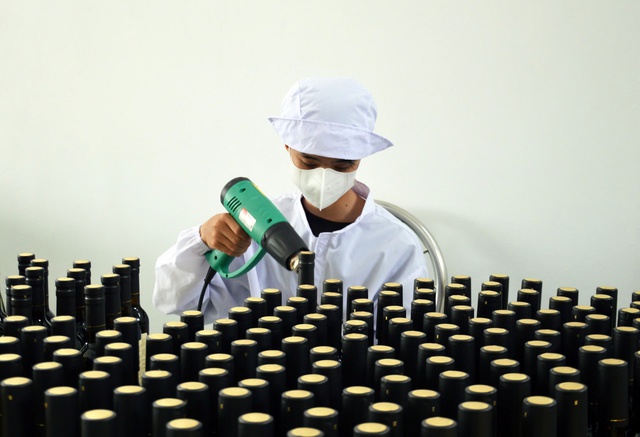
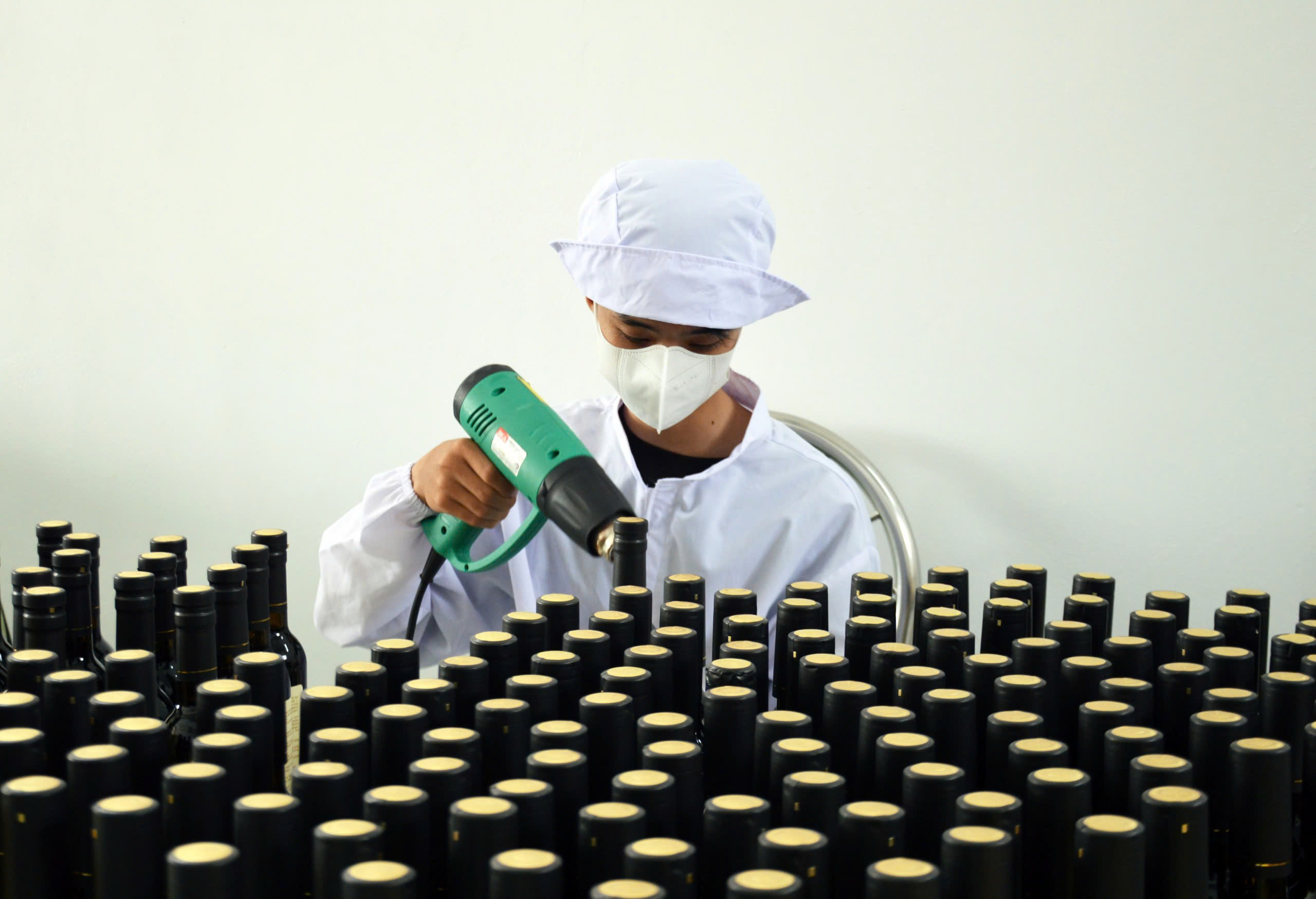
Noni juice is sold through 30 distributors nationwide and e-commerce platforms. PHOTO: DUY TAN
The noni fruit, once meeting quality standards, is washed, dried, and then fermented for 12 months. Next, it's processed using a machine to separate the juice and seeds, and then blended into various products. Approximately 3-4 kg of fresh noni fruit yields 1 liter of pure noni juice. "To cater to customers' tastes, in addition to pure noni juice, I also make noni juice with a little rock sugar added for those who prefer a sweeter aftertaste," Mr. Chuong said.
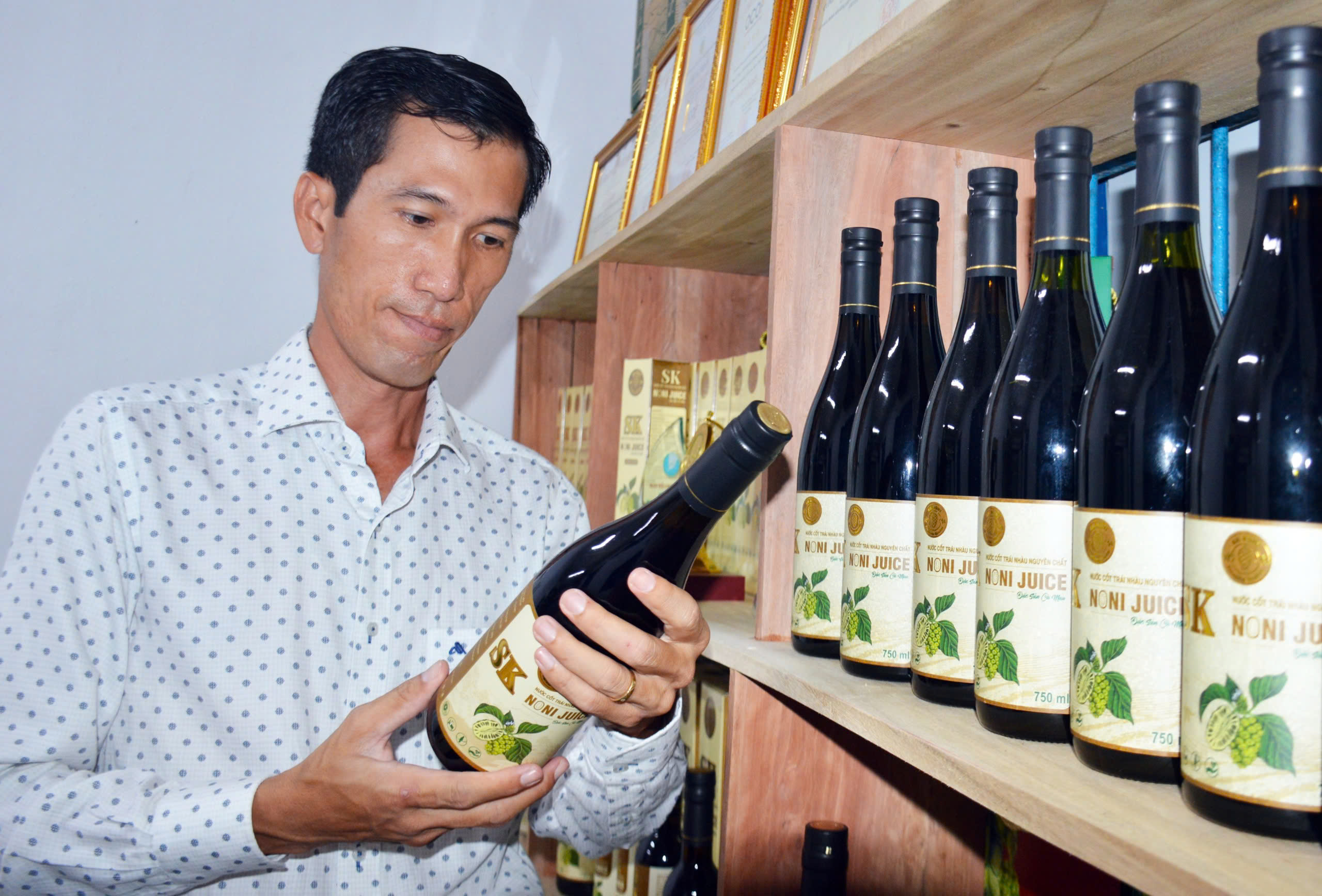
Currently, Mr. Chuong divides his noni juice products into two lines: premium and basic, distributed through 30 agents nationwide and e-commerce platforms. His facility produces four bottled formats, selling thousands of bottles annually at prices ranging from 180,000 to 380,000 VND per bottle, thus generating profit. over 1 billion VND.
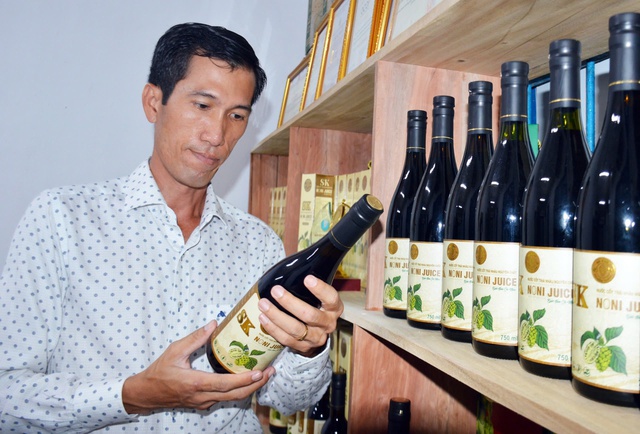
Mr. Chuong's facility produces four different bottled formats, selling thousands of bottles of noni juice concentrate at prices ranging from 180,000 to 380,000 VND per bottle. PHOTO: DUY TAN
Source: https://thanhnien.vn/bo-tui-hon-1-ti-dong-moi-nam-tu-cay-nhau-185250507104841329.htm




![[Photo] General Secretary and President To Lam and the President of the Philippines hold talks.](https://vphoto.vietnam.vn/thumb/1200x675/vietnam/resource/IMAGE/2026/06/01/1780283481955_vna-potal-tong-bi-thu-chu-tich-nuoc-to-lam-va-tong-thong-philippines-hoi-dam-8797519-1429-jpg.webp)
























































































Comment (0)