

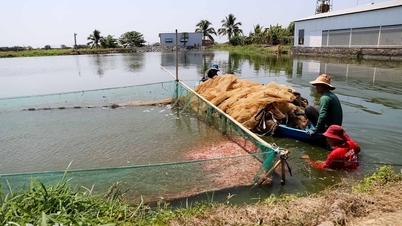
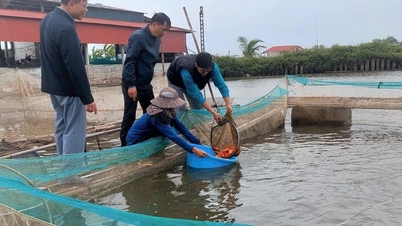
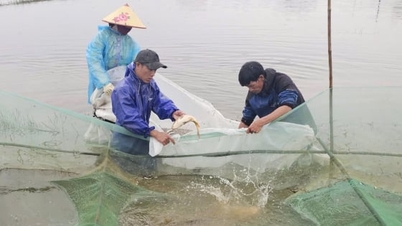
Buying and selling fish fry at Nguyen Fish Hatchery in Can Tho City.
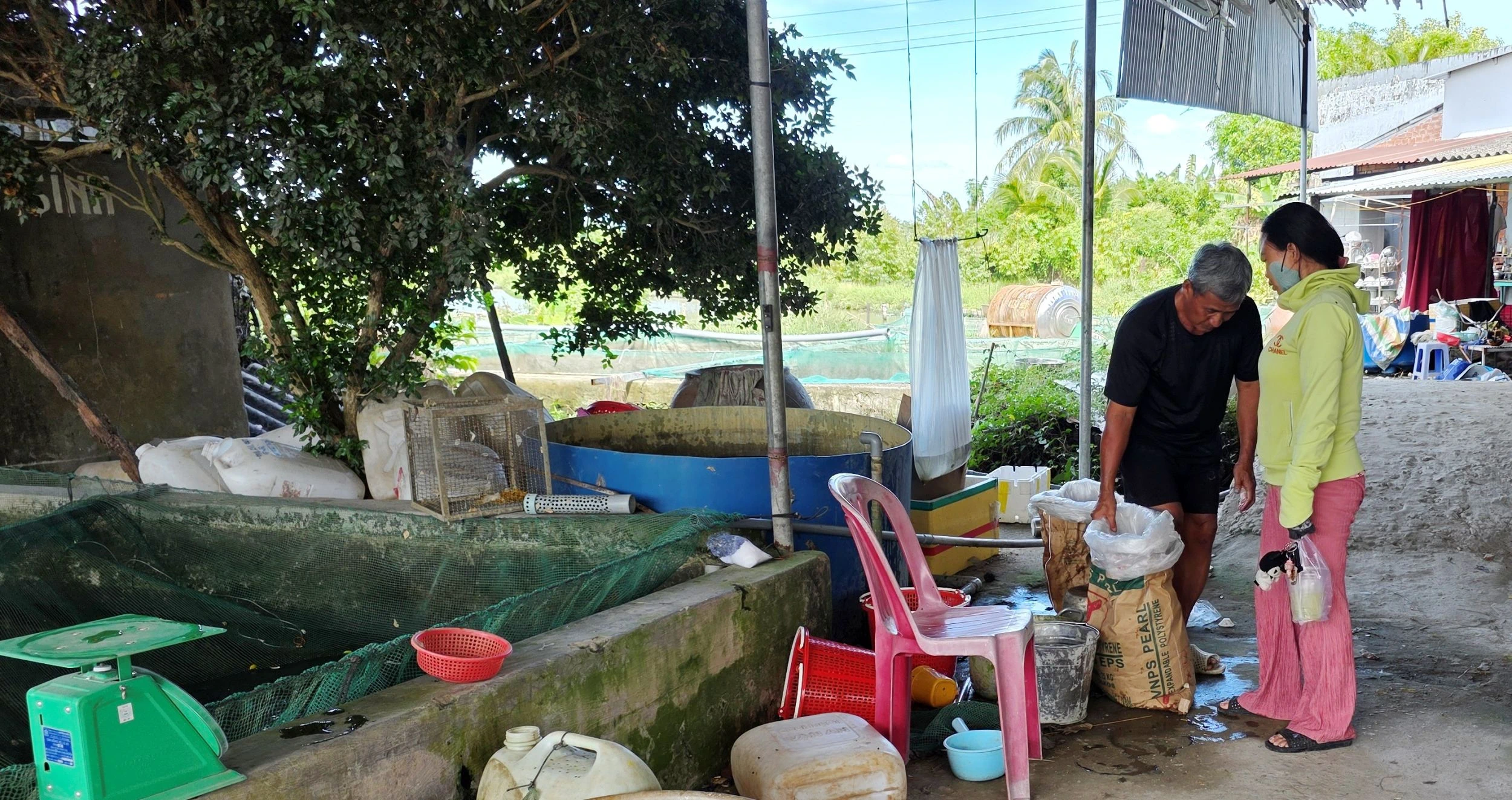
Prices of fish fry are increasing.
Currently, the prices of many types of fish fry such as tilapia, carp, red snapper, striped catfish, spotted catfish, etc., have increased by at least 5,000-50,000 VND/kg or 100-300 VND/fry compared to previous months and compared to the same period in 2024.
At many fish breeding and trading establishments in Can Tho City, the price of striped catfish fingerlings (120-150 fish/kg) is currently at 160,000-180,000 VND/kg, while in the same period last year the price was only 120,000-150,000 VND/kg. The price of yellow catfish, tilapia, and carp fingerlings is sold at many breeding facilities at 100,000-140,000 VND/kg (100-150 fish/kg). This is also the highest price in many years. The retail price of tilapia, silver carp, grass carp, loach, and red snapper fingerlings sold to consumers in many places is at 70,000-90,000 VND/kg (80,000-120 fish/kg). Spotted catfish (size from cage 12 to cage 16) cost 1,500-2,000 VND/fish; white pomfret (size from cage 12 to cage 16) cost 500-600 VND/fish. Mud eels (longer than 10 cm) cost 5,000-6,500 VND/fish; snakehead fish (size from cage 10 to cage 12) cost 800-1,000 VND/fish…
Prices for many types of fish fry have increased due to rising input costs and reduced supply. This year, the supply of some fish fry (tilapia, striped catfish, etc.) has decreased due to difficulties in production and high mortality rates during the rearing process caused by unfavorable weather and production conditions, as well as reduced production by farmers due to previous losses. Many households involved in fish fry production in Can Tho City have stopped or switched to other agricultural production, especially crop farming, so the area dedicated to fish fry rearing has also decreased significantly compared to previous years. The increase in fish fry prices is also supported by high prices for commercial fish. In addition, in recent times, the main export-oriented fish species in the Mekong Delta, pangasius, has sold at high prices, leading many households to focus on producing pangasius fry and reduce the production of other fish fry.
However, some fish species, such as snakehead fish, catfish, and eels, maintain stable prices, or even slightly decrease compared to previous months and the same period last year, due to weak demand and the decline in the price of marketable fish (meat fish). The price of snakehead fish fingerlings (size 14 in cages) in many places is around 2,500 VND/fingerling; eel fingerlings (500-1,000 fish/kg) are 2,800-3,600 VND/fingerling; and catfish fingerlings are 45,000-50,000 VND/kg. Notably, after reaching record highs in the early months of this year, the price of pangasius fingerlings has recently dropped sharply due to increased supply and a decrease in the price of marketable pangasius. The price of pangasius fingerlings (30-35 fish/kg) is currently at 26,000-28,000 VND/kg in many places, while in the early months of the year it sometimes reached 45,000-50,000 VND/kg. Compared to the same period in 2024, the current price of pangasius fingerlings is still about 5,000 VND/kg higher.
Expectations are that purchasing power will continue to increase.
Every year, farmers in many localities in the Mekong Delta region often promote the development of freshwater fish and aquatic species farming during the flood season due to favorable water conditions. Currently, floodwaters have appeared in most major rivers and canals in the Mekong Delta, signaling the beginning of the flood season. Although the floodwaters have not yet arrived in large quantities, the rainy season has begun, and the water resources in rivers, streams, and canals in many areas are abundant, and the weather is also cool, favorable for people to develop various fish and aquatic species farming models. The 2025 summer-autumn rice crop has also been harvested in many areas, allowing farmers to immediately start fish farming in their rice fields. Therefore, the demand for many types of fish fry will increase and is predicted to increase further in the future.
Mr. Le Thai Nguyen , owner of Nguyen fish breeding facility in Thoi Binh B area, O Mon ward, Can Tho city, said: “The demand for many types of fish fry at my facility has increased by about 20-30% compared to previous months and is expected to increase further when the floodwaters arrive, creating favorable conditions for people to develop aquaculture models in rice fields and cage farming on rivers. Currently, most people are focusing on buying fish fry to raise in ponds, tanks, ditches in orchards or artificial ponds and tanks.”
According to Mr. Nguyen, in recent years, many types of fish fry produced in Can Tho City have not only met the needs of local people but have also been supplied to farmers in many provinces in the Mekong Delta and exported to the Cambodian market, thus the demand is quite large. Therefore, the demand for many types of fish fry is likely to increase sharply in the coming time and prices may also rise, especially for some types of fish fry that are in high demand.
According to Ms. Ngo Thi Xuan Lan, owner of Thien fish breeding facility in Hoa Thanh A area, O Mon ward, Can Tho city, previously, the model of raising freshwater fish and other aquatic species in rice paddies developed quite strongly due to large floods, abundant readily available food sources in the fields, and rapid fish growth. Farmers did not have to spend money investing in fish feed, resulting in high economic efficiency. However, in recent years, the Mekong Delta has experienced fewer large floods, and rice prices have improved, leading people to increase rice production to three crops per year and reduce aquaculture during the flood season...
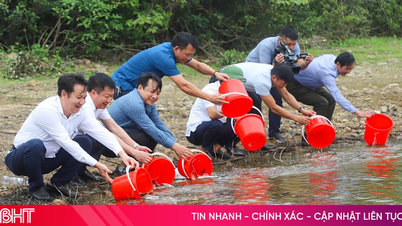
In the coming period, the demand for various types of fish fry is expected to increase with the floodwaters as people intensify the development of fish farming models during the flood season. In addition, many people also need to buy fish fry to use as feed for livestock, thus bringing higher economic value, or to prepare dishes made from young fish, or to release them into the natural environment to regenerate aquatic resources.
Text and photos: KHANH TRUNG
Source: https://baocantho.com.vn/ca-giong-bat-dau-tang-gia-a188402.html
![[Photo] General Secretary and President To Lam presides over the meeting to approve the draft report on the results of the second inspection by the Politburo of the Standing Committee of the Hanoi City Party Committee.](https://vphoto.vietnam.vn/thumb/1200x675/vietnam/resource/IMAGE/2026/05/26/1779789811432_a2-bnd-4430-9620-jpg.webp)









































































Comment (0)