

Meanwhile, many food stalls are still trying to keep prices the same, accepting slightly lower profits so as not to affect customers, while waiting for rice prices to cool down.
"Without growth, we can't survive!"
At 9 a.m. on August 12th, as usual, Mr. Nam, the owner of a famous fried chicken rice restaurant in District 3 (Ho Chi Minh City), along with a few assistants, were busy setting up their stall, getting ready to open for business at 10 a.m.
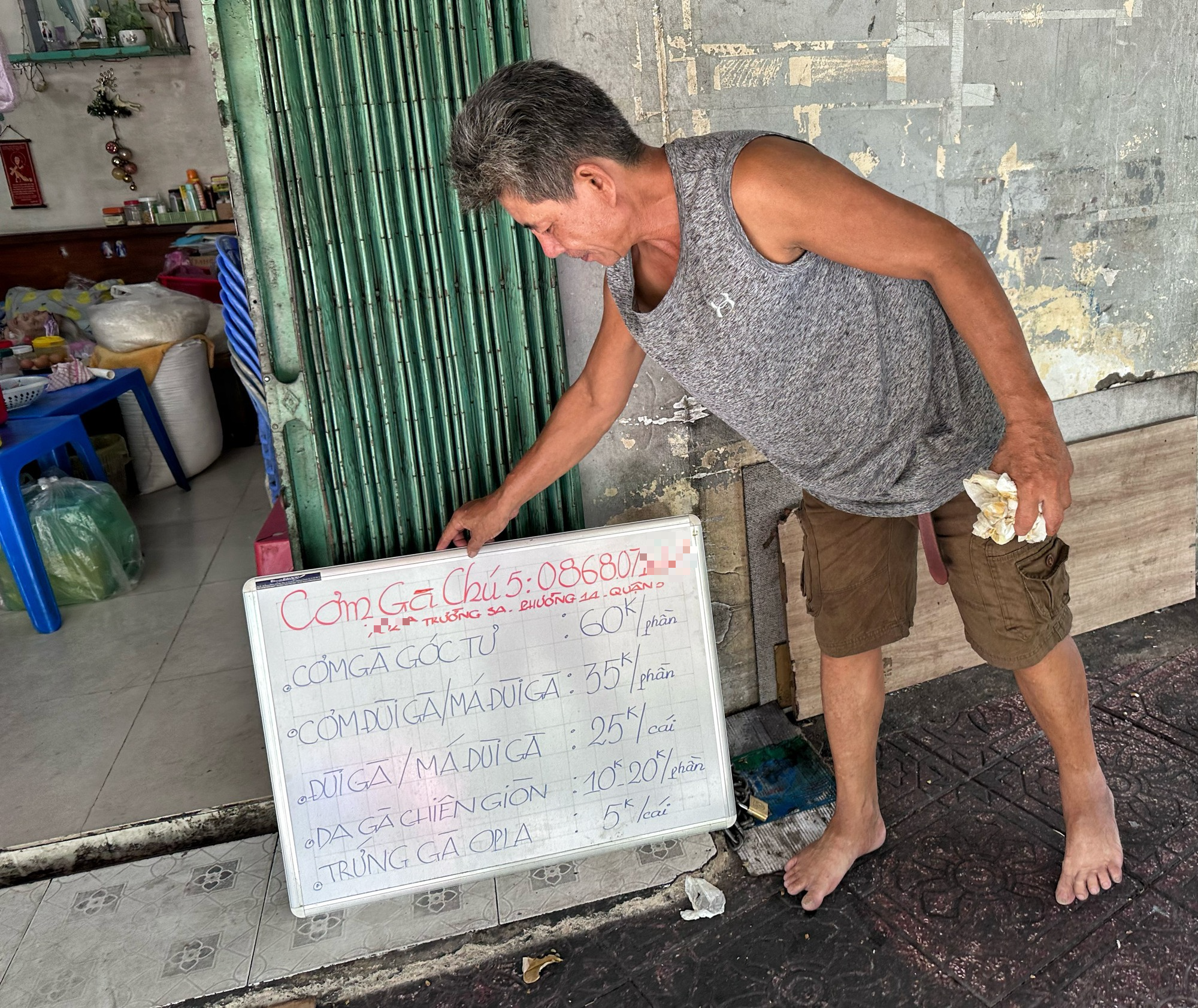
In early August, Mr. Nam's restaurant started raising prices.
In front of the restaurant, a menu board clearly shows the prices, ranging from 10,000 to 60,000 VND per serving. Pointing to it, the owner sighed and said that from the beginning of August, he started increasing the prices of dishes by 3,000 to 5,000 VND. Specifically, chicken thigh/leg rice went from 32,000 VND to 35,000 VND per serving, and chicken quarter rice went from 55,000 VND to 60,000 VND per serving.
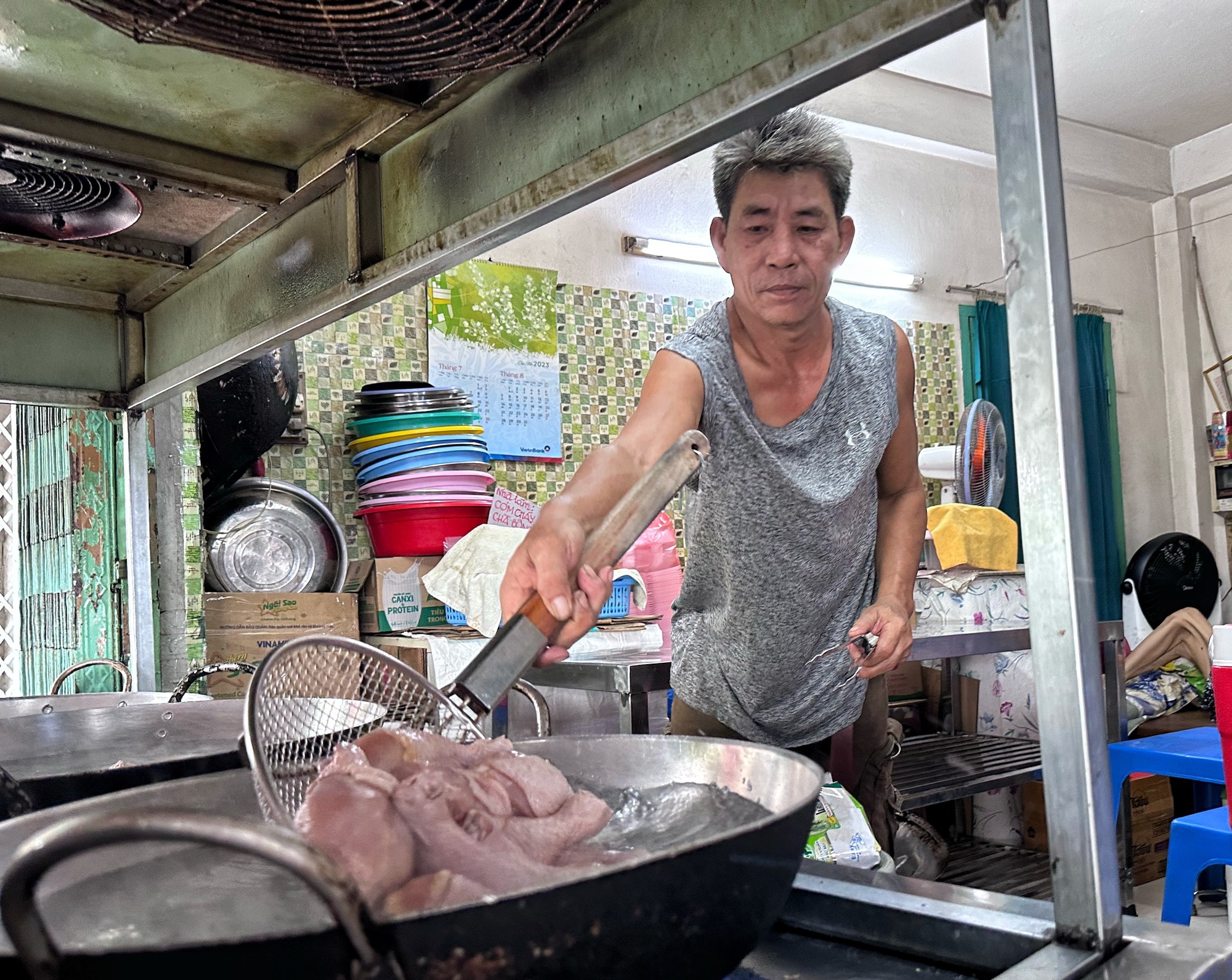 Mr. Nam, the owner of the restaurant.
"Before raising the price, I also informed the customers beforehand so they would understand. I reduced the profit margin a little, and the customers understood so we could get through this difficult period together," the owner said while tidying up the shop.
The restaurant owner felt fortunate that despite the price increase, customers were understanding and continued to support him. However, he hoped that rice prices would decrease in the future so that his business and finances would stabilize. He explained that he cooks a large quantity of rice daily, and if the situation continues and rice prices keep rising, it will significantly impact his business.
Next to Mr. Nam's shop, Ms. Tram (45 years old), who recently opened a shop selling Central Vietnamese specialties such as noodle soup and pasta, also hung a sign in front of her shop with the words: "From August 1st, 2023, the price will increase to 28,000 VND/bowl. Thank you!"
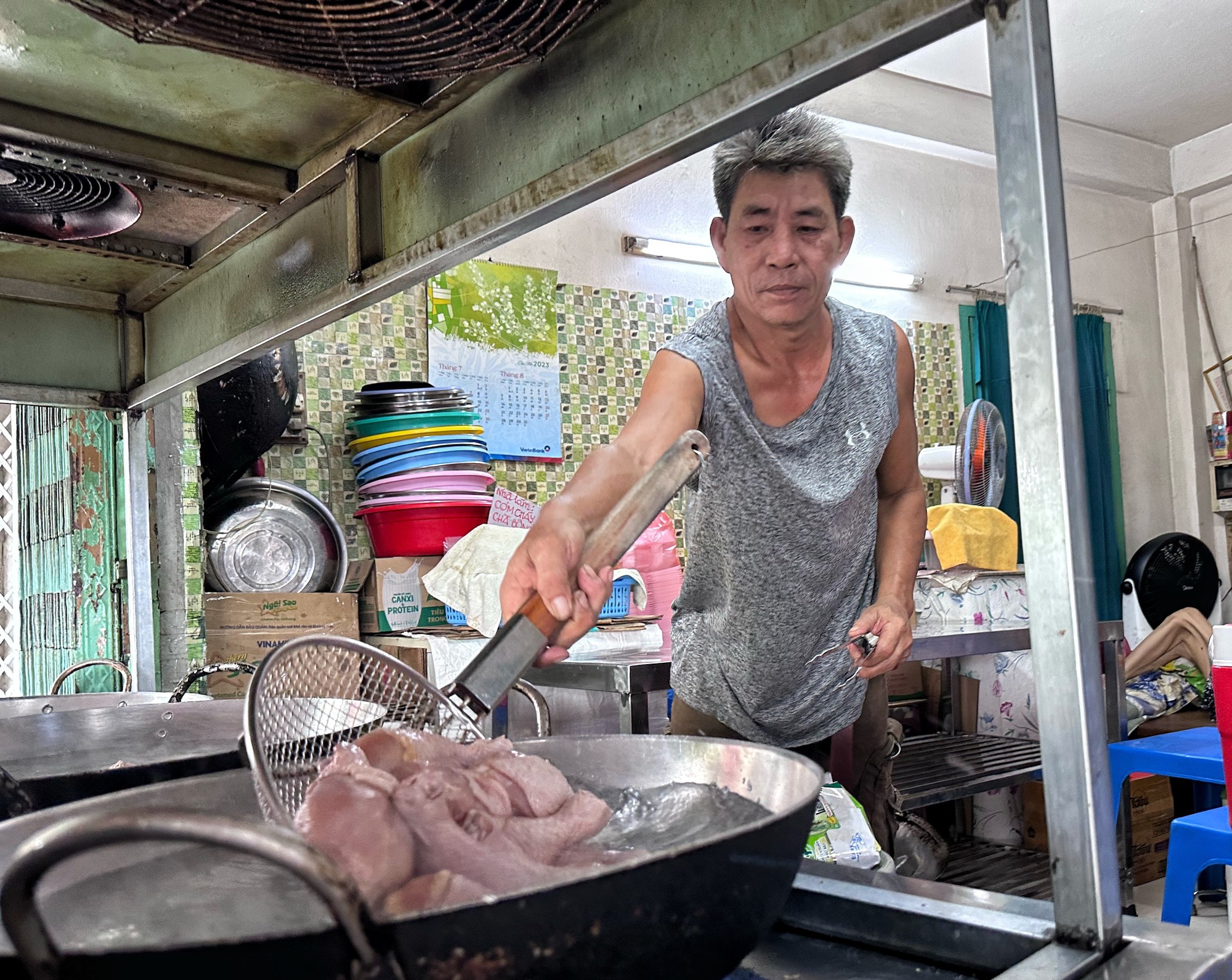
The owner said that not only rice, but the prices of many other ingredients have also increased.
The owner said she only opened the shop 4 months ago, and although she doesn't sell many dishes made from rice, the rising price of rice has, to some extent, affected her business.
Regarding the price increase of 3,000 VND from the initial 25,000 VND, the owner confided that it was partly due to the rising cost of raw materials at this time, so she had to increase the price accordingly to stay afloat. If she had kept the old price from when she first opened, it would have been difficult to overcome this challenging period.
"I heard that the price of rice has increased by 2,000 dong. I might not be affected much right now, but in the long run, if this trend continues, things will definitely get worse. Everything is getting more expensive these days, and since I'm just a small business owner, I'm trying to hold on and wait for things to improve," the shop owner said.
The cost increased, but prices didn't rise because…
Ms. Truong Thi Hanh (38 years old), owner of a beef noodle soup restaurant with nearly 40 branches in Ho Chi Minh City and several other provinces and cities in Vietnam, said that for the past month, since the price of rice started to increase, the price of noodles she imports has also gone up. This is the first time she has encountered this situation in the past four years.
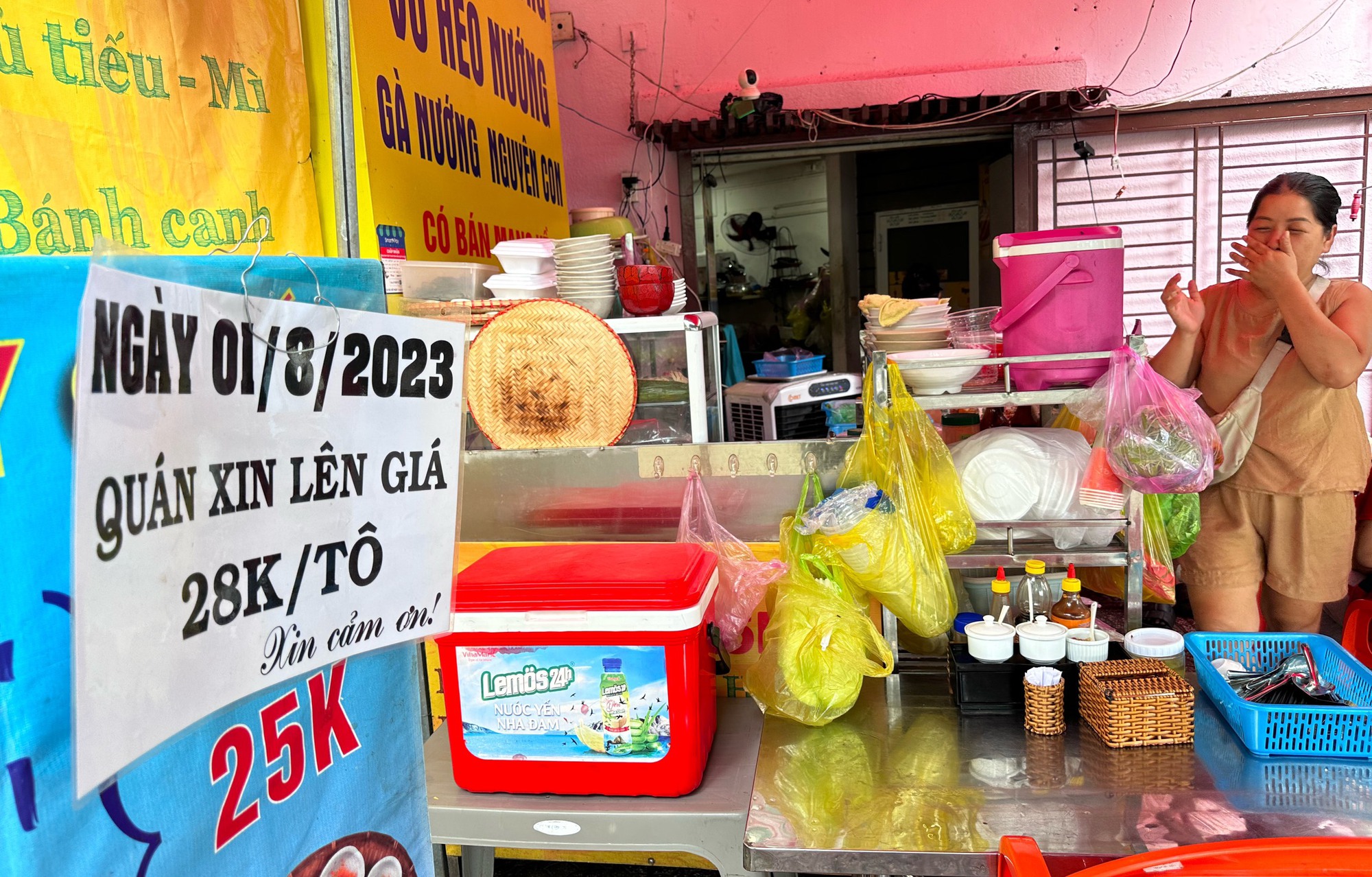
Ms. Tram's shop hopes customers will understand that they have to increase prices.
 Ms. Hanh, owner of the beef noodle soup restaurant.
According to the owner, not only the price of rice noodles, but also other ingredients used to cook a bowl of beef noodle soup have increased. Business is difficult, but she is determined not to raise prices for fear of losing customers, as sales have not been very good for the past few months.
Similarly to Ms. Hanh's restaurant, the broken rice restaurant located at 852 Truong Sa Street (District 3) stated that despite the increase in rice prices, they haven't raised their prices because they purchased a large quantity of rice several months ago and have enough to last for almost two more months. She mentioned that the restaurant cooks about 100 kg of rice daily.
The manager of this eatery said that they mainly serve students and ordinary workers, so the prices are only from 30,000 to 55,000 VND, or more if customers request it. Therefore, even though some restaurants have increased the prices of their dishes when the price of rice has risen, her restaurant still tries to keep the prices the same.
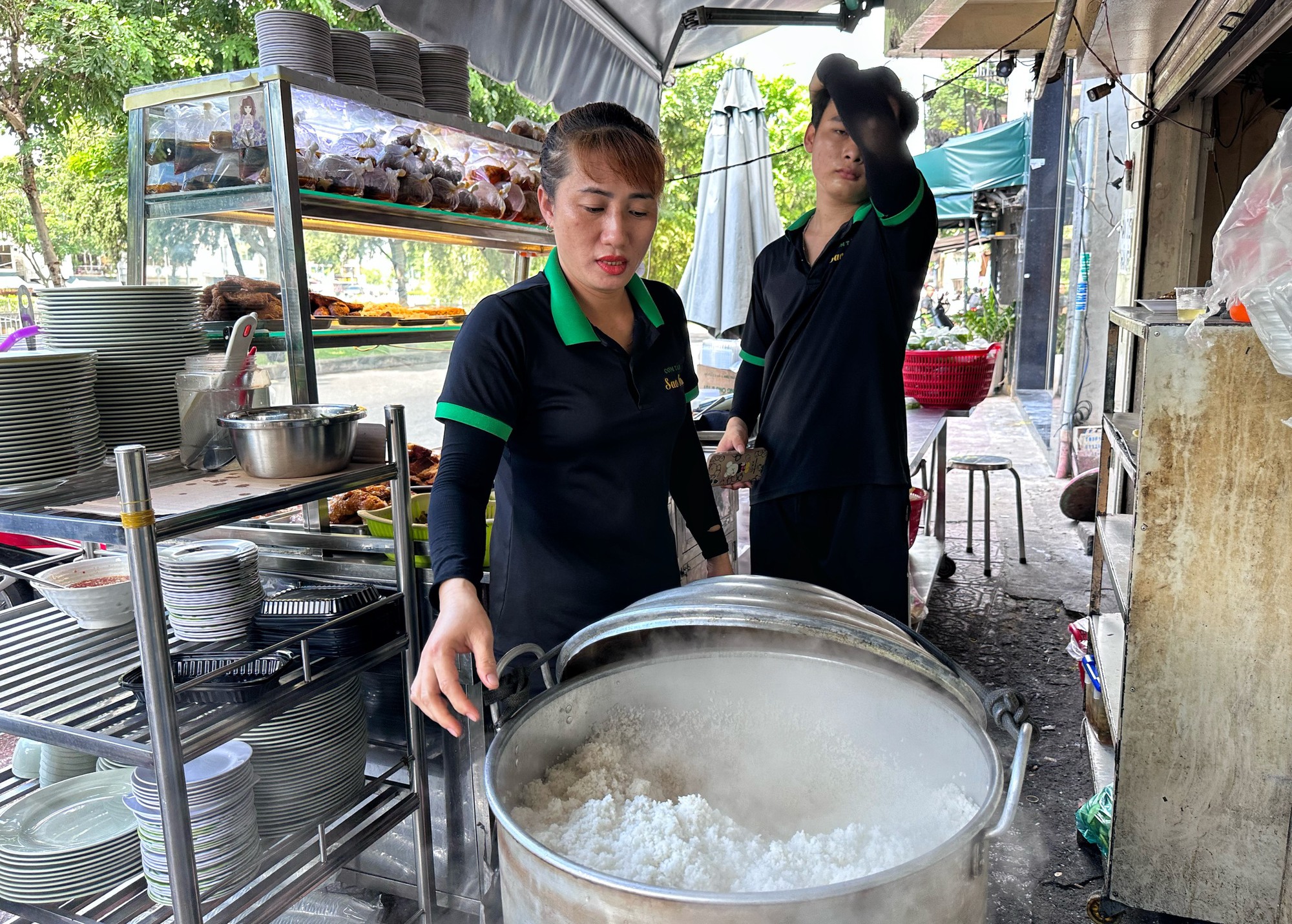
Having stockpiled rice months before prices began to rise, a rice dish restaurant maintained the same prices for its meals.

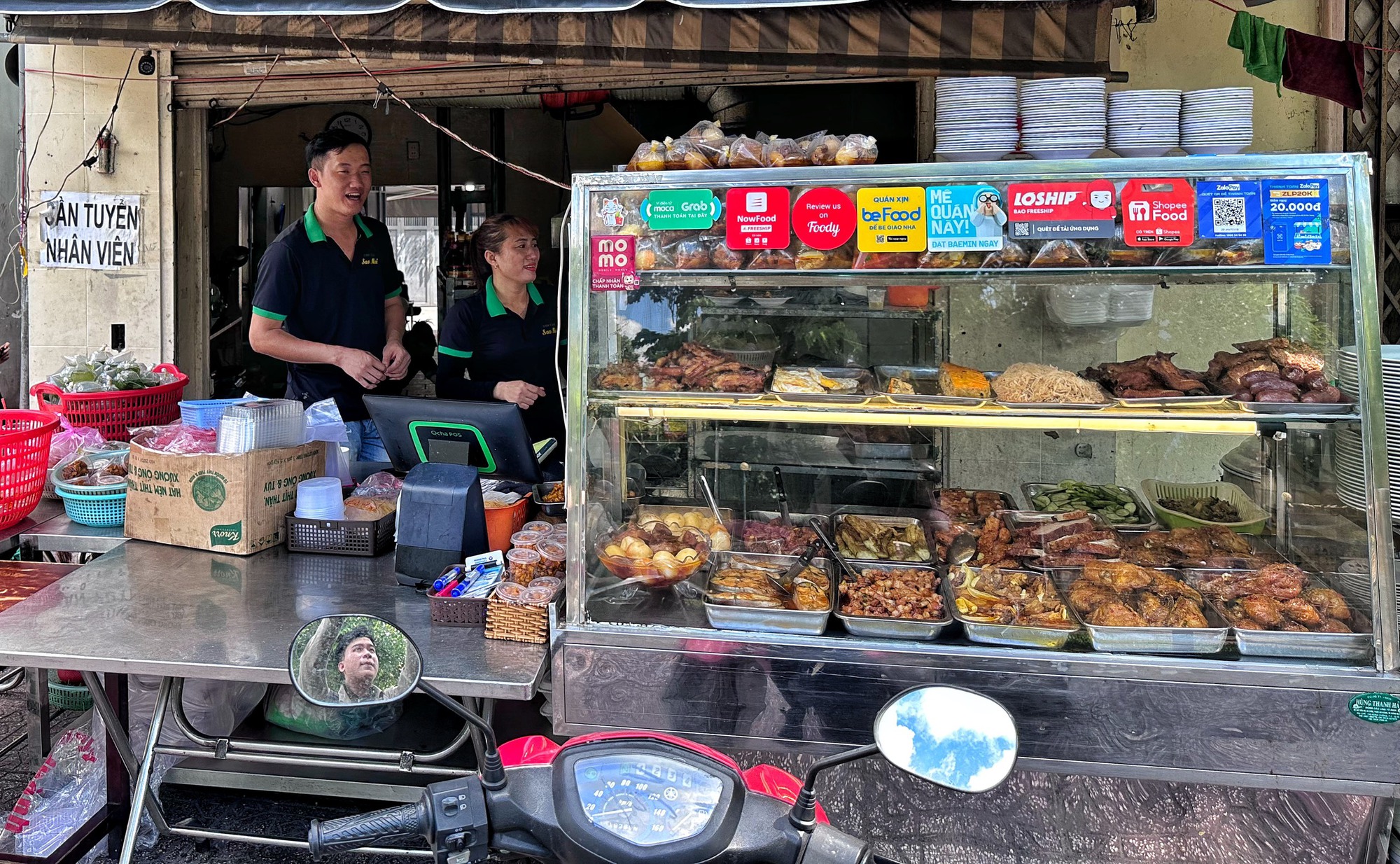

Rising rice prices are affecting restaurants that sell dishes made from this staple food.
"Regarding the chicken dish, because the price of this ingredient has increased, the restaurant has raised the price by 2,000 dong in the past few days. Everything else remains the same. I don't know what the situation will be like in a few months when our rice reserves run out; hopefully, the price of rice will decrease then," she expressed.
The owner of a broken rice restaurant on Bui Minh Truc Street (District 8) also said that although rice prices have increased, her restaurant is not affected because she has relatives who are in the rice business. At this time, due to their close relationship, she is still supplied with rice at the old price, and her business is not significantly impacted.
"Looking at the long term, I'm a little worried because if prices keep rising, it will definitely affect me. Let's wait and see what happens, hoping prices stabilize for workers," the shop owner said hopefully.
As of the end of August 11th, information from the Vietnam Food Association (VFA) and the Thai Rice Exporters Association (TREA) indicated that the price of 5% broken rice was at US$650/ton, while the price of 25% broken rice from Vietnam was US$618/ton and from Thailand US$612/ton. These are all record high prices, at least in the past 15 years since the rice price surge in 2008. The price of 5% broken rice exceeding US$600 was predicted by many experts since India's rice export ban. However, the fact that the price of 25% broken rice also surpassed US$600/ton came as a surprise to many.
Source link


















![[Photo] Prime Minister Pham Minh Chinh attends the Conference on the Implementation of Tasks for 2026 of the Industry and Trade Sector](/_next/image?url=https%3A%2F%2Fvphoto.vietnam.vn%2Fthumb%2F1200x675%2Fvietnam%2Fresource%2FIMAGE%2F2025%2F12%2F19%2F1766159500458_ndo_br_shared31-jpg.webp&w=3840&q=75)



























































Comment (0)