

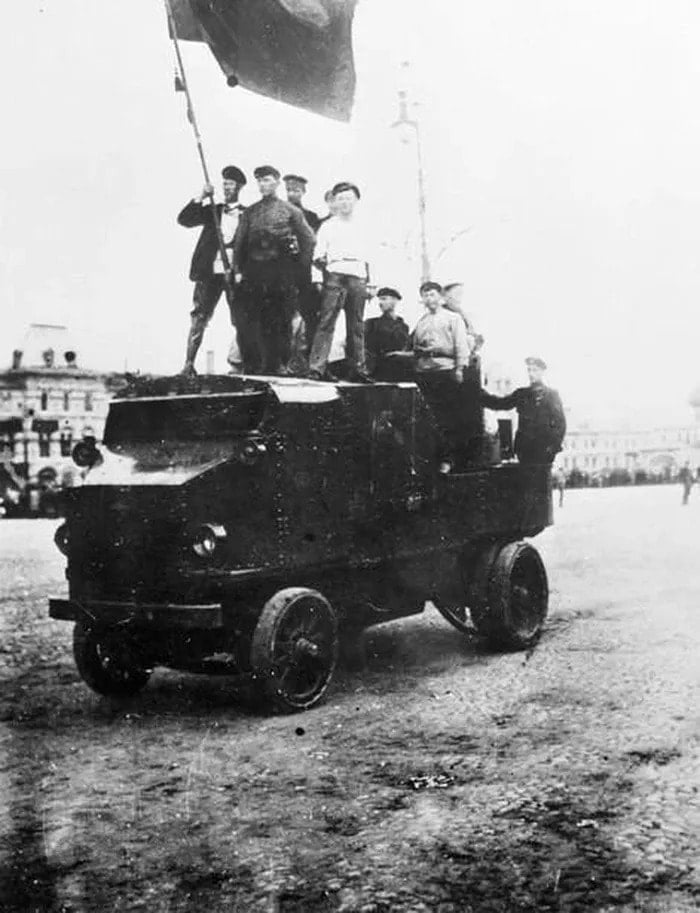
The Russian October Revolution (November 7, 1917 - November 7, 2024) left many valuable lessons about mobilizing forces in the struggle for power, and these lessons remain relevant to current revolutionary movements.
Solidarity among social classes
The Russian October Revolution was victorious thanks to the solidarity between the working classes, especially workers and peasants. The Bolshevik Party, under Lenin's leadership, clearly recognized the role of these forces in the revolution and successfully combined the interests of the two classes.
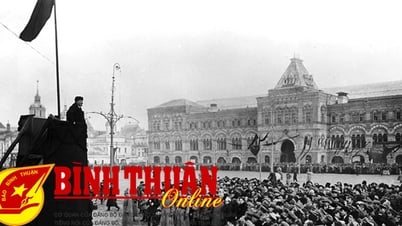
With regard to the workers, Lenin and the Bolshevik Party called on workers in the cities, especially in Petrograd and Moscow, to rise up against the Tsarist regime and capitalism, and to seize power, thereby defending their own ownership rights. Workers were the vanguard force in demonstrations, strikes, and armed struggles during the urban revolutions.
The peasantry also played a key role in the Russian October Revolution. To mobilize the peasantry, the Bolshevik Party put forward slogans about land reform, confiscating landlords' property and distributing land to peasants. This policy attracted widespread support from the poor and middle peasant classes.
The Bolshevik Party not only focused on uniting the proletariat but also formed strategic alliances with other progressive forces. Before the Russian October Revolution, the Bolshevik Party had established relationships with political parties such as the Menshevik Party, the Socialist Revolutionary Party, and progressive intellectual groups.
The Bolshevik Party also skillfully rallied various forces within society under a common goal: overthrowing the Tsarist regime, eliminating oppression and injustice, and building a just society. In particular, its connections with intellectual groups and smaller revolutionary parties helped the Bolshevik Party develop widespread influence and support among various social strata.
Apply appropriately.
The Vietnamese Revolution has been applying many valuable lessons from the Russian October Revolution. In the current stage, the lesson of uniting forces and components is a key factor in building revolutionary strength, especially in combining and protecting the interests of the working classes in society.
In particular, national unity, a key strategic guideline of our Party and a decisive factor in the success of national construction and defense in all periods, has been summarized in the thesis "promoting the tradition of national unity to build our country into an increasingly prosperous, civilized, and happy nation," as in the title of an important book by General Secretary Nguyen Phu Trong.
Furthermore, the lessons learned about the Party's leadership and organizational capacity, especially its personnel and strategic preparation, are decisive factors for the success of a revolution. Building a clean, strong, disciplined Party and knowing how to harness the strength of all forces in society are valuable lessons for the current task of building and defending the country.
In this context, the pioneering role, exemplary conduct, and capabilities of Party members, especially those in leadership positions, are crucial in order to lead, persuade, and motivate others to act together.
In the Russian October Revolution, or any revolution for that matter, the element of unity and broad mobilization of forces has always played a crucial role in its success. Currently, as our country enters a new era, an era of national progress, these lessons remain profoundly valuable and need to be applied appropriately to achieve the goals set by the Party.
The right decision
Under Lenin's leadership, the Bolshevik Party employed sound strategies and actions to rally forces and seize power. The party developed into a tightly-knit, highly disciplined organization capable of operating effectively even in difficult circumstances. In particular, Lenin possessed foresight in organizing and leading the revolution. Lenin's leadership enabled the Bolshevik Party to harness the strength of the working class, peasantry, and intellectuals, while also making correct decisions at crucial moments.
Furthermore, the Bolshevik Party organized the revolutionary forces scientifically , from workers' organizations to armed armies, ensuring close coordination and decisive action in battles and the struggle for power. The Bolshevik armed forces fought fiercely in the uprisings and battles against the 14 imperial powers that followed.
Source: https://baohaiduong.vn/cach-mang-thang-muoi-nga-vang-mai-bai-hoc-quy-397443.html




































































Comment (0)