

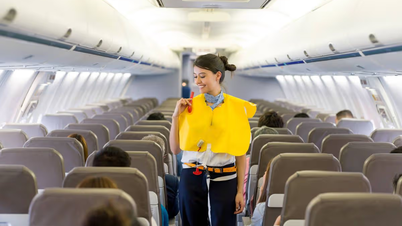
Upon discovering the fire, the nine Japan Airlines flight attendants urged everyone to remain calm, notified the pilots, and proactively opened the emergency doors to evacuate passengers.
Japan Airlines provided details on January 3rd about what happened inside the Airbus A350 cabin after it collided with a Coast Guard patrol aircraft at Haneda Airport in Tokyo the previous day. The A350 was preparing to land after a flight from New Chitose Airport in Hokkaido, northern Japan.
According to Japan Airlines, after the collision, the A350 aircraft skidded along the runway for about one kilometer before coming to a stop. The pilot in the cockpit did not detect any fire, but the flight attendants noticed the aircraft was on fire.
At this point, smoke began to fill the aircraft cabin, and some passengers showed signs of panic, screaming and calling for help. Nine flight attendants asked everyone to remain calm, instructed them to crouch down, use masks or handkerchiefs to cover their noses and mouths, and urged cooperation while waiting for the plane to come to a complete stop.
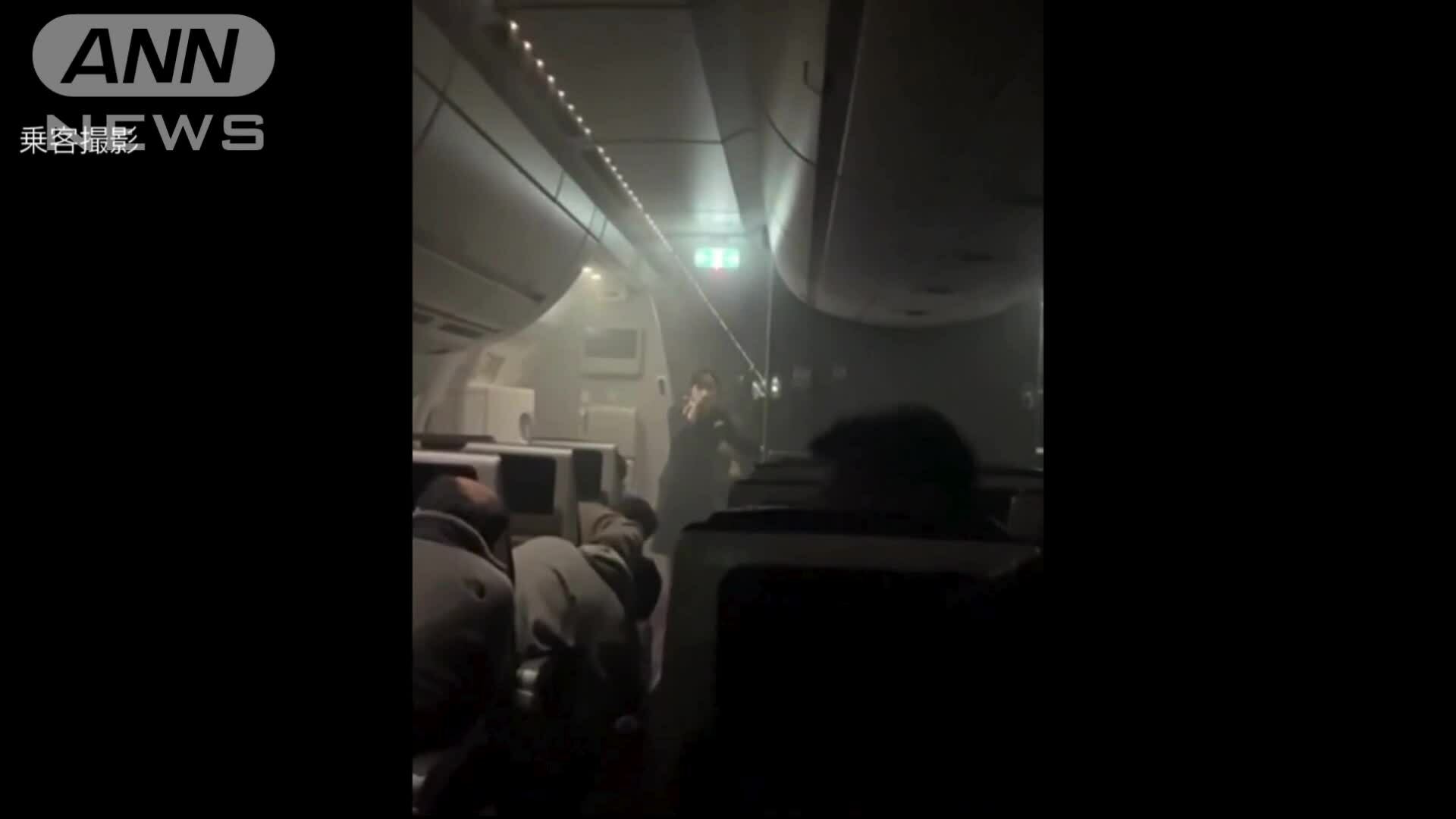
The moment passengers escaped during the air crash at Haneda Airport on January 2nd. Video : X, ANN
The chief flight attendant then called the cockpit, announcing that the plane was on fire and that passengers needed to be evacuated urgently. According to procedure, flight attendants needed the pilot's permission before opening the emergency exits.
The A350 aircraft has eight emergency exits on either side of the fuselage, and the evacuation began from the two front exits. However, five of the six remaining doors in the middle and rear of the aircraft were not safe to escape from due to the fire, leaving only the rear left door unaffected by the flames.
However, the internal communication system was malfunctioning, preventing the flight attendants from obtaining the pilot's authorization to open it. In this critical situation, the flight attendants proactively opened the door and activated the emergency slides to allow passengers to quickly evacuate.
This decision was considered consistent with standard evacuation procedures because, in an emergency, flight attendants could immediately activate the emergency exits and evacuate without waiting for the captain's orders, thus saving time.
All passengers followed the flight attendants' instructions, quickly moving to the emergency exits in the face of limited visibility due to the thick black smoke. No one stopped to retrieve their carry-on luggage, which could have hindered the evacuation.
The captain was the last person to leave the plane at 6:05 PM, and the evacuation was completed within 18 minutes of landing. Japan Airlines stated that all 379 people on board were safe and that the crew prioritized passenger safety throughout the process, acting independently without waiting for instructions from the ground.
The Japanese Ministry of Transport said Japan Airlines' evacuation procedure "was carried out correctly." International aviation experts also praised the flight attendants' response, saying their calmness and professionalism contributed to the miracle.
The airline also stated that prior to the collision, none of the three pilots on the A350 saw the Coast Guard patrol aircraft approaching the runway, and therefore they did not consider aborting the landing.
The airline stated that it is currently unable to provide a reason why the pilots failed to see the patrol aircraft. Some experts suggest that the patrol aircraft is quite small compared to the A350, making it difficult to detect in the dark. Additionally, the design of the wings above the fuselage obscures its interior lights when A350 pilots look down from above.
The collision also caused the patrol plane to catch fire, killing five people on board. The pilot of the patrol plane was the sole survivor, having managed to escape. The Coast Guard plane crashed while en route to deliver relief supplies to the earthquake-affected area in central Japan.
The Japan Transport Safety Committee yesterday launched an investigation into the accident. Investigators are expected to question the captains of both aircraft.
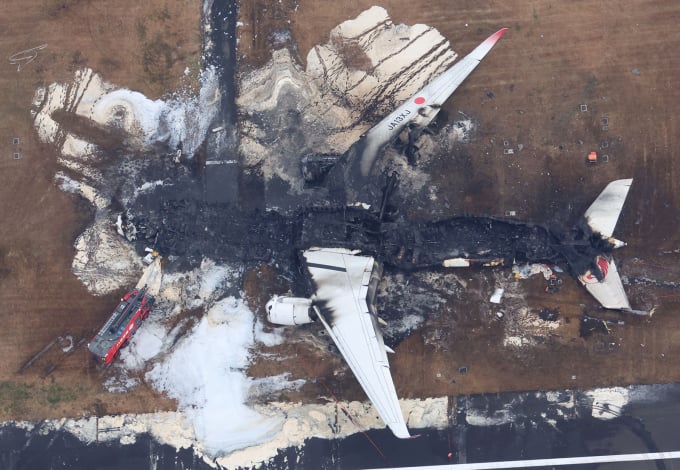
A Japan Airlines A350 aircraft burns to ashes on the runway at Haneda Airport in Tokyo after a collision on January 2nd. Photo: AFP
Takuya Fujiwara, an official from the Japan Transportation Safety Board, confirmed that air traffic control had given permission for the A350 to land. The Ministry of Transport also released a recording of the communication between air traffic controllers and the pilot, showing that the passenger plane was allowed to land and the patrol aircraft was instructed to move to a waiting position near the runway.
According to the audio recording, the air traffic controller announced that the patrol aircraft would take off first and instructed it to move to the runway-side holding point at position C5.
However, the pilot, Major Genki Miyamoto, 39, apparently misunderstood air traffic control's instruction to move to stop point C5 on the runway. Officials from the Japan Civil Aviation Administration said the recording showed the coast guard aircraft had not been cleared to enter the runway for takeoff before the accident occurred.
Huyen Le (According to NHK , AFP )
Source link





![[Photo] General Secretary and President To Lam presides over a meeting on preparations for the review of one year of operation of the three-tiered government system.](https://vphoto.vietnam.vn/thumb/1200x675/vietnam/resource/IMAGE/2026/06/02/1780391821195_a1-bnd-4595-9717-jpg.webp)










































































Comment (0)