

When maintaining air conditioning systems, many families often focus only on the indoor unit because it's the part that directly blows out the cool air. However, the outdoor unit is the component responsible for releasing heat into the environment to ensure the cooling cycle operates smoothly. Due to its exposed installation, the outdoor unit is constantly exposed to dust, leaves, cobwebs, and weather elements.
When dust and dirt accumulate heavily on the aluminum heat exchanger fins, heat exchange efficiency is significantly reduced. This forces the compressor to operate continuously at a higher power to maintain the set room temperature, leading to skyrocketing electricity bills and reduced equipment lifespan. Regularly cleaning this component not only improves cooling performance but also helps prevent many malfunctions.
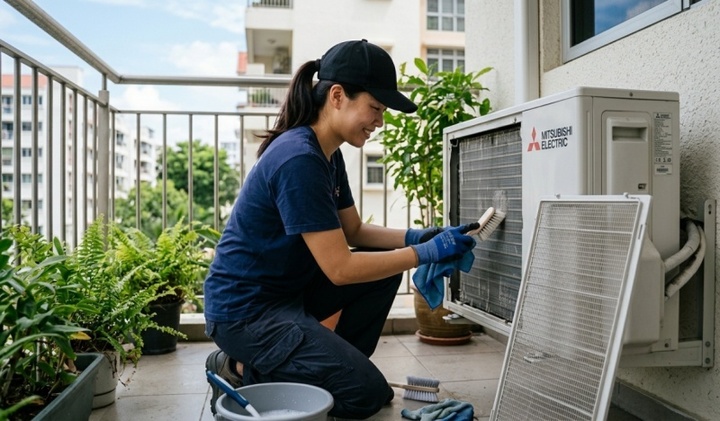
Cleaning the outdoor unit of an air conditioner requires attention to safety. Photo: FN
Preparation and safety precautions before cleaning the air conditioner's outdoor unit.
To ensure the air conditioner's outdoor unit cleaning process goes smoothly and to minimize risks to the equipment, having all the necessary tools and adhering to safety principles is absolutely essential.
Tools and equipment needed:
- For water spray, use a type with moderate water pressure or a handheld pressure sprayer for easy control of the water flow.
- Screwdriver, used to remove the protective cover of the outdoor unit when necessary.
- A soft brush or small dust brush.
- A soft, dry cloth and a small amount of mild cleaning solution, such as diluted dish soap.
- Use a plastic bag or food wrap to cover the circuit board.
Note: Before touching any internal components of the device, you need to completely disconnect the power supply to the air conditioner by turning off the circuit breaker or unplugging it. This ensures that there is no risk of electrical leakage or short circuits during the water spraying process. After disconnecting the power, wait about 5 to 10 minutes for the internal components to cool down completely before proceeding.
Proper procedure for cleaning the outdoor unit of an air conditioner.
Following the steps below in the correct order will help you thoroughly clean the outdoor unit without affecting its internal structure.
Step 1: Clean up the surrounding area.
Please remove any debris, dry leaves, or potted plants that may be obstructing the outdoor unit, within a minimum radius of 60cm. This space allows for better heat dissipation and prevents dust from being blown back into the unit immediately after cleaning.
Step 2: Clean the outer casing and remove the protective shield.
Use a soft, damp cloth to wipe clean the outer plastic or metal casing of the outdoor unit. Then, use a screwdriver to gently remove the screws securing the fan guard on the front to easily access the inside.
Step 3: Remove coarse dust and debris.
Use a soft brush or dustpan to remove cobwebs and dry leaves that are stuck in the nooks and crannies inside the outdoor unit. You can also use a vacuum cleaner on a low setting to quickly remove these debris.
Step 4: Spray and clean the fan blades and cooling system.
Spray water directly onto the fan blades to clean off any dust and dirt accumulated on the surface. For the rear heat sink fins, spray water along them from top to bottom.
Note: Always keep the spray nozzle perpendicular to the aluminum fins and maintain a suitable distance. Do not spray water at an angle or use excessive water pressure, as these aluminum fins are thin and easily dented, hindering airflow later on.
Step 5: Allow to dry completely and reassemble.
Use a dry cloth to wipe away any excess water from the surface and components. Allow the outdoor unit to air dry naturally for 1 to 2 hours before reattaching the protective grille. Only when you are sure all parts are completely dry should you turn the power back on and start the device.
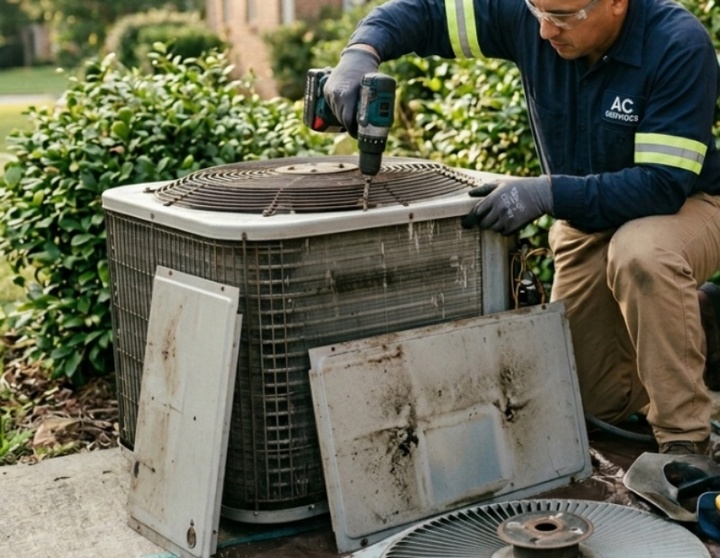
It's advisable to call a professional if the outdoor unit is installed in high or dangerous locations. (Image: IT)
Common mistakes to avoid
Cleaning your appliances at home can save you money; however, you should be aware of certain mistakes that can cause unnecessary damage:
Avoid spraying water directly onto the electronic circuit board box: In modern air conditioners, especially inverter models, the outdoor unit integrates a complex control circuit board. Although manufacturers have designed a protective box, using a high-pressure water hose to spray directly onto this area still poses a risk of water leakage inside, causing short circuits and electrical fires during operation. Therefore, carefully cover the electrical box before washing.
Using highly corrosive cleaning chemicals: Many people have a habit of using strong cleaning agents such as solutions containing high levels of acid or alkali to quickly remove stains. These substances can corrode the protective coating of the radiator, leading to gas leaks after a short time.
Ignoring the drain hole: During cleaning, dirt and debris can be washed down to the bottom of the outdoor unit and clog the drain hole. If water cannot drain, it will accumulate, causing rust on the base and creating an environment for bacteria and mold to grow.
How often should the outdoor unit of an air conditioner be cleaned, and when should you call a technician?
The frequency of cleaning the outdoor unit depends largely on the surrounding environment and the frequency of air conditioner use throughout the year.
For households in areas with less dust and more greenery: Regular cleaning every 3 to 6 months is recommended.
For homes near main roads, industrial areas, or commercial establishments: The frequency should be increased to approximately once every 1 to 2 months to ensure the equipment operates reliably.
Although cleaning the outdoor unit isn't overly complicated, you should only attempt it yourself if the unit's installation location is convenient and safe, such as directly on a spacious balcony or on a sturdy support on a lower floor. If the unit is suspended from a high exterior wall, requiring dangerous climbing or specialized safety equipment, contacting professional service technicians is the best solution to ensure your safety and the safety of your equipment.
Source: https://vtcnews.vn/cach-ve-sinh-cuc-nong-dieu-hoa-ar1020121.html



![[Photo] General Secretary and President To Lam presides over the meeting to approve the draft report on the results of the second inspection by the Politburo of the Standing Committee of the Hanoi City Party Committee.](https://vphoto.vietnam.vn/thumb/1200x675/vietnam/resource/IMAGE/2026/05/26/1779789811432_a2-bnd-4430-9620-jpg.webp)






























































































Comment (0)