

We need to change our mindset about how to collect and manage land data.
By 2025, the entire country will have completed the construction of a digital database and national information system on land. However, many localities are still struggling with data digitization.
Digital transformation for land management is still slow.
As of May 2024, Van Ban district ( Lao Cai province ) has nearly 3,500 plots of land that have not been issued land ownership certificates. According to Mr. Nguyen Huy Viet, Head of the District's Department of Natural Resources and Environment, the reasons for this situation stem from the loss of land cadastral records and complaints and disputes between households after land surveying.
Previously, to standardize records, local leaders assigned a company to remeasure the land use area of the households. The entire process was carried out manually by this company. According to residents, the data on land area, boundaries, etc., provided by this company contained many errors. Some households also reported the loss of their land ownership certificates after submitting them to the district for standardization purposes.
The case of Van Ban district reflects the weaknesses of land data management using outdated methods and a slow pace of innovation. However, this is not the only locality facing this problem.
According to Mr. Bui Quang Toan, Director of the Department of Natural Resources and Environment of Hoa Binh province, the locality has not yet completed the task of digitizing land data. The reason for this situation is due to inadequacies in surveying and building cadastral databases…
However, even in districts where land data digitization has been implemented, such as Tan Lac and Yen Thuy (Hoa Binh province), the situation is not much better. In Tan Lac district, the land management software has malfunctioned, making it impossible to update or correct the data.
As for Yen Thuy district, its database has been integrated into the land information management system of the Hoa Binh Provincial Department of Natural Resources and Environment. However, the processes of data transfer, guidance, operation, exploitation, and correction have not yet been clearly defined.
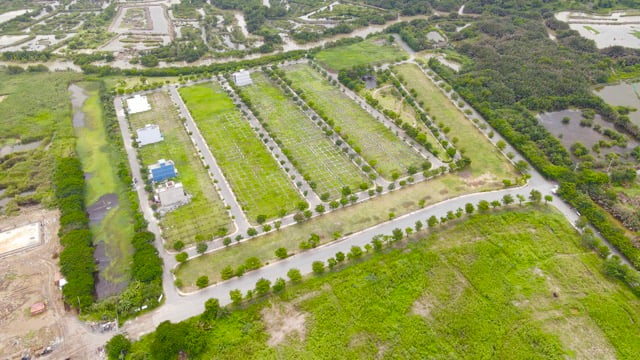 |
| Digitizing land data is an urgent task for government agencies in the coming period. Photo: Dung Minh |
As of June 2024, statistics on the National Public Service Portal indicate that only the Ministry of Public Security and the Ministry of Culture, Sports and Tourism have utilized digitized data to streamline and simplify administrative procedures. The remaining ministries and agencies, including the Ministry of Natural Resources and Environment with its land database, have yet to do so.
As of the end of May 2024, the Department of Land Registration and Information Data (Ministry of Natural Resources and Environment) reported that only 455 out of 705 district-level administrative units had completed their cadastral databases. 325 out of 705 district-level units had completed the construction of their land use planning and plan databases.
Furthermore, only 300 out of 705 district-level units have completed the construction of land price databases. 48 out of 63 provinces and cities have established connections between land registration agencies and tax authorities to determine land-related financial obligations for households and individuals.
Land data must be live and accurate information.
At a recent meeting, Deputy Prime Minister Tran Hong Ha emphasized the need for government agencies to change their mindset, methods, and technologies in land surveying, mapping, and cadastral record keeping. Specifically, he stressed the need to clearly define the basic indicators to be surveyed, avoiding widespread, unsustainable, and inefficient surveys.
"Data collected from land survey processes, updating land records, and providing online public services on land must be live and accurate information," the Deputy Prime Minister instructed. In addition, land information and data need to be consistent and synchronized from the central to local levels.
At the same time, the Deputy Prime Minister requested that decentralization and delegation of authority be strengthened, increasing responsibility for localities, such as deadlines for completing land surveying procedures, preparing cadastral records, and issuing certificates… in order to meet the legitimate demands of land users.
Previously, in March 2023, the Government issued Resolution No. 37/NQ-CP, which clearly stated the goal of completing the construction of a centralized, unified, synchronized, multi-purpose, and interconnected national digital database and information system on land by 2025.
To realize the above objective, the 2024 Land Law clearly stipulates the model of a national land information system, from the central to local levels. At the same time, the law also outlines the responsibilities of the Ministry of Natural Resources and Environment and provincial People's Committees in investing in the construction of technical infrastructure and system software, building land databases and land information systems.
Source: https://baodautu.vn/batdongsan/can-thay-doi-tu-duy-ve-cach-thu-thap-quan-ly-du-lieu-dat-dai-d218076.html


![[Photo] Prime Minister Pham Minh Chinh presides over a meeting on private sector economic development.](/_next/image?url=https%3A%2F%2Fvphoto.vietnam.vn%2Fthumb%2F1200x675%2Fvietnam%2Fresource%2FIMAGE%2F2025%2F12%2F20%2F1766237501876_thiet-ke-chua-co-ten-40-png.webp&w=3840&q=75)




































































































Comment (0)