

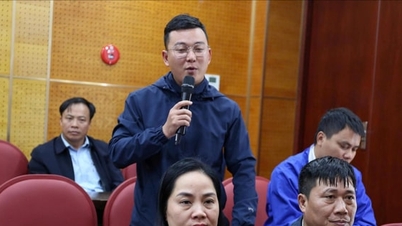
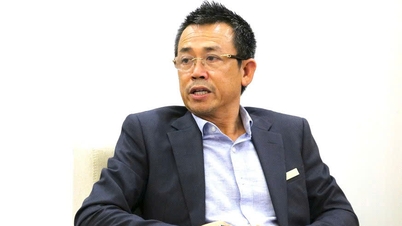
According to Associate Professor Dr. Nguyen Ba Ngai, Vice President and General Secretary of the Vietnam Forest Owners Association (VIFORA), there is currently no consensus on the definition of non-forested land, nor on the data regarding forest land, between land law and forestry law.
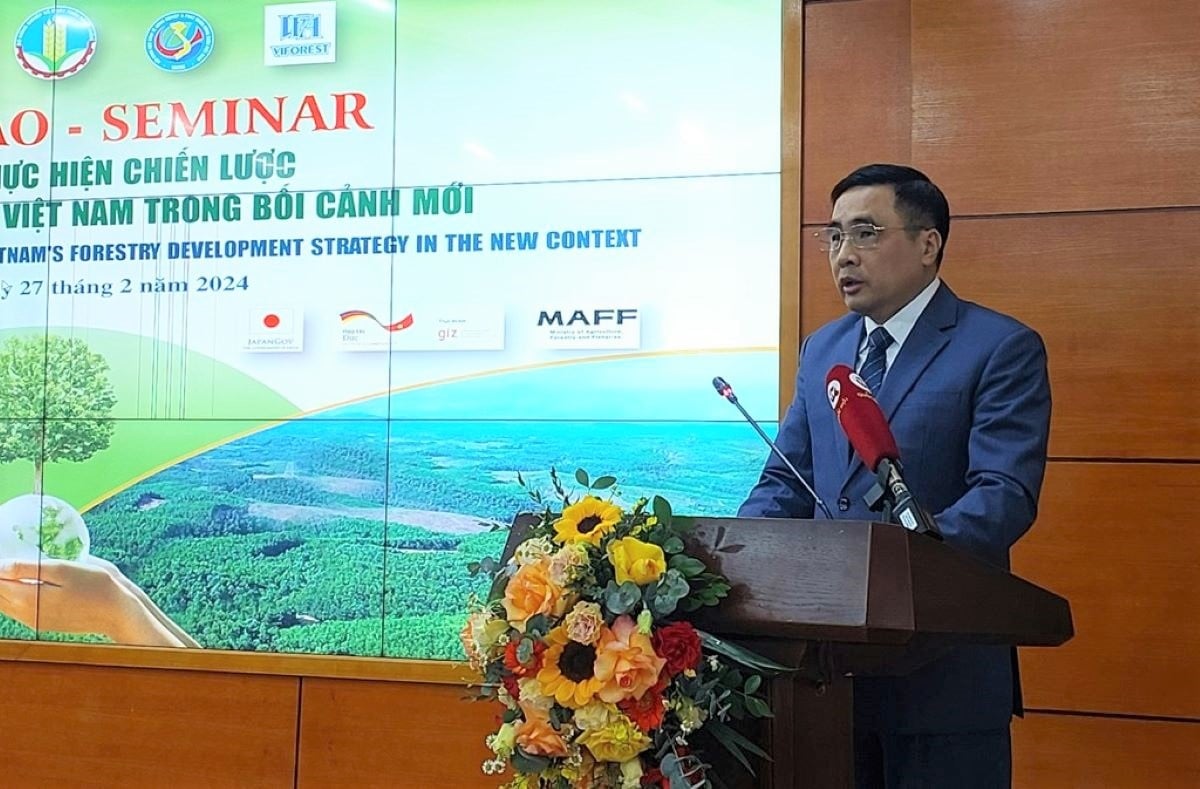 |
| Deputy Minister of Agriculture and Rural Development Nguyen Quoc Tri delivered a speech at the workshop. |
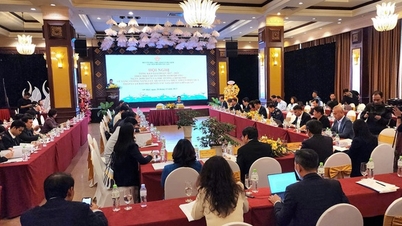
On February 27, 2024, in Hanoi, the Ministry of Agriculture and Rural Development, in collaboration with the Vietnam Association of Agricultural and Rural Development Economic Sciences, the Vietnam Forest Owners Association, and the Vietnam Wood and Forest Products Association, organized the workshop "Solutions for Implementing the Vietnam Forestry Development Strategy in the New Context".
The forestry development strategy still has some shortcomings.
According to Mr. Trieu Van Luc, Deputy Director of the Forestry Department (Ministry of Agriculture and Rural Development), after three years of implementing the Forestry Development Strategy, the entire sector has achieved results in all aspects: economic, social welfare, and environmental.
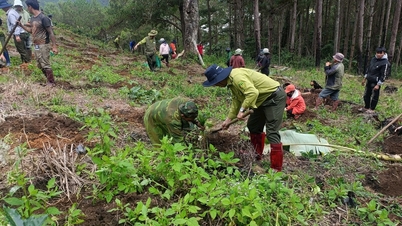
Specifically, the structure of forestry production has shifted towards increasing the added value of the forestry production chain. The value of forestry production has grown steadily at 4.6% per year. Annually, the whole country plants over 260,000 hectares of forest.
According to Mr. Trieu Van Luc, the productivity and quality of planted forests have improved, providing over 70% of the timber raw materials for forest product processing, serving both export and domestic consumption. The export value of timber and forest products averaged 15.8 billion USD, with a high trade surplus. Revenue from forest environmental services averaged 3,650 billion VND per year.
In particular, in 2023, 4,130 billion VND was collected, including 997 billion VND from forest carbon sequestration and storage services, contributing to reducing the pressure on the state budget, paying for the protection of approximately 7.3 million hectares of forest, and becoming an important and sustainable source of funding for the forestry sector.
However, according to Mr. Trieu Van Luc, the implementation of the Forestry Development Strategy still faces some shortcomings and difficulties, such as overlapping and inconsistent land use planning and planning for the three types of forests. The process of allocating and leasing forests is also slow to be implemented.
State budget investment in forest protection and development remains limited. Many localities have not paid sufficient attention to investing in and supplementing their budgets for forest protection and development. The wood and forest product processing industry is not developing sustainably, mainly consisting of small and medium-sized enterprises with limited ability to lead and dominate the domestic market and expand into international markets; the capacity for cooperation and linkage along the value chain, connected to raw material areas, is still not strong...
Speaking at the workshop, Deputy Minister of Agriculture and Rural Development Nguyen Quoc Tri said that the achievements after three years of implementing the Vietnam Forestry Development Strategy for the period 2021-2030 have made increasingly important contributions to socio-economic development, environmental protection, disaster mitigation, proactive response to climate change, ensuring national defense and security, and successfully achieving national goals on sustainable development.
However, according to Mr. Nguyen Quoc Tri, some important targets have not been met compared to the plan, such as the export value of wood and forest products, or the added value of the forestry sector, which is not commensurate with its potential. The reason is that in recent times, the forestry sector has faced many unpredictable changes such as war and climate change.
There is no consensus on the definition of non-forested land.
According to Associate Professor Dr. Nguyen Ba Ngai, Vice President and General Secretary of the Vietnam Forest Owners Association (VIFORA), the Vietnamese forestry development strategy for the period 2021-2030, with a vision to 2050, has been implemented for three years. Besides noteworthy achievements, several issues have emerged in forest management and forestry land management. The Land Law of 2024, effective from January 1, 2025, stipulates several provisions directly related to forest management and forestry land management. The national forestry plan for the period 2021-2030, with a vision to 2050, is currently in the preparation phase and will soon be issued, requiring forestry planning to be consistent with land use planning.
Currently, the land category used for forest protection and development has many unclear points and is difficult to define criteria, making it challenging to statistically track and manage forests. This is because this land category includes areas of forest undergoing regeneration but not yet fully formed; land where trees have been planted but are not yet fully formed; and land used for constructing facilities serving forest protection and development, such as firebreaks.
According to land law, forest land is divided into three groups: production forest land; protection forest land; and special-use forest land. Each group is further subdivided into: land with natural forest, land with planted forest, and land currently used for forest protection and development. Land law does not specify land without forest cover. The area of forest land surveyed in 2022 was 15,458,657 hectares, excluding land without forest cover.
According to forestry law, forest land includes both forested and non-forested land areas. According to Resolution No. 39/2021/QH15 of the National Assembly on the national land use planning for the period 2021-2030, with a vision to 2050, and the 5-year national land use plan 2021-2025, the total forest land area in 2020 was 16,348,000 hectares, of which 1,671,700 hectares were non-forested land.
Associate Professor Dr. Nguyen Ba Ngai argues that the problem lies in the lack of uniformity regarding the definition of non-forested land, as well as the data on forest land, between land law and forestry law.
According to Associate Professor Dr. Nguyen Ba Ngai, the data on the area of forest land allocated, as published by the Ministry of Natural Resources and Environment, is inconsistent and even contradictory with the data published by the Ministry of Agriculture, such as the area of forest land allocated being higher than the area of similar land allocated.
The area of forest allocated to local communities is higher than the area of forestry land allocated to local communities; the area of forest managed by the commune People's Committee is more than 1 million hectares higher than the area of forestry land managed by the commune People's Committee.
"These are long-standing issues that have significantly impacted forest and forestry land management. The main reasons are the lack of consensus on indicators for inventorying and statistically recording forestry land and forests, and the inadequate implementation of technology, processes, methods, and coordination in the inventorying and statistical recording of forestry land and forests," shared Associate Professor Dr. Nguyen Ba Ngai.
According to Associate Professor Dr. Nguyen Ba Ngai, the natural resources and environment sector, and the agriculture and rural development sector need to unify forest land into three groups: land with forests, land without forests, and land used for forest protection and development purposes.
Associate Professor Dr. Nguyen Ba Ngai suggested that, in order to standardize the land categories within forestry land, it is necessary to first study and supplement sub-legal documents guiding the implementation of the land law, including unifying regulations on the codes for the aforementioned types of forestry land; and amend and supplement some articles in the Decrees guiding the implementation of the Forestry Law. Specifically, it is necessary to regulate land used for the purpose of protecting and developing forests.
Source link


![[Photo] Prime Minister Pham Minh Chinh presides over a meeting on private sector economic development.](/_next/image?url=https%3A%2F%2Fvphoto.vietnam.vn%2Fthumb%2F1200x675%2Fvietnam%2Fresource%2FIMAGE%2F2025%2F12%2F20%2F1766237501876_thiet-ke-chua-co-ten-40-png.webp&w=3840&q=75)































































Comment (0)