

The KCNA news agency reported on August 31 that the North Korean military fired two short-range ballistic missiles during a drill simulating a "tactical nuclear attack." The targets were South Korean military command centers and airfields along the inter-Korean border. Information about the missile launch was released after the US deployed B-1B heavy bombers to participate in the joint "Ulchi Freedom Shield" military exercise with South Korea.
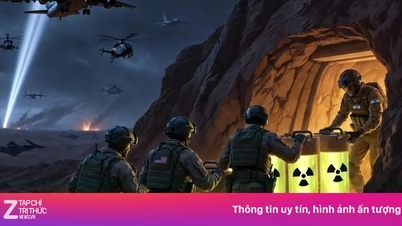
Nuclear attack drills conducted in the middle of the night.
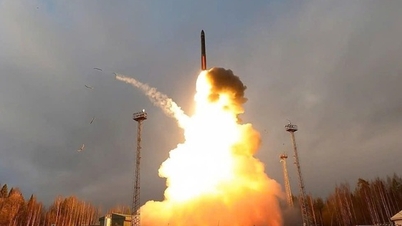
The Korean People's Army (KPA) said that nuclear-armed forces in the west of the country launched two ballistic missiles northeast from Pyongyang International Airport. According to the KPA, the North Korean military "accurately carried out a nuclear strike mission through airborne explosions at a predetermined altitude approximately 400 meters from a target at sea."
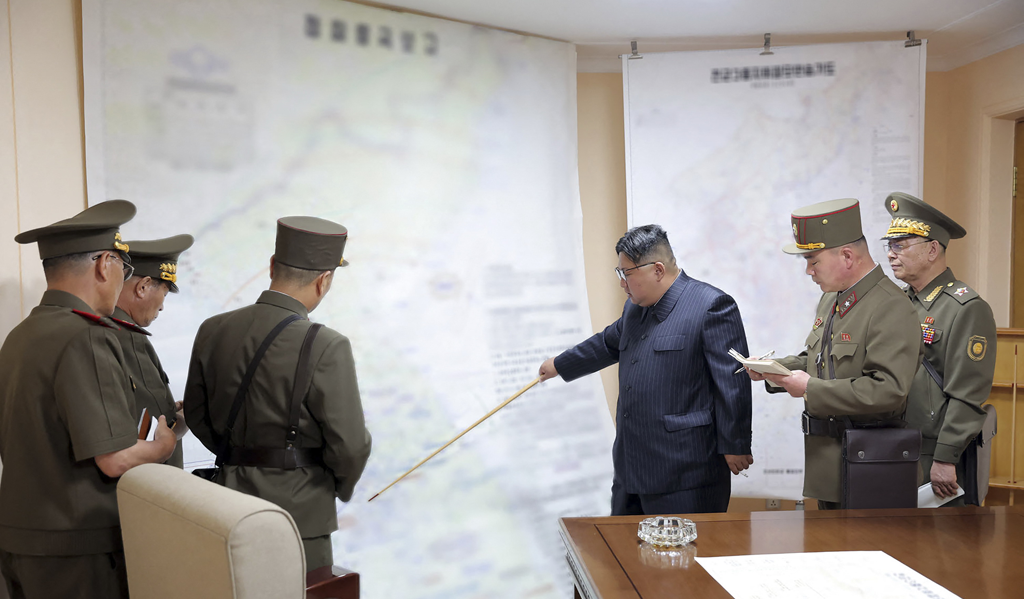
North Korean leader Kim Jong-un directs military exercises.
According to KCNA, the drill was intended to send a warning message to South Korea and the United States that North Korea is ready and capable of retaliating against any attempted attack.
According to Yonhap News Agency, citing sources from the South Korean Joint Chiefs of Staff (JCS), two short-range ballistic missiles were detected launched from North Korean territory towards the sea between the Korean Peninsula and Japan. The Japanese Ministry of Defense confirmed that the two missiles were launched at 11:38 PM and 11:46 PM on August 30th (local time), respectively. Both traveled 350 km and 400 km before falling outside Japan's Exclusive Economic Zone (EEZ). Japan stated that it is coordinating with the United States, South Korea, and other countries to analyze the two launches.
In another news report, KCNA announced that the North Korean military also held a command-level military exercise on August 29 in response to the joint South Korea-U.S. military drills. Leader Kim Jong-un oversaw the exercise, which was designed to "repel a surprise attack and deliver a retaliatory blow to gain complete control of South Korea."
US bombers arrive for military exercises.
North Korea's move comes as the joint "Ulchi Freedom Shield" military exercise between South Korea and the United States officially concluded yesterday. The day before, the South Korean Ministry of Defense stated that, within the framework of the exercise, "US strategic bombers undertook the main mission in the air drill, escorted by South Korean FA-50 fighter jets and US F-16s," according to Yonhap. The details of this exercise are unclear, but this marks the tenth time the US has deployed B-1B strategic bombers to participate in joint exercises with South Korea since the beginning of the year.
Also on August 30, US bombers simultaneously participated in joint exercises with Japan. Reuters reported that the US Air Force deployed two B-1B bombers and the Japan Air Self-Defense Force deployed 12 fighter jets, including four F-15s. These joint exercises between South Korea and the US, and between the US and Japan, are believed to be aimed at preparing for a timely response in case of any developments on the Korean Peninsula.
Given this situation, Professor Leif-Eric Easley of Ewha University (South Korea) believes that North Korea's dual missile launches during this period may be aimed at demonstrating its ability to strike at any time and from multiple directions.
Japan proposes a record defense budget.
Yesterday, Japan's Ministry of Defense proposed a record defense budget, requesting parliament to approve 7.74 trillion yen (US$53 billion) for the 2024-2025 fiscal year, an increase of US$6.8 billion compared to the 2023-2024 period, to promptly respond to the new situation related to China and North Korea, according to AFP.
Specifically, the Japanese Ministry of Defense is requesting 380 billion yen for the construction of two new warships, expected to be equipped with the US-made Aegis missile defense system, and an additional 755 billion yen to upgrade defense capabilities, such as purchasing more missiles. Japan also plans to invest 75 billion yen in joint efforts with the US to develop the capability to intercept hypersonic missiles in the near future.
The proposal, announced on August 31, is part of Japanese Prime Minister Kishida Fumio's plan to increase defense spending to 2% of GDP by 2027.
Source link





![[Photo] General Secretary and President To Lam presides over the meeting to approve the draft report on the results of the second inspection by the Politburo of the Standing Committee of the Hanoi City Party Committee.](https://vphoto.vietnam.vn/thumb/1200x675/vietnam/resource/IMAGE/2026/05/26/1779789811432_a2-bnd-4430-9620-jpg.webp)



































































Comment (0)