

Pickleball is becoming one of the fastest-growing sports in Vietnam. From parks and apartment complex courtyards to professional clubs, more and more people are joining this sport, which is considered a combination of tennis, badminton, and table tennis.
However, a common misconception is that the pickleball is "easy so anyone can play it." In reality, most injuries in beginners don't come from overexertion but from very basic mistakes such as choosing the wrong racket, holding the racket incorrectly, or moving with improper technique.
The good news is that most of these injuries are completely preventable if players understand the mechanics of their bodies and develop good training habits from the start.
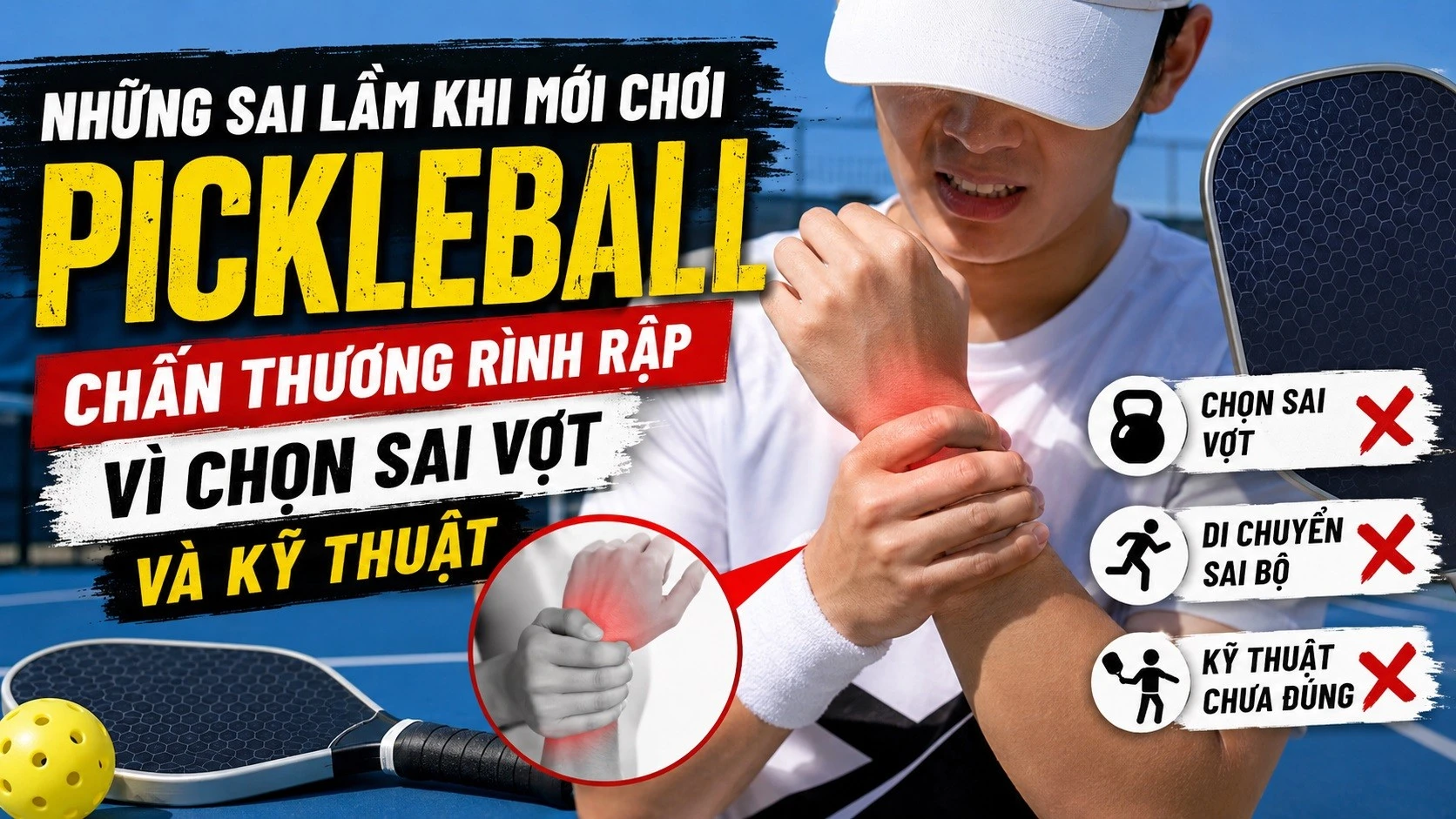
Why are beginner pickleball players prone to injury?
Misconception: The heavier the racket, the harder it hits.
Many beginners often choose heavier rackets thinking it will generate more power. However, this puts greater strain on the wrists, elbows, and shoulders with each stroke.
When muscles and tendons haven't adapted, micro-injuries gradually accumulate and lead to:
- Wrist tendinitis
- Elbow tendonitis
- Shoulder pain
- Forearm muscle strain
Sports experts say that beginners often use too much arm strength instead of utilizing full-body movement, putting direct pressure on small joints.
Incorrect footwork is the most overlooked cause.
Many people focus on learning hitting techniques but neglect movement skills.
In Pickleball, the maneuvers happen very quickly in tight spaces. Beginners often make mistakes:
- Running continuously on tiptoes
- Cross your legs when defending.
- Shift your body weight to one side.
- Sudden braking and abrupt changes of direction
These mistakes increase the risk:
- Ankle sprain
- Knee pain
- Hamstring strain
- Calf injury
This is why many people experience persistent pain after only a few weeks of playing, even though the amount of exercise isn't excessive.
Warning signs that your body is overloaded.
If the following symptoms appear, players should not continue high-intensity training:
☑ Wrist pain after each game session
☑ Aching sensation on the outer side of the elbow
☑ Shoulder pain when raising the arm
☑ Knee pain when going up and down stairs
☑ Calf stiffness lasting more than 48 hours
☑ Reduces grip strength
These are early signs that tendons, muscles, and joints are being overloaded.
How to choose the right pickleball racket for beginners.
Quick reference table
| Criteria | New players |
|---|---|
| Racket weight | 210 - 230 grams |
| Racket handle circumference | Fits in the palm of your hand |
| Racket surface material | Composite or Carbon-based |
| Equilibrium point | Neutral |
| Racket surface thickness | 14 - 16 mm |
Checklist for choosing the right racket
☑ Hold it in your hand for at least 5 minutes before buying
☑ Don't choose a racket that's too heavy just for the sake of "powerful shots".
☑ Prioritize comfort over advertised specifications.
☑ Use grip tape that fits your hand size.
☑ Try both forehand and backhand strokes before making a decision.
5 things new pickleball players should do right away.
1. Warm up thoroughly for at least 10 minutes.
Focus on:
- Wrist
- Elbow
- Shoulder
- Hip
- Knee
- Ankle
Warming up helps increase blood flow to the muscles and reduces the risk of muscle tearing during exercise.
2. Learn movement techniques before learning to hit hard.
Prioritize:
✓ Split step
✓ Shuffle step
✓ Move horizontally
✓ Keep your center of gravity low
This foundation helps reduce pressure on the joints and increase performance.
3. Gradually increase playtime.
First week:
- 30-45 minutes per session
- 2-3 sessions per week
Then gradually increase the intensity.
You shouldn't play continuously for 2-3 hours in the first few days.
4. Combine wrist and shoulder strength exercises.
Here are some simple exercises:
- Wrist Curl
- Reverse Wrist Curl
- Ben Rotation
- Resistance Band Office
These muscle groups play a crucial role in protecting tendons and joints when playing pickleball.
5. Rest when experiencing unusual pain.
Don't try to continue playing when your body is sending warning signals.
Taking a few days off to recover is always better than being sidelined for months due to injury.
Pickleball is good for your health if played correctly.
The explosive growth of pickleball shows that it is a sport suitable for many age groups, helping to improve cardiovascular health, reflexes, and motor skills.
However, the benefits only truly materialize when players understand that pickleball is more than simply holding a racket and hitting the ball. Choosing the right racket, learning the correct technique, and increasing exercise intensity appropriately are key to enjoying this sport long-term without facing unfortunate injuries.
Recommendations from sports medicine experts: Beginners should prioritize learning proper movement techniques and grip posture during the first 2-4 weeks. If pain persists for more than 72 hours or joint swelling occurs, training should be temporarily stopped, and a specialist in musculoskeletal disorders or rehabilitation should be consulted for an accurate assessment of the cause.
Source: https://baolaocai.vn/canh-bao-sai-lam-pho-bien-khi-choi-pickleball-post900902.html
![[Photo] General Secretary and President To Lam presides over a meeting with the Central Organizing Committee.](https://vphoto.vietnam.vn/thumb/1200x675/vietnam/resource/IMAGE/2026/06/03/1780482764658_a1-bnd-4741-3342-jpg.webp)
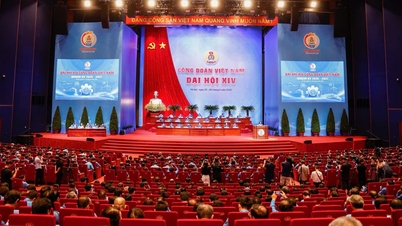
![[Photo] First session of the 14th Congress of the Vietnam Trade Union](https://vphoto.vietnam.vn/thumb/1200x675/vietnam/resource/IMAGE/2026/06/03/1780465947883_ndo_br_img-3852-jpg.webp)


![[Photo] Secretary of the National Assembly Party Committee, Chairman of the National Assembly presides over the meeting of the Standing Committee and Executive Committee of the National Assembly Party Committee.](https://vphoto.vietnam.vn/thumb/1200x675/vietnam/resource/IMAGE/2026/06/03/1780480353201_ndo_br_bnd-2585-jpg.webp)



































![[Video] Sunset at Lap An Lagoon – Where the sun sets over the fishing nets](https://vphoto.vietnam.vn/thumb/1200x675/vietnam/resource/IMAGE/2026/05/31/1780192137701_beach-landscape-sea-water-nature-grass-745871-pxhere-com.jpeg)























Comment (0)