

On May 20th, information from Xuyen A General Hospital in Ho Chi Minh City indicated that recently, the hospital has continuously received and treated many stroke cases in patients with a history of atrial fibrillation. A typical case is that of a 43-year-old female patient, NTTD, residing in Cu Chi, who had a history of atrial fibrillation, mitral valve stenosis, and had been using anticoagulants for over 10 years. However, simply because she forgot to take a few doses of her medication, she unexpectedly suffered a stroke while sleeping.
When discovered by her husband, the patient had lost her ability to speak, had a distorted mouth, and was completely paralyzed on the right side of her body. Thanks to arriving at the hospital in time during the "golden hour," the patient was prescribed thrombolytic drugs and has since recovered from the critical condition.
Similarly, an 80-year-old woman (residing in Hoc Mon) also unexpectedly suffered a stroke in the morning. The patient suddenly fell, exhibiting symptoms such as facial asymmetry and difficulty speaking. Relatives discovered her in time and quickly took her to the hospital for emergency treatment. Upon reviewing her medical history, it was revealed that the patient had a history of atrial fibrillation and hypertension.
Dr. Vo Minh Thien, from the Neurology Department of the hospital, said: "The cause of stroke in these patients may stem from atrial fibrillation (irregular heartbeat). Irregular heartbeat increases the risk of blood clot formation."
Based on clinical experience, Dr. Ngo Hang Vinh – Head of Cardiology Department 2, Xuyen A General Hospital – stated that atrial fibrillation is rapidly increasing globally, affecting tens of millions of people. In Vietnam, the number of cases is rising due to an aging population and the increase in underlying conditions such as hypertension, diabetes, obesity, and cardiovascular disease.
Atrial fibrillation occurs when the two upper chambers of the heart contract chaotically, causing the heart rate to become rapid and irregular. Instead of working rhythmically to pump blood to the body, the heart experiences "rhythm irregularities," reducing circulatory efficiency and creating conditions for blood clot formation.
Alarmingly, many people have the disease but show no symptoms at all. In some cases, it is only detected when complications such as stroke or heart failure have already occurred.
Common symptoms of atrial fibrillation include palpitations, a racing heartbeat, or a feeling of skipped beats. Patients may also experience fatigue, shortness of breath, dizziness, lightheadedness, or chest pain during exertion. However, these symptoms are often transient and easily overlooked or mistaken for stress or insomnia.
According to Dr. Ngo Hang Vinh, stroke is the most dangerous complication of atrial fibrillation. When the heart contracts erratically, blood easily pools in the heart chambers and forms blood clots. These clots can travel through the bloodstream to the brain, causing cerebral embolism leading to paralysis, speech loss, or death.
"People with atrial fibrillation have a five times higher risk of stroke compared to the general population," Dr. Vinh warned.
Besides causing strokes, prolonged rapid heartbeat also weakens the heart muscle, leading to chronic heart failure and severely reducing quality of life.
According to some cardiologists, age is the leading risk factor for atrial fibrillation due to the degeneration of the heart's electrical conduction system over time. However, the disease is no longer limited to the elderly. People with hypertension, coronary artery disease, heart failure, diabetes, or valvular heart disease are also at high risk. In addition, unhealthy lifestyles such as being overweight, smoking, alcohol abuse, lack of exercise, and sleep apnea also contribute to the earlier onset of the disease.

Doctors recommend that people over 65 or those with underlying cardiovascular conditions should proactively undergo regular screening for atrial fibrillation. Electrocardiogram (ECG) is the basic method for detecting heart rhythm disorders. However, because atrial fibrillation episodes can be transient and disappear, many cases require 24-hour or extended-duration Holter ECG monitoring to increase the chances of detecting the condition.
A common misconception today is that many people believe that when the palpitations or rapid heartbeat subside, the condition is cured. In reality, atrial fibrillation often progresses silently and tends to worsen over time if left uncontrolled.
According to Dr. Ngo Hang Vinh, current treatment for atrial fibrillation focuses on controlling heart rate, preventing stroke, and treating underlying medical conditions. Patients may be prescribed anticoagulants to prevent blood clots from forming in the heart – an important measure to reduce the risk of stroke.
Besides medication, lifestyle changes play a crucial role in managing the disease. Losing weight, controlling blood pressure and blood sugar, quitting smoking, and limiting alcohol consumption can help slow the progression of atrial fibrillation and reduce the risk of complications.
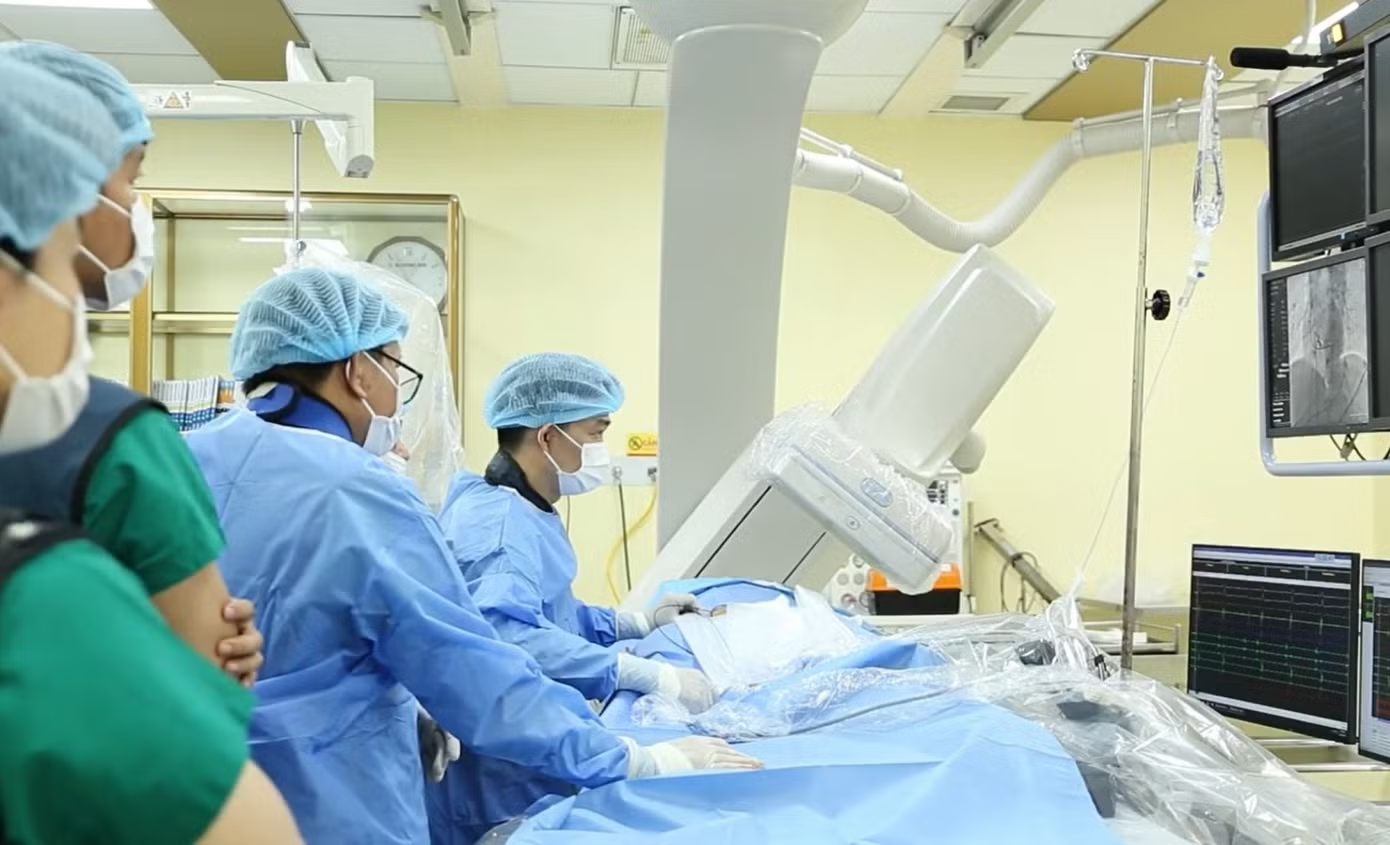
Currently, electrophysiological ablation is also increasingly being applied to some cases of atrial fibrillation to eliminate the area of abnormal electrical signaling in the heart, helping to restore a stable heart rhythm.
"Atrial fibrillation is a complex condition, but it is completely controllable if detected early and treated properly," said Dr. Ngo Hang Vinh. According to the doctor, regular health checkups, good management of underlying conditions, and attention to abnormal changes in heart rhythm are key to preventing stroke and protecting long-term cardiovascular health.
Source: https://tienphong.vn/canh-bao-sat-thu-tham-lang-tang-nguy-co-dot-quy-gap-5-lan-post1844592.tpo

![[Image] Hanoi's urban life under the challenge of a "scorching hot" environment](https://vphoto.vietnam.vn/thumb/1200x675/vietnam/resource/IMAGE/2026/05/25/1779706979265_nang-nong-t5-2026-minh-duy-7-4636-jpg.webp)































































































Comment (0)