

A landmark where "the four virtues converge".
Cao Duc is located at the southern end of Bac Ninh province, bordering Hai Phong city in the Luc Dau Giang area. According to ancient beliefs, Luc Dau Giang is the place where "six rivers converge." Notably, four of these six rivers bear the word "Duc" in their names: Nhat Duc (Thuong River), Minh Duc (Luc Nam River), Nguyet Duc (Cau River), and Thien Duc (Duong River).
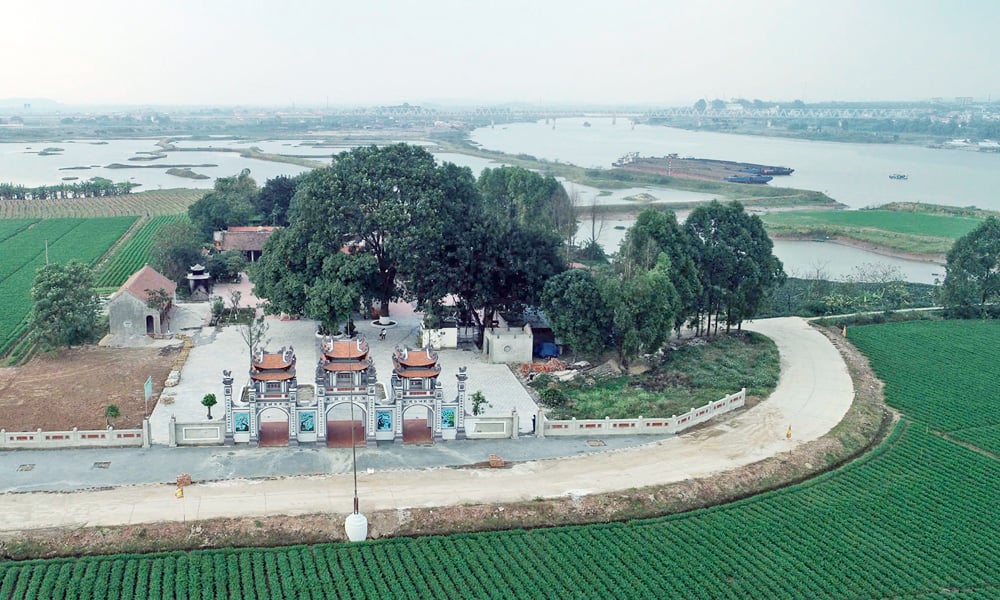 |
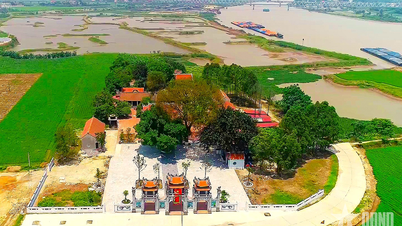
The Tam Phu Temple, located on Nguyet Ban beach, has been renovated and restored through investment from the government and the people. |
A large alluvial plain formed in Luc Dau Giang, located towards Cao Duc commune, is called Nguyet Ban. Here lies the famous Binh Than wharf, associated with the 1282 event where the Tran dynasty's king and his ministers met to discuss strategies against the Mongol-Yuan invaders, leading to glorious victories in the nation's history of resistance against foreign aggression.
The Binh Than Conference clearly demonstrated the spirit of "unity between king and subjects, harmony among brothers, and the whole nation contributing." Strategic decisions were made here, talented individuals were valued, and national interests were placed above all else. The image of Hoai Van Hau Tran Quoc Toan, who, being too young to participate in military discussions, crushed an orange before personally recruiting a militia to fight the enemy, has become a symbol of the courage and patriotism of Vietnamese youth.
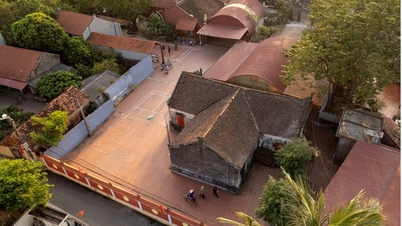
Also on the land of Cao Duc, from the dawn of history, the legacy of General Cao Lo, who helped An Duong Vuong build Co Loa Citadel and create the magic crossbow to fight invaders, still resonates through legends and folk memories. Today, the Cao Lo Vuong temple in Dai Trung village is a place that preserves the memory of the dawn of Vietnamese military wisdom. The ancient temple by the Duong River still retains cultural and architectural values from many centuries. Royal decrees, horizontal plaques, couplets, exquisite carvings... all seem to tell the story of a man who contributed to laying the foundation for the nation's military art from a very early age.
From Cao Lỗ's magic crossbow to the Bình Than Conference, history seems to have chosen Cao Đức as a special focal point, where major decisions were formed from the people's hearts and for the people. These are not only historical milestones but also the crystallization of a consistent ideology: using righteousness to unite the people, using humanity to replace tyranny – the source of the enduring strength of the Vietnamese nation.
Continuing the tradition, Cao Duc also made its mark in modern history when it was awarded the title of Hero of the People's Armed Forces during the resistance war against the French. The patriotic tradition and indomitable spirit of the people have become the lifeblood of this land.
Leveraging advantages for development
According to local legends, the Tam Phu Temple was built a long time ago on Nguyet Ban beach. Around the 13th century, when the Tran Dynasty king and his officials gathered at Binh Than wharf to discuss strategies for fighting the Mongol-Yuan invaders, the king went to the Tam Phu Temple to pray for divine assistance in defeating the enemy. Today, the Tam Phu Temple has been renovated and beautified by the government and the people.
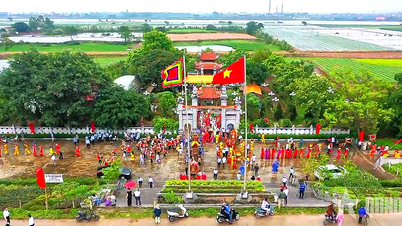
Mr. Hap Tien Bao, Head of the Tam Phu Temple Relic Management Team, said: “The people are very proud because Cao Duc, our hometown, was once the site of a momentous historical event for the nation: the Tran Dynasty's military conference to fight against the Mongol-Yuan invaders. Every year, a large number of tourists from all over the country come to Tam Phu Temple to offer incense. This motivates us to strive even harder to preserve the heritage left by our ancestors.” With its peaceful village and well-preserved historical relics, Cao Duc today is a destination for many tourists.
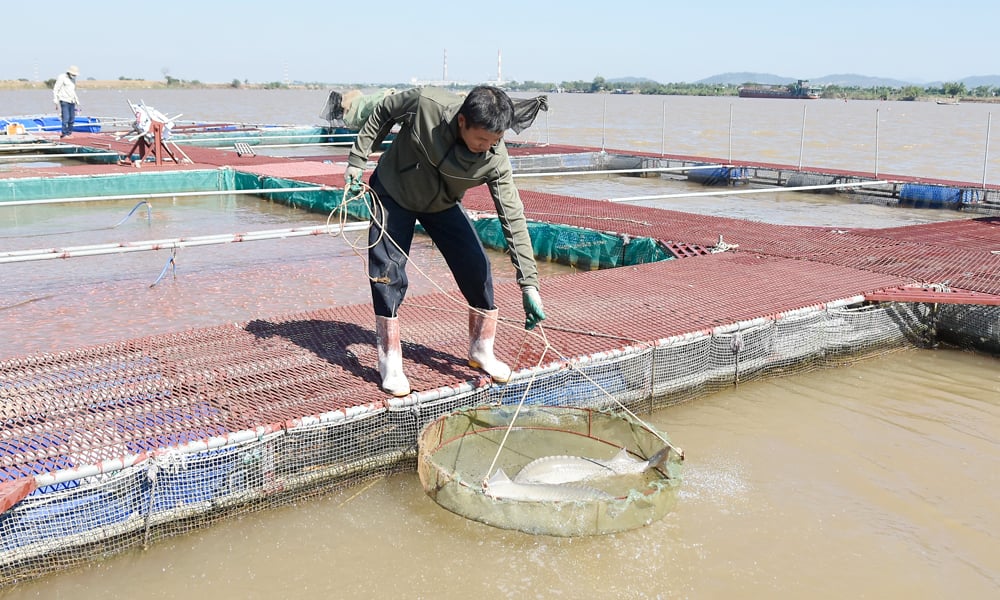 |
Farmers in Cao Duc commune raise fish in cages on the Duong River, yielding high economic returns. |
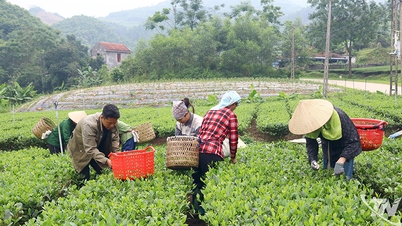
Alongside cultural development, Cao Duc today focuses on economic development, exploiting the strengths of agriculture, and promoting the application of science and technology. The "foot-free field" model, using unmanned aerial vehicles (drones), has helped reduce labor, improve economic efficiency, and move towards building a safe and sustainable agricultural system.
In the riverside area, people cultivate various vegetables and raise aquatic species characteristic of the Duong River region. Local black carp and crispy carp products have achieved OCOP certification, gradually establishing their brand and economic value. These changes show that the production mindset of the people is changing, adapting to the new demands of the market.
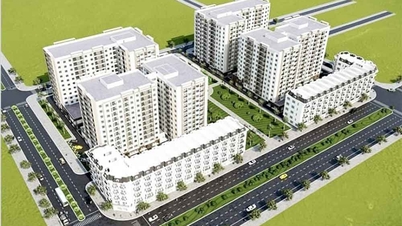
Not only in production, but also in local government administration, there have been many innovations. The digitization of land data, administrative procedure reform, and the promotion of digital transformation are creating the foundation for a more modern, transparent, and efficient governance model. Transportation infrastructure and public works are being invested in, expanding the scope for development.
Located near many historical and cultural sites in the region such as Con Son - Kiet Bac and Pha Lai Pagoda, Cao Duc now has the advantage of being within the development zone of Gia Binh International Airport. The locality is facing new opportunities to become an attractive cultural, spiritual, and ecological tourism destination in the Kinh Bac region.
From a land rich in tradition, Cao Duc is gradually shaping a new direction: economic development linked to the preservation of cultural values and the sustainable exploitation of tourism potential. This is not only about material development but also about the continuation of a spiritual flow that has been nurtured through generations.
Source: https://baobacninhtv.vn/bg2/dulichbg/cao-duc-mien-ky-uc-hao-hung-postid443630.bbg
![[Photo] General Secretary and President To Lam receives Amazon's Senior Vice President David Zapolsky](https://vphoto.vietnam.vn/thumb/1200x675/vietnam/resource/IMAGE/2026/05/22/1779466547770_a1-bnd-3513-6601-jpg.webp)








































































Comment (0)