

The National Target Program for Socio -Economic Development of Ethnic Minority and Mountainous Regions (2021-2025), as stipulated in Government Decision No. 1719, clearly sets out the requirement: Developing medicinal plants in conjunction with establishing concentrated raw material areas, organizing production, consumption, processing, scientific and technical linkages, credit, and markets along the value chain.
Achieving that goal involves not only preserving valuable genetic resources but also a sustainable poverty eradication strategy. In fact, in the communes of Dao Tru, Dai Dinh, and Tam Duong Bac ( Phu Tho province), the model of cultivating medicinal plants linked to the development of concentrated raw material areas is proving highly effective, contributing to sustainable livelihoods and increasing income for local people. Among these, Dao Tru commune is considered a highlight in expanding the area for cultivating Codonopsis pilosula (ba kích).
Currently, the entire commune has about 20 households participating in the cultivation of Codonopsis pilosula, with over 15 hectares of cultivated land, combining seedling propagation and commercial cultivation. This model not only helps people effectively utilize hilly land and land under the forest canopy but also creates regular jobs for local laborers.
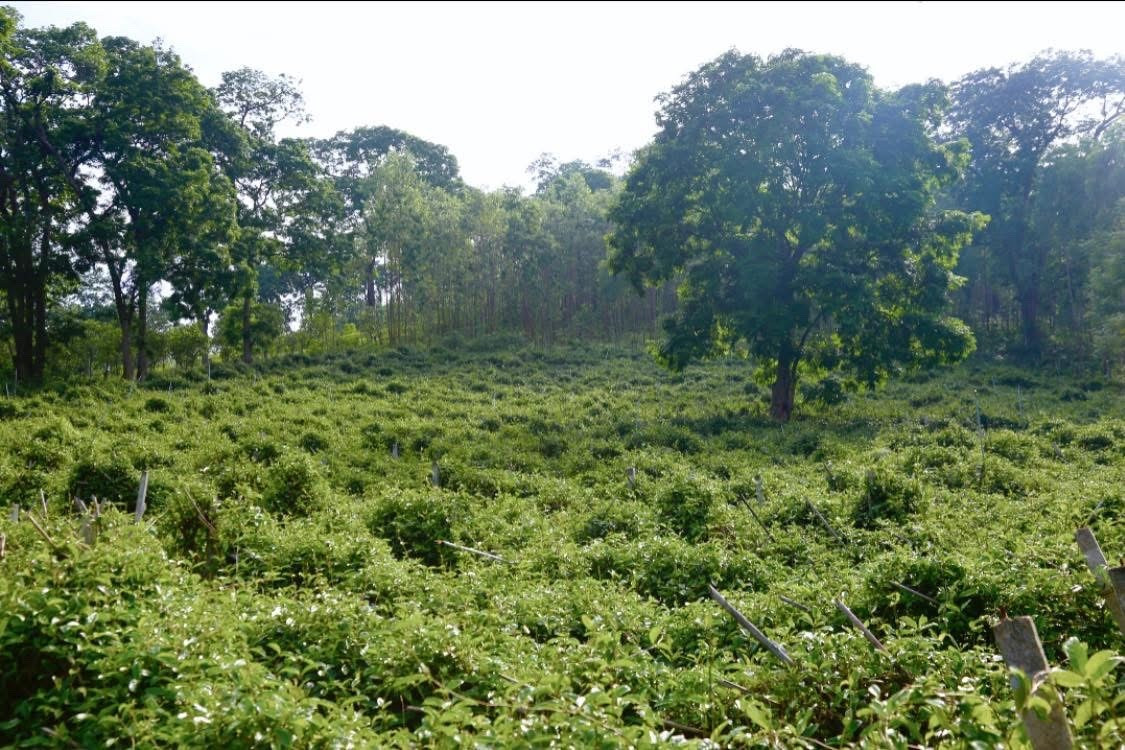
Having been involved in the cultivation of Codonopsis pilosula since 2015, Ms. Ly Thi Man, a San Diu ethnic minority woman from Dong Gieng village, Dao Tru commune, is one of the exemplary households in developing their economy through this crop. Previously, her family was classified as poor, relying mainly on eucalyptus trees on the hill for an unstable income. After being informed by commune officials about the economic benefits of this medicinal plant and witnessing the stable market demand, she boldly renovated 1 hectare of hillside land to cultivate Codonopsis pilosula.
According to Ms. Man, the rehmannia plant is easy to care for, requires low investment costs, and can be intercropped under other trees while still thriving. In the very first harvest, with a selling price of around 200,000 VND/kg, her family earned a profit of over 300 million VND. This stable income from the medicinal plant has helped her family gradually improve their lives, escape poverty, and become more prosperous.
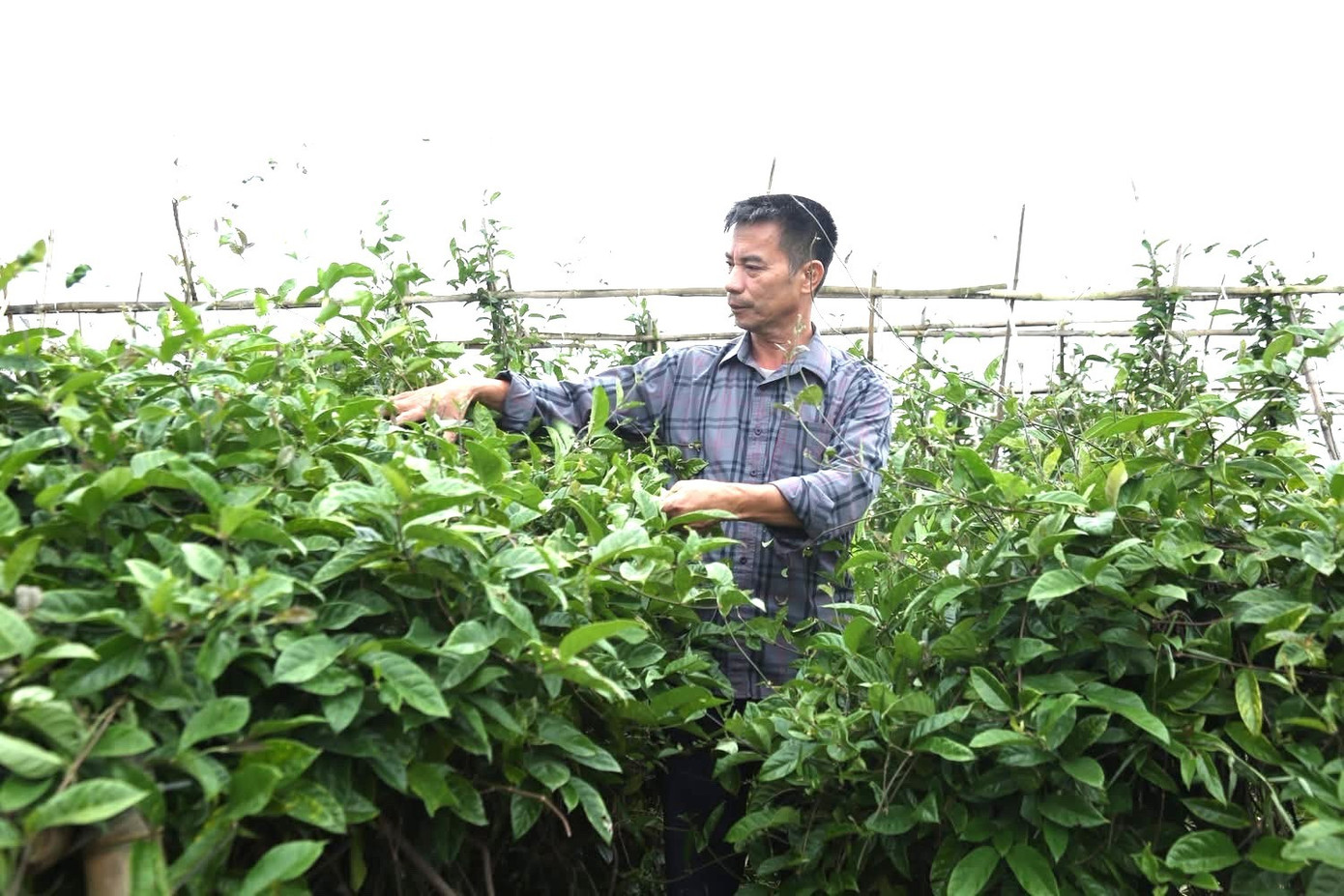
In Dai Dinh commune, Mr. Nguyen Van Tinh, from Dong But village, is considered a pioneer in bringing the Codonopsis pilosula plant to cultivate in his homeland. During a conversation, Mr. Tinh confided: "During a visit to model farms in Bac Giang and Quang Ninh , I learned about the Codonopsis pilosula plant, which is both easy to grow and has high economic value, so I decided to try planting it on my family's hilly forest land."
Currently, Mr. Nguyen Van Tinh is cultivating over 1 hectare of Codonopsis pilosula with 20,000 plants and has harvested 15 tons of tubers, bringing in nearly 1 billion VND in income, many times higher than his previous cassava cultivation.
Not only did Mr. Tinh focus on developing his own family's economy, but he also actively supported other farmers. He regularly guided them on techniques for soil preparation, seed selection, propagation by cuttings, and pest and disease control. As a result, more than 10 households in Dong But village, mainly from the San Diu ethnic minority, have started cultivating Codonopsis pilosula (ba kích) on an area of over 10 hectares, forming a concentrated medicinal herb growing area that is initially showing clear positive results.
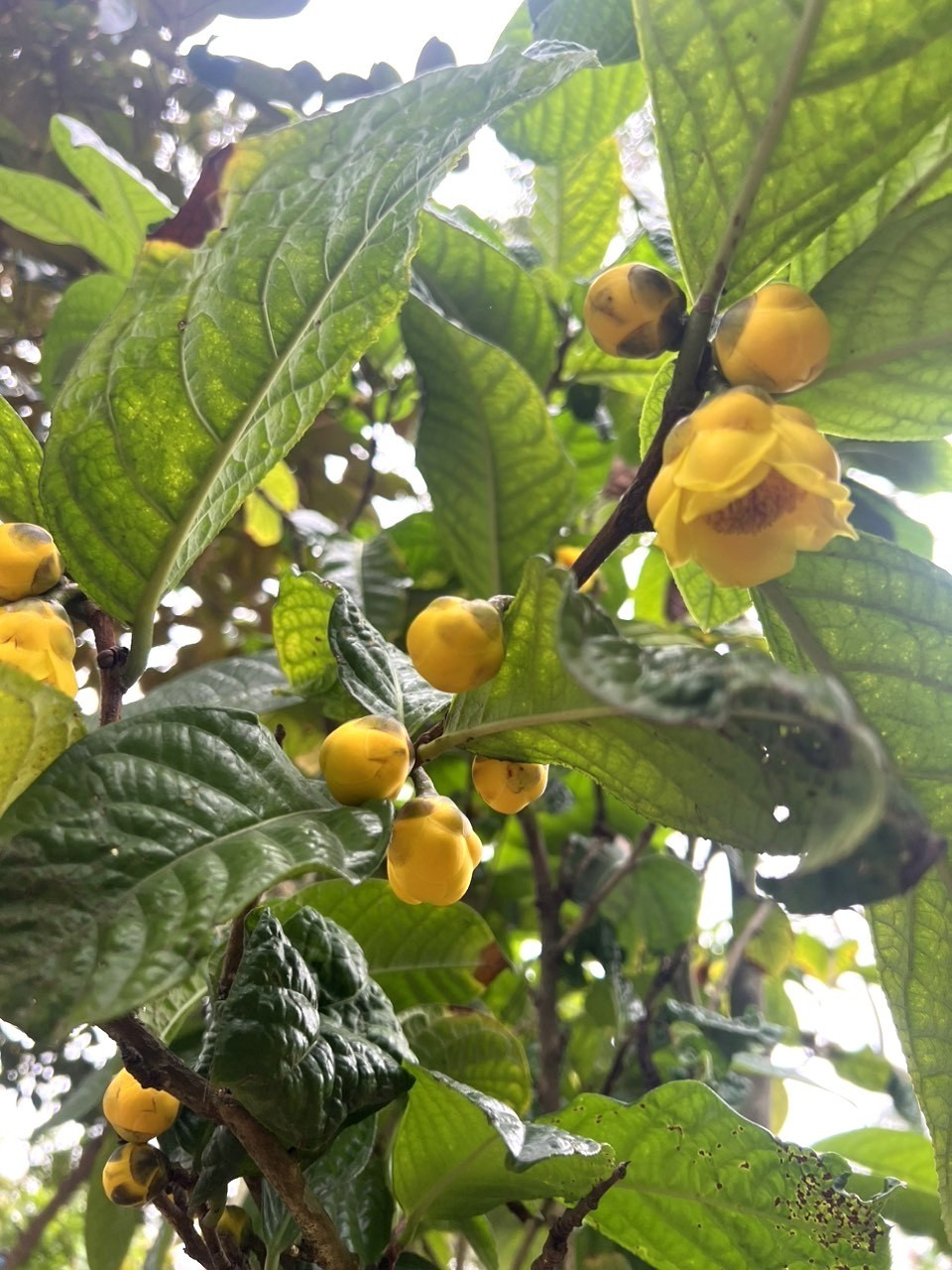
In line with the province's policy of restructuring crop patterns to suit its soil conditions, in 2018, Mr. Trieu Minh Phuc, from Nhan Ly village, Tam Duong Bac commune, invested in purchasing golden camellia seedlings to plant in his garden. After three years, Mr. Phuc's family harvested the first golden camellia buds, yielding over 50 kg of fresh flowers. Selling them at approximately 850,000 VND/kg, the total revenue was around fifty million VND.
From then on, Mr. Phuc decided to propagate the rare golden camellia plant and converted his entire family's mixed garden area to growing golden camellias. To date, in his nearly 1-hectare garden, Mr. Phuc's family has more than 1,000 golden camellia plants of various ages, of which about 300 are currently producing flowers.
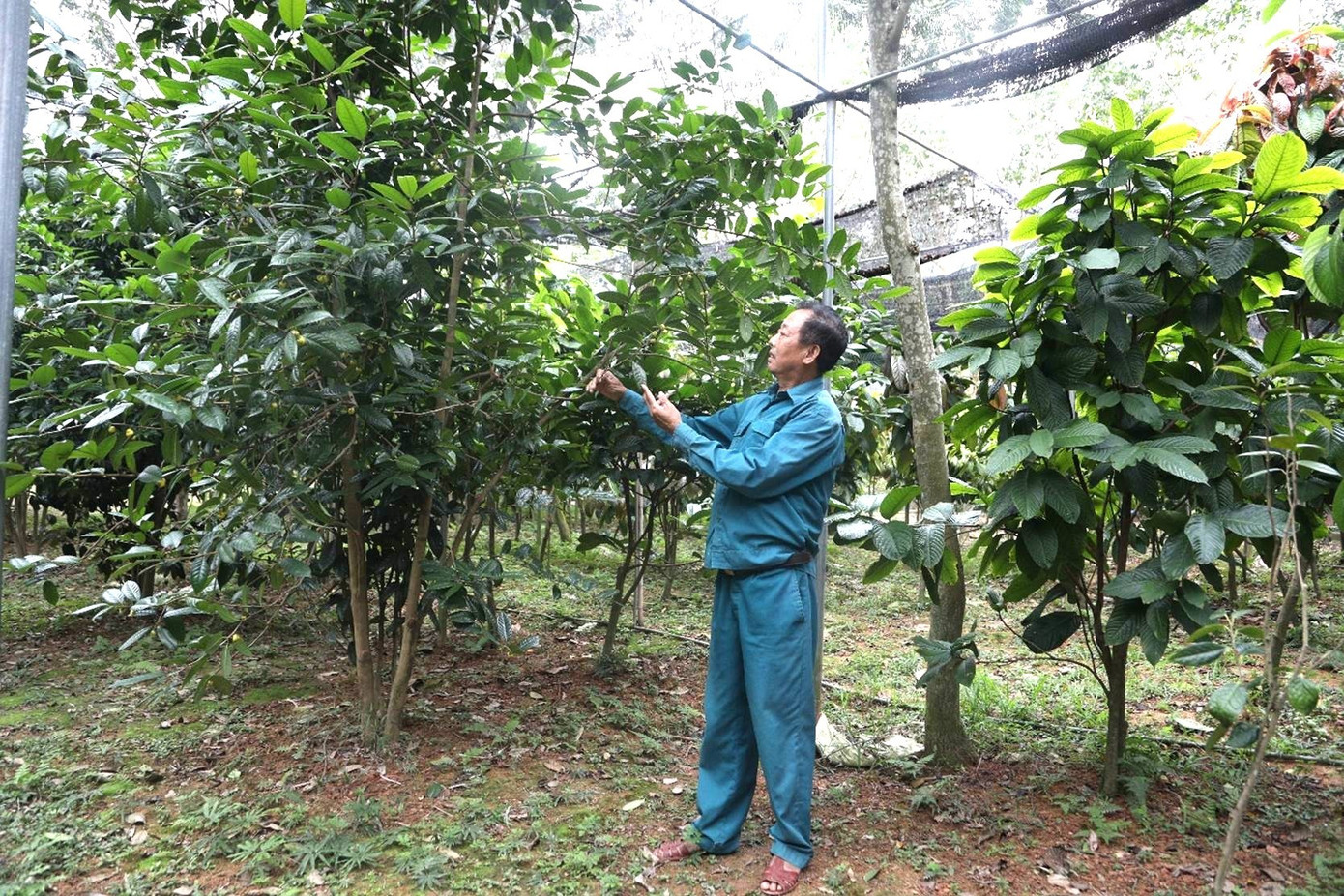
Mr. Phuc stated: "Golden flower tea is a valuable medicinal herb, so propagating and preserving this precious genetic resource not only meets the needs of domestic pharmaceutical production but also brings high economic efficiency to growers. Therefore, my family is steadfast in our goal of expanding and developing the cultivation and propagation of golden flower tea, aiming to develop a clean, sustainable medicinal herb growing area and meet market demands."
According to statistics, the three communes of Dao Tru, Dai Dinh, and Tam Duong Bac currently have over 70 hectares of medicinal plant cultivation. This includes 25 hectares of Codonopsis pilosula (ba kích), nearly 20 hectares of golden flower tea (trà hoa vàng), and dozens of hectares of other medicinal plants such as Solanum torvum (cà gai leo), Rhinacanthus nasutus (đinh lăng), Gynostemma pentaphyllum (giảo cổ lam), and Panax notoginseng (tam thất).
Source: https://tienphong.vn/cay-duoc-lieu-mo-loi-thoat-ngheo-cho-dong-bao-dan-toc-thieu-so-o-phu-tho-post1797918.tpo



![[Photo] General Secretary and President To Lam presides over a meeting on preparations for the review of one year of operation of the three-tiered government system.](https://vphoto.vietnam.vn/thumb/1200x675/vietnam/resource/IMAGE/2026/06/02/1780391821195_a1-bnd-4595-9717-jpg.webp)










![Transforming from Resolution 57: [Part 2] Businesses Lead the Way](https://vphoto.vietnam.vn/thumb/402x226/vietnam/resource/IMAGE/2026/06/02/1780399668663_5332-dsc09931-2-235637_295-235639.jpeg)






























































Comment (0)