

Beyond simply recreating ancient customs, the capital city also opens up interactive spaces for residents and tourists to directly experience them, contributing to integrating Thang Long culture with contemporary life.
The place where past and present intersect.
In the dreamy spring air, Hoai Nam, a student, stepped out of the Ha Vi communal house gate with a lacquered Giong horse sculpture still smelling of fresh paint in his hands. He gently turned the artwork in the light, admiring the meticulously crafted eggshell fragments rising above the glossy black lacquer background. “I’ve long admired lacquerware, but I always thought only highly trained, experienced artisans could create such elaborate pieces.”
Knowing that artisan Nguyen Tan Phat was directly guiding the process, I was very curious to participate. Only when I actually did it did I realize that each step required immense patience and concentration. But it was completely worth it because the feeling of completing a product is truly satisfying,” Nam shared.
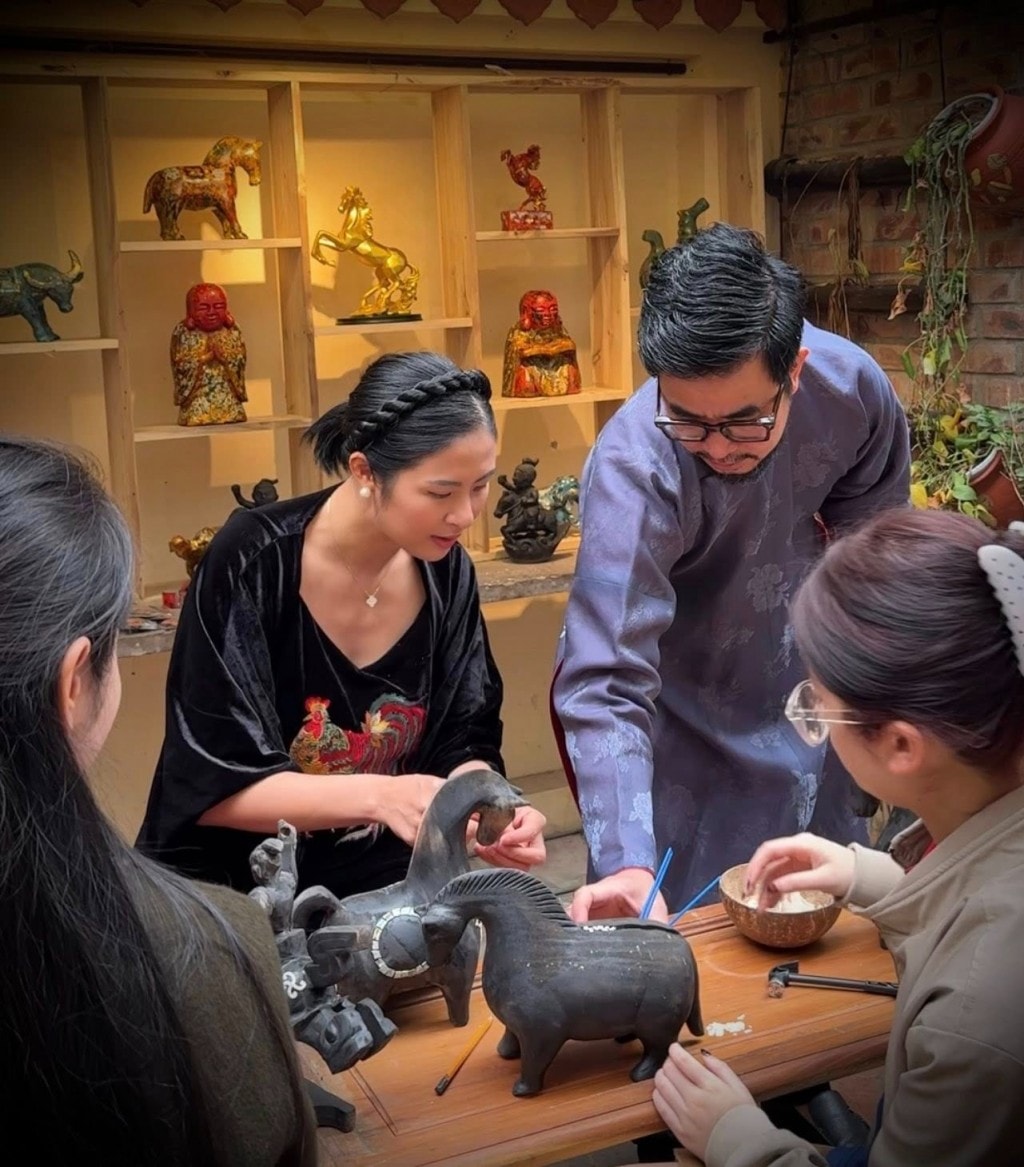
The experience he just participated in was the workshop "Following in the Footsteps of Giong's Horse," an activity within the "Vietnamese Tet - Tet in the Streets 2026" program series, jointly organized by the Hoan Kiem Ward People's Committee, the Hoan Kiem Lake Management Board, and the Hanoi Old Quarter, under the guidance of artisan Nguyen Tan Phat. Taking place from January 20th to February 20th, the workshop was free of charge, providing an opportunity for locals and tourists to experience traditional lacquer art right in the heart of the Old Quarter.
Located on Hang Hom Street, Ha Vi Temple – a sacred space dedicated to Tran Lu, the founder of the lacquer craft – is a revered traditional site. In the days leading up to Tet (Lunar New Year), it transforms into a creative hub, with the image of Giong's horse chosen as the centerpiece for experiential activities. Inspired by the legend of Saint Giong, the horse not only evokes national spirit but also symbolizes perseverance and progress, especially significant as the Year of the Horse approaches.
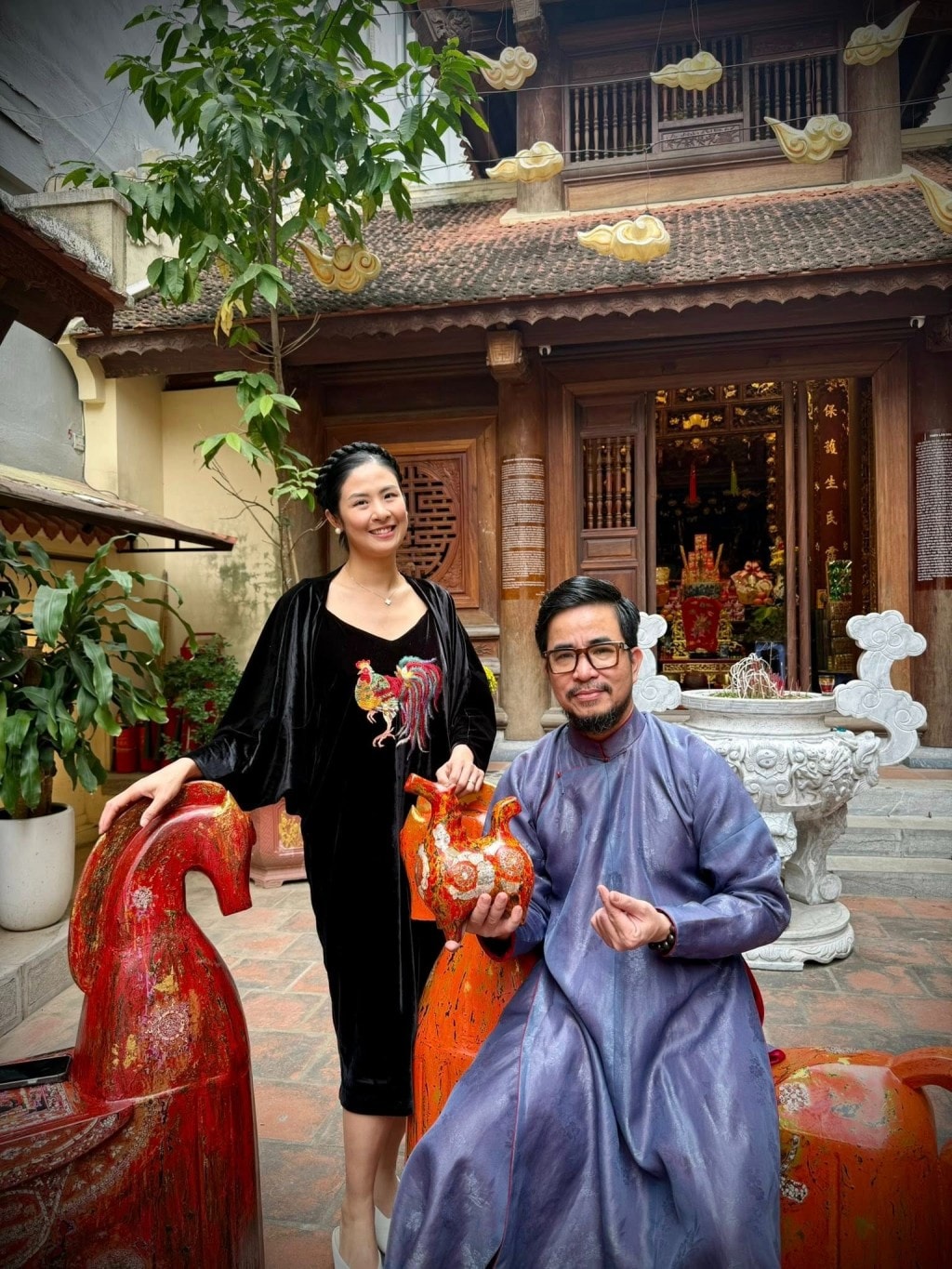
According to artisan Nguyen Tan Phat, organizing workshops is not simply about providing hands-on instruction, but also about opening up opportunities for the public, especially young people, to access lacquerware in a more understandable and accessible way. Lacquerware is renowned for its meticulous craftsmanship: from preparing the base, applying the lacquer, to sanding and polishing. In the workshop, the steps are simplified while retaining the core essence, helping participants understand the depth of the material.
Attendees were given an overview of the history of Vietnamese lacquerware, and the eggshell inlay technique – a characteristic that creates the unique visual effect of Vietnamese lacquerware. Only when they directly placed each piece of eggshell onto the horse's body did they truly appreciate the meticulousness behind each finished piece. Even a single misstep could disrupt the balance of the composition.
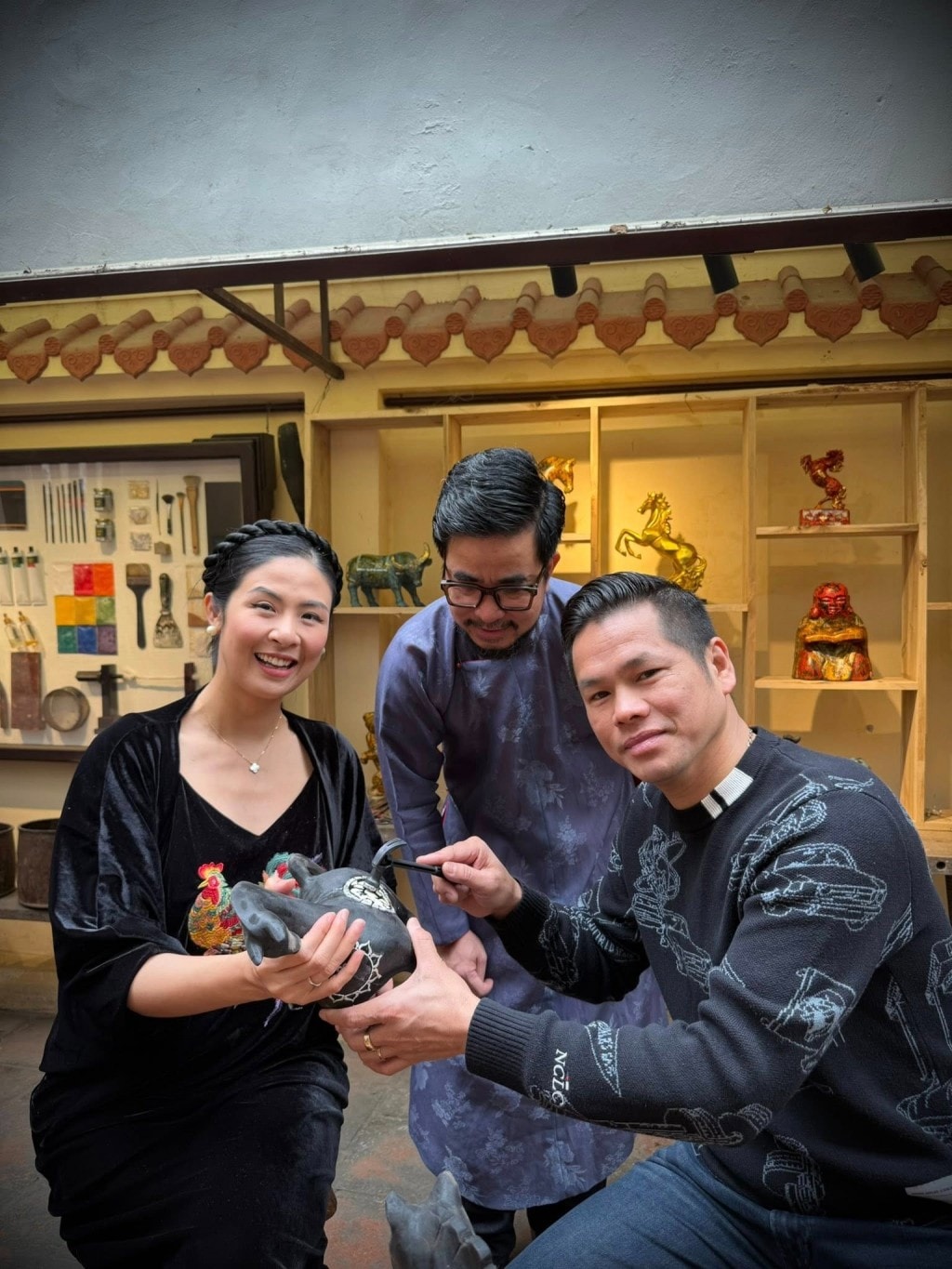
The workshop space thus becomes a place where the past and present intersect. Amidst the hustle and bustle of the old town, the quiet moments spent carefully applying eggshells and paint help young people slow down and connect with heritage through their own hands. The small Giong horse, once completed, is not just a handcrafted product but also a memento, a deeper understanding of the value of traditional crafts.
Find peace of mind amidst the hustle and bustle of life.
In recent years, during every holiday season, Hanoi has focused on organizing experiential activities right at its prominent historical sites, creating a journey of experiences that is both traditional and innovative. Especially during the Lunar New Year, these cultural characteristics become even more distinctive and valuable when disseminated through practical activities that bring heritage closer to contemporary life.
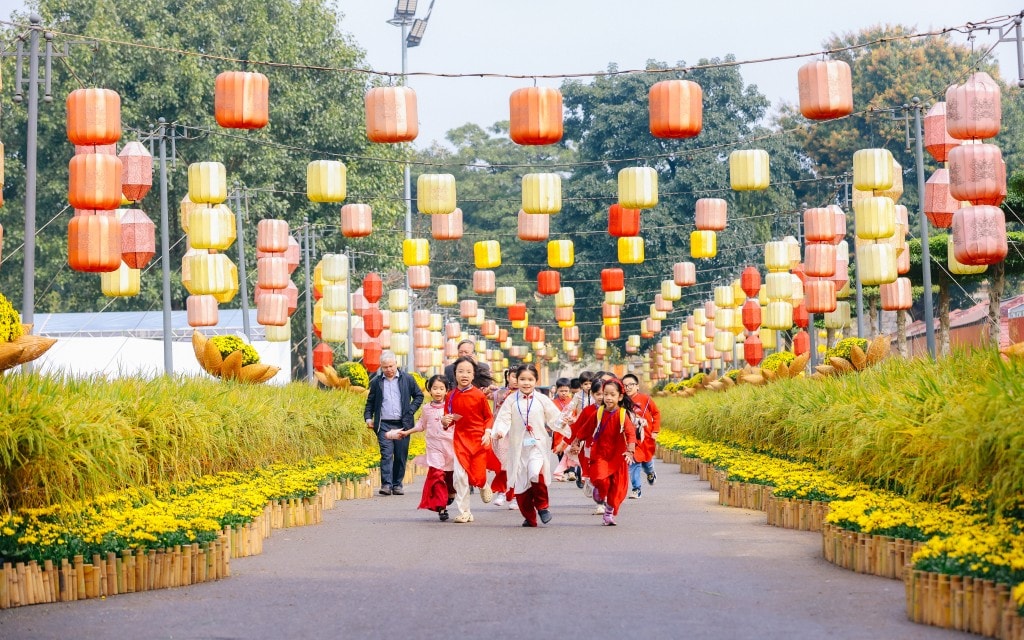
At Thang Long Imperial Citadel, the elaborately decorated spring flower street has become a highlight attracting large numbers of locals and tourists. Amidst the ancient architecture, miniature scenes of Tet feasts, New Year's poles, red couplets, and folk games are harmoniously arranged, recreating the atmosphere of Tet in old Hanoi. Each decorative cluster is associated with a story about the history of Thang Long, about the customs of the people of Thang An, from the tradition of cultivating Nhat Tan peach blossoms to the art of calligraphy at the beginning of the year.
Notably, traditional elements are not presented in isolation but are combined with modern light projection technology. Dragon motifs from the Ly Dynasty, imperial patterns, and the hallmarks of the ancient capital are recreated using vivid visual language, bringing the site to life with contemporary rhythms. Visitors not only tour the site but also interact, take photos, listen to explanations, and participate in experiential activities.
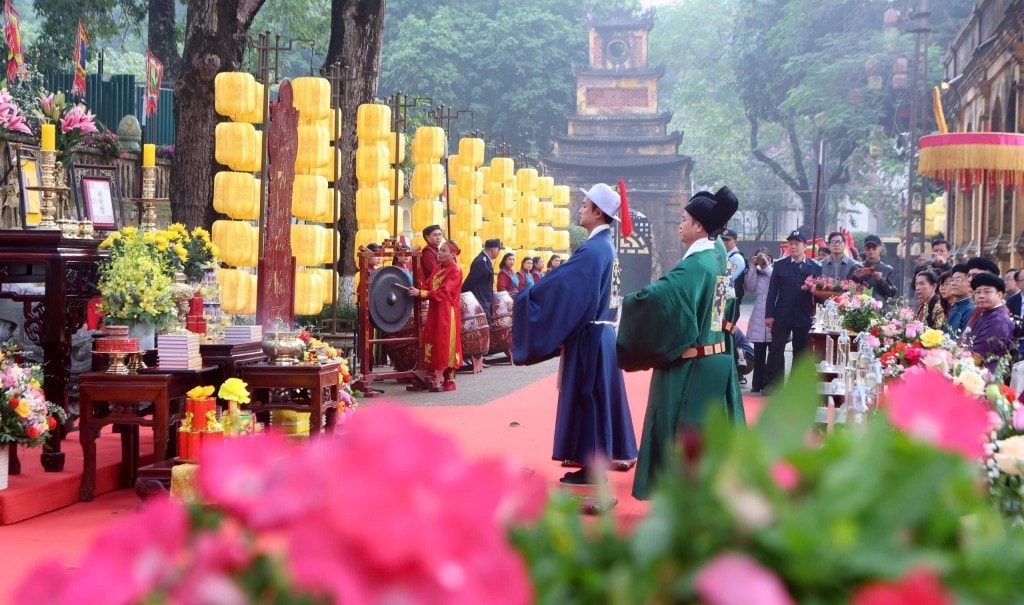
The "Vietnamese Tet - Street Tet" program in the Hoan Kiem Lake area and the Old Quarter, lasting for several days before, during, and after Tet, continues to promote the value of the historical urban space. Heritage houses on Ma May and Hang Buom streets are decorated according to traditional Tet customs with ancestral altars, trays of five fruits, tea sets, and trays of candied fruits. Visitors can participate in making banh chung (traditional rice cakes), printing folk paintings, receiving calligraphy from calligraphers, and enjoying ca tru, cheo, and xam (traditional Vietnamese folk singing) in the heart of the city.
The Spring Calligraphy Festival 2026 at Van Mieu - Quoc Tu Giám, with its art exhibitions, heritage experience spaces, traditional craft village experience areas, calligraphy request areas for the new year, and culinary culture introduction areas, also offers an elegant and harmonious Spring atmosphere, blending traditional elements with contemporary spirit.
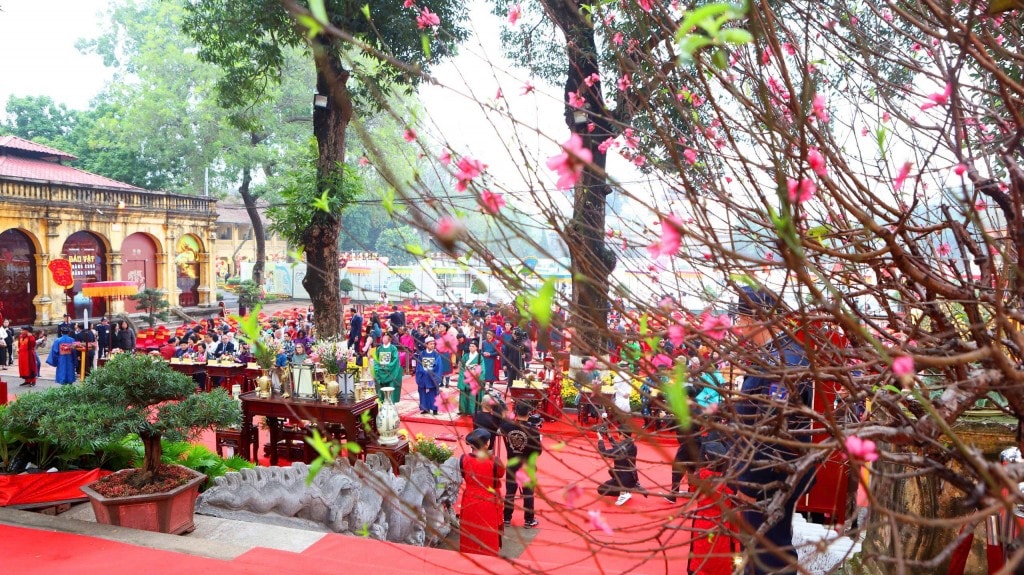
This year, the Spring Calligraphy Festival is themed "National Studies," coinciding with the 950th anniversary of the founding of the Imperial Academy – Vietnam's first national school. This theme emphasizes the special role of the Temple of Literature – Imperial Academy in the history of national education , affirming the tradition of respecting teachers and valuing talent – enduring values that have shaped the cultural identity of Thang Long – Hanoi and the Vietnamese nation.
Attending the event, in addition to visiting and requesting calligraphy at the calligraphy booths, people have the opportunity to experience a rich series of activities through heritage education programs, a reading culture space, exhibitions and introductions of traditional craft products, folk games, traditional chess, lion dances, and unique folk art performances such as Quan Ho, Ca Tru, and Cheo... organized in the Inner Sanctuary, the Garden of the Guardians, and Ho Van Lake, contributing to creating a vibrant and culturally rich Spring atmosphere.
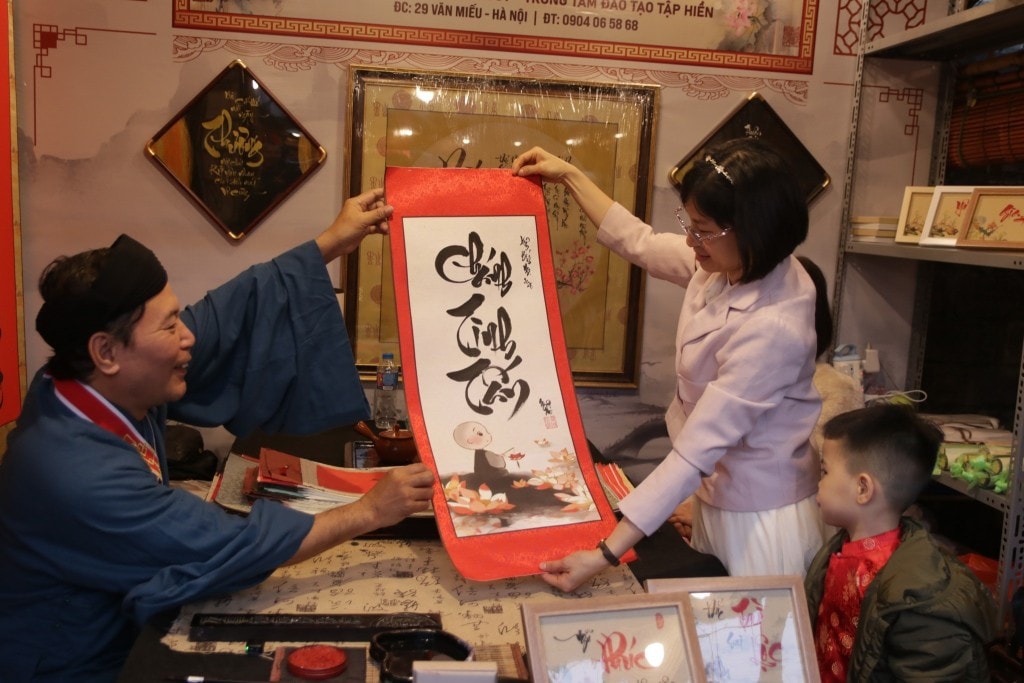
Beyond simply recreating customs, Hanoi also connects traditional craft villages into the Tet (Lunar New Year) activities. Nhat Tan peach blossoms, Tu Lien kumquats, Quang Phu Cau incense, Tranh Khuc sticky rice cakes… have become experiential destinations, where tourists can learn about the production process and the stories of preserving these crafts through generations. The participation of young designers and artists with creative products inspired by Hang Trong and Dong Ho paintings also contributes to refreshing the image of Tet in Hanoi.
From small lacquer workshops to magnificent displays within the Imperial Citadel, the transformation in conservation thinking is evident: heritage at the center, community as the main actors. When people directly participate, touch, and create alongside heritage, cultural values no longer remain dormant in memory but become a vibrant part of contemporary life.
And perhaps, it was from the moment a young person emerged from Ha Vi Temple with a Giong horse figurine in their hand that the story of connecting Thang Long's heritage was gently but persistently continued in the heart of Hanoi every spring. It is also a way for every Hanoi resident, domestic and international tourist, to quiet their souls amidst the hustle and bustle of life, feel a new spring rich in cultural identity arriving, and together spread the thousand-year-old cultural flow of Thang Long - Hanoi in a sustainable and powerful way.
Source: https://hanoimoi.vn/cham-vao-sac-xuan-ha-noi-ket-noi-di-san-de-truyen-thong-song-dong-giua-long-hien-dai-733484.html
![[Photo] The General Secretary, President and his wife begin their state visit to the Philippines.](https://vphoto.vietnam.vn/thumb/1200x675/vietnam/resource/IMAGE/2026/05/31/1780230559452_anh-man-hinh-2026-05-31-luc-19-28-11.png)
![[Photo] Solemn bathing ceremony and Buddha procession in Hue](https://vphoto.vietnam.vn/thumb/1200x675/vietnam/resource/IMAGE/2026/05/31/1780228263543_1-jpg.webp)
![[Photo] Admire the coral "masterpiece" amidst the million-year-old heritage of Dak Lak province.](https://vphoto.vietnam.vn/thumb/1200x675/vietnam/resource/IMAGE/2026/05/31/1780221235105_anh-man-hinh-2026-05-31-luc-16-53-27.png)
![[Image] Hanoi Police officially crowned champions of V-League 2025/2026](https://vphoto.vietnam.vn/thumb/1200x675/vietnam/resource/IMAGE/2026/05/31/1780244769054_ndo_br_039d561b692be875b13a-jpg.webp)












![[Video] Sunset at Lap An Lagoon – Where the sun sets over the fishing nets](https://vphoto.vietnam.vn/thumb/340x192/vietnam/resource/IMAGE/2026/05/31/1780192137701_beach-landscape-sea-water-nature-grass-745871-pxhere-com.jpeg)






























![[Photo] Admire the coral "masterpiece" amidst the million-year-old heritage of Dak Lak province.](https://vphoto.vietnam.vn/thumb/402x226/vietnam/resource/IMAGE/2026/05/31/1780221235105_anh-man-hinh-2026-05-31-luc-16-53-27.png)


























Comment (0)