

 |
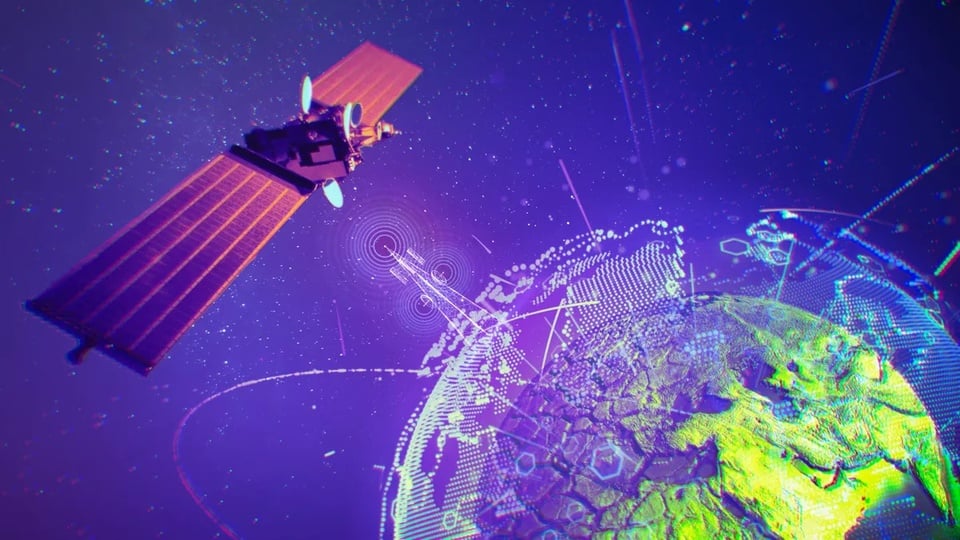
The environmental impact of the Internet has increased significantly. Photo: CNET . |
Maintaining the internet requires a massive amount of stable energy, from powering mobile base stations and data centers to extracting raw materials and manufacturing everyday equipment. The environmental impact of the internet is considered relatively small, but it has changed rapidly over the past decade.
The environmental impact of the internet depends on many factors, such as internet usage habits, AI, and the number of devices owned. Understanding and making smarter decisions in technology applications will help minimize energy consumption.
Potential impact
The Internet can be understood as a vast network connecting data centers, devices, and routers, via various cables, frequency bands, and radio signals.
The term falls within a larger group known as Information and Communication Technology (ICT), which includes devices such as radio and television, and extends to analog technology.
Edward Oughton, a professor of geographic data science and space computing at George Mason University, wrote in a study that this industry accounts for approximately 3.6% of global CO2 emissions. This doesn't even account for its rapid expansion, given that 2-3 billion people still lack internet access.
When considering the entire supply chain, including the extraction of rare materials, chip manufacturing, and the transportation of those materials, the impact is even greater. Apple states that 99% of the water it consumes comes from its own supply chain.
Nevertheless, technology, AI, and the Internet can still improve the sustainability of the ICT industry as well as many other industries. “ICT has the potential to reduce global greenhouse gas emissions by nearly 20%,” shared Joe Rowsell, a telecommunications policy expert and head of legal affairs at Telus.
How we conduct ourselves online largely determines our behavior.
According to CNET, fiber optic cable is the most energy-efficient and environmentally sustainable type of internet connection. Professor Oughton argues that photons traveling through the fiber consume very little energy.
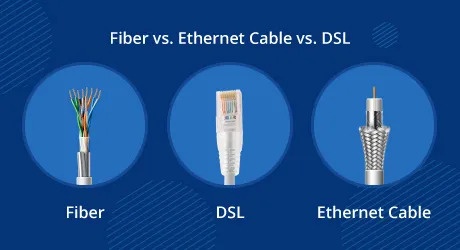 |
Comparison of fiber optic cable and conventional cable. Image: HeyOptics. |
Research from the Fiber Broadband Association (FBA) shows that this network has a lower carbon footprint than hybrid fiber coax across all sustainability-related metrics, including material and operating costs. While initial deployment may disrupt the ecosystem or increase carbon emissions in the short term, the research also indicates that after six years of use, emissions decrease significantly, providing long-term benefits.
Despite being the best solution, fiber optic cable still hasn't reached rural households. Many people either lack access to it or still choose to use traditional networks like coaxial cable and DSL.
These types of cables simply don't have the same bandwidth as fiber optic cables and are also inefficient for long-distance transmission, resulting in greater signal loss. FBA research shows that fiber optic internet can reduce power consumption and carbon emissions by 93-96% compared to the two most common types of cables currently available (hybrid fiber-optic and DOCSIS 4.0).
Many internet providers are also phasing out DSL services entirely. AT&T announced this in December 2024, calling the technology "energy-hungry" and difficult to maintain. As a result, users are switching from DSL to other technologies such as satellite internet if available.
Meanwhile, 5G internet is becoming an increasingly popular alternative to wired internet. This network is often used in remote or hard-to-reach areas, but it consumes more energy to transmit the same amount of data.
Because 5G relies on frequency bands rather than direct transmission over cables, the network is susceptible to congestion and signal loss, especially over long distances. Oughton's study, published in July 2025, highlighted the high energy consumption of 4G and 5G networks in developing countries in Asia, noting that rural households consume more energy than urban households.
Like 5G internet, low-orbit (LEO) satellites have revolutionized user accessibility. The strength of satellite internet lies in its ability to provide widespread coverage without the need for cables or existing infrastructure for connection.
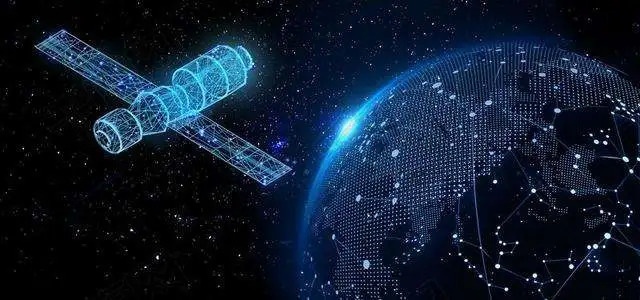 |
5G internet and satellite technology have revolutionized user accessibility. Photo: IP Look. |
To transmit a strong signal and ensure wide connectivity, a large number of LEO satellites are needed in orbit. However, these satellites generate a significant amount of emissions. Professor Oughton wrote in a study that emissions from LEO satellites are eight times higher per user in rural areas.
Furthermore, the frequency of rocket launches has increased exponentially. 2024 saw the highest number of launches ever recorded in the US, totaling 259. Of those, SpaceX alone conducted 134 launches. The race to provide satellite internet has created greater risks to Earth's ozone layer.
AI and data centers
With any search on Google or Safari, you're accessing a data center, almost instantaneously. Despite consuming vast amounts of electricity, water, and releasing pollutants, these levels have generally remained relatively stable over the past decade.
However, the emergence of AI has changed the way we use the internet. Data centers running large-scale language modeling are consuming energy at an increasingly alarming rate.
Berkeley Lab, which provides the most comprehensive and detailed overview of data center usage in the US, has expressed concern about energy consumption driven by AI. The lab predicts that by 2028, over 90% of server energy will be consumed by large-scale data centers and shared data.
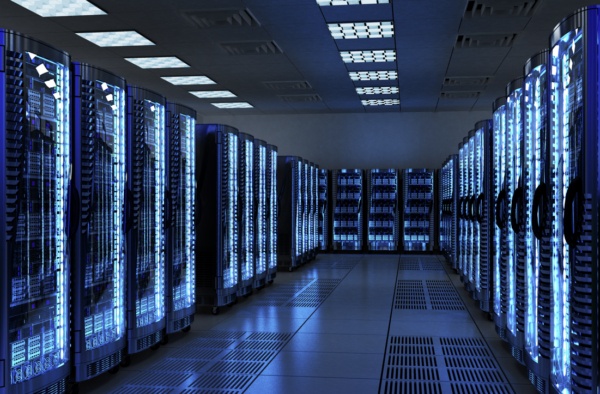 |
Data centers for AI consume a large amount of energy. Photo: Rack Solutions. |
Each server rack for a typical cloud or internet service consumes around 5, or less than 10, kilowatts. That number increases three to tenfold compared to an AI server rack, according to Professor Shaolai Ren, a specialist in electrical and computer engineering at the University of California.
Using AI also consumes water resources and causes serious air pollution. A 2023 study from the University of California, Riverside showed that composing a 100-word email using AI consumes approximately 519 ml of coolant. Another paper from the university also stated that the total public health cost caused by data centers in the US could equal, or even exceed, emissions from vehicles on the roads in large states like California.
Although internet connectivity varies depending on location, understanding the environmental impact of technology helps individuals make more informed choices. Users can prioritize durable devices that require less frequent replacement, disable AI, or reduce the use of demanding tasks when unnecessary. If possible, choose fiber optic connections instead of energy-intensive options like 5G or DSL.
Source: https://znews.vn/chi-phi-ngam-cua-internet-post1561213.html

![[Photo] Prime Minister Pham Minh Chinh attends the Conference on the Implementation of Tasks for 2026 of the Industry and Trade Sector](/_next/image?url=https%3A%2F%2Fvphoto.vietnam.vn%2Fthumb%2F1200x675%2Fvietnam%2Fresource%2FIMAGE%2F2025%2F12%2F19%2F1766159500458_ndo_br_shared31-jpg.webp&w=3840&q=75)






























































































Comment (0)