

On November 21st, the Ministry of Information and Communications organized a training conference to enhance communication capacity on tobacco harm prevention for reporters and editors of newspapers and broadcasting stations.
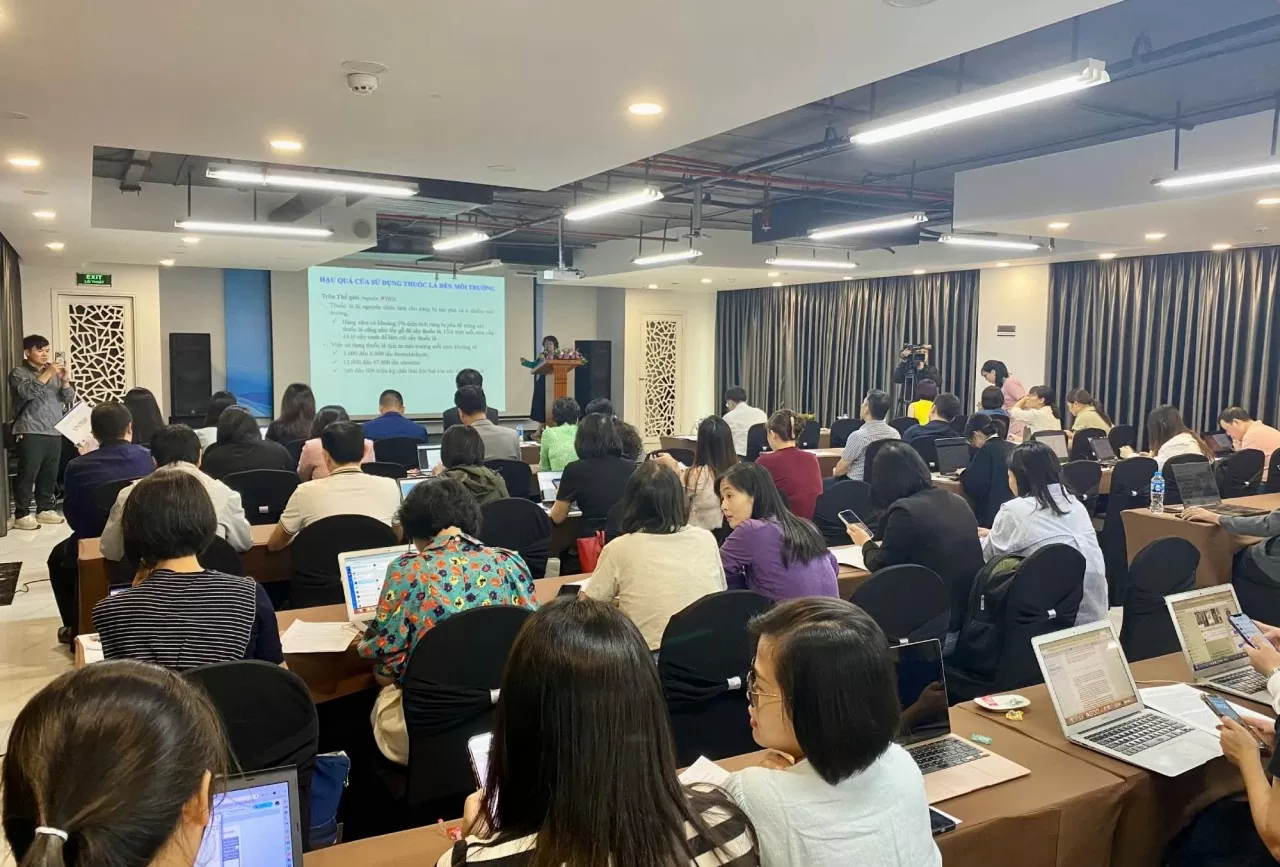 |
| The conference aimed to enhance the understanding and interest of reporters and editors from central and local media outlets in disseminating information about preventing and combating the harmful effects of tobacco in Vietnam. (Photo: Xuan Son) |
Attending the conference were Mr. Ho Hong Hai, Deputy Director of the Legal Department, Ministry of Information and Communications; Ms. Phan Thi Hai, Deputy Director in charge of the Tobacco Harm Prevention Fund, Ministry of Health; and speakers, reporters, and editors from newspapers and television stations.
In his opening remarks at the conference, Mr. Ho Hong Hai, Deputy Director of the Legal Department, Ministry of Information and Communications, emphasized that for many years, the Department has closely coordinated with the Tobacco Harm Prevention Fund, the Ministry of Health, and actively collaborated with media agencies to leverage the advantages of communication work, guide information, disseminate quickly and widely, and contribute to promoting effective propaganda on tobacco harm prevention.
The use of e-cigarettes and heated tobacco products is increasing in Vietnam, especially among young people, students, and university students, who are exploiting these devices for the illegal distribution and use of drugs. In the first quarter of 2024, police nationwide detected and handled 111 cases involving 152 individuals related to e-cigarettes and heated tobacco products, including 33 cases with 73 individuals prosecuted for drug-related offenses.
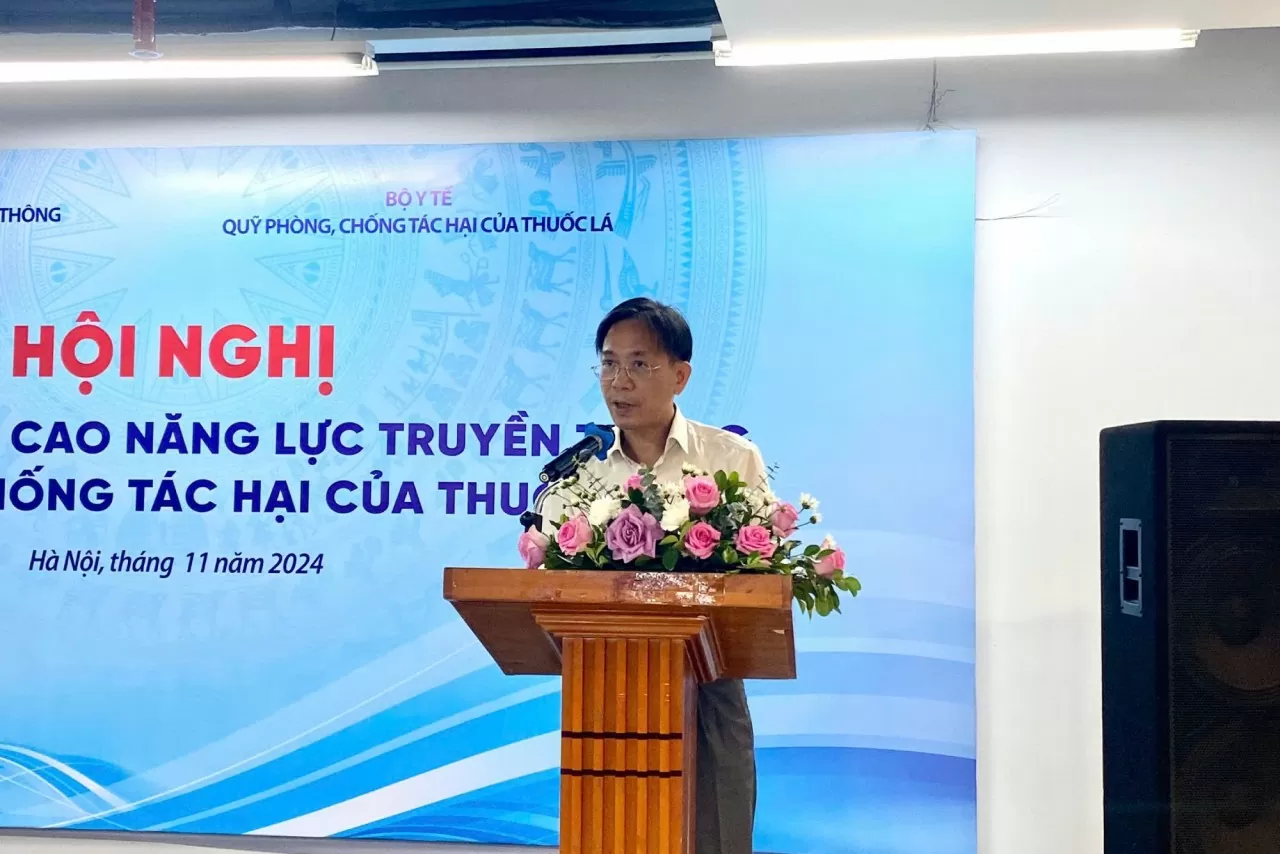 |
| Mr. Ho Hong Hai, Deputy Director of the Legal Department, Ministry of Information and Communications, delivered the opening remarks. (Photo: Xuan Son) |
Presenting on the topic "Tobacco Tax - An Effective Solution to Reduce Tobacco Use Rates," Ms. Nguyen Thi Thu Huong, from the Tobacco Harm Prevention and Control Fund, Ministry of Health, stated that tobacco use is one of the leading causes of illness and premature death. Tobacco contains 7,000 chemicals, including 69 carcinogens, and is the cause of 25 types of diseases (cancer, cardiovascular disease, respiratory and reproductive diseases).
Recent research indicates that the annual economic cost of tobacco use in Vietnam is estimated at 108 trillion VND, equivalent to 1.14% of GDP (in 2022). This figure is more than five times greater than the contribution of tobacco tax revenue to the national budget.
Tobacco taxes and prices in Vietnam are currently low compared to other countries worldwide and the regional average. According to the amended Special Consumption Tax Law No. 70/2014/QH13 of 2014, Vietnam currently applies a special consumption tax rate of 75%, with the tax base being the ex-factory price. The proportion of tobacco tax calculated based on the retail price (including special consumption tax and value-added tax) accounts for only 38.8%, according to a 2023 WHO report.
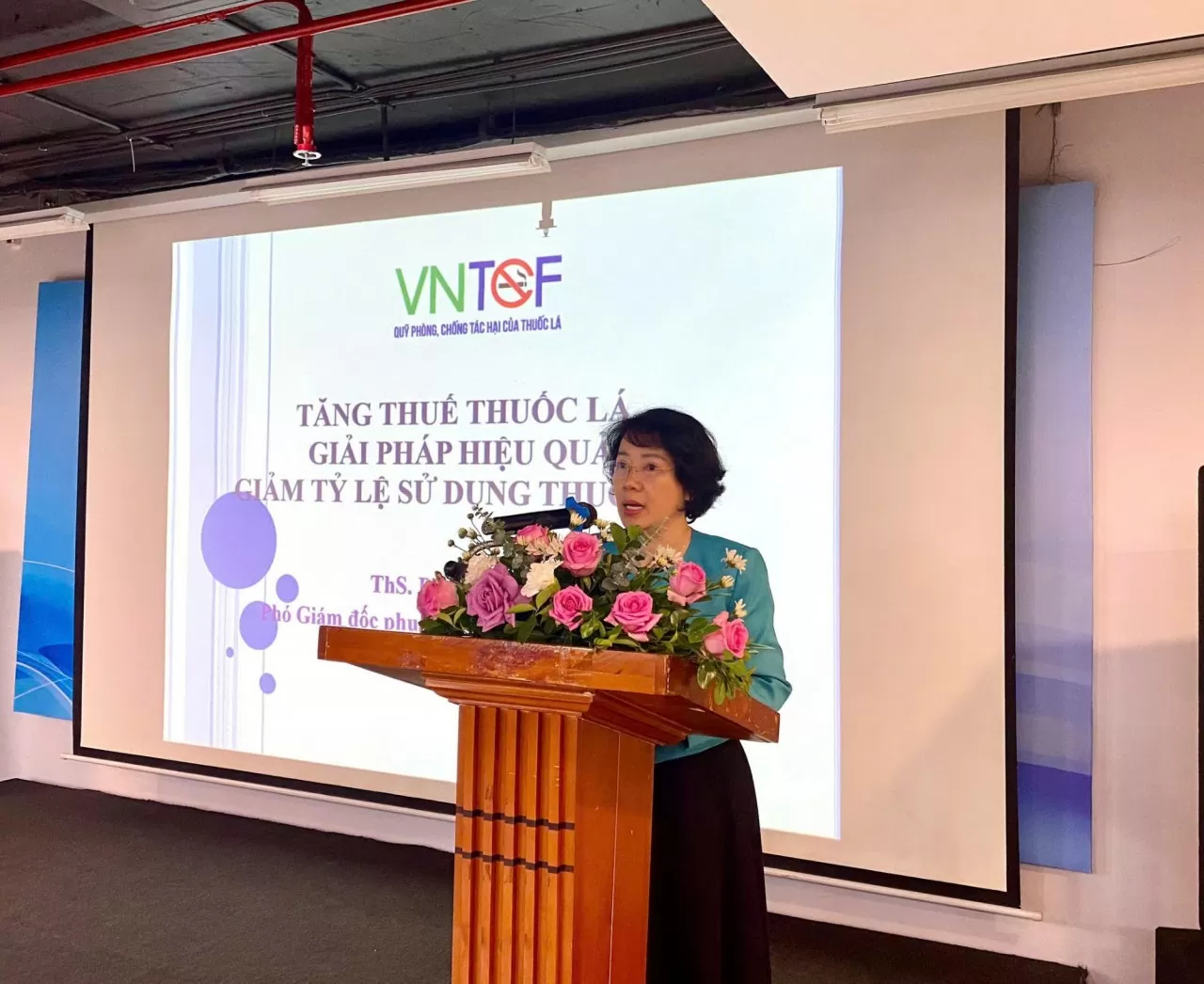 |
| Ms. Nguyen Thi Thu Huong, from the Tobacco Harm Prevention Fund, Ministry of Health, presented on the topic "Tobacco Tax - an Effective Solution to Reduce Tobacco Use Rates". (Photo: Xuan Son) |
In his presentation on “Tobacco Tax in Vietnam: The Need for Tax Increases, Assessment of Tax Options, International Experiences and WHO Recommendations,” Mr. Nguyen Tuan Lam, a tobacco harm prevention expert from the World Health Organization (WHO), stated that the experience of tobacco tax reform in Thailand and the Philippines shows that imposing high taxes and regularly increasing tobacco taxes has helped reduce smoking rates, decrease tobacco consumption in the community, and increase tax revenue from tobacco.
To effectively reduce tobacco consumption, the WHO recommends adding a sufficiently large absolute tax (to transition to a mixed tax system) and increasing the tax gradually so that tobacco prices keep pace with income growth, eventually moving towards the optimal tax rate of 75% of the retail price to contribute to achieving the goal of reducing tobacco use rates.
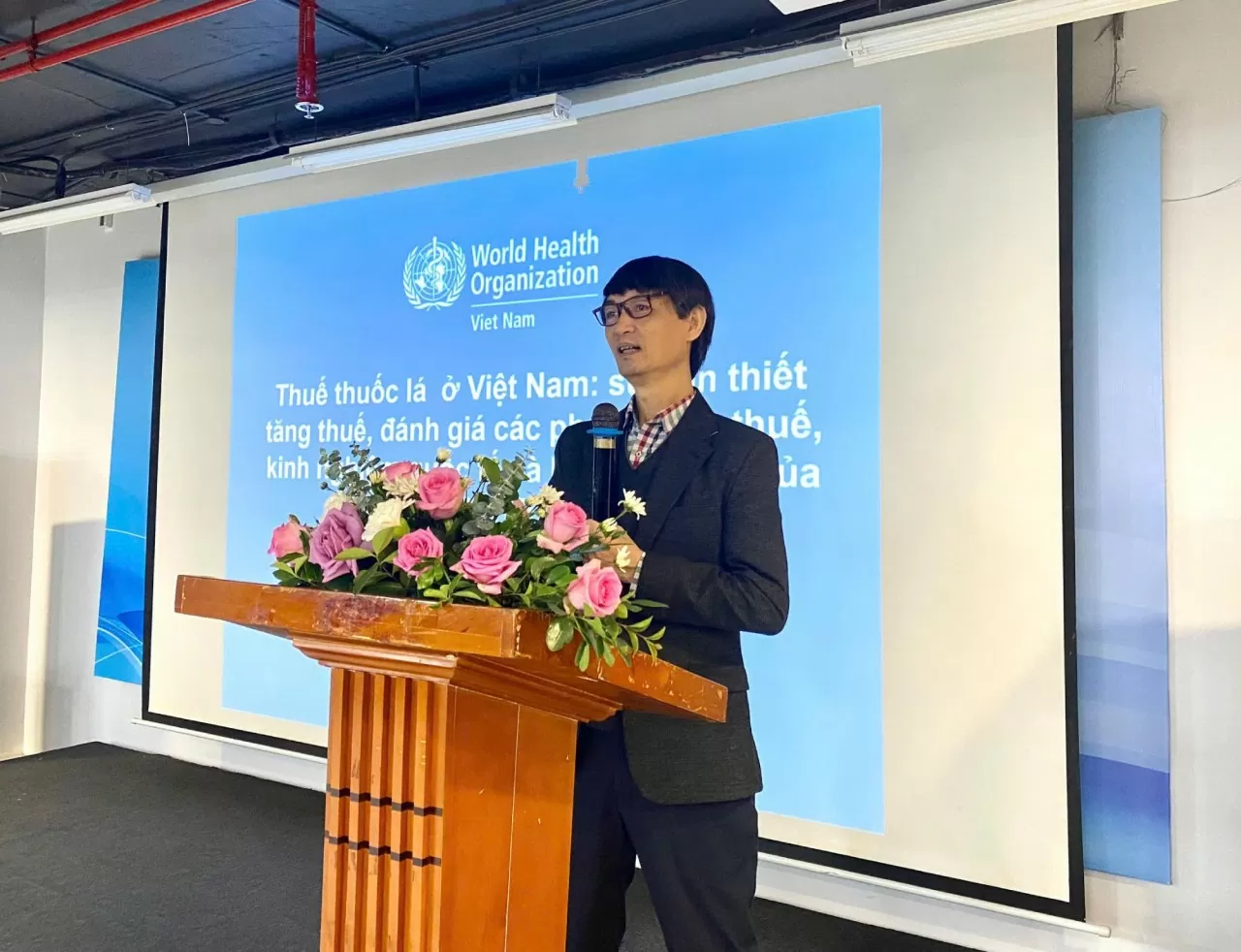 |
| Mr. Nguyen Tuan Lam, a WHO expert on tobacco harm prevention, gave a presentation on "Tobacco Tax in Vietnam: The Need for Tax Increase, Assessment of Tax Options, International Experience and WHO Recommendations". (Photo: Xuan Son) |
In the topic "Increasing tobacco taxes and their connection to smuggling and employment," Mr. Nguyen Ngoc Anh from the Center for Policy and Development Research emphasized that smuggled cigarettes are significantly more expensive than legal cigarettes. This difference is even more pronounced in the central and northern provinces, despite these being the provinces with the lowest rates of smuggled cigarettes.
Mr. Nguyen Ngoc Anh affirmed that the tax on tobacco is a special policy tool that brings dual benefits: it reduces tobacco consumption, improves people's health, saves on medical treatment costs related to tobacco, and increases government revenue.
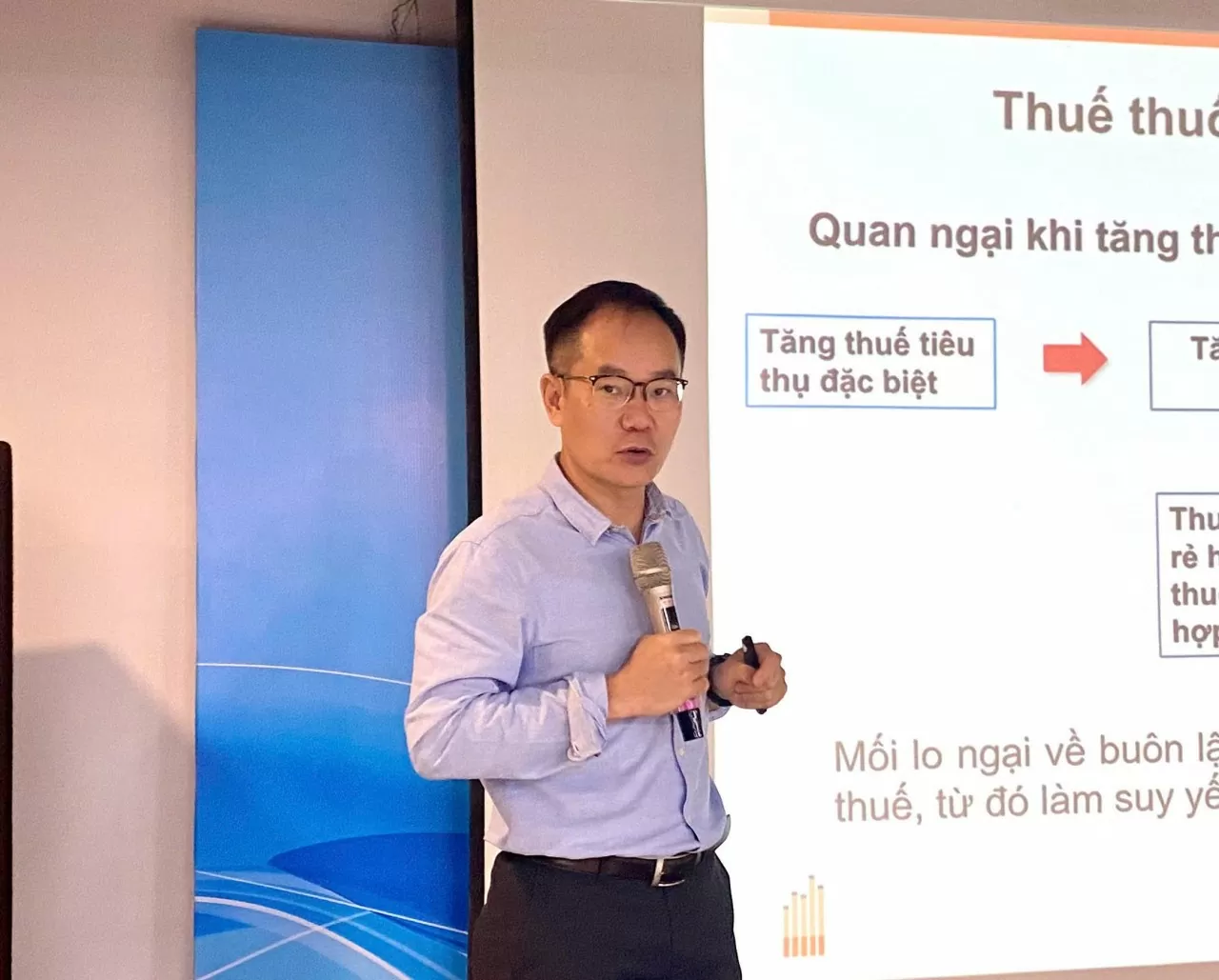 |
| Mr. Nguyen Ngoc Anh from the Center for Policy and Development Research presented on the topic "Increasing tobacco taxes and their relationship with smuggling and employment." (Photo: Xuan Son) |
Regarding the "Role of Tobacco Excise Tax in Sustainable Socio-Economic Development," Mr. Nguyen Anh Duong from the Central Institute for Economic Management Research stated that excise tax is an indirect tax levied on certain luxury goods and services or those discouraged from consumption, thereby regulating production, import, and social consumption. Vietnam needs to be confident that increasing excise tax is a key and effective strategy to reduce tobacco consumption, especially among low-income individuals and children.
Mr. Nguyen Anh Duong proposed that Vietnam should actively consider switching to a mixed excise tax mechanism for tobacco; review and improve the effectiveness of communication regarding the demand for increased excise tax on tobacco in conjunction with promoting sustainable economic development; and strengthen consultations with international organizations and domestic and foreign experts on the implementation of tax policies on tobacco in general and excise tax on tobacco in particular in conjunction with promoting sustainable economic development.
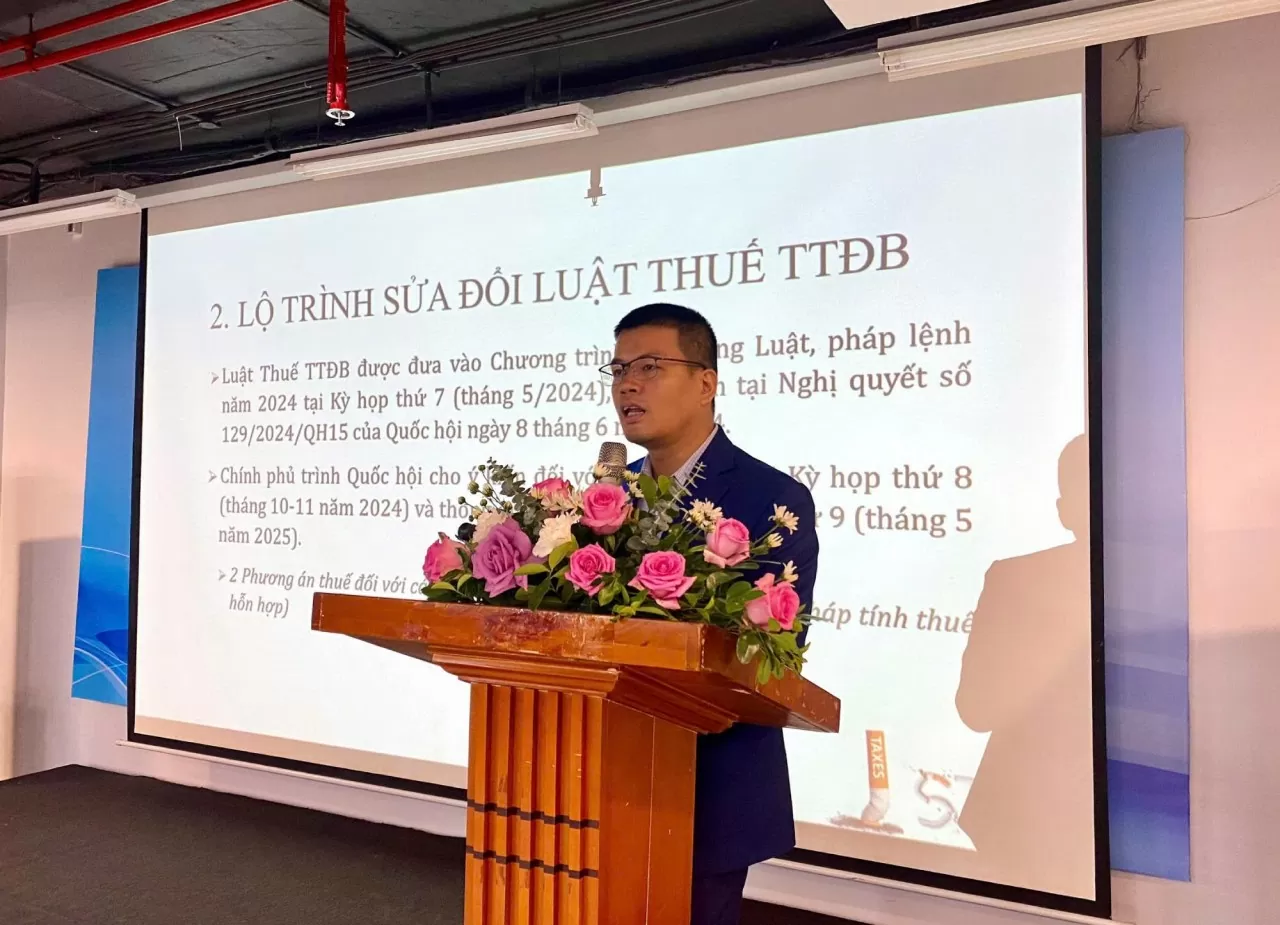 |
| Mr. Nguyen Anh Duong from the Central Institute for Economic Management Research presented on "The Role of Tobacco Excise Tax in Sustainable Socio-Economic Development". (Photo: Xuan Son) |
In an interview with the World and Vietnam Newspaper , Mr. Nguyen Anh Duong from the Central Institute for Economic Management Research emphasized two challenges in achieving the goal of reducing smoking rates in the community: consumer awareness and the development of a tax roadmap, especially the special consumption tax on tobacco, to ensure a balance of interests among all parties.
Regarding solutions to raise young people's awareness about tobacco harm prevention, Mr. Nguyen Anh Duong affirmed that we must strengthen the dissemination of research results on the economic costs and health consequences of tobacco to young people and the community, as well as update sustainable development programs.
Source
![[Photo] Solemn bathing ceremony and Buddha procession in Hue](https://vphoto.vietnam.vn/thumb/1200x675/vietnam/resource/IMAGE/2026/05/31/1780228263543_1-jpg.webp)
![[Image] Hanoi Police officially crowned champions of V-League 2025/2026](https://vphoto.vietnam.vn/thumb/1200x675/vietnam/resource/IMAGE/2026/05/31/1780244769054_ndo_br_039d561b692be875b13a-jpg.webp)


![[Photo] The General Secretary, President and his wife begin their state visit to the Philippines.](https://vphoto.vietnam.vn/thumb/1200x675/vietnam/resource/IMAGE/2026/05/31/1780230559452_anh-man-hinh-2026-05-31-luc-19-28-11.png)
![[Photo] Admire the coral "masterpiece" amidst the million-year-old heritage of Dak Lak province.](https://vphoto.vietnam.vn/thumb/1200x675/vietnam/resource/IMAGE/2026/05/31/1780221235105_anh-man-hinh-2026-05-31-luc-16-53-27.png)





















![[Video] Sunset at Lap An Lagoon – Where the sun sets over the fishing nets](https://vphoto.vietnam.vn/thumb/340x192/vietnam/resource/IMAGE/2026/05/31/1780192137701_beach-landscape-sea-water-nature-grass-745871-pxhere-com.jpeg)































































Comment (0)